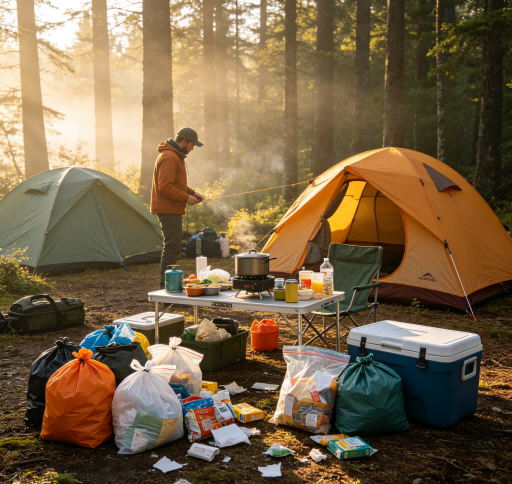
You arrive at your campsite. You set up your tent. You start unpacking your gear. Then you realize something important is missing. You forgot to bring trash bags.
Panic sets in. How will you manage your waste? How will you keep your site clean? The answer is simpler than you think.
You do not need trash bags. There are many creative ways to handle your camp waste. They use what you already have. They keep your site spotless. They help you leave no trace.
Here are nine clever ways to manage your trash without a single garbage bag.
Table of Contents
#1. Use Your Food Packaging as Your Trash Bag
Most of your food comes in packaging. Wrappers, boxes, and bags. You do not need to unpack everything first.
Eat directly from the packaging. When you finish, flatten it. Store it inside a larger bag. You can also use your cooler.
This is a zero-waste method. You use the packaging you already have. You do not create extra containers. It is simple and effective. Your trash stays contained.
#2. Use Your Cooking Pot as a Temporary Trash Can
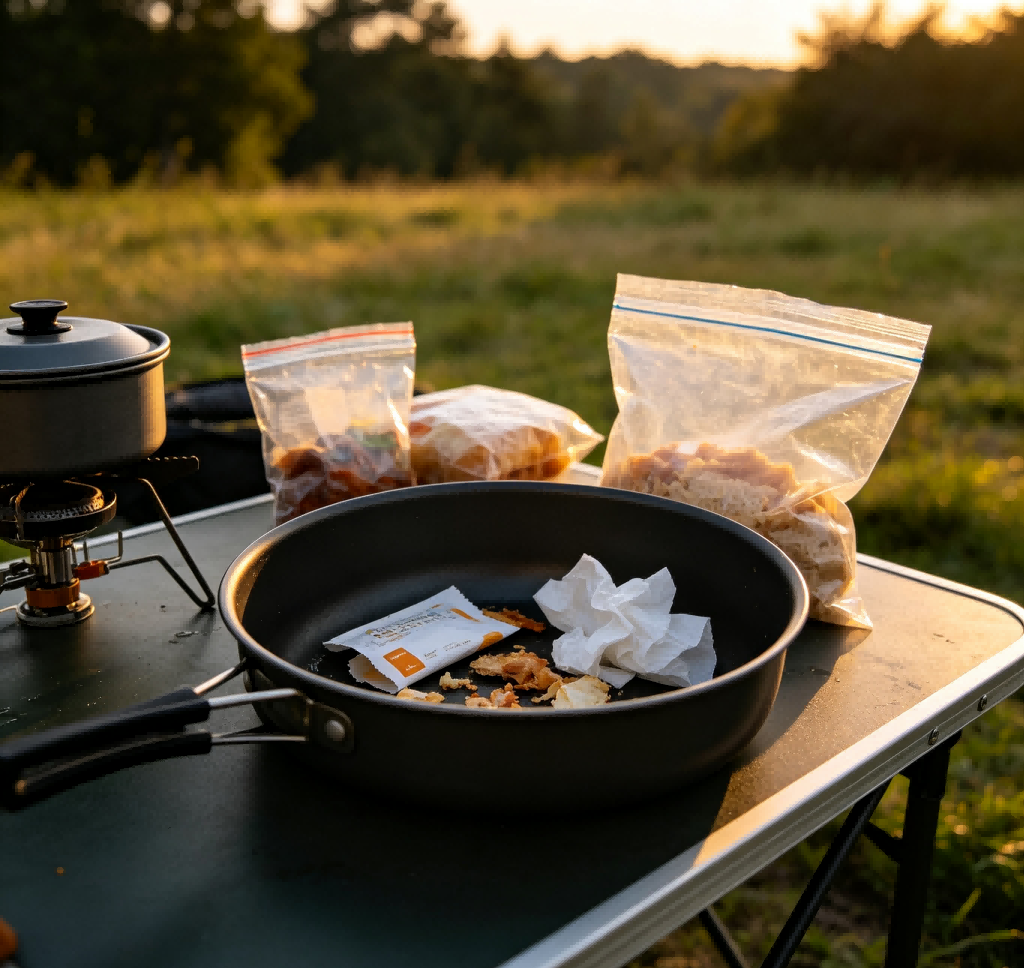
Your cooking pot is useful. It can hold your trash too. Designate a clean, dry pot at your cooking station.
Toss small scraps into it. Add wrappers and used paper towels. Keep it handy throughout the day.
At the end of the day, empty it. Transfer the trash to a bigger container. You can also burn burnable items safely. Your cooking station stays clean and organized.
#3. Use a Spare Dry Bag or Stuff Sack
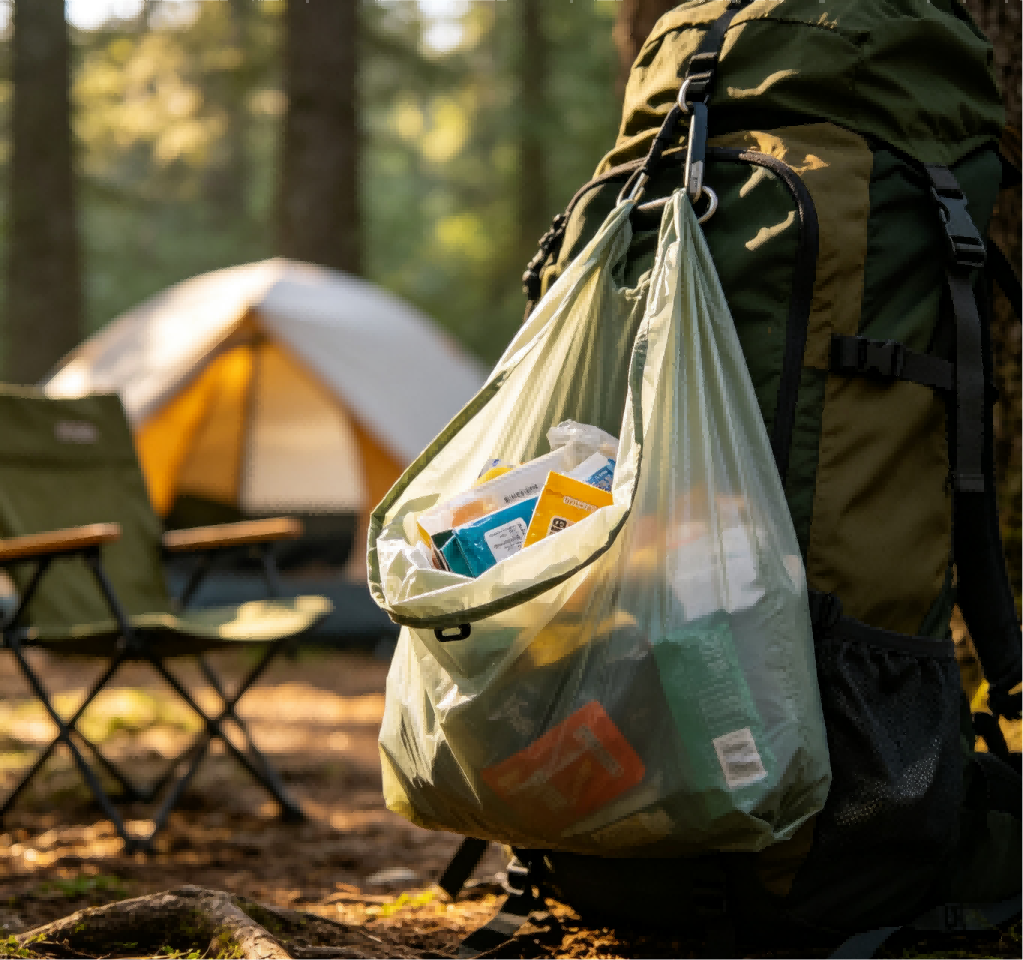
You probably have extra dry bags. They are waterproof and sturdy. They make excellent trash bags.
Use a dry bag you are not using for gear. Turn it into your trash container. It seals in smells effectively. You can clip it to your pack. You can hang it up at night.
The bag is durable and reliable. It keeps animals out. It keeps smells contained. This is a smart and practical solution.
#4. Wrap Trash in a T-Shirt or Bandana
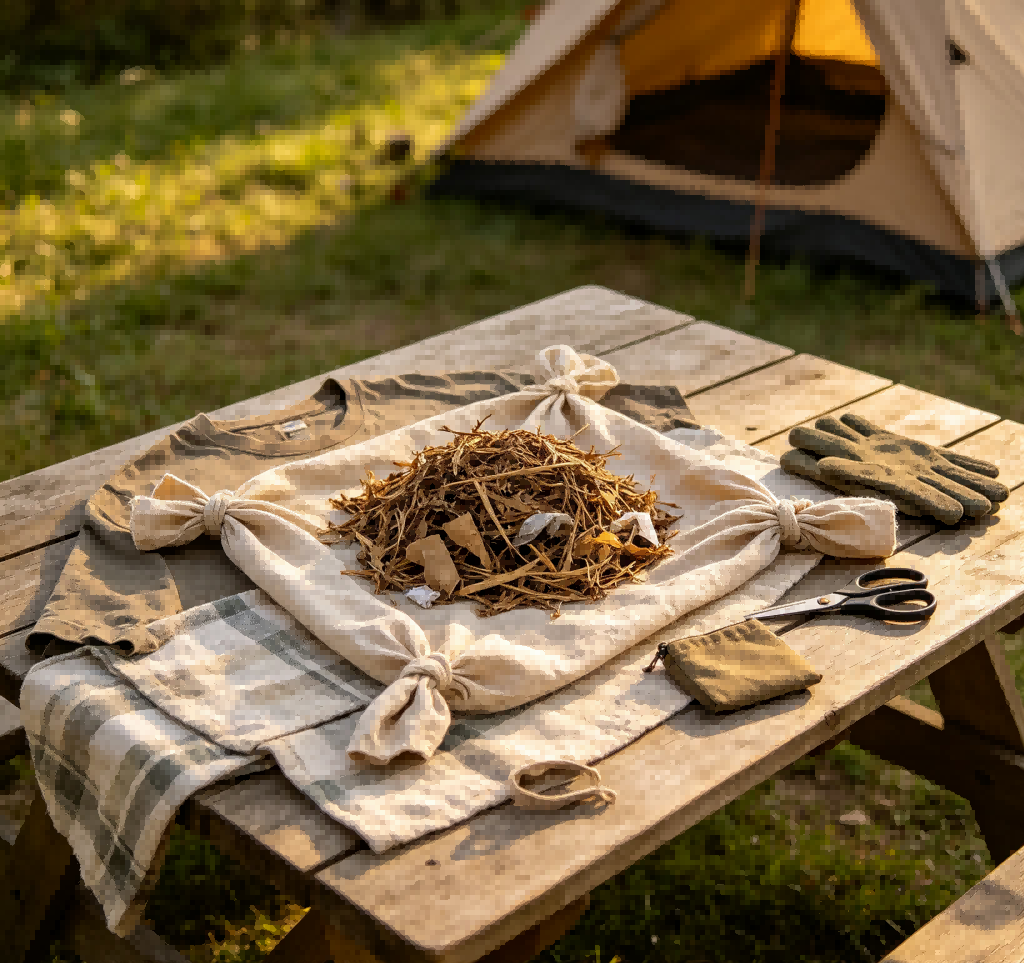
You have old clothes with you. A shirt or large bandana can help. Lay it out flat on the ground.
Pile your dry trash on it. Fold the corners over. Tie it into a secure bundle. The fabric keeps everything contained.
This is a simple and effective method. You can wash the fabric later. It is reusable and versatile. You do not need any special gear.
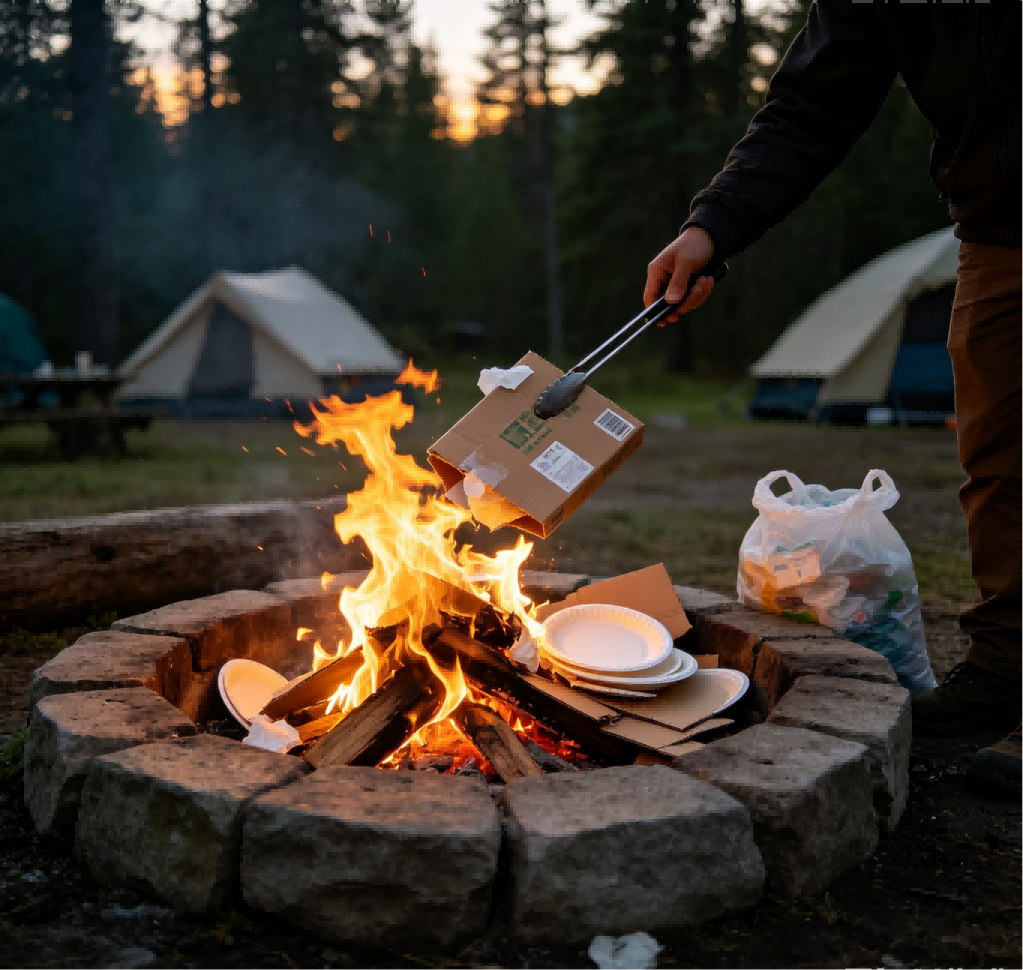
#5. Burn Paper and Cardboard in the Campfire
Some trash can be burned. Paper plates, cardboard boxes, and paper towels are safe. Check local regulations first. Make sure there is no fire ban.
Throw these items into the campfire. The flames consume them quickly. They reduce your trash volume immediately.
Never burn plastic or coated materials. They release toxic fumes. Stick to plain paper and cardboard. It is a fast and effective disposal method.
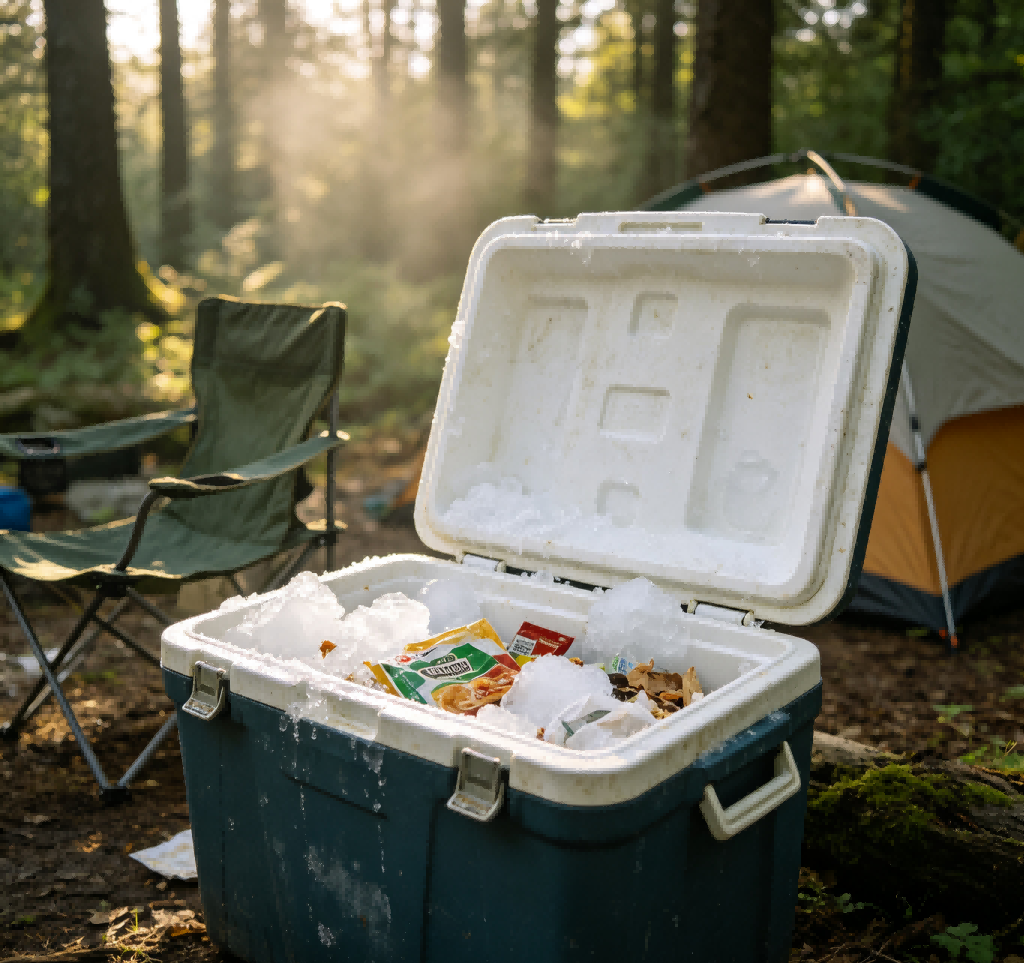
#6. Use Your Cooler as a Trash Bin After the Ice Melts
Your cooler keeps food cold. But eventually the ice melts. The cooler becomes empty.
Do not pack it away. Turn it into a sealed trash bin. Place all your waste inside. Close the lid securely.
The cooler keeps food scraps from smelling up your camp. It keeps animals out. It is an excellent, animal-proof solution. Use it until you pack out your trash.
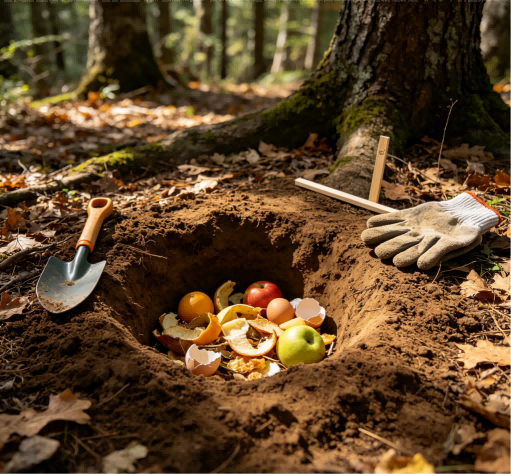
#7. Bury Organic Scraps if Local Rules Allow
Some waste can go back to the earth. Fruit peels, eggshells, and other biodegradable scraps are safe. Check local regulations first.
Dig a six-inch cat hole. Place the scraps inside. Cover them with soil. The scraps will decompose naturally.
Do not bury meat, cheese, or oily foods. These attract animals. They also take longer to break down. Follow the rules and be responsible.
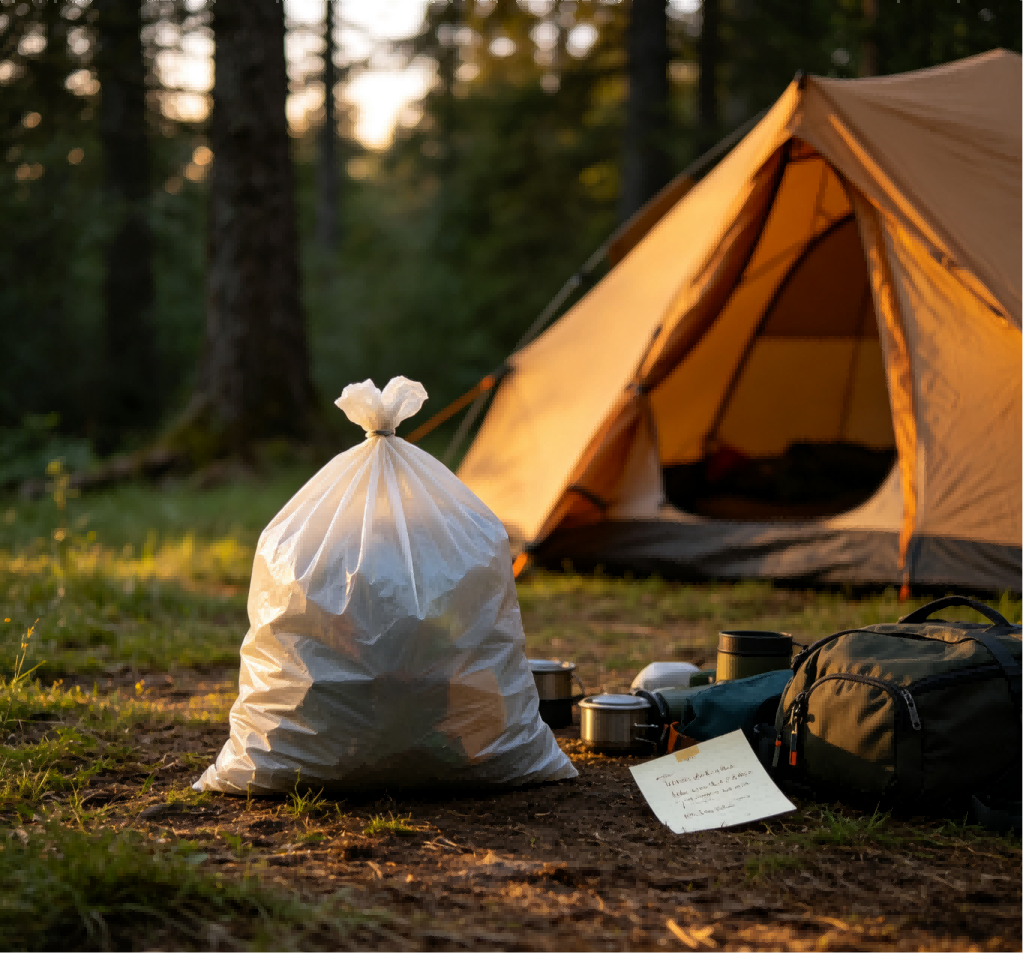
#8. Use a Backpack or Duffel Bag That Is Going Home Anyway
You have extra bags in your camp. An old duffel bag is perfect. It is sturdy and holds a lot.
Use it as your garbage bag. Tie the top securely. Label it clearly so you do not forget. Keep it away from sleeping areas.
This repurposes gear you already have. It saves you from carrying dedicated trash bags. It is a practical and efficient solution.
#9. Prevent Trash in the First Place
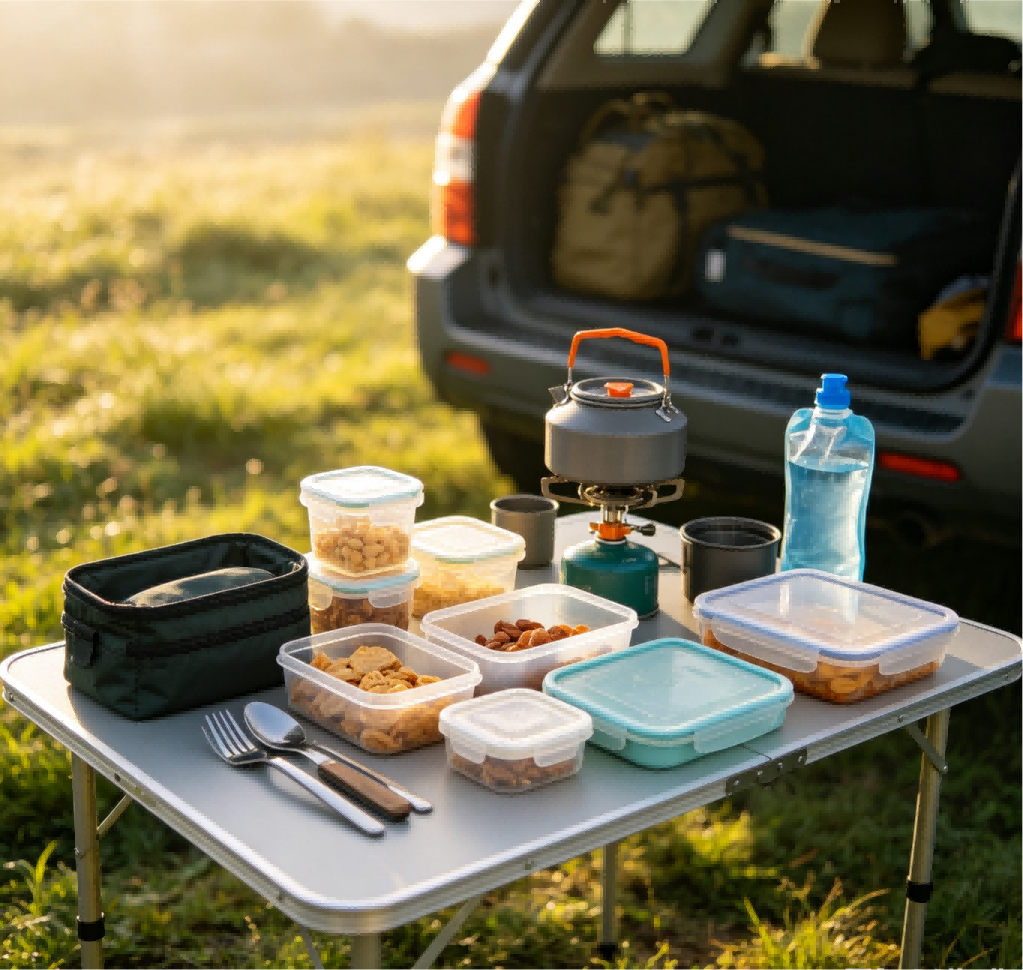
The best solution is prevention. Remove excess packaging at home before you leave. Repackage your food into reusable containers. Use containers for snacks and meals.
Plan your meals carefully. Choose items with minimal packaging. This reduces your waste from the start. You have less to carry and less to manage.
Prevention is the most effective strategy. It saves you effort on the trail. It protects the environment. It is the smartest choice for any camper.
Conclusion
Forgetting trash bags does not mean disaster. You have many options. Use your food packaging as your trash bag. Designate a cooking pot for temporary trash. Repurpose a spare dry bag or stuff sack. Wrap trash in an old t-shirt or bandana. Burn paper and cardboard safely. Use your cooler as a trash bin. Bury organic scraps if allowed. Use a spare backpack or duffel bag. Prevent trash by removing packaging at home.
These nine methods work. They keep your site spotless. They protect the environment. They help you leave no trace. A clean camp is a happy camp. You can handle your waste without bags. Be creative, be responsible, and enjoy the outdoors.