Now, I know that sounds a little dramatic, but let’s be honest, it got your attention. And it’s a legitimate concern!
The great outdoors is, well, great. But it’s also filled with unpredictable variables, and not all of them are bears with poor table manners.
My name is Jake, and I was an Eagle Scout. This unique combination of a paranoid government spook and a perpetually-prepared Boy Scout has given me a, let’s say, heightened perspective on camping safety.
I love camping and hiking more than almost anything, but I have a very strong focus on doing it safely.
So, if you don’t want to get murdered when camping, pay attention to these 10 camping safety tips — I promise they’ll keep you safer.
You wouldn’t buy a house in a war zone without doing a little research first, right? The same logic applies to your temporary, fabric-based home.
Choosing a campsite is the perfect example. Avoid places that are known for a, shall we say, festive atmosphere.
The Spring Break-style campground where the party doesn’t stop until 4 AM is not just annoying; it’s a security nightmare.
People with impaired judgment are unpredictable, and unpredictability is not your friend.
Similarly, be wary of campgrounds that are essentially in the middle of an inner-city area with a high crime rate. I’m not here to pick on any specific city, but if you’re thinking of pitching a tent in a park in downtown Baltimore or Chicago, maybe reconsider.
You’re not urban camping; you’re making yourself a soft target.
The Fix: Research is your best friend. Read reviews online.
What are people saying? Are there mentions of thefts from tents? Muggings on trails? Rowdy, out-of-control groups?
A few minutes on your phone can save you from a world of hurt.
Choose a safe, well-rated, and well-managed location. Don’t start your relaxing nature retreat from a position of weakness.
This is one of my favorite tips because it’s so cheap, so easy, and so incredibly effective. It’s the camping equivalent of having a guard dog that doesn’t need to be fed or walked.
We’re talking about a simple driveway alarm. This is a simple motion sensor system that alerts you when someone crosses an invisible line.
For about $40-$50, you can get a set that will revolutionize your camping security.
How to Use It: It’s embarrassingly simple. You place the sensor units around the likely entry points to your campsite—the path from the main road, the trailhead, etc.
You can stake them into the ground or just set them on a picnic table. The base station sits with you, in your tent or by your chair.
How it Works: The sensors are often solar-activated. When something with a heat signature (like a person, a bear, or a very large raccoon) walks past, it sends a wireless signal to the base station, which then plays a chime.
You can set it to different tones so you know which sensor was triggered. The base station can run on batteries or, if you have one, a small generator.
Tip 3 – Don’t Post on Social Media Until After Your Trip
This is another prime example of “common sense on steroids.” In our oversharing culture, this one is tough for people, but it is absolutely critical.
Do not, I repeat, DO NOT announce your camping plans to the world in real time.
That “Headed to the mountains for a week of solo camping! #OffTheGrid” post is a neon sign to two groups of people:
1. Burglars: You’ve just told them your house is empty and unattended for a precise amount of time. You might as well include your address and a list of valuables.
2. Creeps: You’ve just told any unsavory characters in the area exactly where to find a lone individual, potentially cut off from communication.
The Fix: It’s simple. Practice a little operational security (OPSEC). Keep your mouth shut and your fingers off the “post” button until you are safely back home.
Then you can upload all the gorgeous photos of sunsets and s’mores. This one habit protects both your physical safety at the campsite and your property back home.
In video games, you just find a health pack. In the real world, you bleed, and you keep bleeding.
Accidents happen, especially when you add kids, axes, knives, and uneven terrain into the mix.
Always, and I mean always, have a proper medical kit. I’m not just talking about a few band-aids and some aspirin.
I carry two types:
1. A Comprehensive Medical Kit: This is your general-purpose kit for scrapes, burns, headaches, and allergies.
2. A Compact Trauma Pack: I specifically like the ones from Adventure Medical Kits. This is for the “oh-crap” moments. It contains things like QuickClot (a clotting agent that can stop severe bleeding), pressure bandages, and chest seals.
To go with this, I also carry a combat application tourniquet (C-A-T). Get a real one, and learn how to use it.
The good ones are designed to be applied with one hand, because you might need your other one to, you know, hold your leg on.
This stuff is not overly expensive, but it can make the difference between a scary story and a tragedy.
Look, I’m a firm believer in the right to self-defense, and nowhere is that more pertinent than when you’re in a remote location with your family, miles from the nearest police response.
My goal is to never, ever have to use these tools. But their presence is a critical part of my safety plan.
Here’s my personal setup:
• Primary Weapon: A Sig Sauer P365 in 9mm. It’s compact, reliable, and holds enough rounds to handle a serious situation. When I go to sleep, it stays in my pocket, in its holster. This means it’s secure, it’s not going to get lost in the bottom of a sleeping bag, and I can access it instantly and safely, even from a lying-down position. It also keeps it away from curious little hands.
• Knife: A quality, fixed-blade, full-tang knife. This isn’t just a weapon; it’s a vital tool for food prep, cutting rope, and a hundred other campsite tasks. But a good knife is also a formidable last-ditch defense tool.
• Flashlight: A durable, metal, baton-style flashlight. Light is a fantastic deterrent. Shining a 1000-lumen beam in someone’s face disorients them and ruins their night vision. Plus, the metal body of a good flashlight can serve as an impact tool if necessary.
The message is simple: be prepared to defend yourself. Whether it’s a gun, a powerful flashlight, or a sturdy knife, don’t go into the woods without a means to protect your loved ones.
Criminals, like predators in the animal kingdom, look for easy targets. A single, small tent with one chair looks a lot more appealing than a campsite bustling with activity.
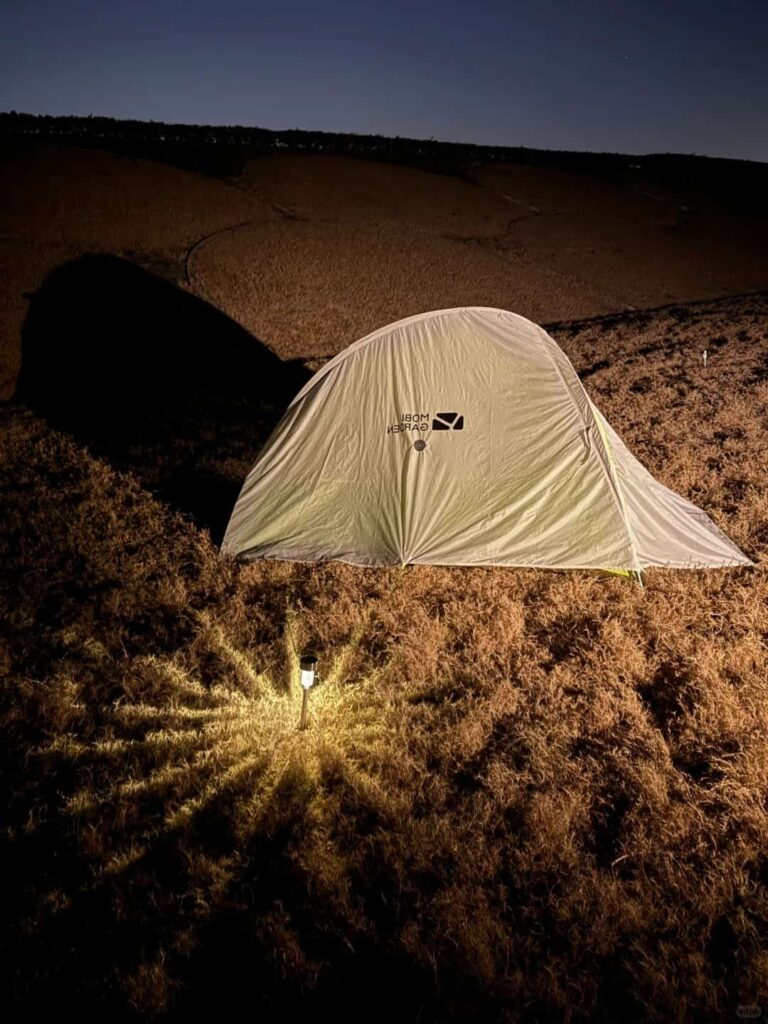
The solution is cheap and easy: create the illusion of a larger group. • Set up multiple chairs. I bring a few adult-sized camping chairs and even a couple of small kids’ chairs. • Set up multiple tents. You don’t need to fill them all. I have a cheap $30 pop-up tent that I throw up in 30 seconds. It sits there, empty, but from the outside, it looks like a family or group site.
A campsite that looks like it has multiple occupants is a much harder target. It introduces too much uncertainty for a would-be troublemaker. It’s a simple psychological trick that takes minutes to execute.
This might be the hardest tip for some people, especially those with a competitive or confrontational streak.
But when you’re camping, your ego is a liability you can’t afford.
You will inevitably run into someone without common sense. The neighbors who blast music at 2 AM. The guy who gets belligerent because you “took his spot.” The road-rager on the way to the campground.
Do not engage. Do not escalate. Swallow your pride, walk away, and let it go. Why? Because you have no idea who you’re dealing with. The guy blasting death metal might just be an obnoxious kid, or he might be an unhinged individual looking for an excuse to fight.
In today’s world, you just don’t know. It is never, ever worth the risk, especially when you have your family with you. My personal policy? I ignore insults, rude gestures, you name it. I just walk away. Inside, I think to myself, “That person is lucky I’m a calm, civilized human being.” De-escalation isn’t weakness; it’s strategic intelligence.
Tip 8 – Use a Fog Horn for Emergencies
Forget whistles. We’re going marine-grade. A small, handheld fog horn is one of the most effective and overlooked safety tools you can own.
This thing is absolutely deafening. I tested one in my garage once and nearly regretted it—my ears were ringing for an hour.
It’s a compact, visceral blast of sound that serves two purposes:
1. It will scare the living daylights out of any intruder, human or animal. That kind of unexpected, painful noise is a powerful psychological deterrent.
2. It will alert everyone in a half-mile radius that there is an emergency, potentially bringing help.
You can pick one up for $10-$20 at a place like Home Depot or any marine supply store. It requires no batteries, never runs out of charge, and is simple to use. It’s your audio-based panic button.
Light is one of the best deterrents for any kind of shady activity. Criminals and creepy-crawlies prefer the cover of darkness. So, take it away from them.
Solar-powered motion sensor lights are perfect for camping. They’re affordable, easy to use, and require no wiring.
How to Use: Just let them charge in the sun for about 8 hours during the day.
As it gets dark, place them strategically around your campsite—on your cooler, on the roof of your car, on a post.
When anything moves within range, they blast the area with light.
This serves two functions: First, it startles anyone who shouldn’t be there. Second, it illuminates the area for you, so you can see what’s going on.
I use these at my house, and they’re so bright I can see the kids from three houses down trying to sneak around during a game of Kick the Can.
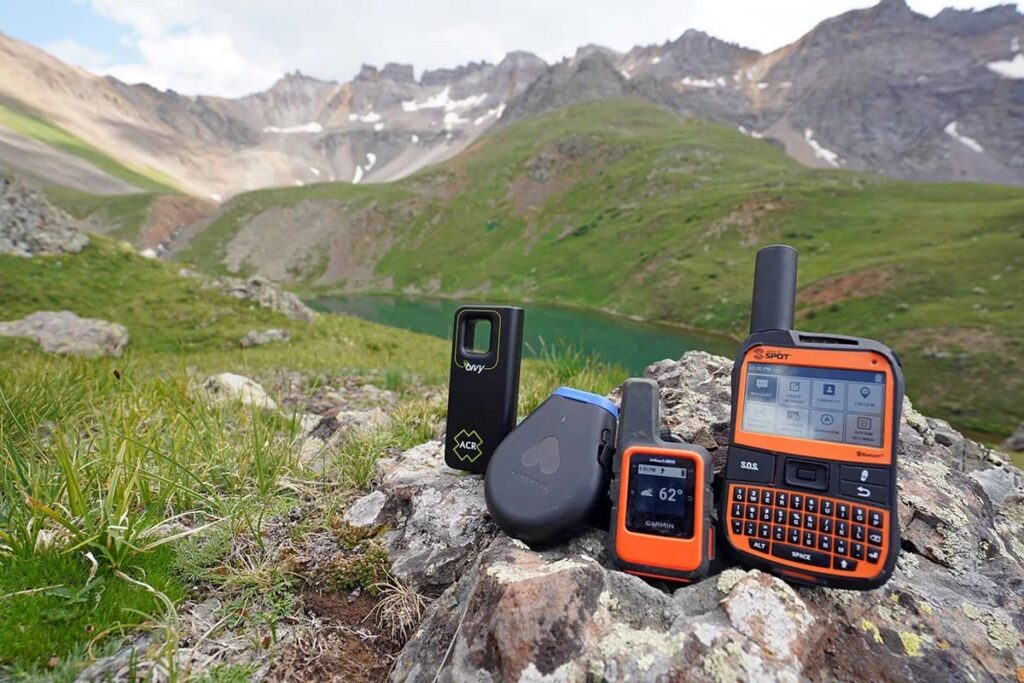
Your cell phone is useless in most of the truly beautiful, remote places. Relying on it is a recipe for disaster. You need a way to call for help or communicate with the outside world if something goes wrong.
I recommend two options:
1. The Satellite Phone: This is the gold standard. A sat phone works anywhere you have a clear view of the sky. They are incredibly simple to use: raise the antenna, dial “1” plus the area code and number , and press send. It’s a direct lifeline. Perfect for solo trips or extremely remote family adventures. (Just remember: they need to be outside, not under a thick canopy or in your tent.) 2. The Bivy Stick: This is a fantastic and more affordable alternative. It’s a small device that connects to your smartphone via Bluetooth and a dedicated app. It turns your normal phone into a satellite texting device. It’s not for voice calls, but for sending “I’m okay” messages or “We have an emergency, send help” texts, it’s brilliant. It’s especially great for partners who want to stay in touch when one is out of cell range.
Don’t venture beyond the signal bars without one of these. It’s non-negotiable.
Conclusion
Review this list before your next trip. Tweak it, add to it, make it your own.
The goal isn’t to be paranoid; it’s to be prepared.
When you’ve taken sensible steps to secure your environment, you can truly relax and enjoy the experience.
Even with seven kids running around the campfire, I still love camping.
It’s because I know I’ve done everything in my power to keep them, and myself, safe.
So get out there, be smart, be alert, and have a fantastic, murder-free time in the great outdoors