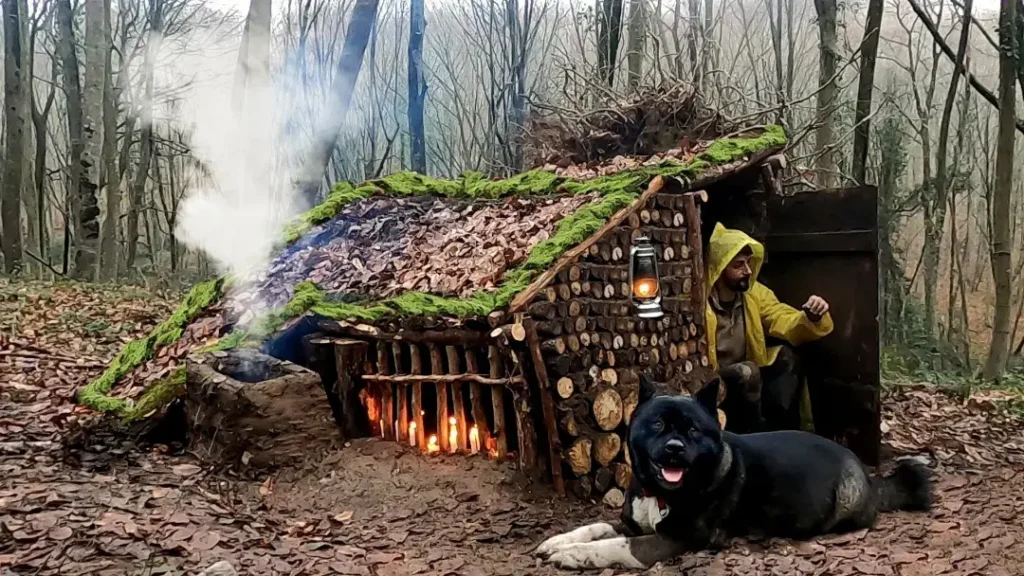
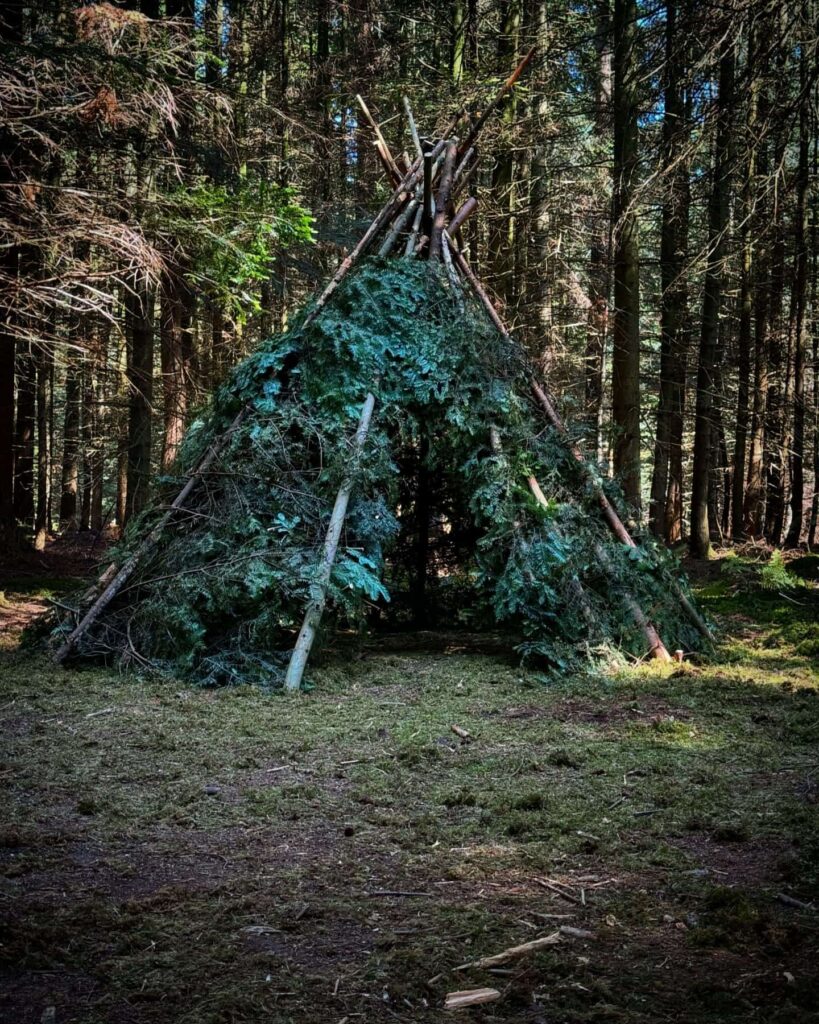
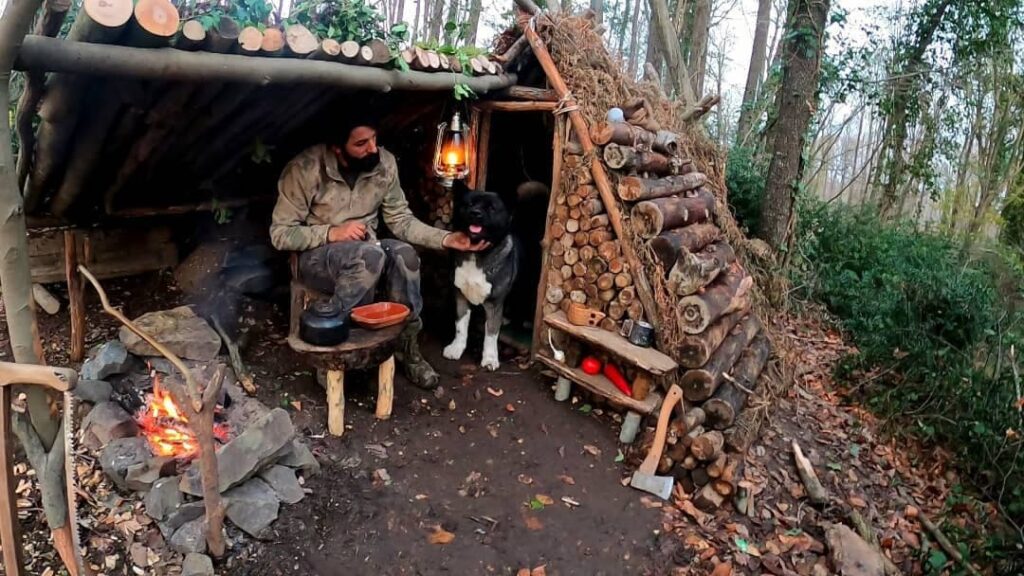
35 Survival Shelter Ideas for Campers, Hikers, and DIY Adventurers

Spread the love

Ever wondered how to turn the wild into a safe, snug hideout? Survival shelters are part practical skill, part confidence boost—and totally approachable.

From quick emergency setups to sturdy natural builds, the right shelter can mean comfort, safety, and peace of mind outdoors.

Whether prepping for adventures or learning bushcraft basics, these tips make shelter-building simple and empowering.

Ready to build smart, stay warm, and adventure responsibly?

Dive into survival shelter know-how anyone can master. 

Table of Contents

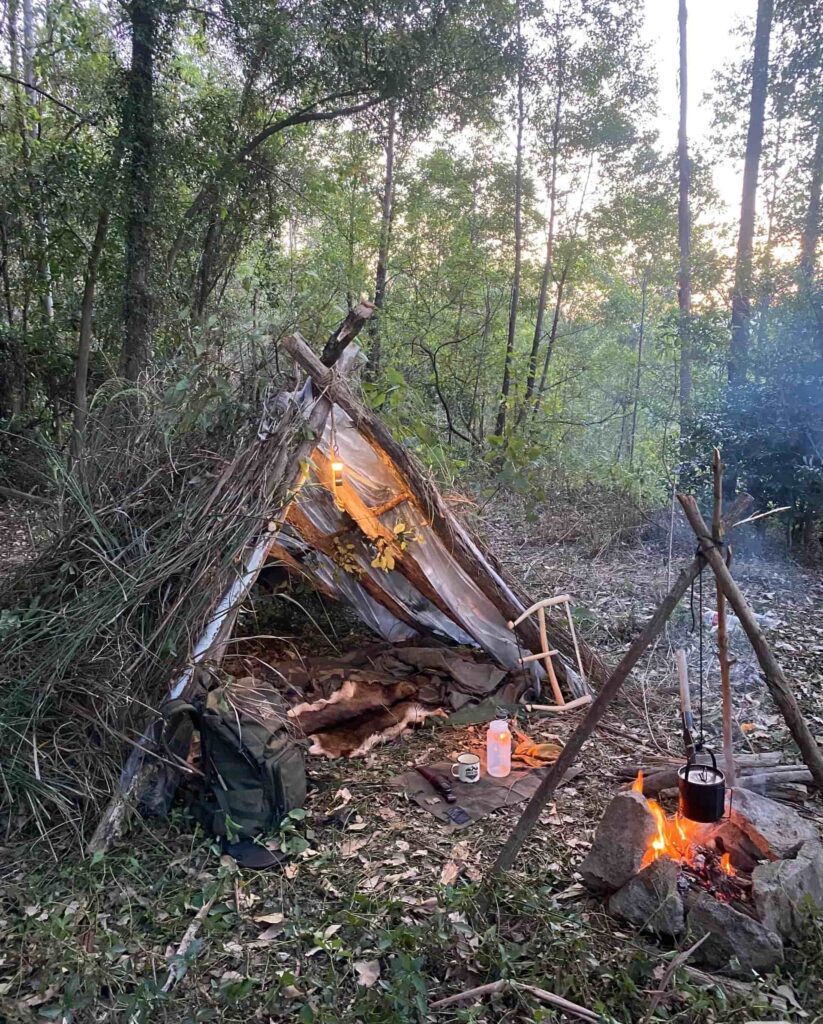
1.Lantern Glow Warms Forest Shelter

Dry grass fills the gaps between wooden poles. Clear plastic blocks the wind and holds heat close. A hanging lantern brightens the hide-covered floor.

Outside, flames crackle beneath a hanging pot. Boiling water and hot food come together fast. A green pack stays by the entrance for quick grabs. Cold air loses its bite behind those walls.

Hot drinks chase away the chill after a long hike. Settling in for the evening feels easy and safe here.

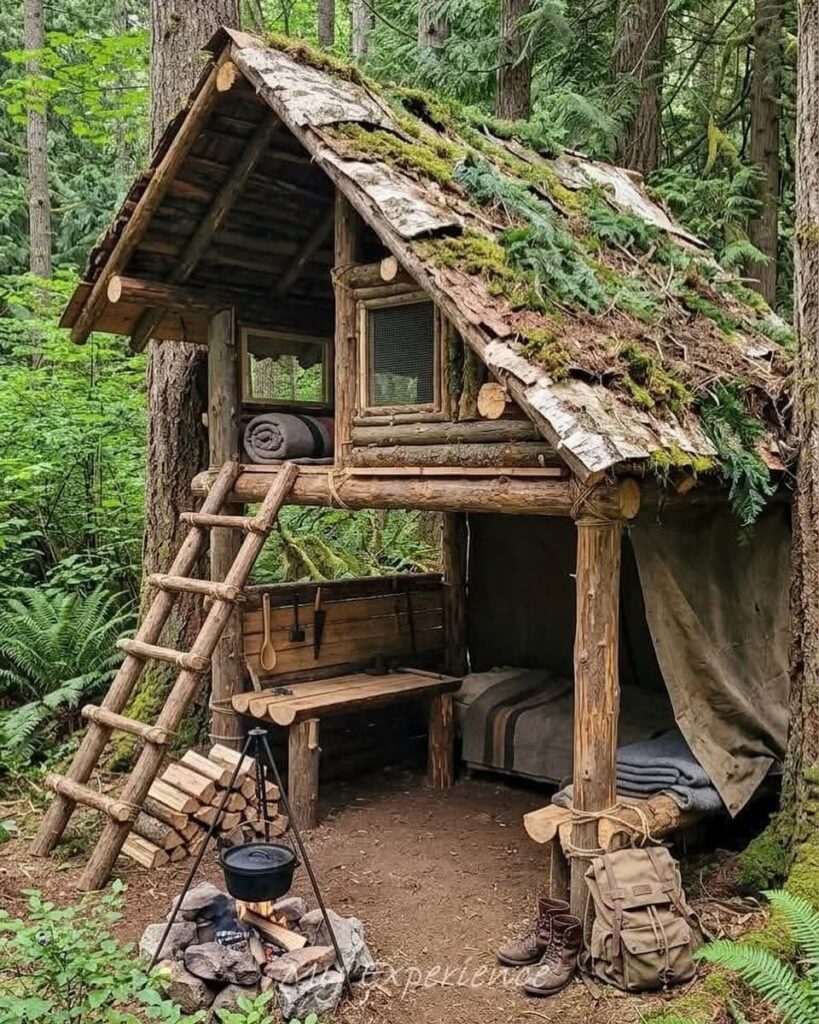
2.Two-Level Cabin Doubles Rest Space

An upper bunk keeps sleeping bags high and dry. Below, a long table holds tools for cooking. Cloth curtains carve out a private corner. A cast iron pot swings over open flames. Chopped wood and sturdy boots stay within arm’s reach.

Steam rises as dinner nears readiness. Two floors mean more room to spread out and rest. A roof of bark and moss seals out the weather. Warm food, dry gear, and a cozy bed all live under one frame.

3.Stove Warms Open-Air Sleeping Deck

Branches and dry leaves blanket the roof above. Twin lamps glow over a thick plaid bed. A small stove sends heat and smoke skyward. A kettle on top keeps water ready for tea. Firewood piles close for the coldest hours.

An axe rests nearby for splitting fresh logs. Warmth pours into every corner of the sleeping area. Chilly autumn air stays outside the shelter. Fallen timber feeds the fire all night long. A dry bed plus steady heat makes cold nights bearable.
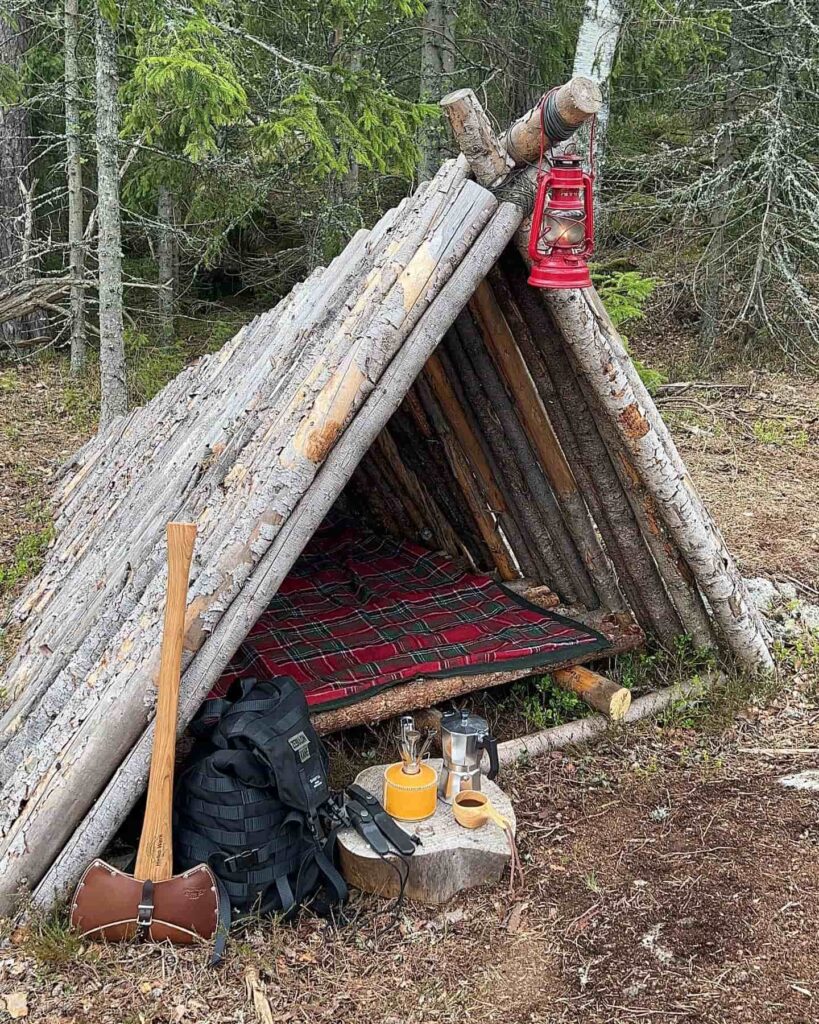
4.Coffee Brews Beside A-Frame Shelter

Smooth logs lock into a classic A-frame. A plaid blanket adds a warm place to sit. A red lantern glows for reading and chores. Fresh coffee steams from a small moka pot. A gas canister keeps the burner running fast.

Sharp tools sit ready on a stump. A black pack carries everything needed for the night. Comfort meets wilderness preparedness in one compact camp. A hot cup brightens a slow forest morning. Strong walls hold back wind and light rain.

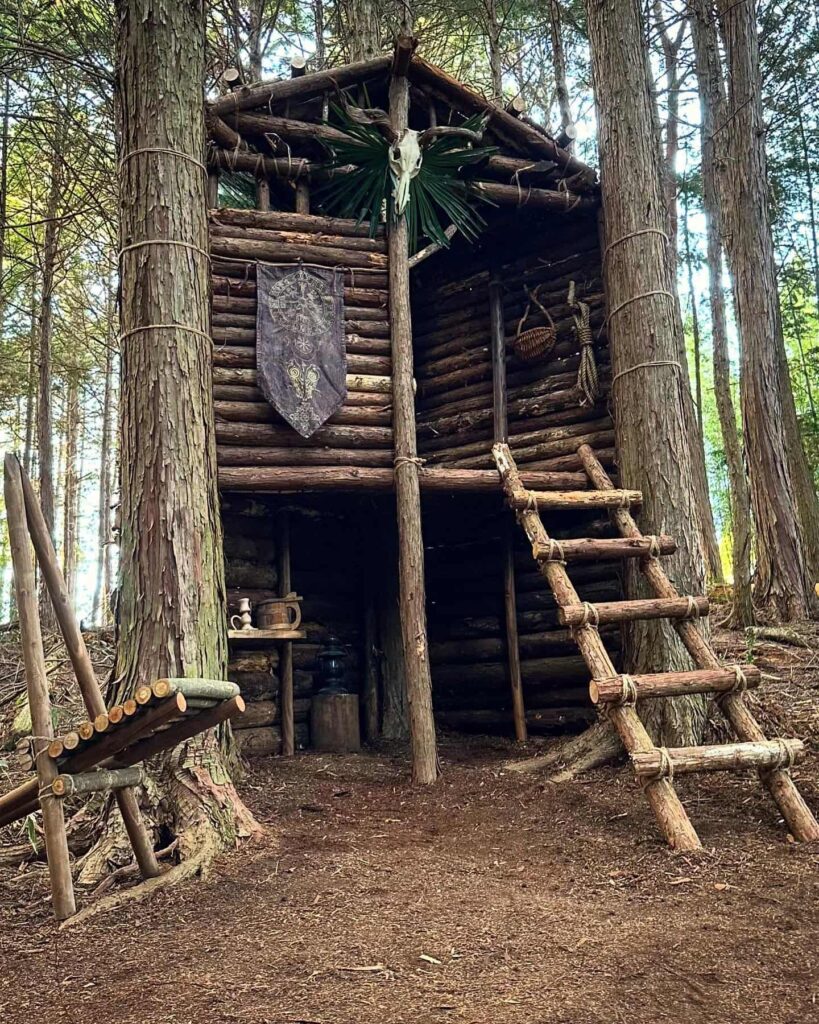
5.Elevated Shelter Stores Gear Safely

A sturdy trunk anchors the whole structure. Two levels split sleeping from storage. Woven baskets hold food and tools off the ground. A low table keeps lanterns and clay pots steady. Rope and rungs give easy climbs to the upper deck.

Supplies stay clean and dry up there. Rain slides down the roof instead of pooling inside. Every raised shelf adds another dry spot. Lantern light keeps the lower room usable after dark.

A sturdy cabin turns rough woodland into dependable lodging.

6.Fire Pit Heats Leafy Lean-To

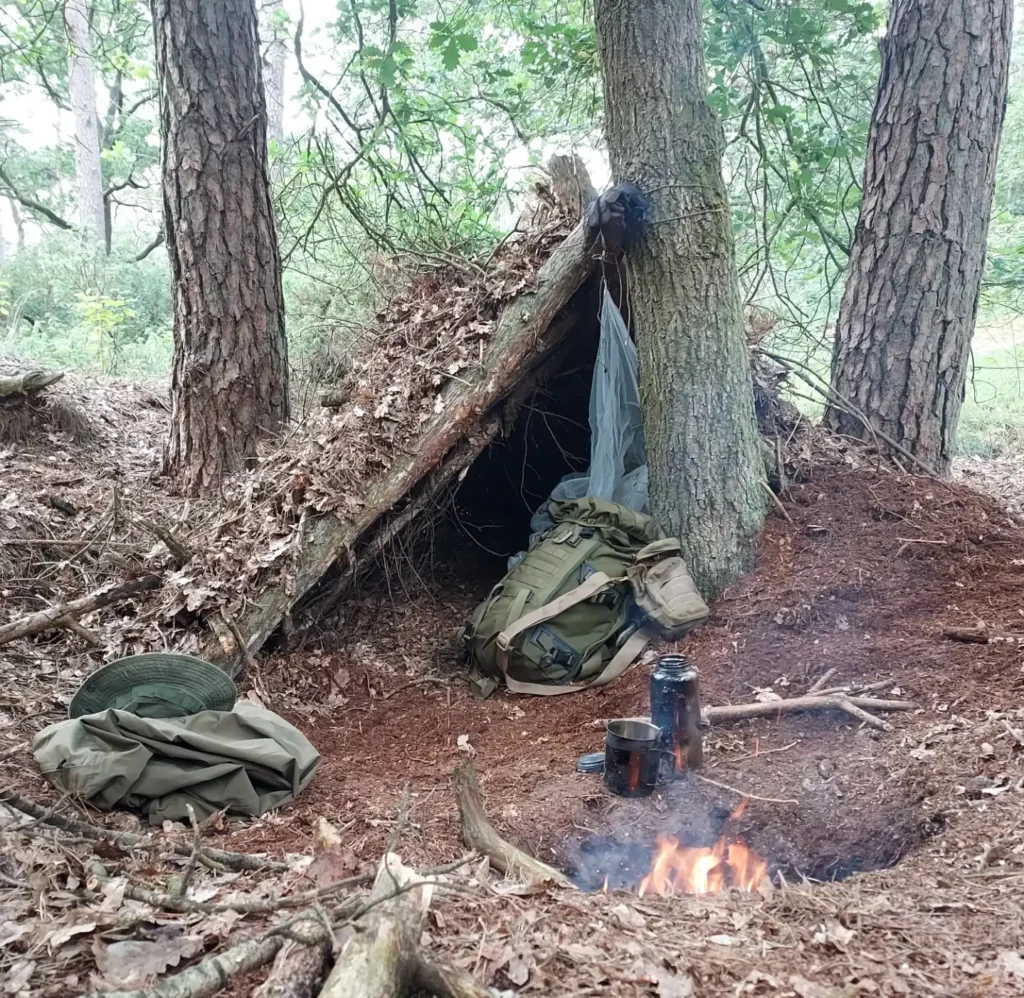
Between thick trunks sits a snug wall of branches. Clear sheeting sheds rain and traps warmth. A crackling fire sits close for cooking and heat. A metal cup and thermos hold hot drinks. A hat and folded clothes wait neatly beside the pack.

Piles of pine needles cushion the ground. Meals cook right where the sleeping spot begins. Everything for a night outdoors stays within reach.

Warmth from the flames cuts through the forest chill. A tidy camp speeds up both cooking and rest.

7.Moss Roof Seals Out Rain

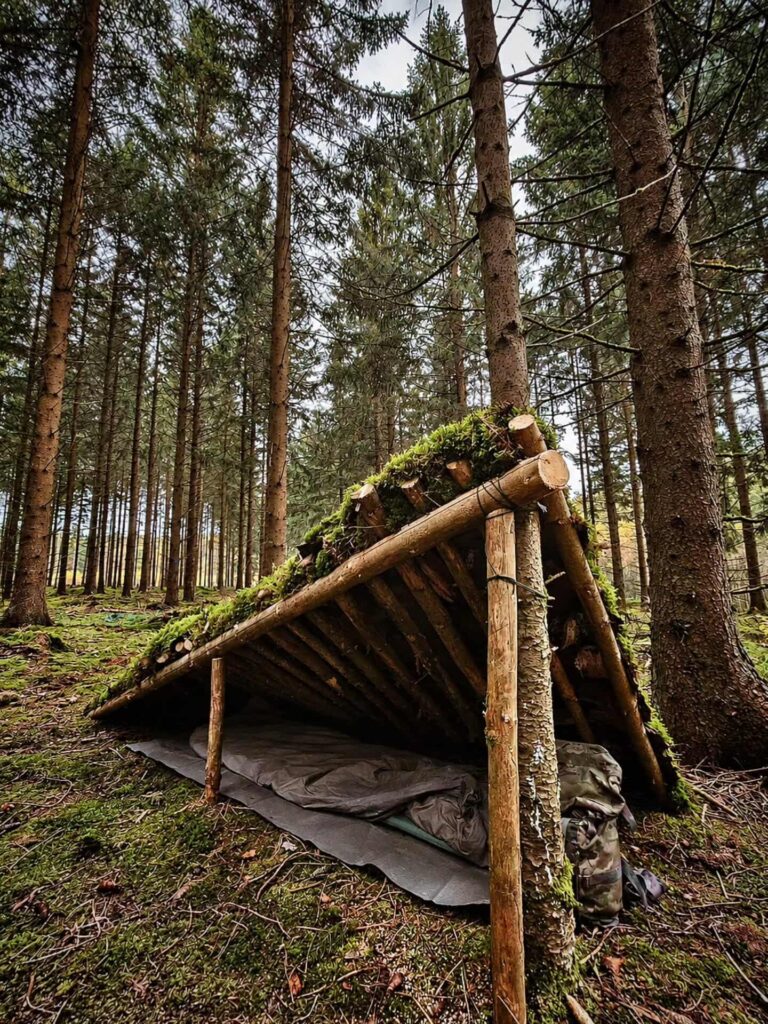
Held fast by rope-bound logs, the triangular frame stays upright. A thick moss layer shuts out wind and water. Inside, a black mat lifts sleep off the ground. A gray bag adds cozy cover through the night. A camo pack rests outside, ready for the next move.

Tall pines shelter the camp from rough weather. Dry bedding means quicker, deeper rest. A tight roof turns a patch of forest into a safe sleeping room. Waking up dry changes the whole trip.

8.Brush Shelter Guards Against Cold

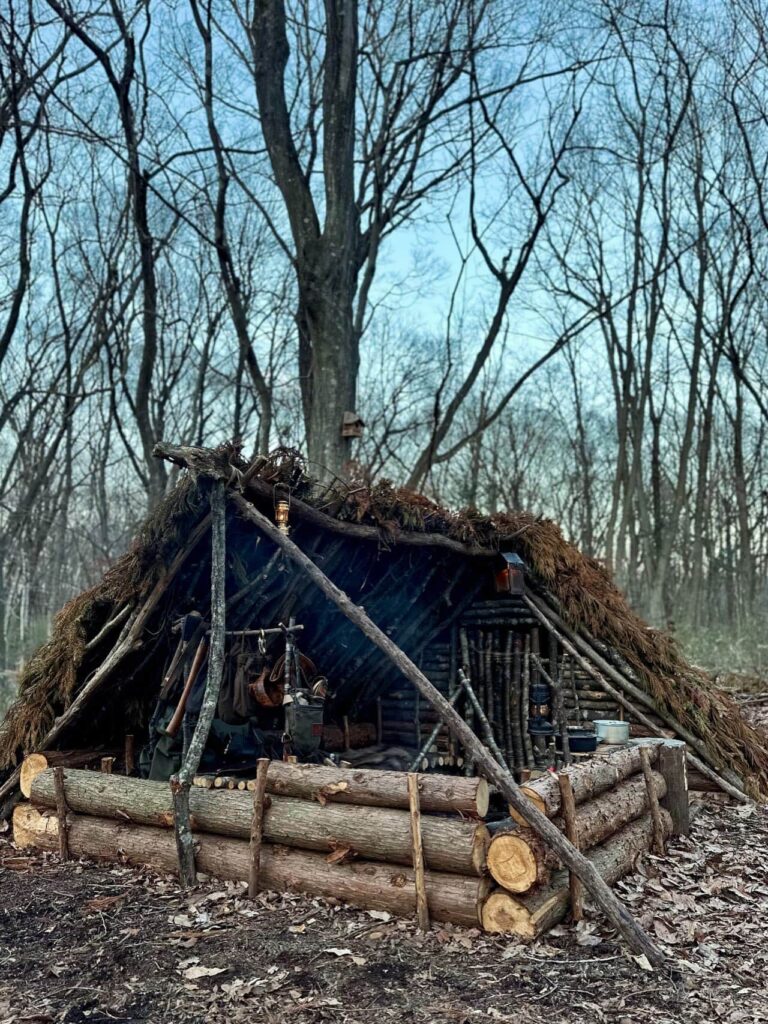
Walls and a mossy cap rise from sturdy branches. A hanging lantern lights the inner workspace. Cookware and supplies line the floor within reach.

Tools stay organized for evening tasks. The low frame breaks strong winds and sheds rain. Dead leaves muffle footsteps and pad the ground. A sheltered nook keeps heat from escaping after sunset.

Building low means less fuel spent on warmth. A compact den delivers warmth without wasting wood. Rest comes faster once the camp settles.

9.Branch Shelter Braces Cold Winds

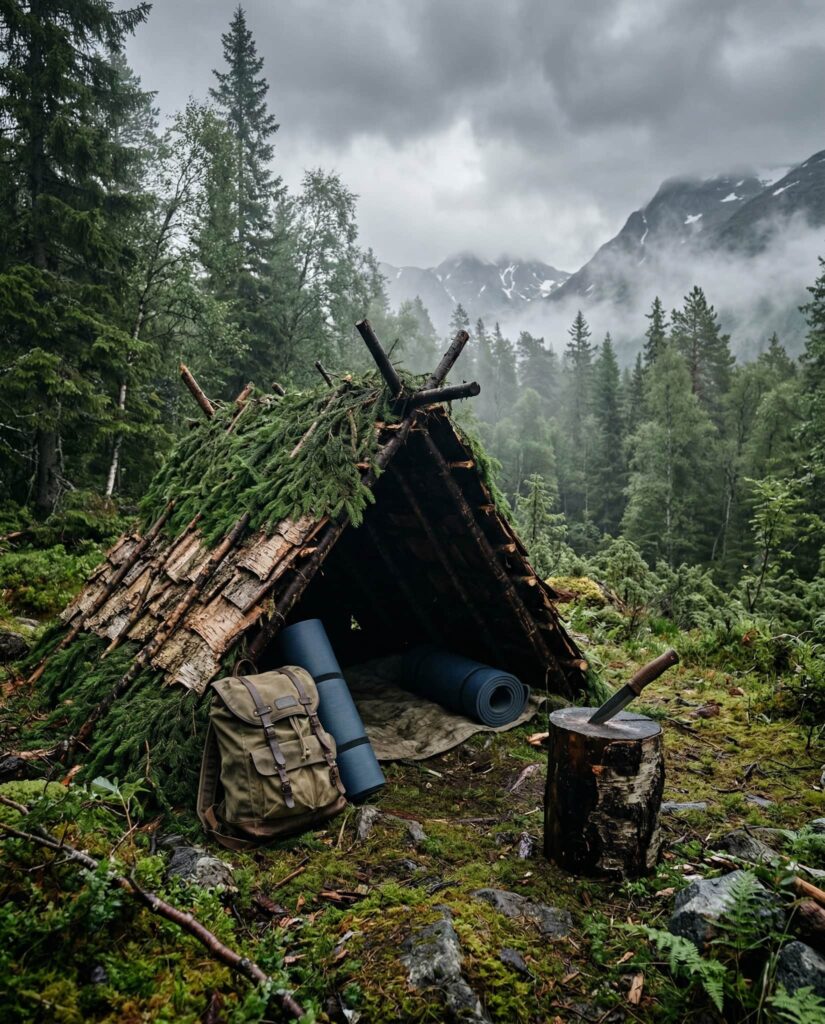
Rough pine branches lean together for a quick weather shield. Thick bark keeps rain from soaking the sleeping spot. A rolled blue mat waits beside a sturdy canvas pack. Firewood stands ready near the stump.

Far snow peaks promise cooler nights ahead. Getting warm inside takes only a few sticks and some dry moss.

Tucking gear close keeps everything within reach. A good lean-to means rest, dry clothes, and a safer night far from the trail.

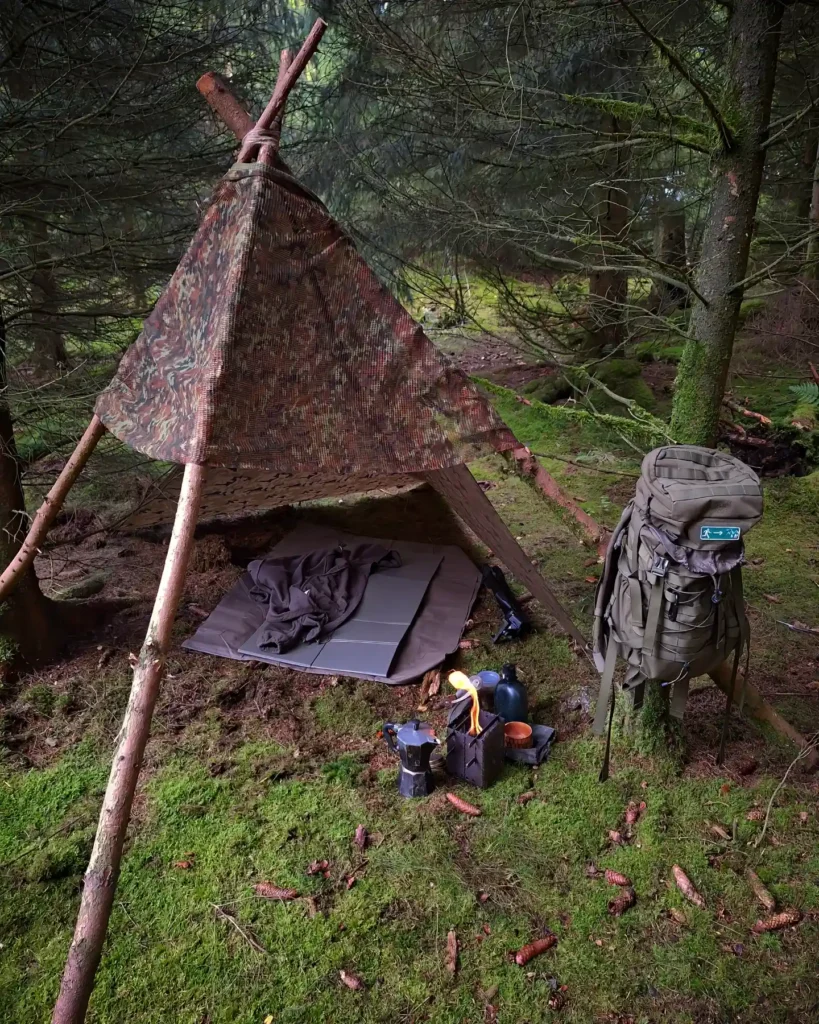
10.Camo Shelter Hides Coffee Camp

Logs and camouflage netting build a low profile in the trees. A folded mat keeps seating off the damp moss. A small burner holds a steady flame for hot coffee. A moka pot and ceramic bowl wait close by. A dark bottle keeps drinking water at hand.

Green pine needles cushion the ground underfoot. A tactical pack hangs ready on the trunk. Warm drinks and warm food make a long forest day feel short. Everything a hiker needs sits within arm’s reach.

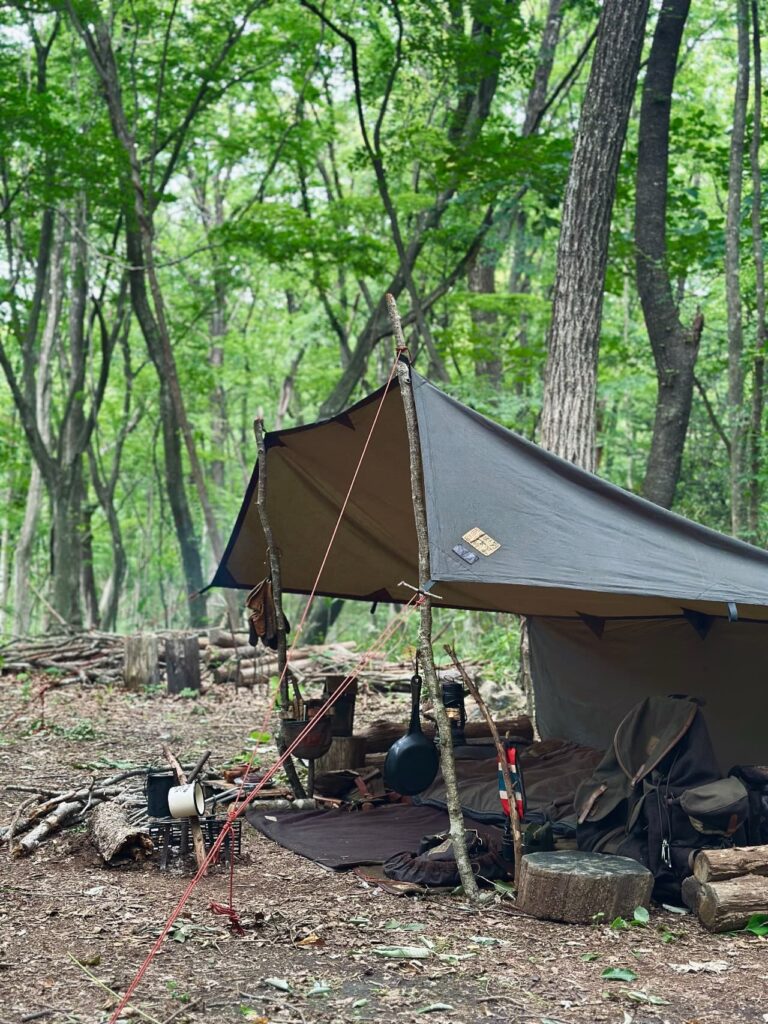
11.Tarp Canopy Gives Dry Cooking

A dark tarp hangs tight on red ropes above the camp. Support branches hold the roof steady against gusts. Below, a frying pan and metal cup sit ready. A camping lamp waits to light the evening. A backpack and stump seat keep the rest area tidy.

Rain slides off instead of soaking the gear. Cooking stays possible even in a sudden shower. A covered corner means dry tools and faster meals. A roof overhead changes how a rainy afternoon plays out.

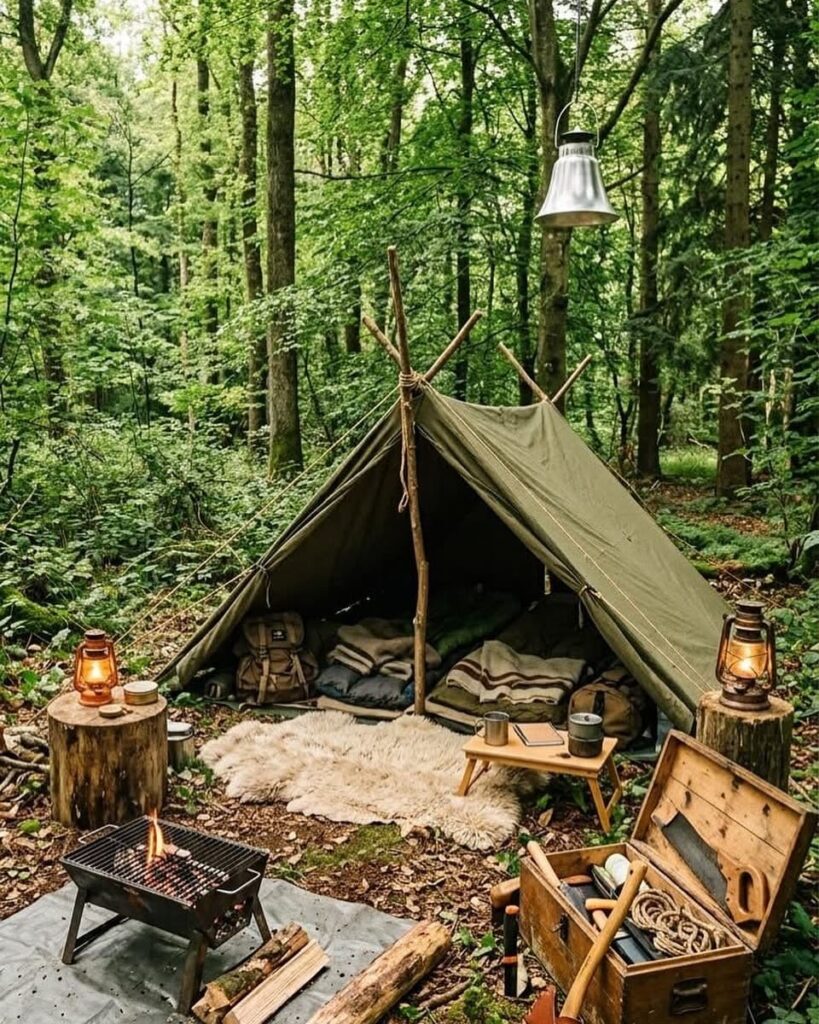
12.Warm Tent Invites Cozy Camping

An olive tent stands tall on wooden supports. Blankets and a backpack fill the sheltered interior. Two lanterns glow from nearby stumps at dusk. A side table keeps cups and a notebook handy. Flames rise from a compact grill for dinner.

Firewood stacks close for a long, warm night. A toolbox holds saws and ropes for quick repairs. Everything needed for comfort packs into one clearing. A campfire meal tastes better under lantern light. Rain and wind stay on the far side of the canvas.

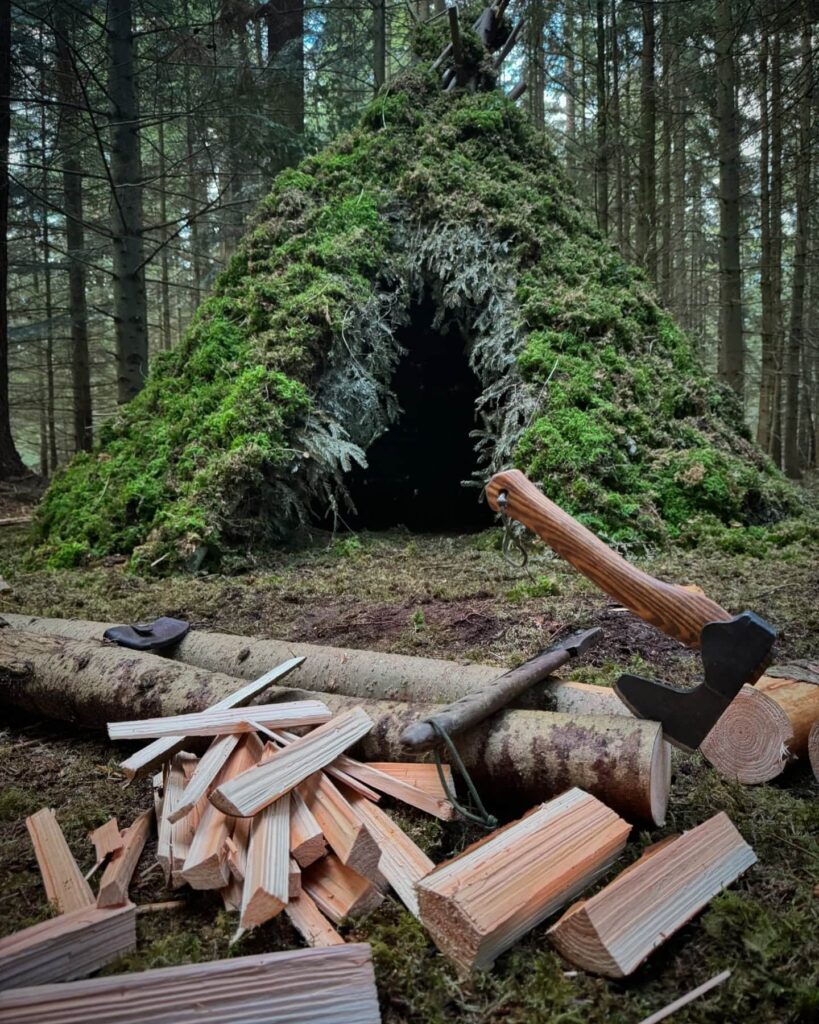
13.Moss Cone Shelter Guards Firewood

Branches, moss, and pine needles form a tall cone. A dark arch doorway leads into the sleeping hollow. Split logs pile beside a heavy wooden-handled axe. A digging tool leans ready for evening chores.

Dry fuel stays within reach of the entrance. The thick wall traps body heat after sundown. Cold wind curls around the curved frame instead of striking it. A well-built shell turns bare ground into dependable shelter.

Chopped wood and a warm bed cover a whole night.

14.Chimney Smoke Marks Warm Tent

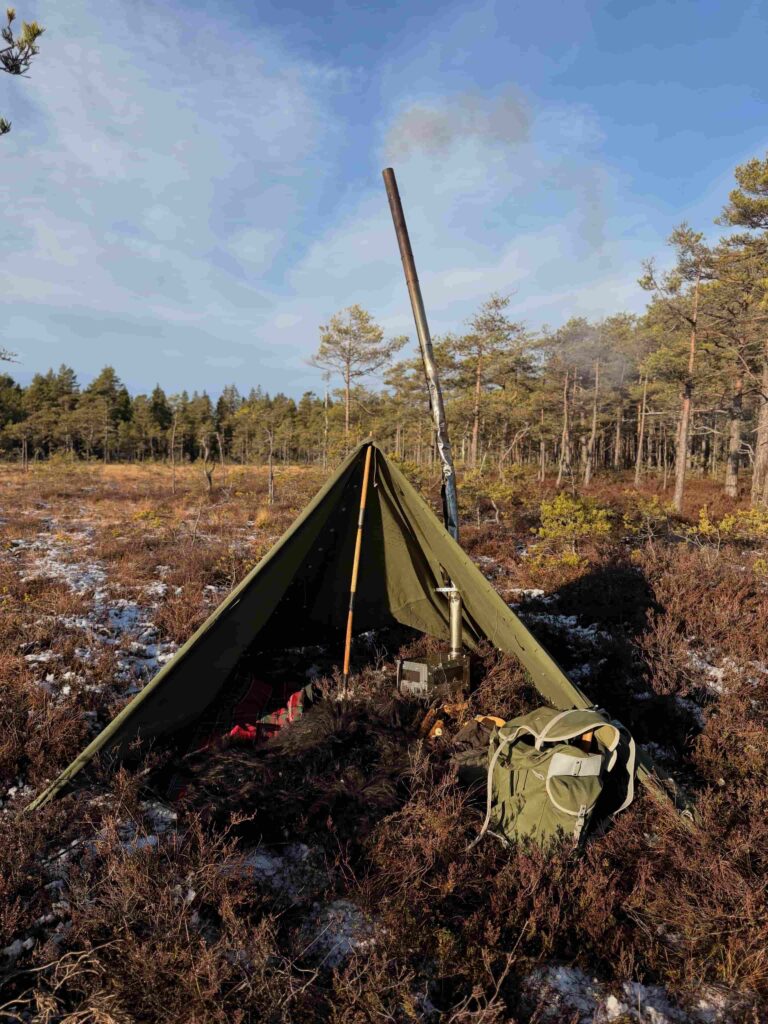
From a metal pipe, white smoke curls above the olive tent. A stove burns inside, heating the whole space. Dark hide and plaid cloth pad the frozen ground. A backpack rests near the entrance for quick access.

Patches of snow still cling to the clearing. The tent roof keeps frost off the bedding. Hot air fills the shelter long before nightfall. Sleeping warm becomes possible even on icy soil. A heated tent turns a frozen campsite into a refuge.

15.Moss Arch Shelter Welcomes Rest

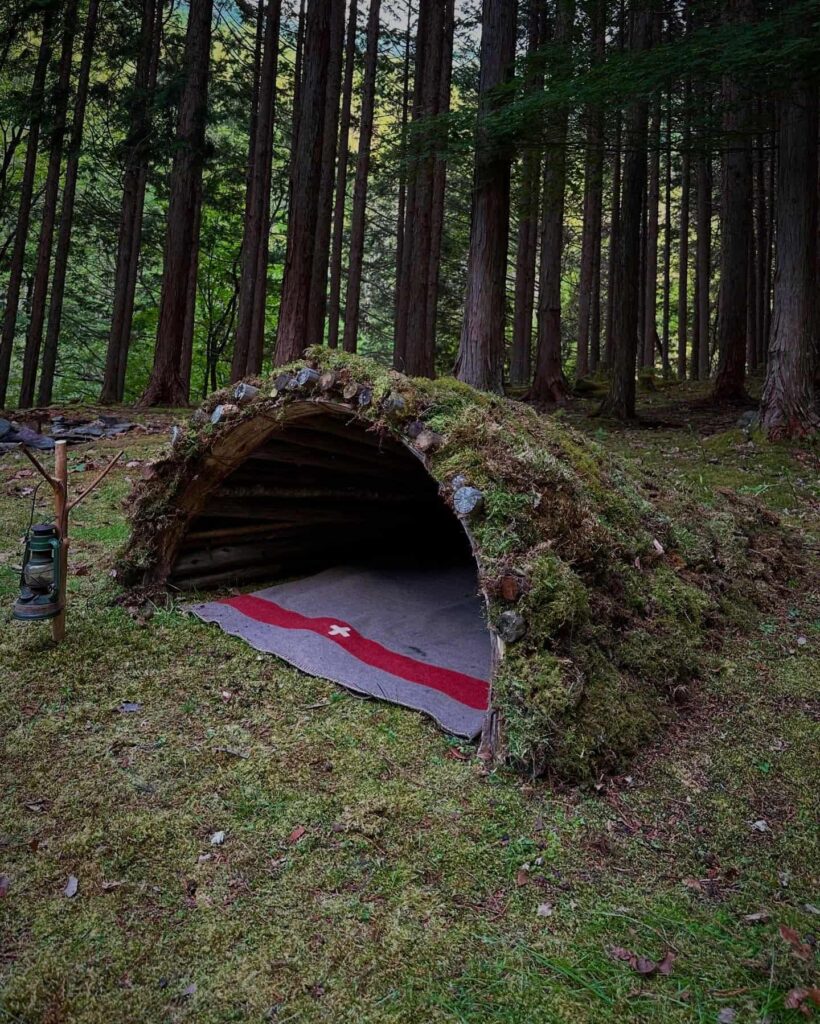
Curved logs form an arch draped in thick moss. A striped mat pads the entrance for dry entry. A lantern hangs from a wooden stand nearby. Its glow reaches deep into the sleeping hollow. Moss seals the frame against wind and light rain.

A low doorway keeps warm air from leaking out. Ferns and green moss cushion the surrounding floor. A hidden den offers privacy and quiet at the end of a long day.

Rest arrives faster once the body warms up.

16.Tarp Camp Feeds Hungry Hikers

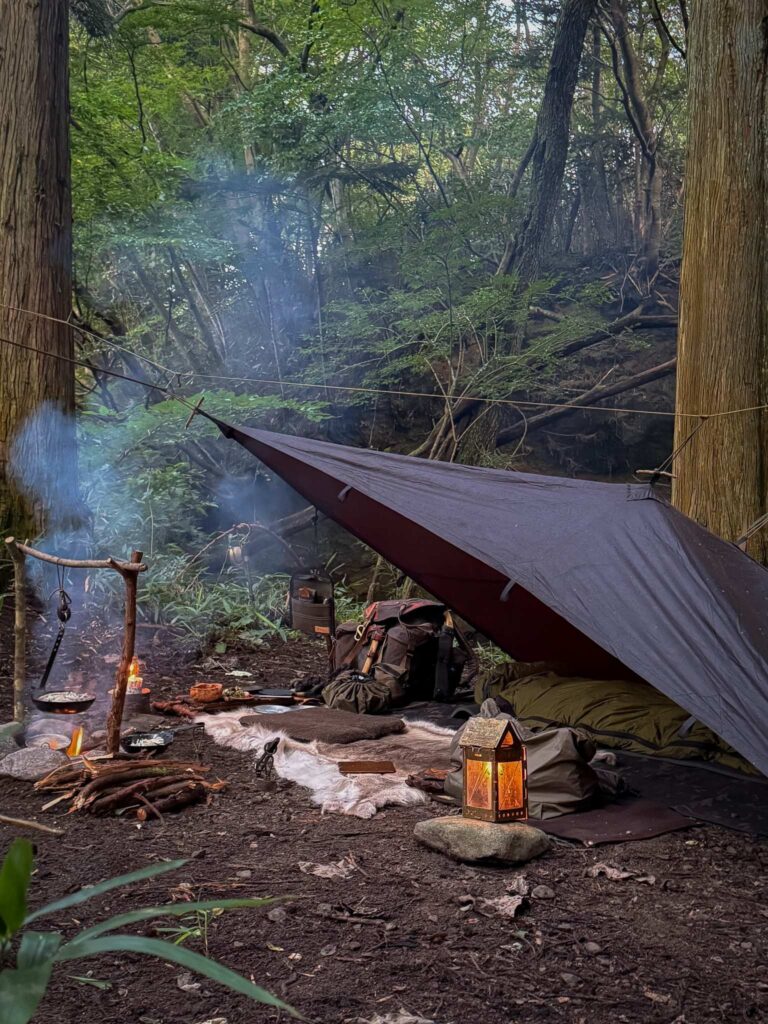
Between two trunks, a dark waterproof tarp stretches tight. A plush mat lifts the sleep area off the dirt. A sleeping bag and backpack sit ready for the night. Flames crackle beneath a hanging cook pot. Smoke drifts up through the green canopy.

Pots, pans, and fresh food wait beside the fire. Hot meals come together without leaving camp. One covered spot handles cooking, eating, and rest.

Dinner, dry bedding, and shelter all share a single roof.

17.Waterproof Cloth Blocks Autumn Chill

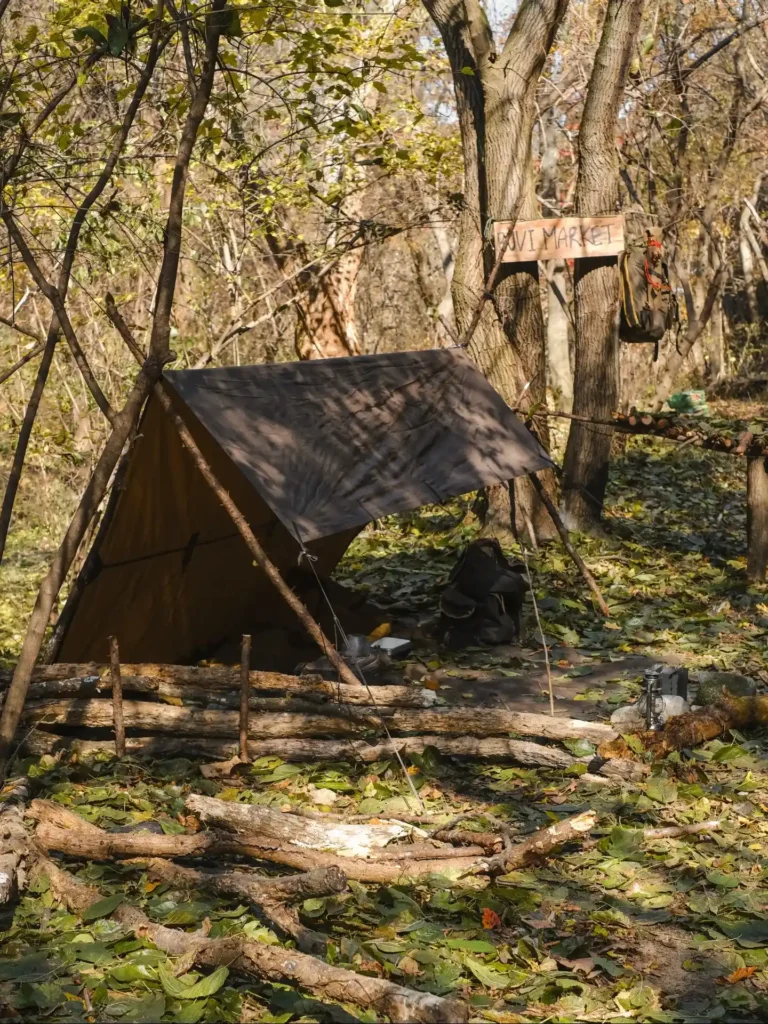
A low shelter rises from branches and dark waterproof cloth. Dead leaves blanket the ground in gold and brown. A lantern stands ready for the early dark. Metal cookware and a backpack stay close at hand. A wooden sign hangs between two trunks overhead.

The sloped cloth sheds rain and holds warmth. Gear stays dry through wet afternoons. A tight cover means a quieter, safer sleep.

Cold autumn air loses its edge behind the canvas. Every dry inch counts when temperatures drop at dusk.

18.Camo Tarp Shelters Stone Stove

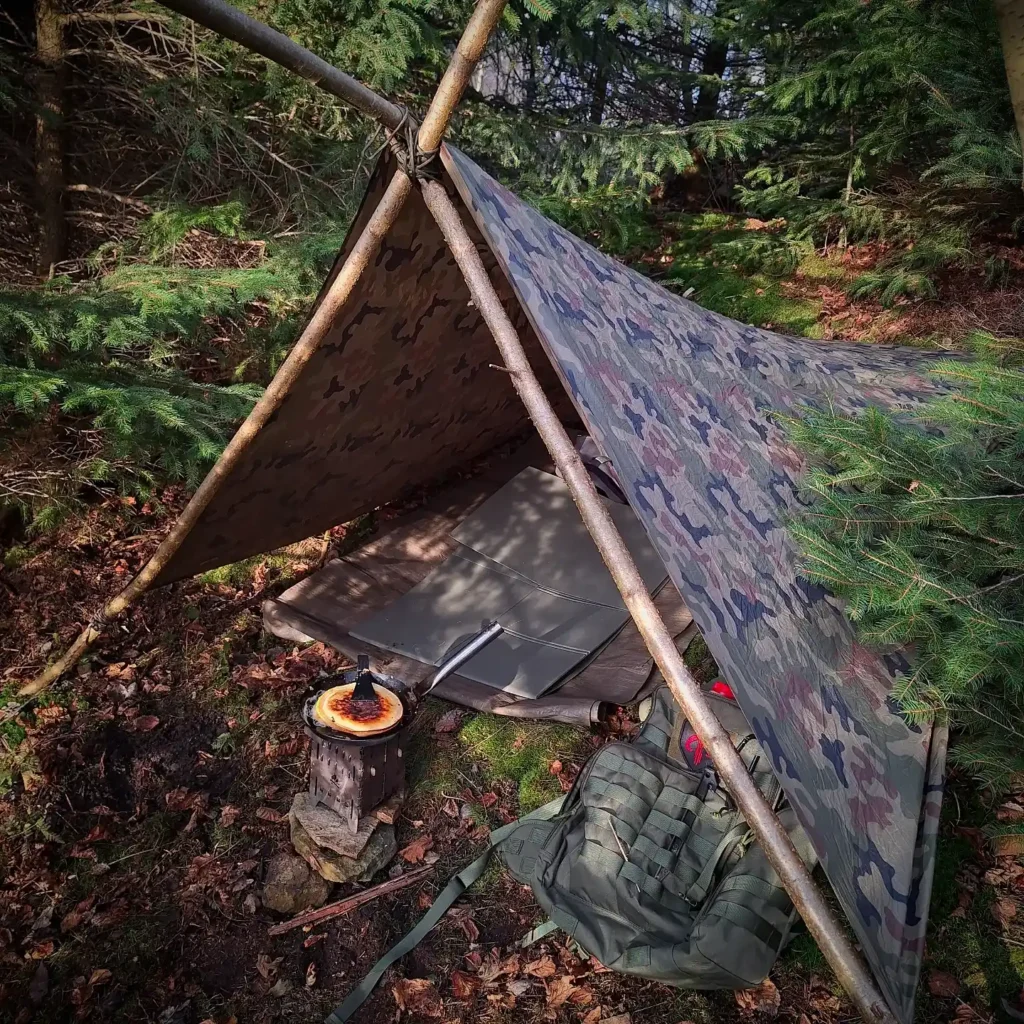
Bound into a firm triangle, three logs hold up the frame. Camo cloth drapes over to keep rain out. A gray mat inside lifts sleep above the moss. A metal stove sits on stones with food cooking.

Cookware waits nearby for quick use. A tactical pack rests outside the low entrance. Warm air gathers under the sloped roof. Meals, heat, and dry bedding share one compact camp. Cooking close to the bed cuts down on wasted fuel.

Warmth reaches the sleeping spot within minutes.

19.Snow-Capped Shelter Blocks Winter Wind

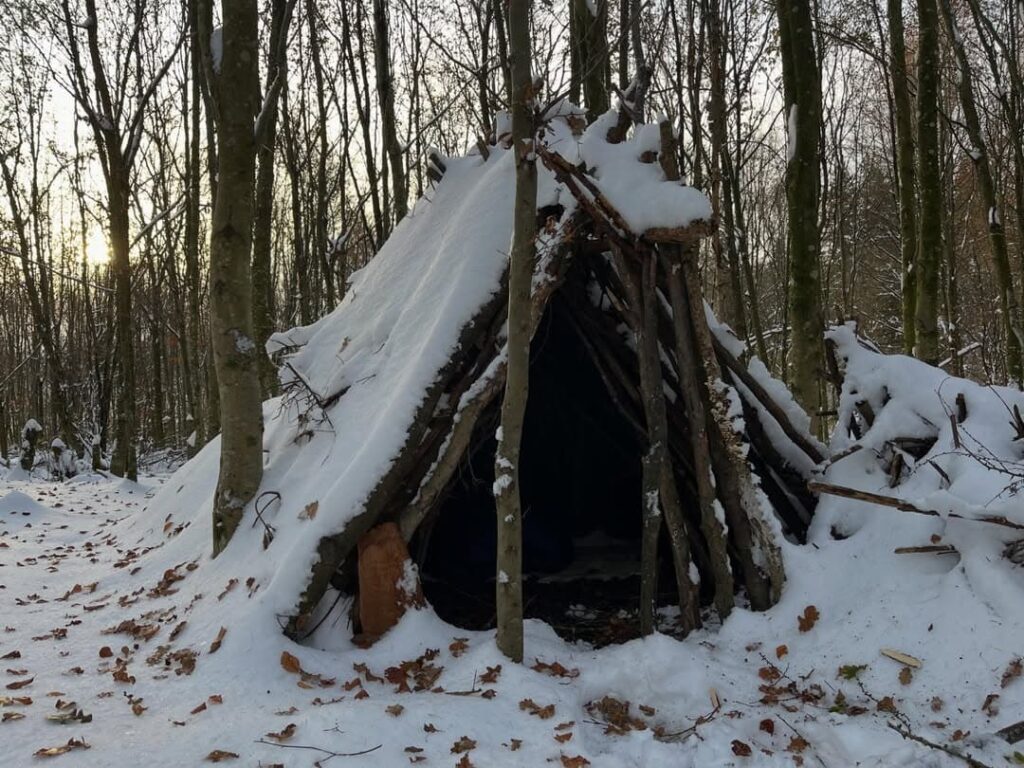
Packed snow seals every gap along the branch frame. A dark doorway opens into a still, warm interior. Bare trunks stand guard all around the camp. Sunlight filters through to melt the cold away.

Dry leaves underfoot break the frozen surface. Stored heat lingers inside once the entrance closes. A sturdy shell turns harsh weather into a calm resting spot. Nights drop below freezing, yet the snow walls keep the chill at bay.

A frozen forest becomes a livable bedroom.

20.Stone Base Shelter Beats Snow

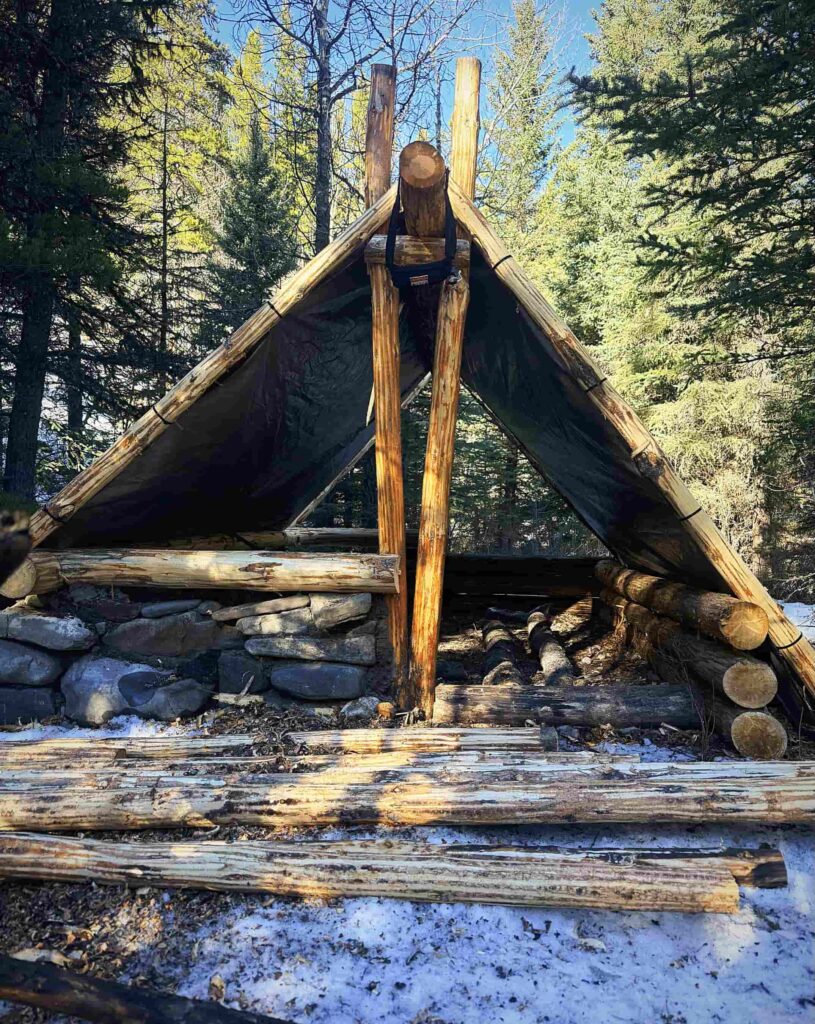
Black waterproof cloth wraps a log triangle frame. A stone base lifts the whole structure off frozen soil. Straps hold the top beam firm in place. Snow lies thin across the clearing below.

The dark cover soaks up daytime warmth. Inside stays drier than the surrounding woods. Wind slides over the sloped cloth instead of pushing through.

A raised floor keeps bedding from touching the cold. Building upward turns a snowy patch into a livable camp. Cold nights feel milder behind that cover.

21.Lantern Tent Warms Forest Night

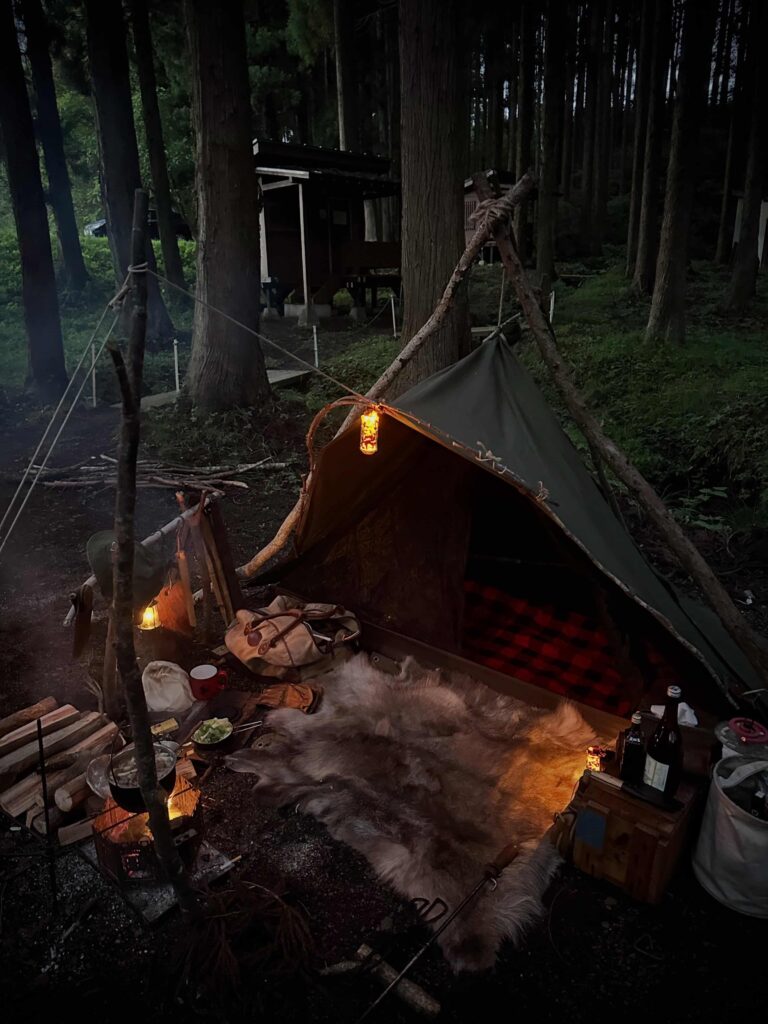
An olive tent glows against the dark fir trunks. Red plaid lines the floor for extra warmth. A fur carpet pads the entryway underfoot. Flames rise from a fire pit with a hanging pot. Wood stacks close for hours of steady heat.

A red mug and fresh vegetables sit ready. Warm lantern light fills every corner of camp. Dinner cooks as the evening turns cool.

A cozy interior keeps the chill and damp away. Hot food and warm bedding close out a long day.

22.Earthen Bunker Guards Against Weather

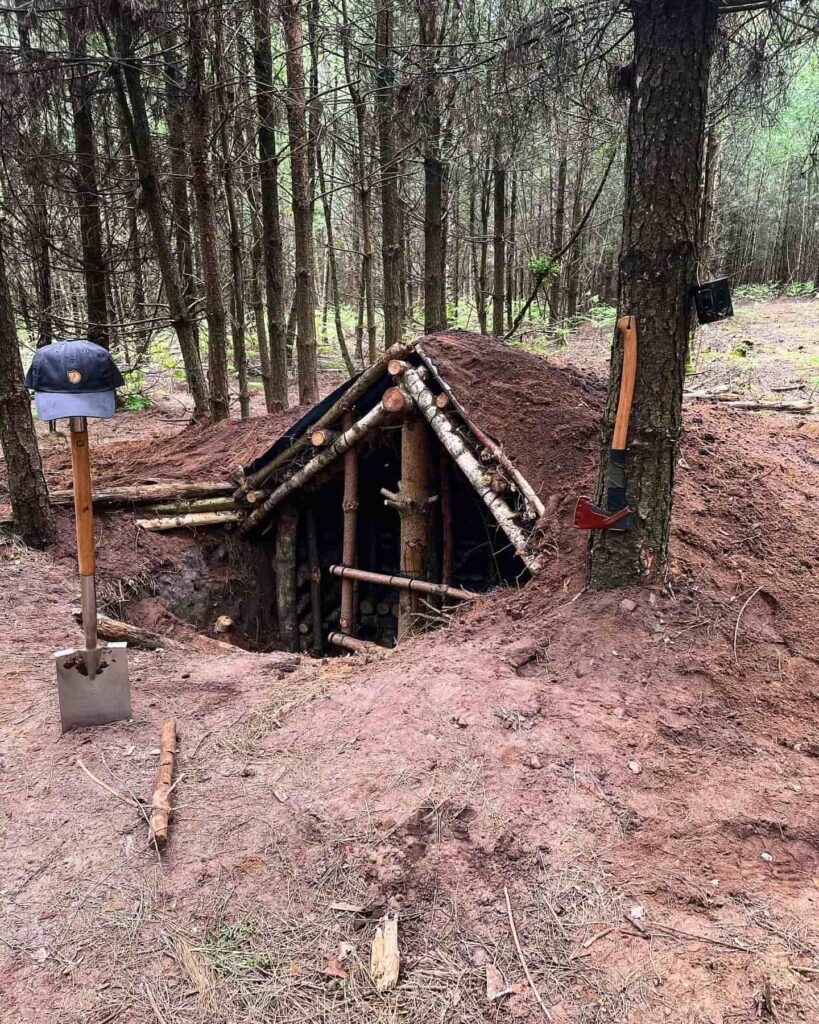
Logs and packed soil form a low bunker cut into the slope. An open entrance keeps the inside reachable. Soil on the roof traps steady warmth. A shovel leans ready with a hat on top. An axe hangs with a red leather sheath nearby.

Red earth and wood chips cover the ground. The buried frame shrugs off wind and rain. Staying low keeps heat close and fuel use small. A dirt roof turns rough hillside into dependable cover.

23.Smoke Rises From Log Camp

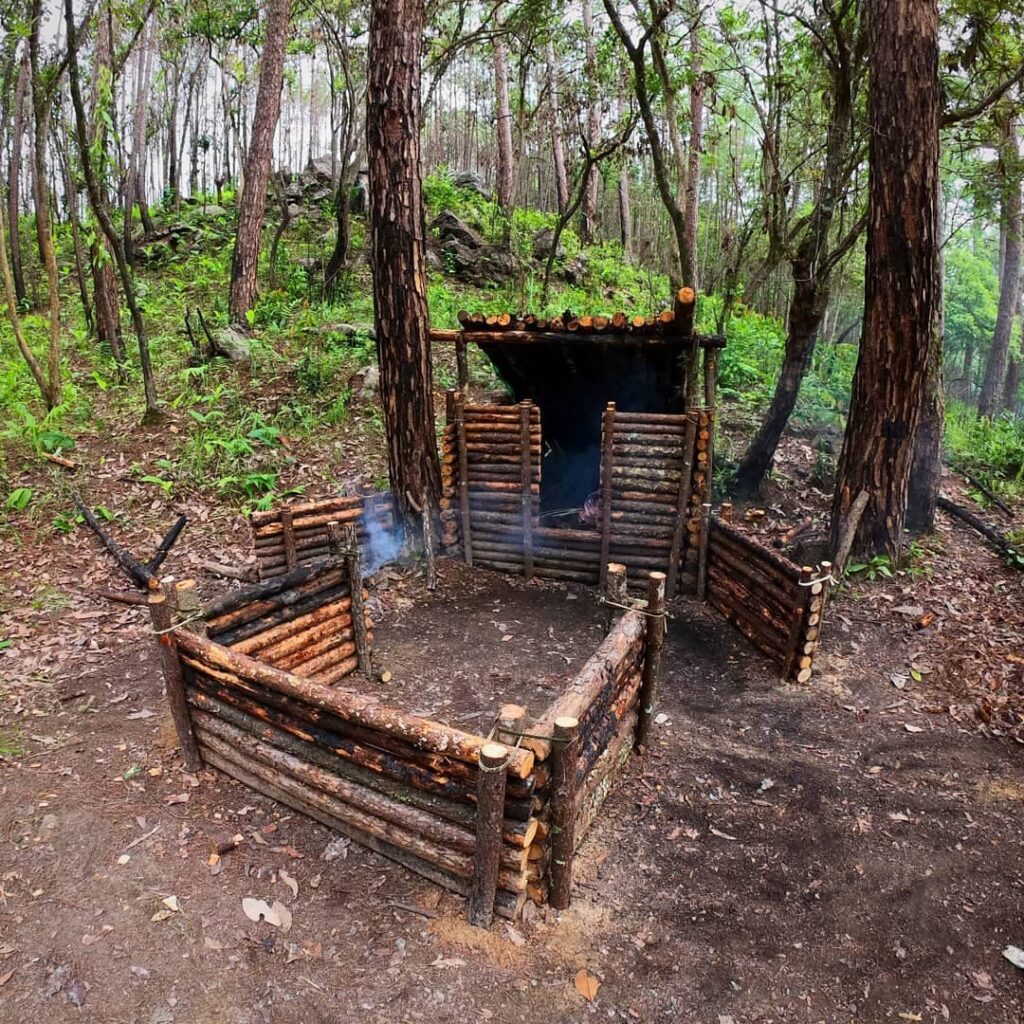
A fenced camp rises from stacked logs and timber. Smoke drifts up from the sheltered fire area. A wall of timber blocks wind at the edge. Dirt and leaves cover the open ground inside. The shed keeps tools and bedding dry.

Fuel stacks close to the burning pit. Fencing holds back drifting snow and cold drafts. One enclosed spot handles cooking, storage, and rest. Warmth stays inside the ring instead of scattering. Extra room opens up all season long.

24.Fire Warms Snow Cone Shelter

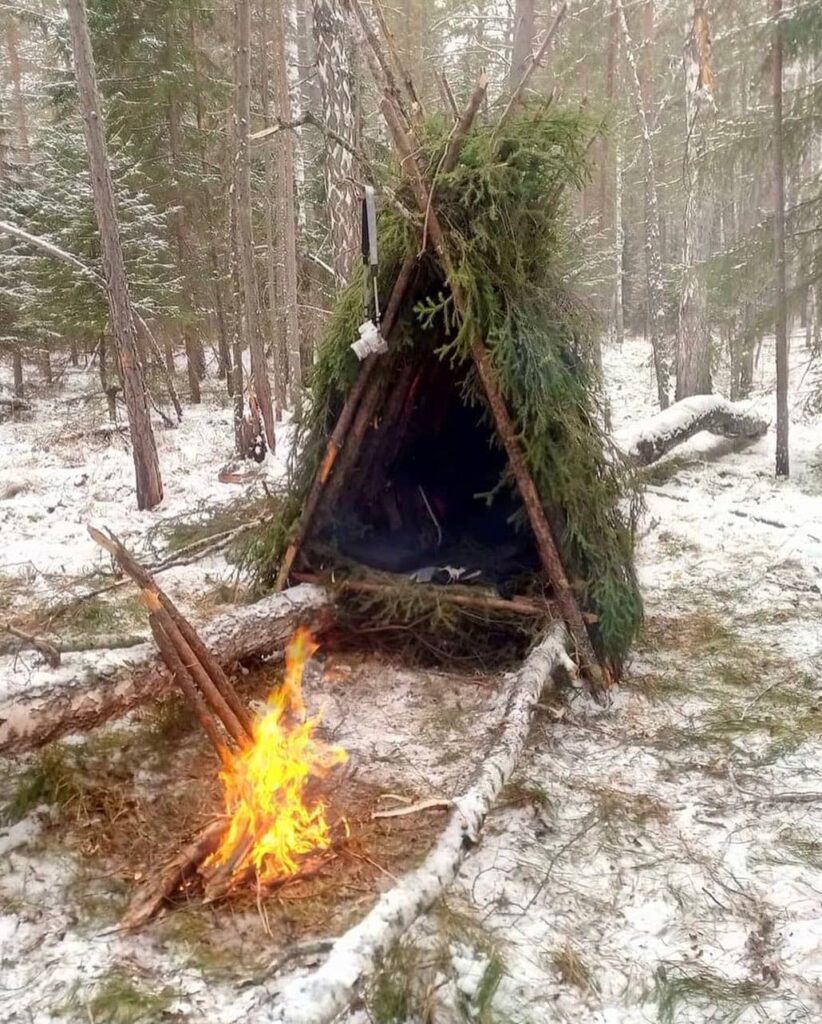
Spruce branches coat a cone-shaped frame in deep snow. A bright fire burns just outside the entrance. Stacked logs feed the flames through the cold. White objects hang near the doorway for quick use.

Bare birch trunks ring the frozen clearing. The thick branch walls trap rising heat. Smoke curls upward past frosty limbs. Warmth reaches the sleeping hollow even on icy days.

Snow outside only makes the shelter feel safer. Fire and shelter together turn a frozen forest livable.

25.Log Shelter Shares Fire Warmth

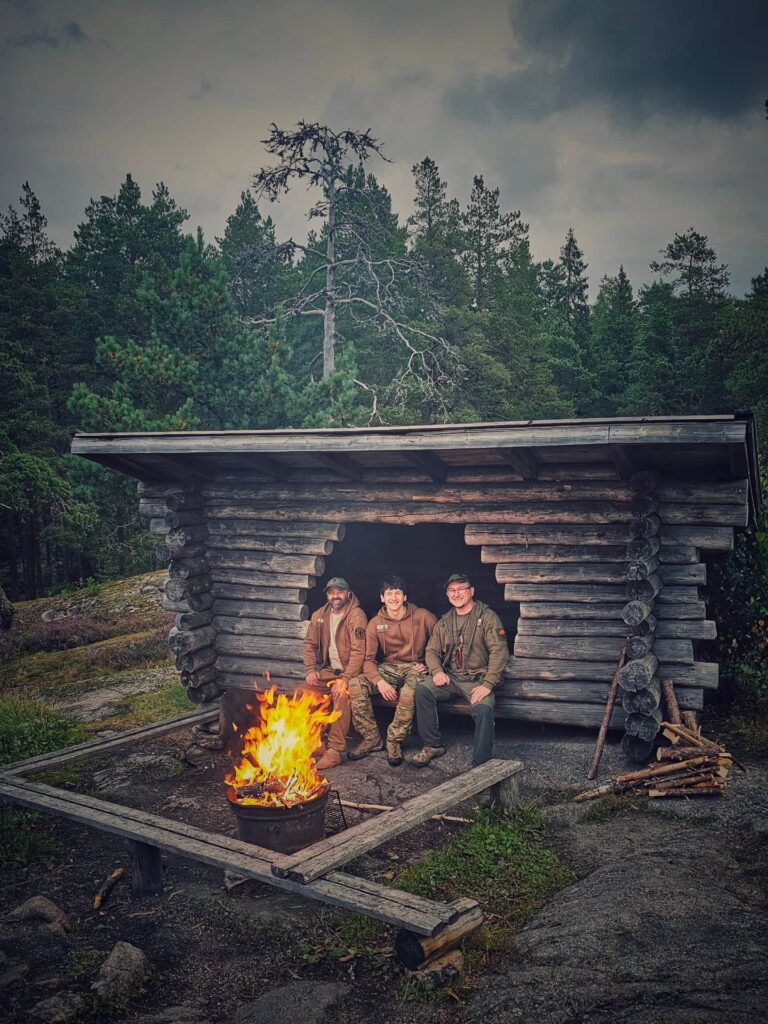
Open timber walls frame a roomy wooden shelter. A long bench gives several people a dry seat. A metal fire pit burns bright out front. Flames throw steady heat toward the bench. Firewood waits stacked on the right side.

Heavy cloud hangs low above the conifers. The roof keeps light rain off everyone below. A wide opening holds the smoke-free air steady.

Group camping gets easier with one shared fire. Warmth and shelter both rise from a few strong beams.

26.Bark Shelter Keeps Gear Close

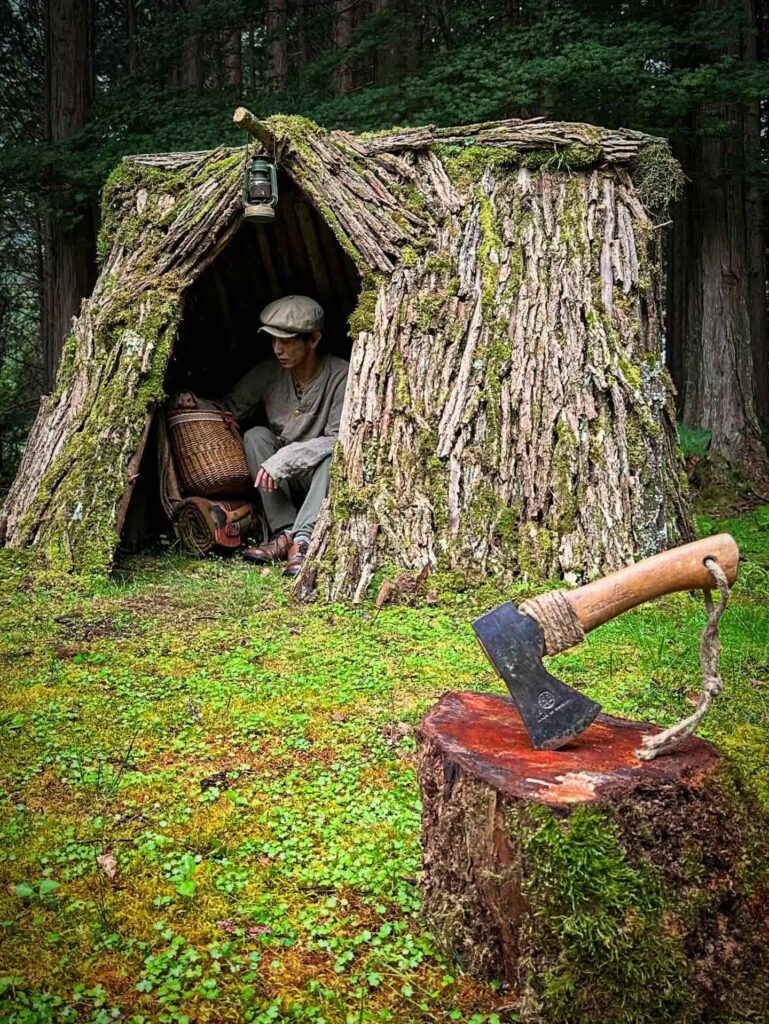
Bark and moss wrap a compact shelter in the woods. A lantern glows right at the low entrance. Woven baskets and rolled fabric sit within reach. An axe stands fixed into a nearby stump. Hemp wraps the handle for a firm grip.

Green moss climbs the walls and floor. The covered nook shields tools from rain. Everything needed for a night rests at arm’s length.

A snug camp packs a full kit into one small space. Staying organized means faster meals and better rest.

27.Sunlight Warms Moss Triangle Shelter

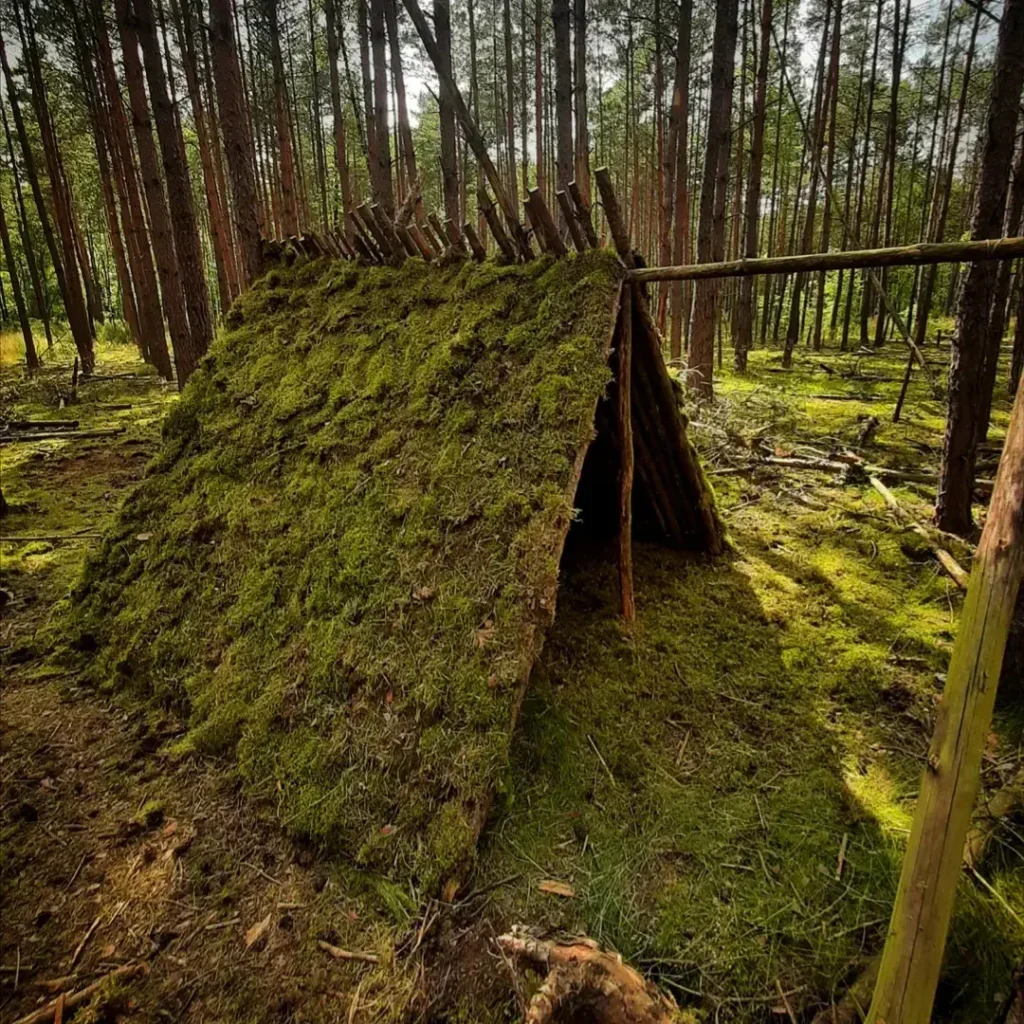
Thick green moss blankets a triangular log frame. Sunbeams slip between tall pines overhead. Light pools on the mossy roof and floor.

An open entrance lets fresh air drift in. Fallen branches and leaves pad the ground. The dense moss layer holds moisture out. Warmth from the sun soaks into the walls.

A shaded rest spot stays cool in summer. Rain slides away instead of seeping inside. Green walls breathe without trapping stale air. A moss roof keeps camp dry from first light to dark.

28.Leaf Shelter Blends With Autumn

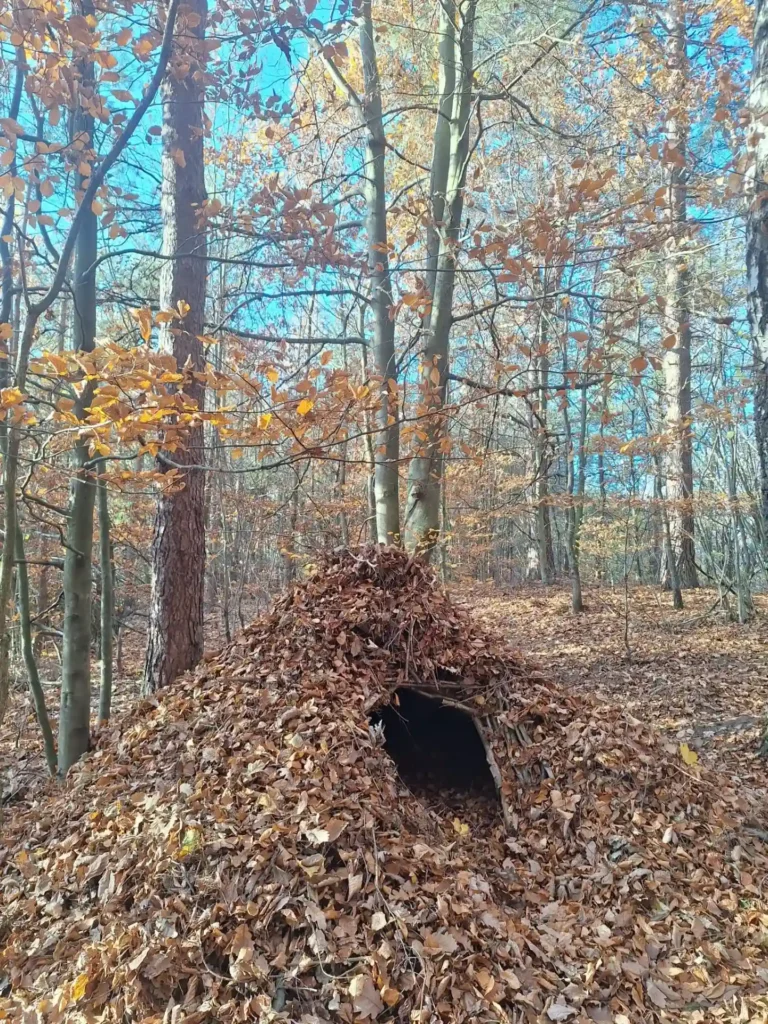
Piles of dry leaves drape a low branch frame. Golden brown covers the roof and walls. An open doorway stays clear for easy entry.

Fallen leaves pad the ground all around. The thick covering blocks wind and light rain. Warm air lingers inside the small hollow. Blue sky shines above the bare branches. A quiet rest spot hides in plain sight.

Cool weather stays outside the leafy walls. Sleeping here costs nothing beyond gathered leaves. The forest gives a dry bed without heavy gear.

29.Woven Fence Blocks Forest Drafts

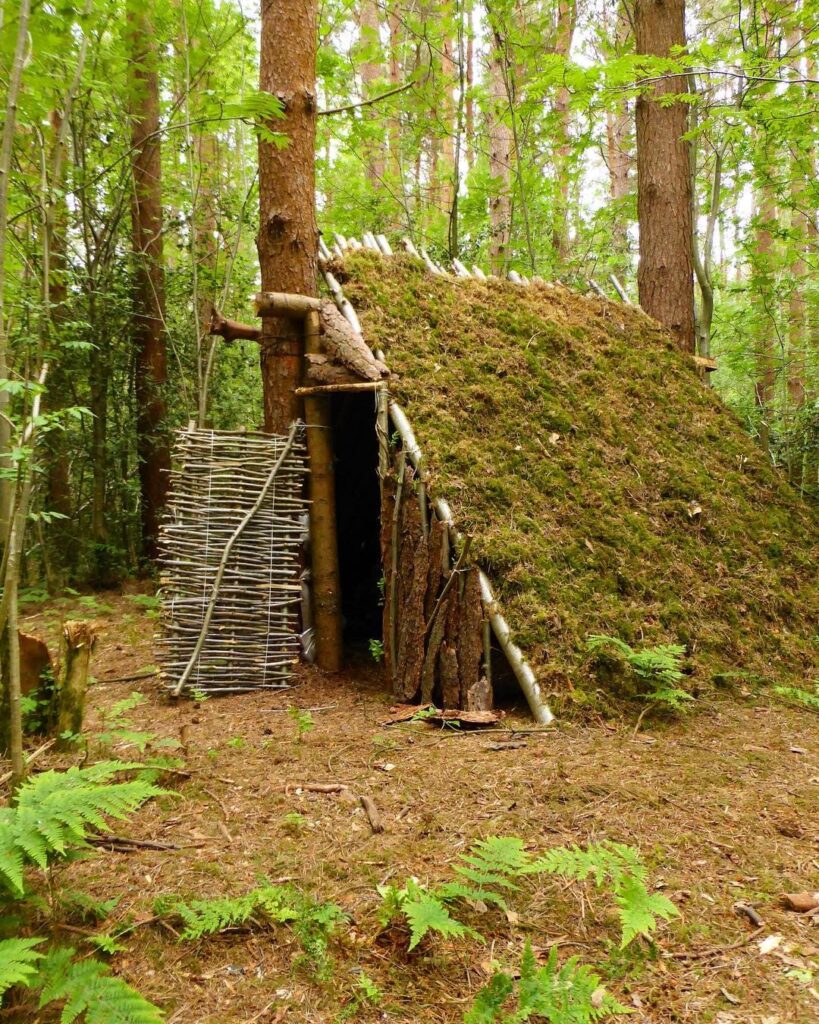
Thick moss drapes a hand-built shelter between the pines. A woven branch fence stands guard at the entrance.

Ferns and dark soil cover the ground all around. Trunks and branches lock the frame together. The green covering sheds rain and keeps warmth. A low doorway cuts down on drifting cold air. Sun and shade balance across the mossy roof.

One sturdy frame offers cover and a place to rest. A fence keeps gear tucked in and wind kept out.

30.Lantern Lights Moss Roof Hut

Logs stack into a low hut with a mossy top. Dry leaves finish the roof and block drizzle. A kerosene lamp burns bright at the doorway.

Flames crackle in the fire pit close by. Smoke drifts up through the bare branches. Warmth spills across the entrance and seat. The thick walls hold heat long after sundown. A sheltered doorway keeps the evening wind away.

Hot light and fire turn a cold clearing cozy. Resting near the flames feels safer after dark.

31.Green Cone Shelter Blocks Rain

Crossed trunks rise into a tall cone of green boughs. Dense needles layer over the whole frame. A front entrance stays open for easy entry. Sunlight filters down through the canopy above. Moss and dead branches carpet the forest floor.

The thick bough wall sheds water and wind. Heat lingers inside the sheltered hollow. A dry corner forms where sleep begins.

Building upward keeps bedding off the damp soil. A cone shape sheds rain faster than flat walls.

32.Stone Fire Heats Log Shelter

Round logs stack into walls with a timber roof. A kerosene lamp glows beside the low entrance. Stones ring a fire pit burning out front.

Flames throw heat toward the shelter walls. Cups and tools hang ready on a wooden rack. Dry leaves scatter across the open ground. The log walls block wind and hold warmth. Sitting near the fire cuts the evening chill.

A sturdy hut keeps gear and bedding protected. Everything for a night outdoors stays within reach.

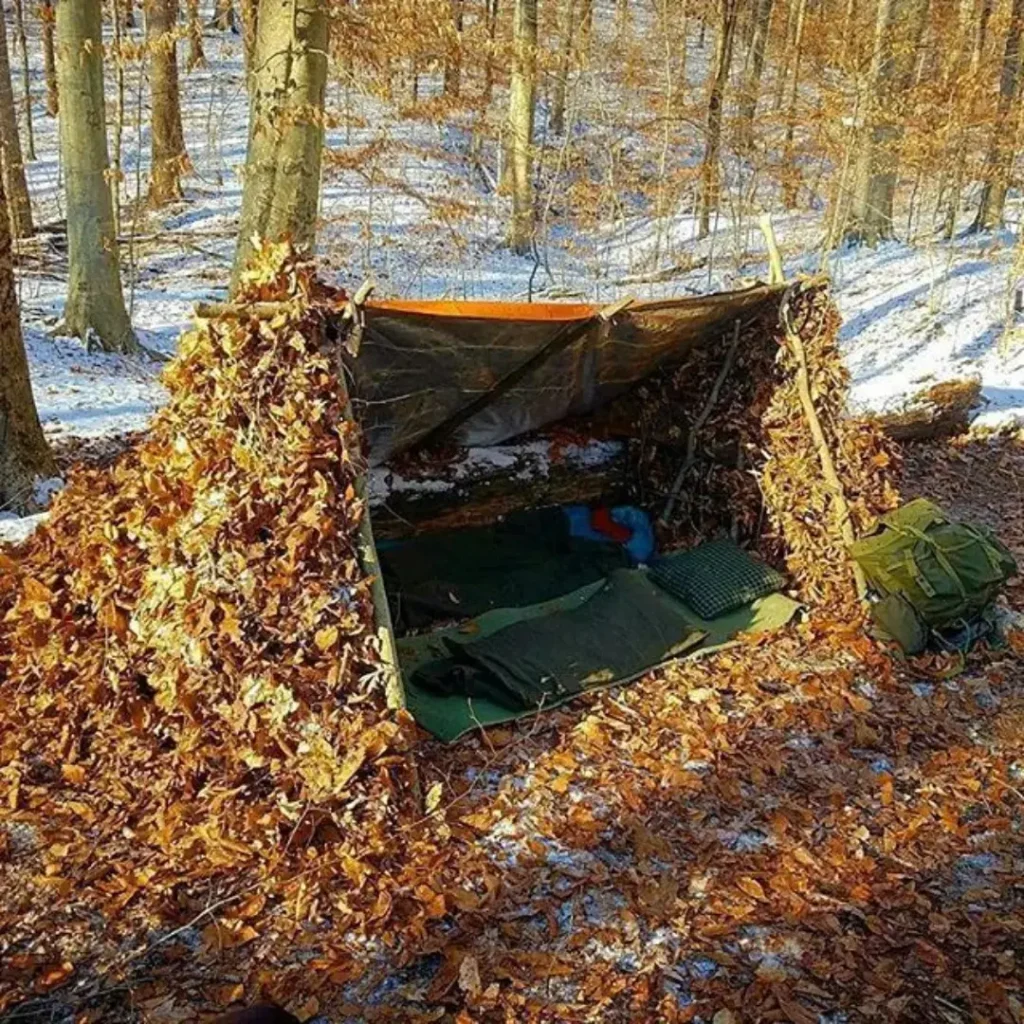
33.Leaf Insulation Keeps Winter Warm

Branches form a low frame padded with dry leaves. An orange-edged cloth tops the shelter against rain. A green mat lifts the sleep spot off cold ground. A sleeping bag and plaid pillow wait inside. A backpack rests beside the entrance.

Patches of snow still linger on the soil. Layers of leaves trap body heat through the night. Cold air stays outside the insulated walls.

A warm bed makes winter camping feel possible. Extra padding turns a frosty patch into a rest stop.

34.Birch Bark Dome Blocks Wind

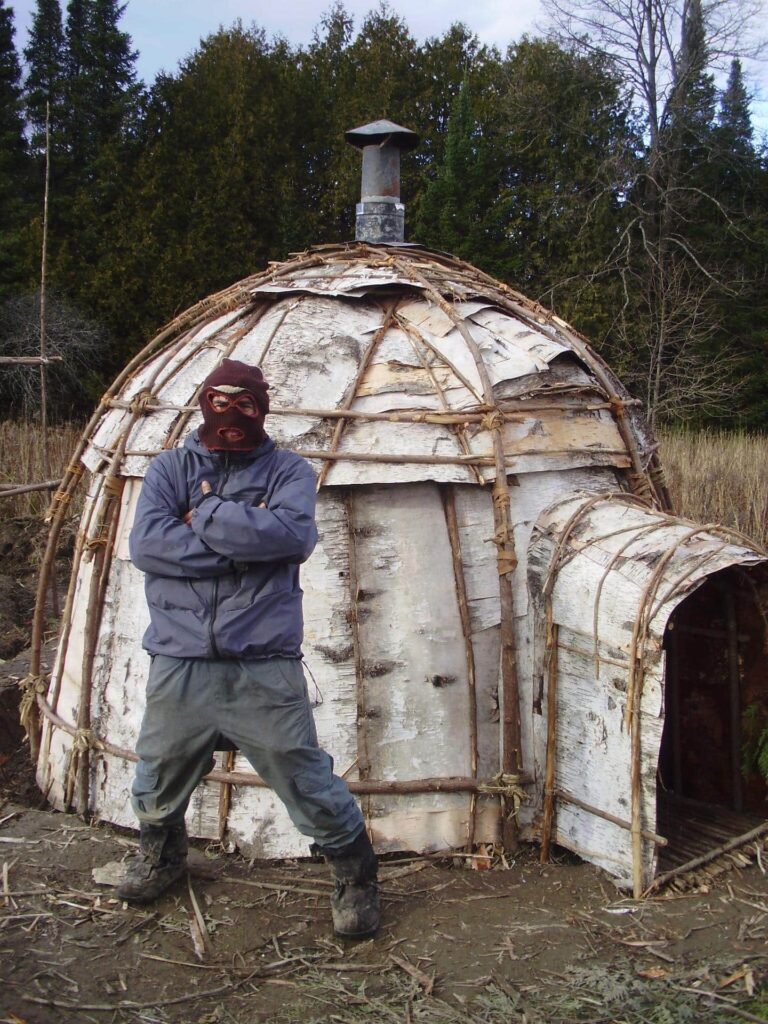
Birch bark covers a dome-shaped branch frame. A metal chimney rises from the rounded roof. An arched entrance keeps the inside reachable. Thick bark layers shed rain and trap warmth. Dry grass and soil ring the forest floor.

The curved walls deflect cold drafts at every side. Smoke drifts up instead of filling the hut.

A compact dome holds heat with far less fuel. Standing cover means fewer gaps for wind. A round shape keeps the warm air close to the body.

35.Clear Film Hut Traps Heat

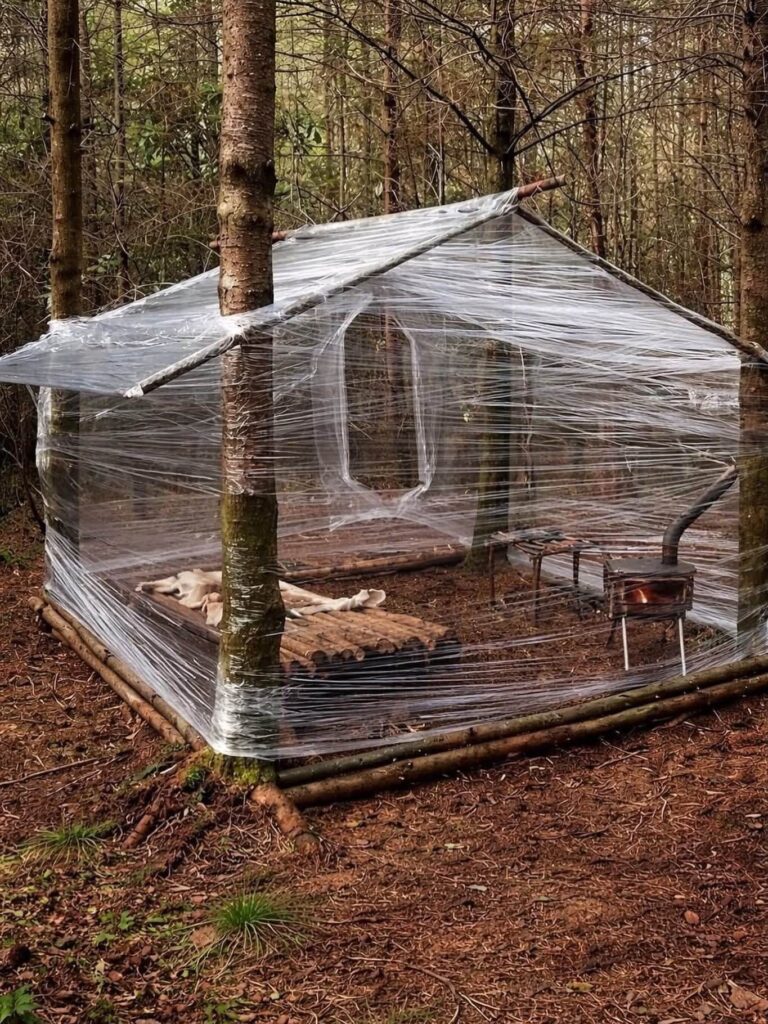
Transparent film wraps a log frame into a closed hut. Light passes through the clear walls all day. A wooden bed sits raised above the forest floor. Pale fabric covers the sleeping surface. A metal stove glows with a chimney above.

Warmth builds inside without any gaps. Wind and rain stay sealed on the outside. Humus and leaves pad the ground below.

One small hut delivers dry sleep and steady heat. A warm bed waits even on cold, damp nights.

Leave a Comment

Your email address will not be published. Required fields are marked *

Scroll to Top