Me, five years ago. Not in a cozy café, but perched on a lichen-covered boulder in the middle of a forest that had started to look suspiciously the same in every direction.
My “shortcut” had mutated into a three-hour odyssey, my phone was a glorified brick with 2% battery, and my most pressing survival skill was an encyclopedic knowledge of The Office quotes.
As the sun began its descent, casting long, accusatory shadows, I had a profound realization: I had no earthly idea how to signal for help beyond jumping up and down and yelling, “Hey! Over here!” like a lost toddler at a grocery store.
Spoiler alert: I stumbled out eventually, more embarrassed than endangered.
But the experience left me with a healthy paranoia and a mission: to learn the art of being findable.
Because let’s be honest, in the age of GPS and Google Maps, getting genuinely lost feels almost archaic.
It’s humbling. But you know what’s more humbling? Doing it wrong.
So, after consulting experts, devouring manuals, and recalling my own idiocy, I present to you: The Snarky, Slightly Traumatized Guide to Wilderness Signaling.
We’re going through these eleven methods, and I’m going to tell you not just how to do them, but how to do them without, you know, setting your only shelter on fire or signaling a passing airliner that you’re just really into Morse code.
Table of Contents
1. The Signal Fire (Smoke Signals)
The OG of distress signals. The classic. It says, “I have seen movies, and I am prepared to be dramatic.”
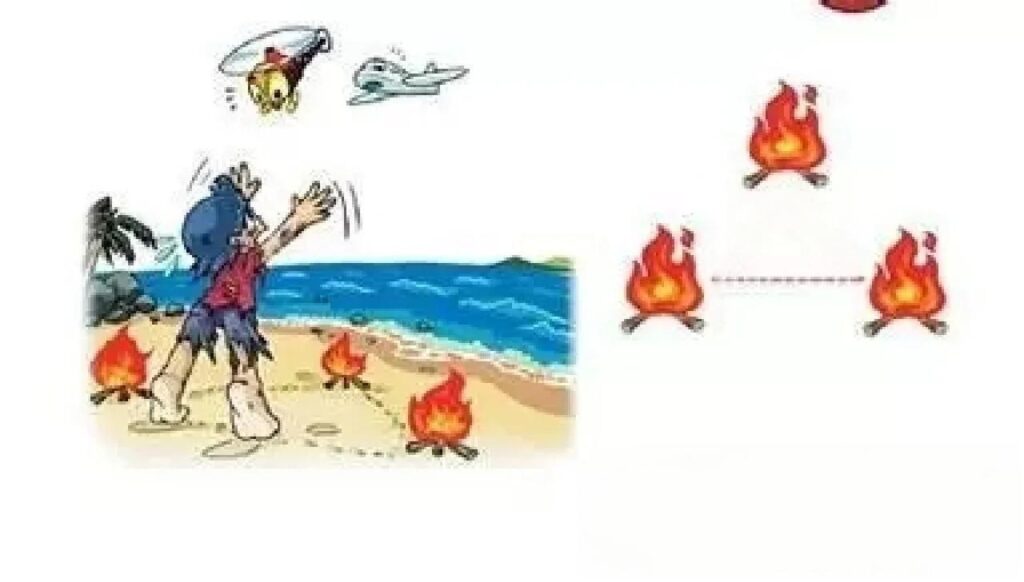
The Theory: You build three fires in a triangle. This is the international symbol for “I am in deep trouble, and I understand geometric shapes.” During the day, you want smoke; at night, you want flame.
The Hilarious Reality: First, you need to find three clear spots not too far apart, gather three times the firewood (which you’re already exhausted from doing for one fire), and keep all three burning. This is a cardio workout disguised as a cry for help.
Pro-Tip from a Past Fool: Green leaves, moss, or a little bit of motor oil (if you have it, which you probably don’t) on a established fire create thick, white smoke. Do NOT, I repeat, do NOT simply light a giant pile of dry pine needles and create a 50-foot tower of flame. You will not be rescued; you will be arrested for starting a wildfire. The goal is to look like a savvy survivor, not a Bond villain.
The Snarky Bottom Line: Three fires. Triangle. Smoke by day, light by night. Practice this at home in your grill first. It’s harder than it looks to keep smoke going consistently. Think of it as sending a text message to the sky, but you have to chop the wood for the letters yourself.
2. The Signal Mirror or Shiny Object
This method feels delightfully clever, like you’re a secret agent. In reality, you’ll be flailing around with a piece of tin, looking like you’re trying to communicate with Mars.
The Theory: Reflect a beam of sunlight toward your target (aircraft, distant hiker, search party). A dedicated signal mirror has a sighting hole to aim perfectly. The flash can be seen for miles, even beyond the horizon.
The Hilarious Reality: Your options are: a) you packed a dedicated signal mirror (you overachiever, you), b) you’re using your phone screen (RIP battery), c) you’re using a polished water bottle, or d) you’re desperately trying to peel the label off a tuna can with your teeth.
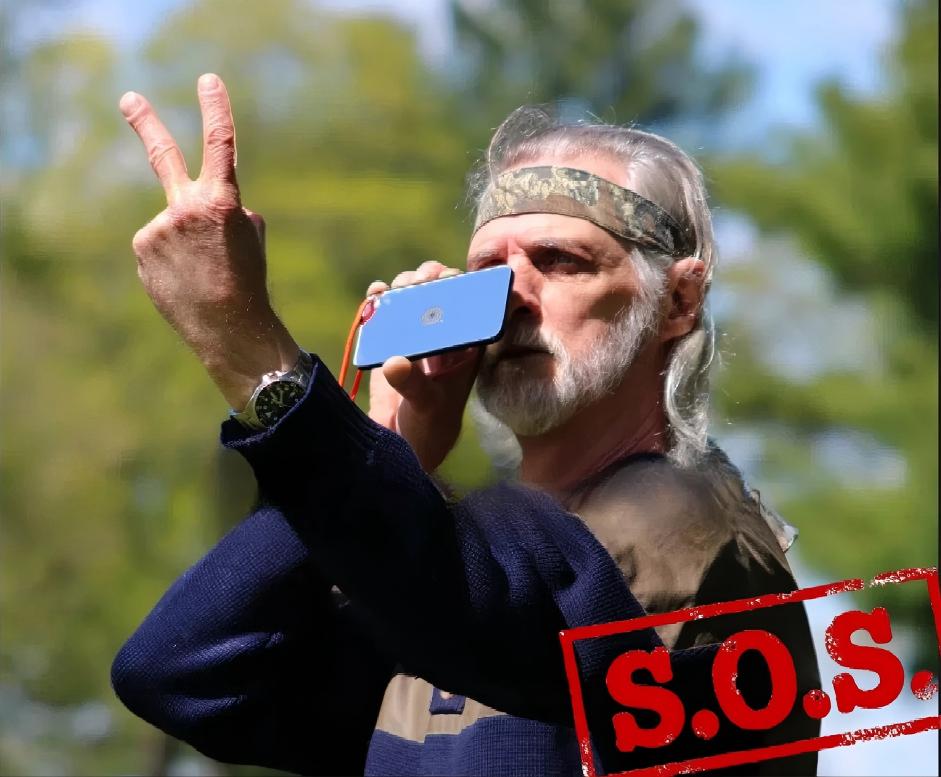
Pro-Tip from a Past Fool: No sighting hole? Make one. Hold the mirror close to your face. Use your free hand to make a “V” or an “OK” sign. Look through that hole at your target (the plane, the hill, etc.). Tilt the mirror until the beam of light shoots through the hole in your hand and onto your target. You’re now painting it with sunlight. Wave it slowly across the target. Three flashes, pause, repeat. Don’t just waggle it wildly; you’ll look like a disco ball having a seizure.
The Snarky Bottom Line: This is your best long-range, non-electronic tool. It’s weightless and never runs out of juice. Just try not to accidentally aim it at a bear, thinking it’s a rescue helicopter. Bears are not known for their search-and-rescue capabilities.
3. Whistle Blasts
Shouting is for amateurs and sports fans. It tires you out, strains your vocal cords, and sounds pathetic after about 50 yards.
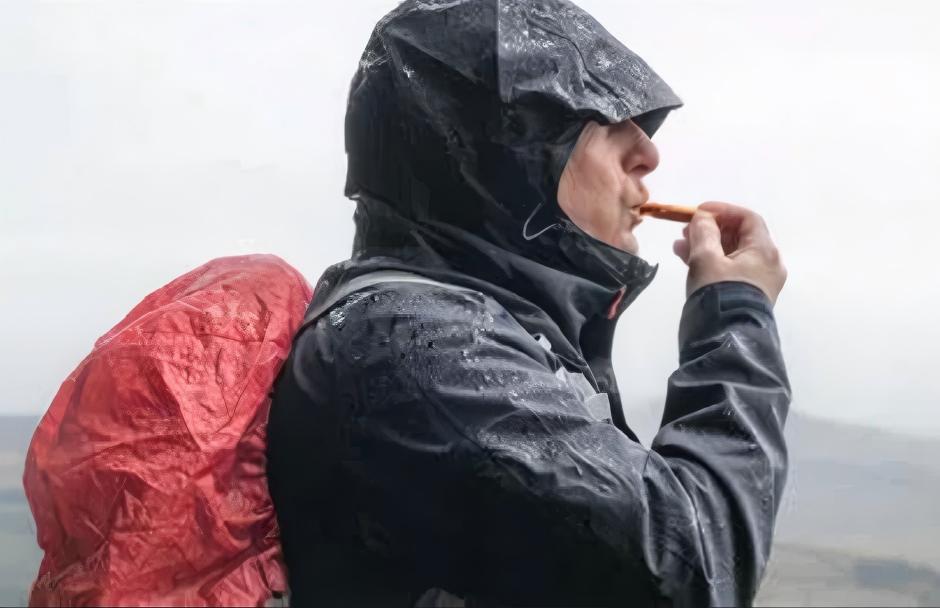
The Theory: Three sharp blasts on a whistle. Repeat every minute or so. The sound carries over incredible distances, cuts through wind, and is unmistakably human.
The Hilarious Reality: You will feel ridiculous at first. TWEET! TWEET! TWEET! Silence. I am a giant, lost bird. But it works. I now have a whistle on my pack strap, my keychain, and probably my toothbrush. The universal distress signal isn’t a melody; it’s a trio of sharp, impatient shrieks.
Pro-Tip from a Past Fool: Don’t use the “pea” inside kind if you’re in cold, wet climates—it can freeze. Get a pea-less one. And for the love of all that is holy, don’t blow it randomly because you’re bored. You’ll train any potential rescuers in the area to ignore the sound.
The Snarky Bottom Line: A whistle costs three dollars. Your voice is free but has terrible range and battery life. Be the annoying, shrill, findable person in the woods.
4. Ground-to-Air Symbols
This is where you graduate from passive signaling to active, large-scale communication. You’re not just saying “HEY!”; you’re saying “HEY, AND HERE’S WHAT’S WRONG!”
The Theory: Create large, contrasting symbols on the ground. The big ones: X = “I need medical assistance.” V = “I require assistance.” → (arrow) = “I went this way, you brilliant detectives!”
The Hilarious Reality: You will spend hours, possibly days, dragging logs, piling rocks, or trampling down grass. It will feel futile. You will question your life choices as you arrange your 50th rock to perfect the leg of your “X.” But from 500 feet up, that “X” is a screaming headline in the landscape.
Pro-Tip from a Past Fool: Contrast is key. Light rocks on dark earth. Dark branches on light sand or snow. Make them BIG—at least 10 feet long, preferably 30. A tiny “V” looks like a natural formation. A giant “V” looks like a very organized person is in trouble.
The Snarky Bottom Line: This is a marathon, not a sprint. It gives you a purposeful, calming task. Plus, if you’re rescued, you get to say, “Yes, that 50-foot arrow pointing to my camp? That was me. You’re welcome.”
5. Bright Clothing or Gear Spread Out
You packed that neon orange rain fly for a reason. It wasn’t fashion. It was for this exact moment of humiliation.
The Theory: Lay out anything brightly colored or reflective in a large, open area. A meadow, a clear riverbank, a bare hilltop. Spread it out, don’t pile it. You’re creating a visual “blip” that doesn’t belong.
The Hilarious Reality: Your camp will look like a garage sale hosted by a clown. Your shiny emergency blanket, your red backpack, your blue tarp, your daughter’s pink socks you accidentally packed—it’s all going on the grass. It feels undignified. Do it anyway.
Pro-Tip from a Past Fool: If you have a reflective emergency blanket, string it up vertically so it flutters. The movement and sporadic flashes of light are catnip for search eyes. A static red jacket is a blob. A shimmering, moving sheet of silver is a beacon.
The Snarky Bottom Line: This is zero-effort, high-reward signaling. It’s literally unpacking your bag. Just make sure you’re not laying it all out under a thick canopy of trees. Get it into the open. Think like a search pilot: “Where would I look for something that doesn’t look like trees?”
6. Flashlight or Headlamp Signaling
The whistle’s flashy cousin. After dark, light becomes your primary tool.
The Theory: Three short flashes. Pause. Three more. It’s Morse code for “SOS” (… — …) if you can manage it, but three of anything is the distress standard.
The Hilarious Reality: You will panic-flash. It’s inevitable. You’ll hear a noise and paint the entire forest in strobe light, terrifying wildlife and wasting battery. Discipline is key. Conserve your battery ruthlessly, then use it in deliberate, targeted bursts toward any sound or suspected light in the distance.
Pro-Tip from a Past Fool: If you hear an aircraft, DO NOT shine the light directly at it as it approaches. You’ll blind the pilot. Shine it steadily beside the aircraft, or flash it on the ground near you. Once it’s overhead or past, you can flash directly at it. They have scanners looking for that exact thing.
The Snarky Bottom Line: Your headlamp isn’t just for reading maps you can’t understand. It’s a signal device. Treat its battery like the last sip of water in your canteen.
7. Fire Torch or Branch at Night
This is the signal fire’s mobile, more theatrical sibling.
The Theory: In a wide, safe, open area (emphasis on safe), light a branch with a good resinous end (like pine) to create a torch. Wave it in a wide, slow, deliberate arc.
The Hilarious Reality: The line between “effective signal” and “uncontrolled brush fire” is about as thick as a piece of tissue paper. You will feel like a caveman who has just discovered fire and also a pressing need for a helicopter.
Pro-Tip from a Past Fool: Have a damp blanket or pile of dirt RIGHT NEXT TO YOU to extinguish the torch completely when you’re done. Do not just toss it aside thinking “eh, it’ll go out.” It won’t. It will instead write the story of how you burned down a national forest to get a park ranger’s attention.
The Snarky Bottom Line: Incredibly effective if done safely. Incredibly stupid if not. This is an advanced move. If you’re the person who burns popcorn, maybe stick to the static signal fire.
8. Flagging Tape or Cloth Strips
You’re not just waiting; you’re actively guiding rescuers to your VIP Lost Person lounge.
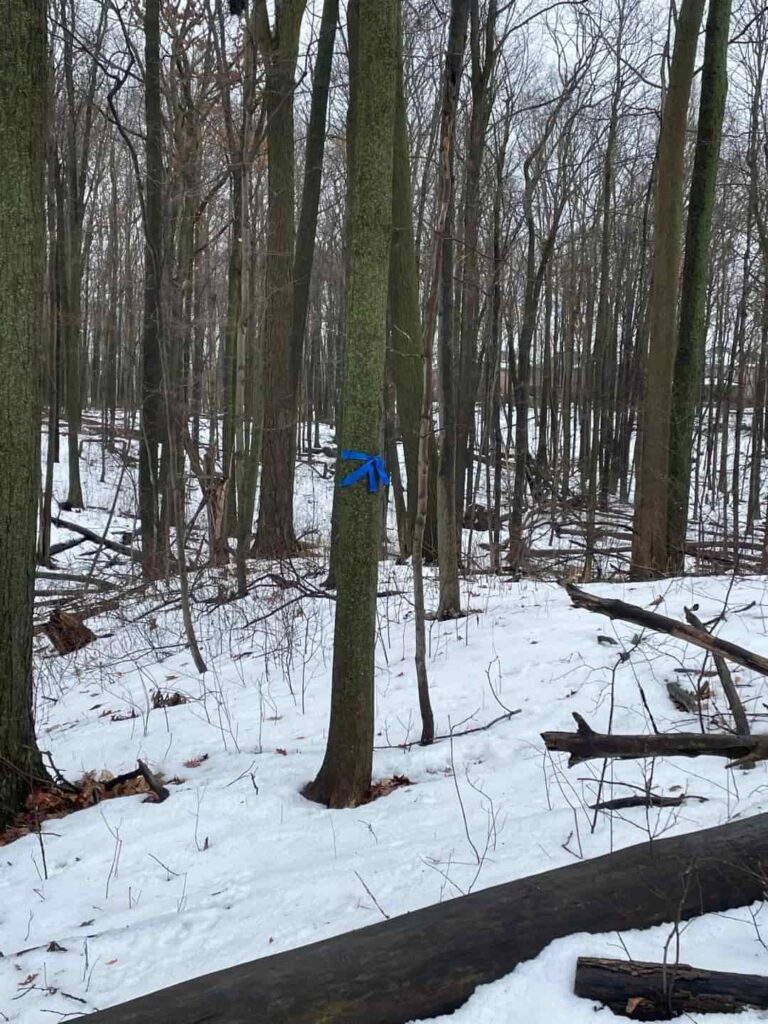
The Theory: As you move (ideally, you should stay put, but if you must move), tie bright strips of material—surveyor’s tape, strips from a shirt, pages from your terrible survival novel—high on branches along your trail.
The Hilarious Reality: You will slowly strip your clothing and gear for confetti. It feels ridiculous, like you’re a parade that got lost. But for a ground search team, it’s a breadcrumb trail of pure joy. Every piece of tape is a “HOT DAMN, WE’RE ON THE TRAIL!” moment for them.
Pro-Tip from a Past Fool: Tie them at eye level for a walking person and make sure they’re visible from both directions of travel. Don’t hide them. The goal is obnoxious visibility.
The Snarky Bottom Line: This turns your potentially meandering, panicked path into a clearly marked highway for help. It also gives you something to do besides panic.
9. Banging Metal Objects
When technology fails, return to the classic “hit things” protocol.
The Theory: The sound of metal on metal carries with a sharp, ringing quality that cuts through forest noise better than wood-on-wood. Three sets of three strikes is your rhythm. CLANG! CLANG! CLANG! …pause… repeat.
The Hilarious Reality: You will be sitting in the silence of nature, then suddenly unleashing a sound like a deranged blacksmith. It’s jarring. It’s also hard to sustain. Your arm will get tired. Your pot may dent. Do it anyway.
Pro-Tip from a Past Fool: Use a rock to strike the metal. It’s louder than metal-on-metal. And for heaven’s sake, listen between sessions. If you hear a distant CLANG in reply, you’ve just had the most beautiful duet of your life.
The Snarky Bottom Line: It’s low-tech, low-energy, and highly effective for ground searchers. Just try to keep a rhythm so it doesn’t sound like natural rock falls.
10. GPS/SOS Device Activation
Let’s be modern about this. This is the one that makes all the others your backup plan.
The Theory: You press a button on a Personal Locator Beacon (PLB) or satellite messenger (like a Garmin inReach or SPOT). It sends a distress signal with your GPS coordinates to a rescue coordination center via satellite. The cavalry is electronically summoned.
The Hilarious Reality: You will second-guess pressing it. “Am I really in trouble? I have water for two more days… but I did sprain my ankle… is this a ‘sprain’ or an ‘inconvenience’?” Press it. The people who coordinate these rescues would vastly prefer you press it early, while you’re still coherent and able to help them help you, rather than days later when you’re dehydrated and trying to eat bugs.
Pro-Tip from a Past Fool: REGISTER YOUR DEVICE. This is the step everyone skips. Registration ties the device’s unique ID to your name, emergency contacts, medical info, and vehicle description. When it goes off, they don’t just get coordinates; they get “This is John Doe, allergic to penicillin, his wife Sally is his contact, and he drives a blue Subaru parked at the Willow Creek trailhead.” This saves hours.
The Snarky Bottom Line: If you can afford a weekend in the woods, you can afford to rent or buy one of these. It is the single most important piece of safety gear you can own. It turns a potential tragedy into a story that starts with “So there I was, waiting for the helicopter…”
11. Marking the Ground with Tracks or Trenches
This is the “I’ve been here a while and I’m getting creative” signal.
The Theory: In soft ground (snow, sand, dirt), use your heels, a stick, or a log to scrape or trample large symbols. The disturbed earth will create shadows and contrast, especially in low-angle sunlight (dawn and dusk).
The Hilarious Reality: You will look like a bored giant playing tic-tac-toe with the earth. It’s exhausting, grunt-work signaling. But if you’re in one place for days, it’s a way to scream your presence to the sky without using resources.
Pro-Tip from a Past Fool: Make the trenches deep and the edges sharp. Shallow scrapes disappear quickly. Deep grooves catch light and shadow. An arrow pointing to your camp, 20 feet long and a foot deep, is impossible to miss from the air.
The Snarky Bottom Line: This is a long-term project. It’s for when you’ve already built your shelters, laid out your signals, and are now in “maintenance and improvement” mode. It beats counting pine needles.
Conclusion
My ordeal on that boulder ended not with a heroic rescue, but with a sheepish, scratched-up trek back to a trail I’d arrogantly left hours before. I got lucky. Luck is not a plan.
The profound lesson I learned—beyond “don’t take shortcuts you saw in a daydream”—is that signaling is not a last-minute act of desperation; it’s an ongoing, mindful process.
These eleven methods are your toolbox.
Being prepared isn’t about expecting the worst. It’s about respecting the wilderness enough to know that it doesn’t care about your Office quotes or your carefully planned itinerary. It’s about giving yourself the grace to be found quickly, efficiently, and with your dignity mostly intact.