Imagine you are deep in the wilderness. Your shoelace snaps. Your tent tie-down breaks. You need cordage. You have no paracord left. What do you do?
Nature provides the answer. Yucca and agave plants grow in many wild areas. Their leaves contain strong fibers. With a little work, you can make natural cordage. It is durable, reliable, and free.
This skill is essential for survival. It is also satisfying to learn. You connect with ancient techniques. You gain self-reliance. Here are six pro tips for making the strongest natural cord from yucca and agave.
Table of Contents
Harvest Mature Yucca Leaves
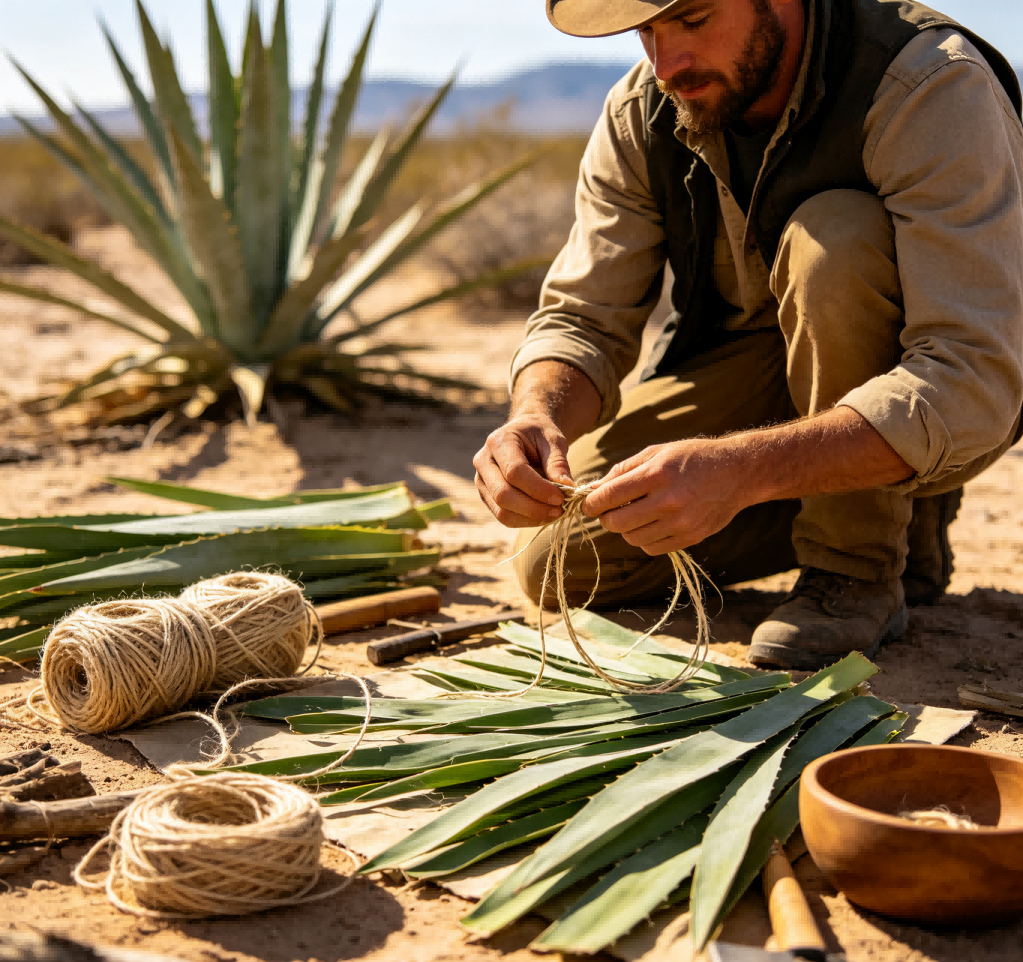
The first step is finding the right leaves. Not all yucca leaves are equal. You need mature ones. They have longer and stronger fibers.
Look at the base of the plant. Choose older leaves. They are usually lower down. They have grown for a longer time. They have developed better fibers.
Cut the leaves near the base. Use a sharp knife. Be careful of the sharp tip. It can poke you. It can break off in your skin. Handle the leaves with respect.
Avoid young leaves in the center. They are too tender. Their fibers are short and weak. Mature leaves give you the best results.
Crush and Soak to Extract Fibers
Harvesting the leaves is just the beginning. Now you need to extract the fibers. This takes some work. It also takes some patience.
Smash the leaves with a rock. Use the flat side of the rock. Hit the leaves firmly. You want to break down the tough structure. You want to separate the pulp from the fibers.
After smashing, soak the leaves in water. Leave them for a few days. Let the water work on them. The green pulp will rot away. It will soften and break down. You will be left with white strands. Those strands are your fibers.
Change the water if it gets too murky. This speeds up the process. Fresh water removes more pulp. Your fibers will be cleaner and stronger.
Roll Fibers on Your Thigh
Now you have raw fibers. They are damp and flexible. You need to turn them into cordage. This is the art of twisting.
Take a few strands of fiber. Dampen them slightly. Place them against your bare thigh. Roll them with your palm. Push forward and down. The fibers will twist together.
This creates 2-ply cordage. The two strands wrap around each other. They become a single, strong cord. The natural saponin in yucca helps. It acts like a mild glue. It makes the fibers stick together.
Keep rolling until the cord is tight. Add more fibers as you go. Join them smoothly. Your cord will get longer and longer. This is the most satisfying part of the process.
Test Strength by Hanging Weight
You have made your cord. Now you need to test it. Do not trust it with your life yet. Test it first. Make sure it is strong.
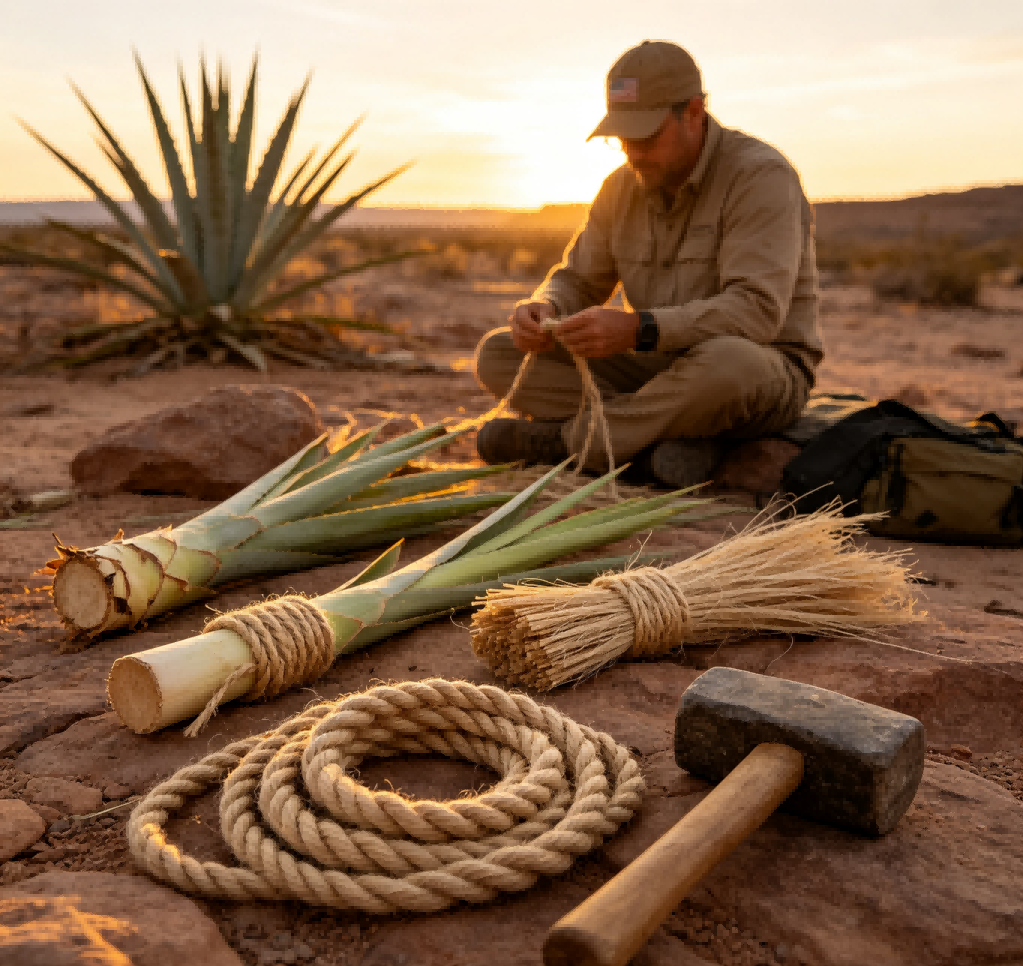
Tie your cord to a secure point. Hang a weight from the other end. Use a rock or your pack. Start with a few pounds. See if the cord holds.
A well-processed yucca cord can hold several pounds. That is strong enough for shelter ties. It is strong enough for gear repair. It can hold your food bag off the ground. It can secure your tarp in the wind.
If the cord breaks, examine it. See where it failed. Were the fibers too short? Was the twist too loose? Learn from the failure. Improve your technique next time.
Agave Gives Even Stronger Fibers
Yucca is excellent. Agave is even better. Agave leaves are thicker. They are more substantial. The fibers are stiffer and stronger.
The processing is similar. Harvest mature agave leaves. Crush and soak them. Extract the fibers. But the result is different. Agave cordage is more rot-resistant. It lasts longer in wet conditions.
This makes agave ideal for lashing. You can build structures with it. You can make fishing lines. You can make nets and traps. Agave cord is a step up in durability.
If you are in agave country, use it. The extra work is worth it. You will get a superior product.
Use Plant Cord as Emergency Shoelace
Your shoelace snaps. You are miles from help. You need a quick fix. Your yucca or agave cord is perfect.
Cut a length of your finished cord. Thread it through your shoe eyelets. Tie it securely. The cord will hold your shoe together.
Natural plant cord is surprisingly durable. It will not snap like a weak grass string. It can handle the pressure of walking. It can handle rough terrain. It will get you back to camp.
This is one of the most practical uses. It is also one of the most immediate. You never know when you will need it. Keep a length of cord in your pack. You will be glad you did.
Conclusion
Natural cordage is a vital survival skill. Yucca and agave are your best materials. Harvest mature leaves for longer fibers. Crush and soak them to remove the pulp. Roll the damp fibers on your thigh to create cordage. Test the strength by hanging weight. Agave gives you even stronger fibers. Use your cord as an emergency shoelace or for gear repair.
This skill connects you to the land. It gives you self-reliance. It reduces your dependence on store-bought gear. With practice, you can make cordage quickly. You can do it in any season. You can do it anywhere these plants grow.
Start practicing today. Find a yucca plant. Harvest a few leaves. Go through the process. You will be amazed at the result. Your first cord will be rough. Your second will be better. Your tenth will be excellent. Keep learning. Keep practicing. You are becoming a true wilderness craftsman.