9 Ways to Mark a Casualty’s Location (Never Leave Anyone Behind)

Spread the love

You are deep in the backcountry. Someone in your group is injured. They cannot walk. You need to leave them to get help. But you worry. How will rescuers find them? How will they know where to look?

The answer is marking. You need to leave clear signals. You need to guide searchers directly to the victim. This is a critical skill. It can save a life.

Here are nine proven ways to mark a casualty’s location. Use these techniques. Leave no one behind.

Table of Contents

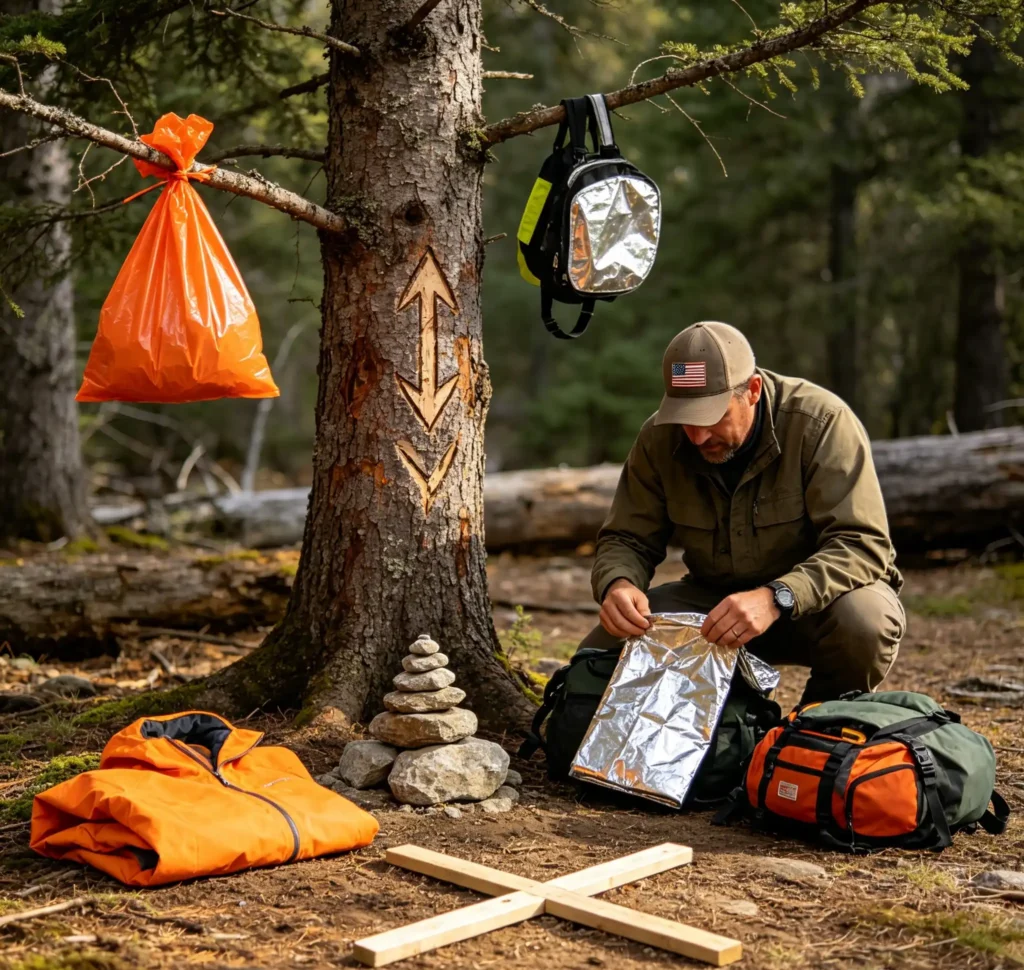
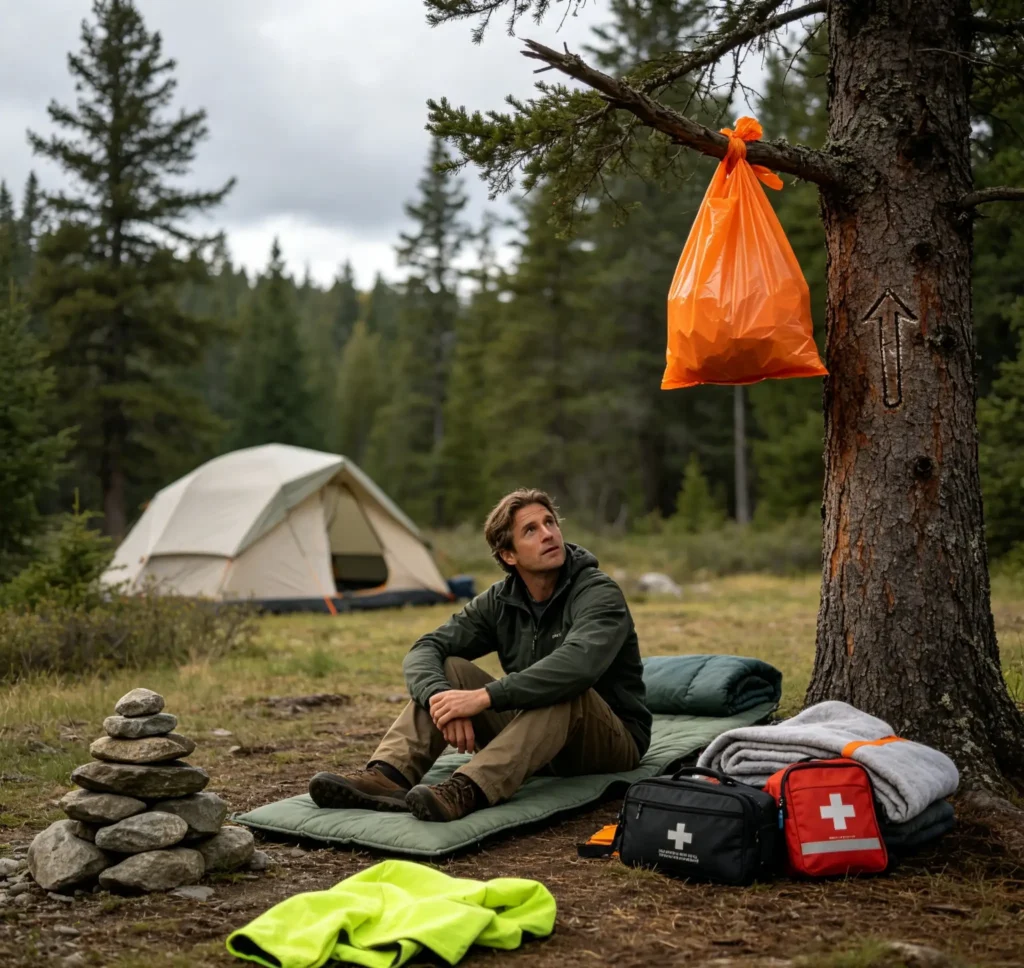
#1. Tie a Bright Orange Garbage Bag to the Highest Nearby Branch

Bright colors catch the eye. Orange is especially visible. It contrasts with green trees and blue sky. It stands out against grey rocks.

Tie a bright orange garbage bag to the highest branch you can reach. Use a long piece of cord. Let it flap freely in the wind. The movement attracts attention. Even light wind makes it flutter.

Rescuers scan for movement and color. An orange bag is hard to miss. It signals there is something important below. It is a simple and effective marker.

#2. Write a Waterproof Note with Time, Condition, and Direction

Information saves time. Rescuers need to know what happened. They need to know the victim’s condition. They need to know where you went.

Write a waterproof note. Use a permanent marker. Write on plastic or a page from a notepad. Put the note inside a ziplock bag. This keeps it dry and readable.

Include the time of the accident. Describe the victim’s condition. Are they conscious? Are they bleeding? Are they stable? Write down your heading. Tell rescuers which direction you went for help. This gives them a complete picture.

#3. Leave a Brightly Colored Piece of Clothing on the Ground

Clothing makes an excellent marker. A bright jacket is visible. A bandana stands out. Any colorful fabric works well.

Place the clothing on the ground. Weigh it down with rocks. This stops it from blowing away. The rocks hold it in place. The fabric stays visible for days.

This method marks the exact spot. It confirms the victim is nearby. It gives rescuers a visual target. It is a fast and easy way to signal.

#4. Build a Rock Cairn on a Bare, Open Spot

Rock cairns are ancient trail markers. They work well in open areas. They stand out against the ground. They draw the eye immediately.

Find a bare, open spot. Build a cairn at least two feet tall. Make it distinctive. Use a pointed shape. Cap it with a dark stone. This makes it unique and noticeable.

Rescuers will recognize it as a man-made signal. They will investigate. They will find the victim. A rock cairn is permanent and weather-proof. It will not blow away or fade.

#5. Carve an Arrow into Bark with a Knife

Sometimes the victim is hidden. They are in a dense thicket. They are behind a rock. You need to point rescuers directly to them.

Carve an arrow into tree bark. Use your knife. Make three shallow marks. Point the arrow toward the victim. Place it at eye level on a prominent tree.

This gives rescuers a directional clue. They follow the arrow. They find the victim. It is a simple and lasting signal. It works in any weather.

#6. Drop a Pin on Your GPS or Phone and Send Coordinates

Technology is a powerful tool. Use it to your advantage. Drop a pin on your phone or GPS device. Mark the exact location of the casualty.

Take a screenshot of the coordinates. This saves the information. If possible, send the coordinates to a ranger. Send them to an emergency contact. This gives rescuers precise location data.

They can navigate directly to the victim. They do not need to search blindly. Coordinates save critical time. They can make the difference between life and death.

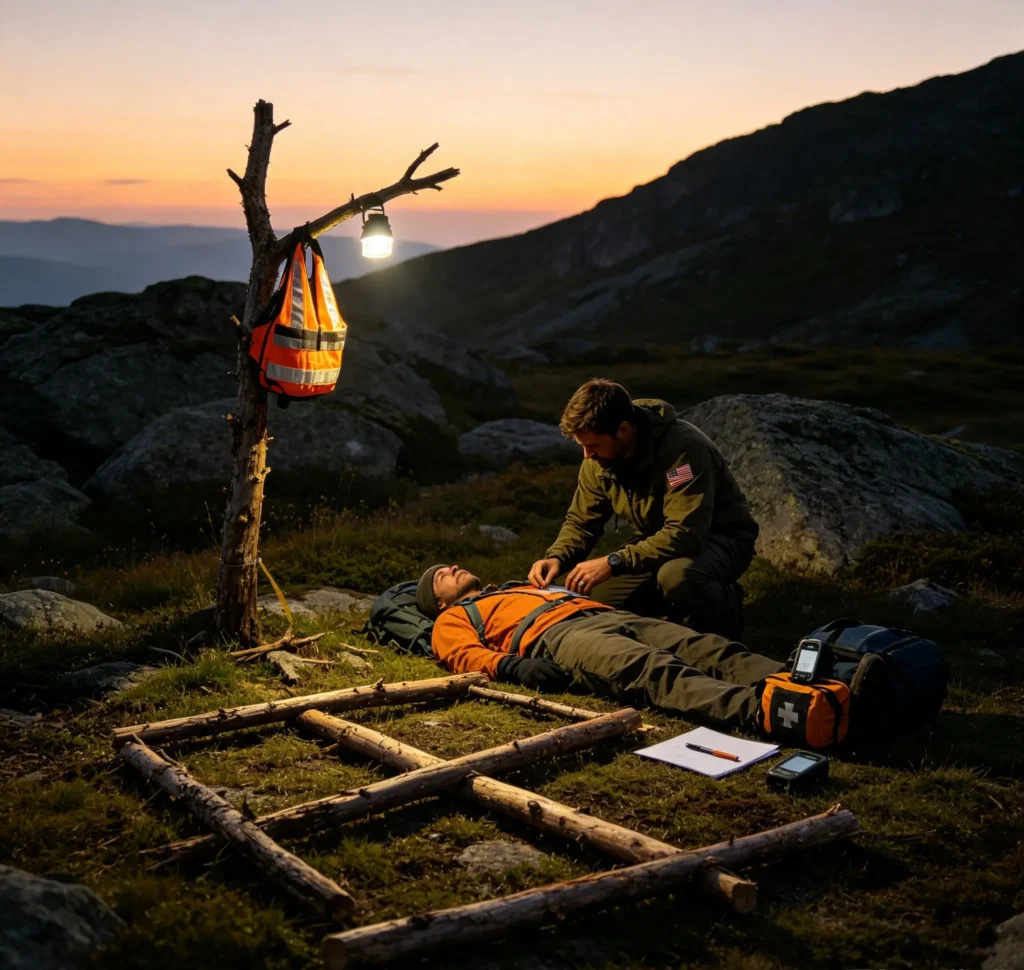
#7. Leave a Lit LED Beacon or Strobe Light at Night

Night makes everything harder. Rescuers cannot see colors. They cannot see clothing. They cannot see cairns. They need a different type of signal.

Use an LED beacon or strobe light. Small bike lights work well. Glow sticks are another option. Tape the light to a stick. Place it in an elevated position.

The light flashes in the darkness. It can be seen from a great distance. Rescuers spot it immediately. They head toward the light. It guides them directly to the victim.

#8. Arrange Sticks or Logs into a Large X on the Ground

The letter X is a universal symbol. It means a location is marked. It signals something important is nearby. It draws attention.

Arrange sticks or logs into a large X on the ground. Use contrasting materials. Use dark branches on light soil. Use light wood on dark ground. The contrast makes it visible.

Make the X as large as possible. Rescuers will see it from the air. They will see it from a distance. It signals that someone is here. It is a simple and universal marker.

#9. Place Reflective Gear in a High Fork of a Tree

Reflective materials catch sunlight. They flash and sparkle. They draw the eye from a distance. They are highly visible.

Place a water bottle in a high tree fork. Place a piece of gear like a foam pad. Choose items with reflective surfaces. The sun will hit them. They will flash and shine.

Rescuers will notice the flashes. They will investigate. They will find the victim. This method works during the day. It works best in sunny conditions.

Conclusion

Marking a casualty’s location saves lives. You need to know these nine techniques. Tie a bright orange bag high in a tree. Write a waterproof note with critical details. Leave colorful clothing weighed down with rocks. Build a tall, distinctive rock cairn. Carve a directional arrow into tree bark. Drop a GPS pin and send coordinates. Use an LED beacon or strobe at night. Arrange sticks into a large X on the ground. Place reflective gear in a high tree fork.

These methods work together. They give rescuers every possible clue. They guide help directly to the victim. Practice these skills before an emergency. Know them by heart. When a crisis happens, you will be ready. You will leave no one behind. This is the promise of a responsible backcountry traveler. Stay prepared. Stay safe.

Leave a Comment

Your email address will not be published. Required fields are marked *

Scroll to Top