9 Ways Your Rainfly Alone Becomes a Life-Saving Shelter

Spread the love

You are deep in the backcountry. A storm rolls in suddenly. Your tent body is damaged. You have no time to set up camp properly. You need shelter fast. What do you do?

Your rainfly alone can save you. It is waterproof and lightweight. It can be pitched without the tent body. You just need to know how.

Learning these skills before an emergency is essential. You need to practice in good weather first. Then you can set up in the dark and rain without panic. Here are nine creative ways to use your rainfly as a shelter.

Table of Contents

Practice Pitching Your Rainfly Without the Tent Body

This is the most important step. You need to know how your fly works. Do not wait for an emergency. Practice on a sunny day in your backyard.

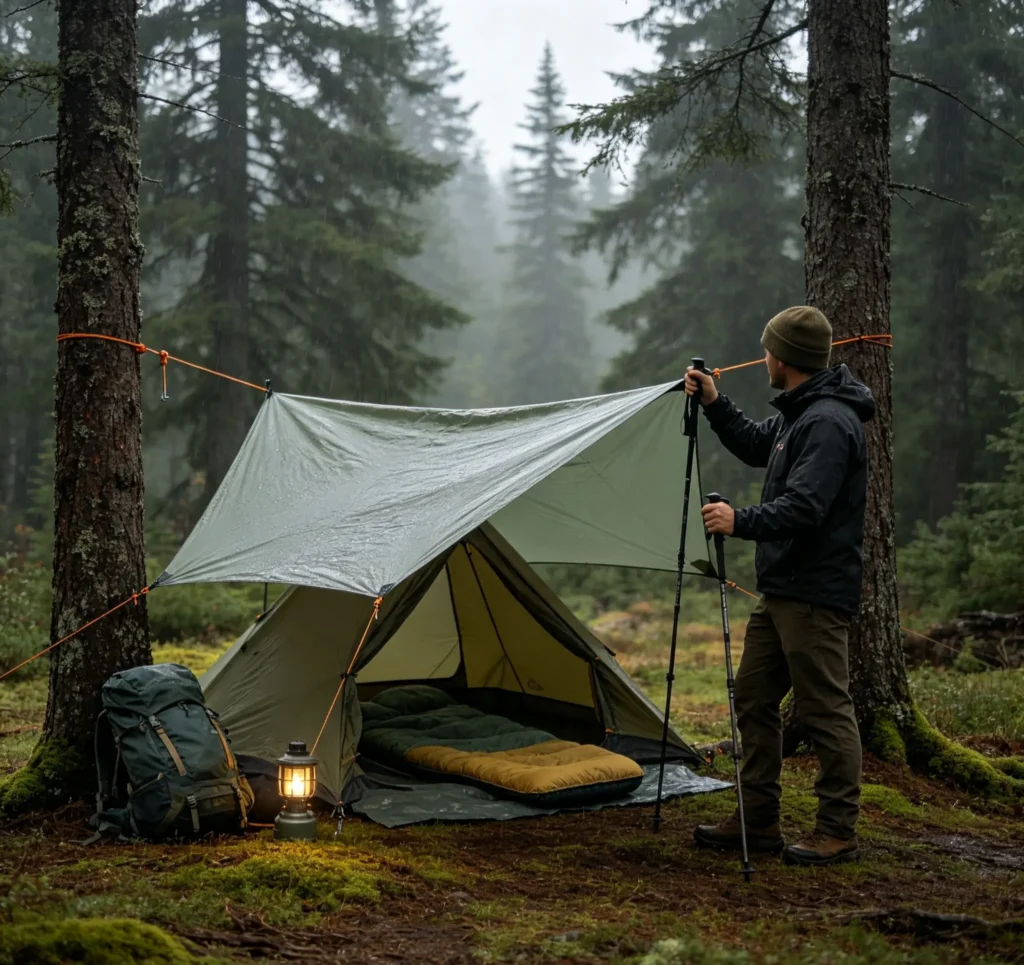
The rainfly creates an A-frame or lean-to. Use trekking poles or sticks for support. You can also use a ridgeline between two trees. The fly suspends above you. It sheds rain and wind.

Practice until you can do it quickly. Time yourself. Know where all the tie-out points are. Familiarity builds confidence. When the storm comes, you will be ready.

Carry Extra Guylines and Stakes

Your rainfly alone needs more support. It has extra tie-out points. Use them. Pre-attach lines to loops before you leave home. This saves time in an emergency.

Carry extra stakes too. The fly alone uses more pegs than the full tent. You want it tight and secure. Loose fabric flaps in the wind. It lets rain in. It makes noise all night.

Having extra lines and stakes gives you options. You can guy out the fly in different configurations. You can adapt to any terrain. Always pack a few extras.

Find Two Trees 6 to 8 Feet Apart

Trees are natural anchors. Look for two trees about 6 to 8 feet apart. Run a ridgeline between them. Your ridgeline can be rope or paracord. Make it tight and secure.

Drape the rainfly over the ridgeline. Stake out the sides. This creates a quick, waterproof roof. The slope sheds rain. The trees hold the fly in place.

This setup takes minutes. It is simple and effective. It works in forests and wooded areas. Find the right trees and you have instant shelter.

Use Trekking Poles as Uprights

Your trekking poles are versatile. They can support your rainfly. Extend your poles to the right height. Insert them into grommets. Tie them to fly corners if needed.

Guy out the poles to keep them stable. Arrange the fly into a pyramid or tunnel. The pyramid shape sheds wind well. The tunnel provides more interior space.

This method works anywhere. You do not need trees. You just need flat ground. Your poles become the structural backbone of your shelter.

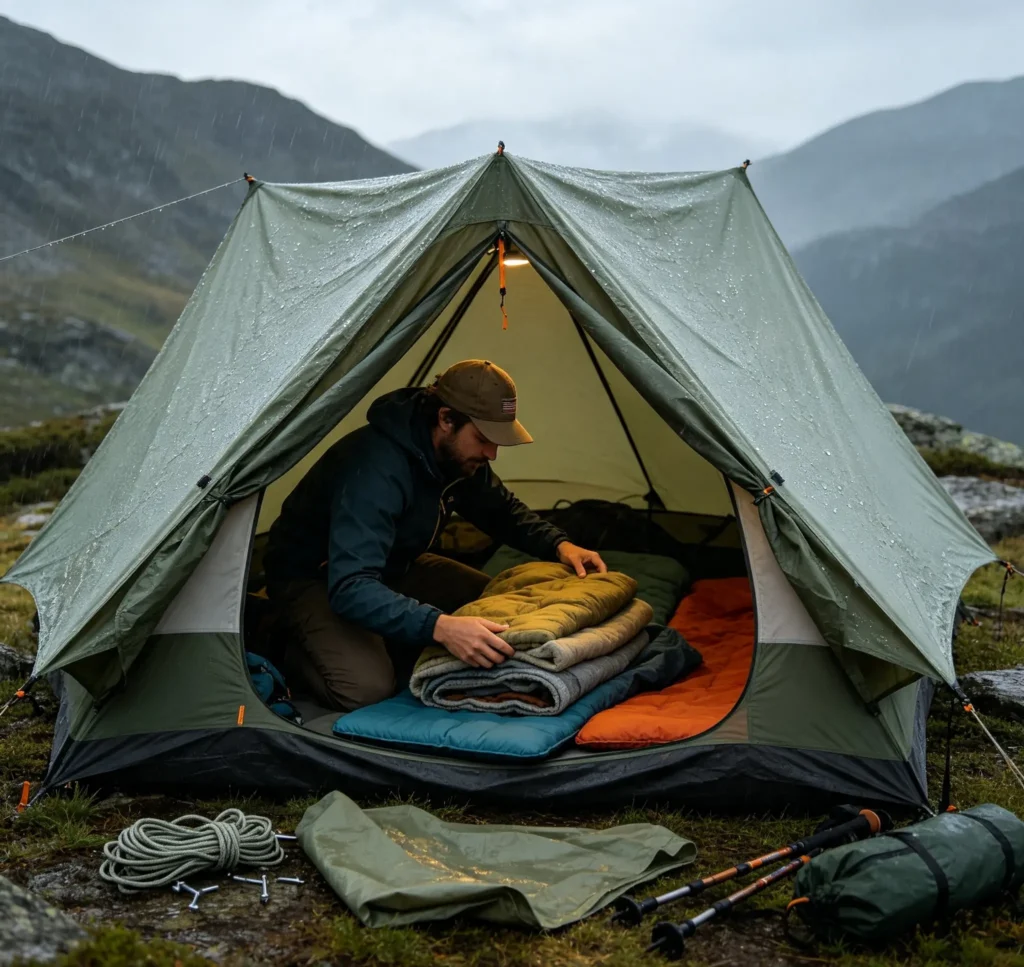
Lay Your Sleeping Pad on a Groundsheet

You no longer have a tent floor. The rainfly alone does not include one. You need protection from the ground. You need to stay dry.

Lay your sleeping pad on a separate groundsheet. Use a footprint if you have one. Use an emergency blanket. Use a cut piece of plastic. Anything that provides a moisture barrier.

The ground is cold and damp. It seeps through your pad. A groundsheet stops that. You stay warmer. You stay drier. Your sleep is much better.

Orient the Open Side Away from Wind

Wind is a major enemy. It drives rain into your shelter. It steals your body heat. You need to block it effectively.

Face the low, closed end of the fly into the prevailing wind. This deflects the wind upward. It sheds rain away from you. Place the open side on the leeward side. This is the downwind side.

Use your pack or a small tarp as a windblock. Place it at the entrance. This creates a barrier. The wind swirls around you. You stay warmer and drier.

Set the Fly Lower to Trap Heat

Cold nights are dangerous. You need to conserve body heat. A smaller space warms faster. Your body heat fills the space quickly.

Set your rainfly lower to the ground. Reduce the interior volume. The fly creates a closer, warmer cocoon. It traps your radiant heat.

You can also use the fly as a vapor barrier. It holds moisture inside. This is not ideal for every condition. But in cold weather, it helps. A low, tight pitch is a warm pitch.

Use Your Tent Body as an Emergency Tarp

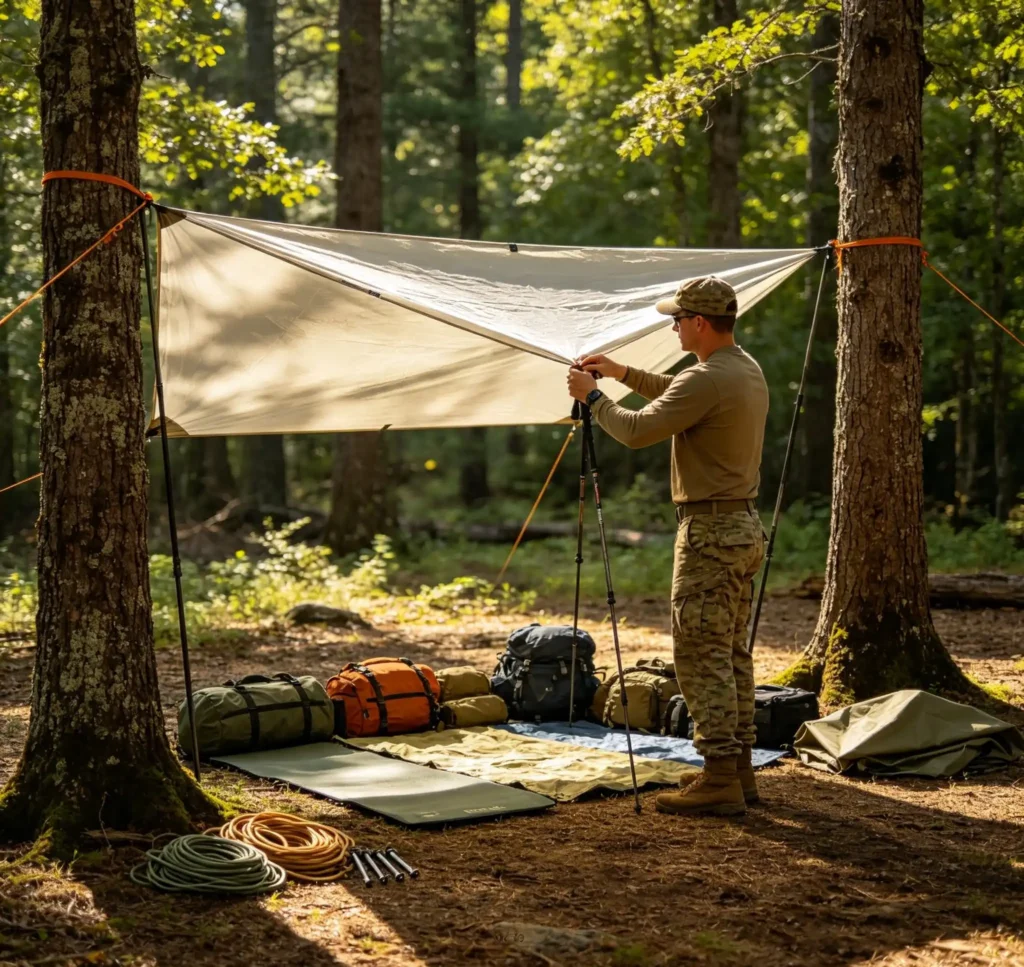
Your tent body might be damaged. It may have a torn floor. It may have broken poles. Do not throw it away. It can still help you.

Spread the tent body underneath the rainfly. Use it as an extra moisture barrier. It protects you from the ground. It adds a layer of insulation.

This works even if the tent body is ruined. The fabric still repels some moisture. It creates a dry platform for your gear. Every little bit helps in an emergency.

Practice in Good Weather First

This is the golden rule. Practice before you need the skill. Do not wait for a stormy night. Practice on a sunny afternoon in your backyard.

Set up your rainfly alone. Use different configurations. Use trees and trekking poles. Try different orientations. Time yourself. Make mistakes while it is easy.

Then you can set it up in the dark. You can do it in the rain. You can do it with cold, numb fingers. Practice builds muscle memory. Practice eliminates panic. Practice saves lives.

Conclusion

Your rainfly alone is a life-saving tool. Practice pitching it without the tent body. Carry extra guylines and stakes. Find two trees 6 to 8 feet apart. Use trekking poles as uprights. Lay your sleeping pad on a groundsheet. Orient the open side away from wind. Set the fly lower to trap heat. Use your tent body as an emergency tarp. Practice in good weather first.

These nine skills give you options. They keep you dry in a storm. They keep you warm in the cold. They protect you in an emergency. Your rainfly is more than just a tent cover. It is a versatile piece of survival gear. Learn to use it well. Practice regularly. You will be prepared for anything the wilderness throws at you.

Leave a Comment

Your email address will not be published. Required fields are marked *

Scroll to Top