You pack your camping gear carefully. You have a first aid kit. You have a multi-tool. You have duct tape and paracord. But you might be missing something small. Something incredibly useful.
Safety pins. These tiny metal fasteners cost pennies. They take up no space. They weigh almost nothing. But they are incredibly versatile. They solve problems you never expected. They fix gear and clothes. They even help catch food.
Here are nine ways safety pins become your tiny metal MVPs on every camping trip. You will never leave home without them again.
Table of Contents
#1. Replace a Broken Zipper Pull
Your tent zipper breaks. The pull tab snaps off. You cannot open or close the door. You are trapped inside or locked out. This is frustrating and inconvenient.
Thread a safety pin through the zipper slider hole. The pin becomes your new pull tab. You can grip it easily. You can pull it smoothly.
The safety pin is the perfect replacement. It is strong and durable. It fits through the small hole. It is easy to use. Your zipper works again.
#2. Secure Bandages or Gauze
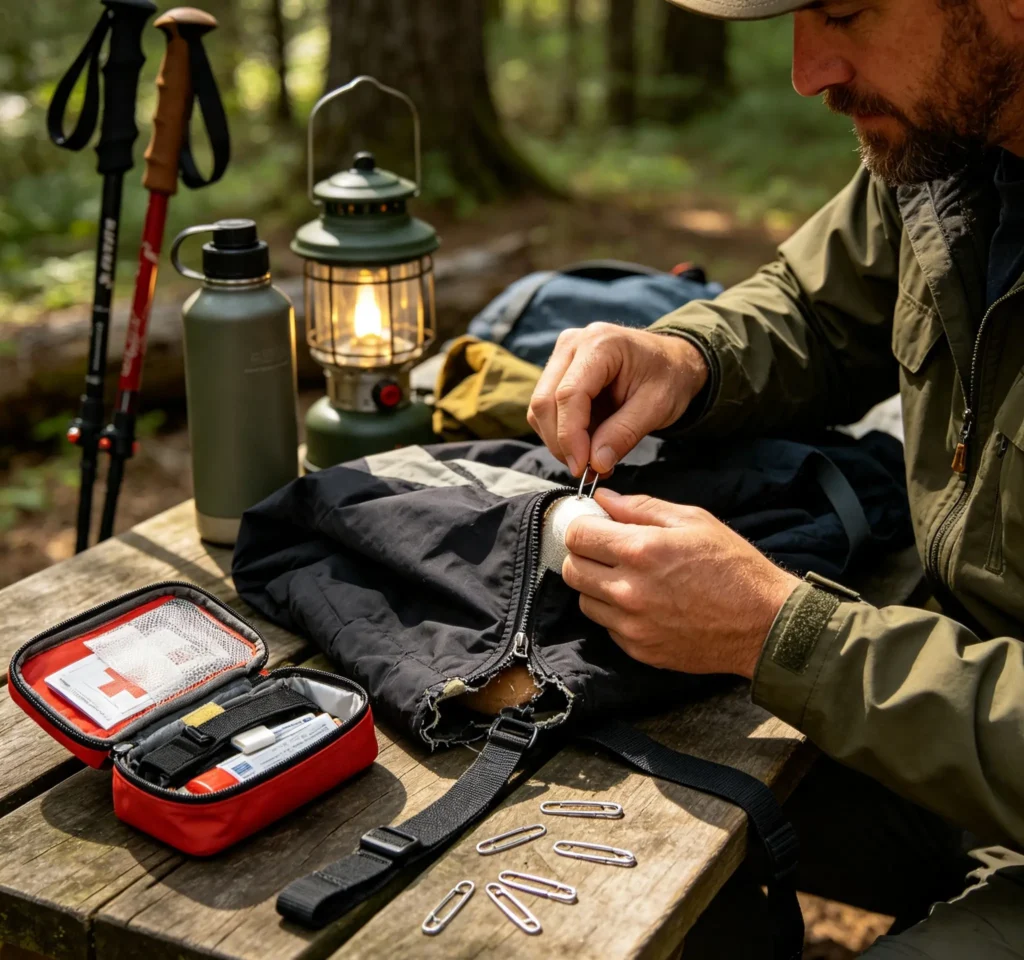
You have a cut or scrape. You apply a bandage. But tape does not stick well on sweaty skin. It falls off quickly. Your wound stays exposed.
Use a safety pin to secure the dressing. Pin it in place over the bandage. The pin holds the gauze firmly. It does not slip or fall off.
This is especially useful on joints and fingers. Tape fails in these areas. A safety pin works reliably. Your wound stays protected.
#3. Fix a Torn Backpack Strap
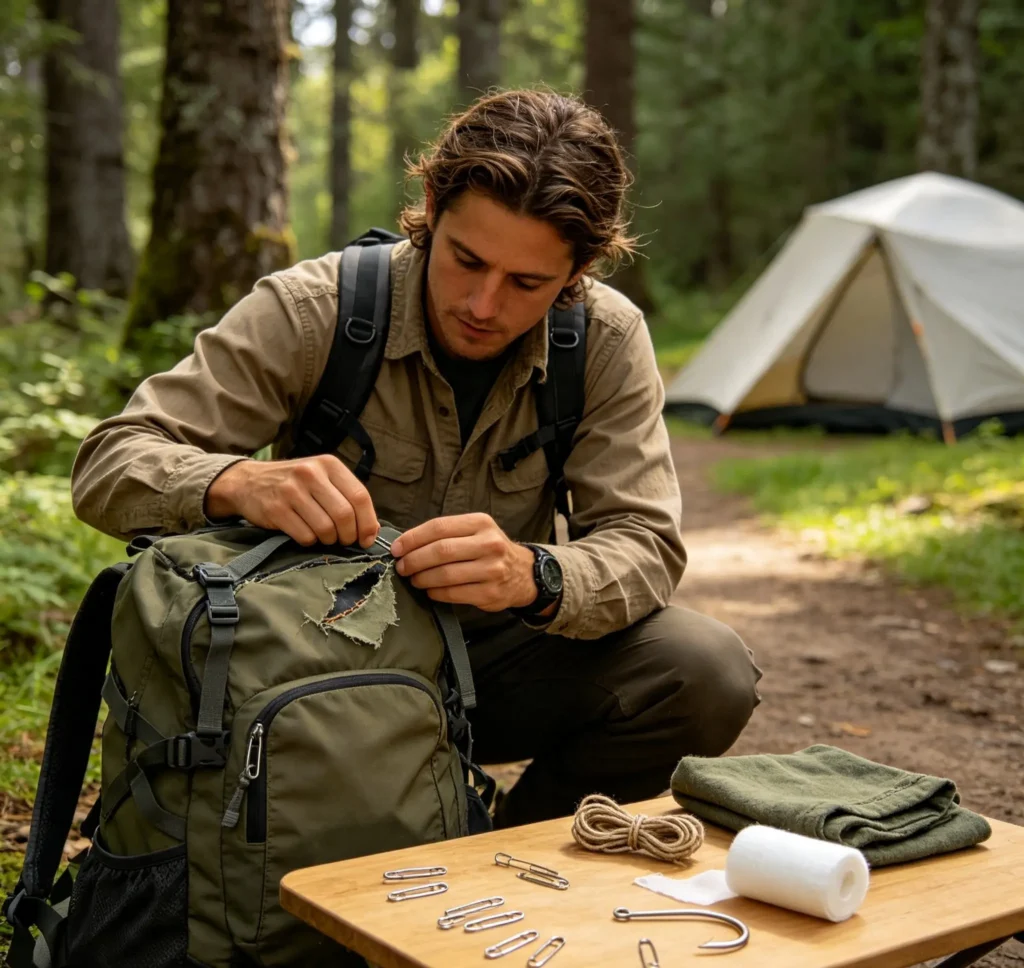
Your backpack strap tears. The webbing separates from the pack. Your pack becomes unusable. You have to carry it awkwardly. This is a major problem on the trail.
Use large safety pins to fix it. Pin the webbing back in place. Use multiple pins for strength. They hold the strap together. Your pack is functional again.
This is a temporary fix. It gets you through the trip. It gives you time for a permanent repair. Safety pins save your hike.
#4. Improvise a Fishing Hook
You are out of fishing hooks. You need to catch food. Your survival depends on it. You have no other options.
Bend a safety pin into a J-shape. Sharpen the point on a rock. Attach a fishing line. The pin becomes a hook. It works for small fish.
This is not as good as a real hook. But it works in an emergency. It can catch small panfish and trout. It provides food when you need it.
#5. Make an Emergency Gear Repair
Gear breaks in the backcountry. Tent poles crack. Sleeping bag zippers fail. Tarp grommets tear. You need solutions.
Safety pins are versatile repair tools. Pin a splint to a broken tent pole. Hold a sleeping bag zipper closed. Attach a tarp grommet that has pulled out.
The pins hold things together temporarily. They keep your gear functional. They get you through the night. This is emergency repair at its best.
#6. Mend Clothing on the Trail
Your clothes get damaged on the trail. You rip a shirt on a branch. Your pants tear on a rock. Your sock keeps slipping down. These are annoying and uncomfortable.
Safety pins solve these problems. Pin a torn shirt closed. Hem a pair of pants. Keep a sock from slipping down.
The pins hold fabric together. They are strong and reliable. They keep you comfortable on the trail. You look a little rough, but you are functional.
#7. Create a Makeshift Sewing Needle
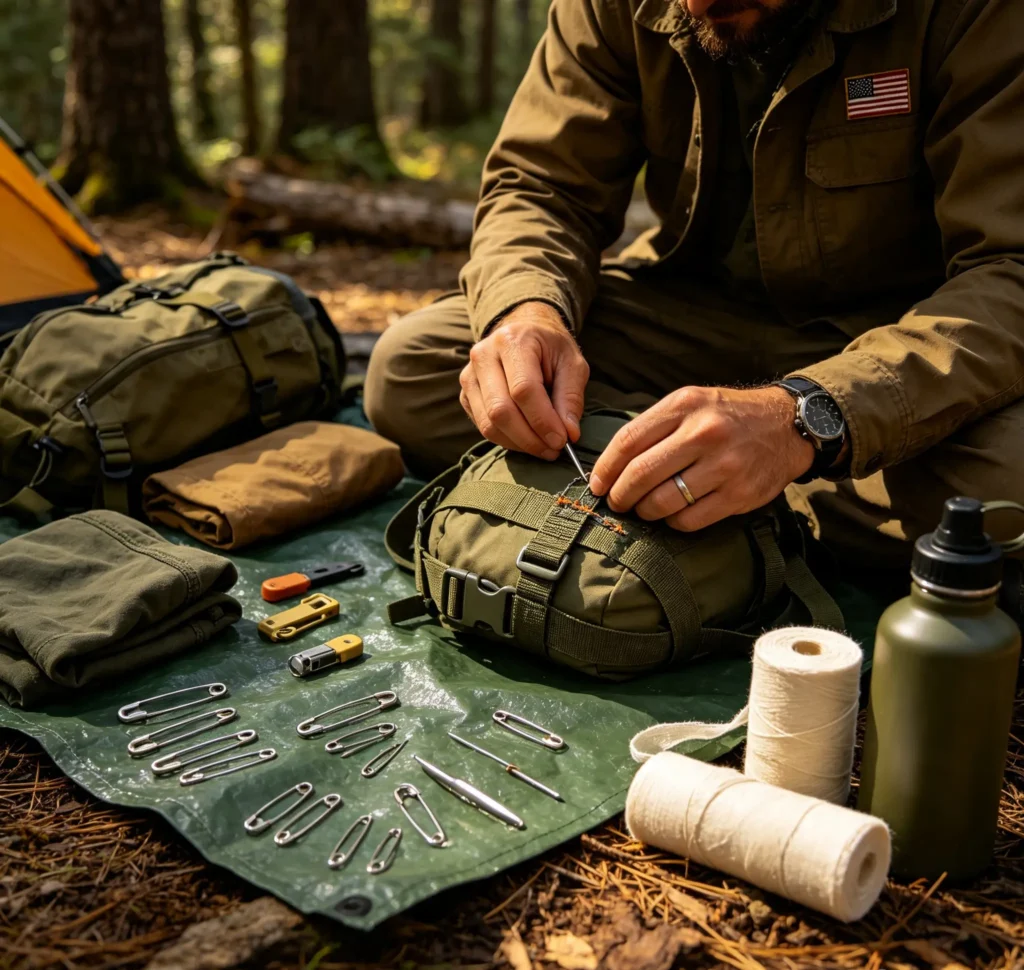
Sometimes you need to stitch. You have a deep wound. You need to repair heavy fabric. You need a needle. You do not have one.
Make one from a safety pin. Heat and straighten a small pin. It becomes a sharp, thin needle. Thread it with dental floss or thread. Use it to stitch gear. Sterilize it first if using on wounds.
This is a survival skill. It requires a little effort. It works well in an emergency. You have a needle when you need one.
#8. Lock a Stubborn Buckle
Some buckles slip open. They do not hold securely. Your pack strap loosens. Your hip belt comes undone. This is frustrating and unsafe.
Slide a safety pin through the webbing slots. It prevents the buckle from slipping. It locks the webbing in place. Your strap stays secure.
This is a simple solution. It takes seconds to do. It solves a common problem. Your gear stays adjusted and comfortable.
#9. Retrieve Small Items
You drop something small. A key falls into a crevice. A coin rolls under a rock. You cannot reach it. Your fingers are too big.
Use the tip of a safety pin. It is thin and pointed. It reaches into tight spaces. It hooks onto small items. It retrieves them easily.
This is a minor use. But it is extremely helpful. It saves you from losing small items. It is a clever little hack.
Conclusion
Safety pins are tiny metal MVPs. They pack a lot of utility. They replace a broken zipper pull. They secure bandages and gauze. They fix torn backpack straps. They improvise as fishing hooks. They make emergency gear repairs. They mend clothing on the trail. They become makeshift sewing needles. They lock stubborn buckles. They retrieve small items from tight crevices.
Carry a handful in your pack. They weigh nothing. They take no space. They solve so many problems. You will be amazed how often you use them. Do not leave home without them. Your future self will thank you. Happy camping. Stay prepared.