Rain flooding your tent? Try these 9 smart drainage hacks.

Spread the love

You are snug in your sleeping bag. Rain patters on the tent fly. You drift off to sleep. Then you feel it. A cold, damp sensation. Water is seeping through the floor. Your tent is flooding.

This is a camper’s nightmare. A wet tent ruins your trip. Your sleeping bag soaks through. Your gear gets wet. You spend a miserable night shivering in the damp.

You need to stop the water before it gets inside. You need drainage. Not just any drainage. Smart, improvised hacks that work. Here are nine proven solutions. They keep your tent dry. They keep you comfortable.

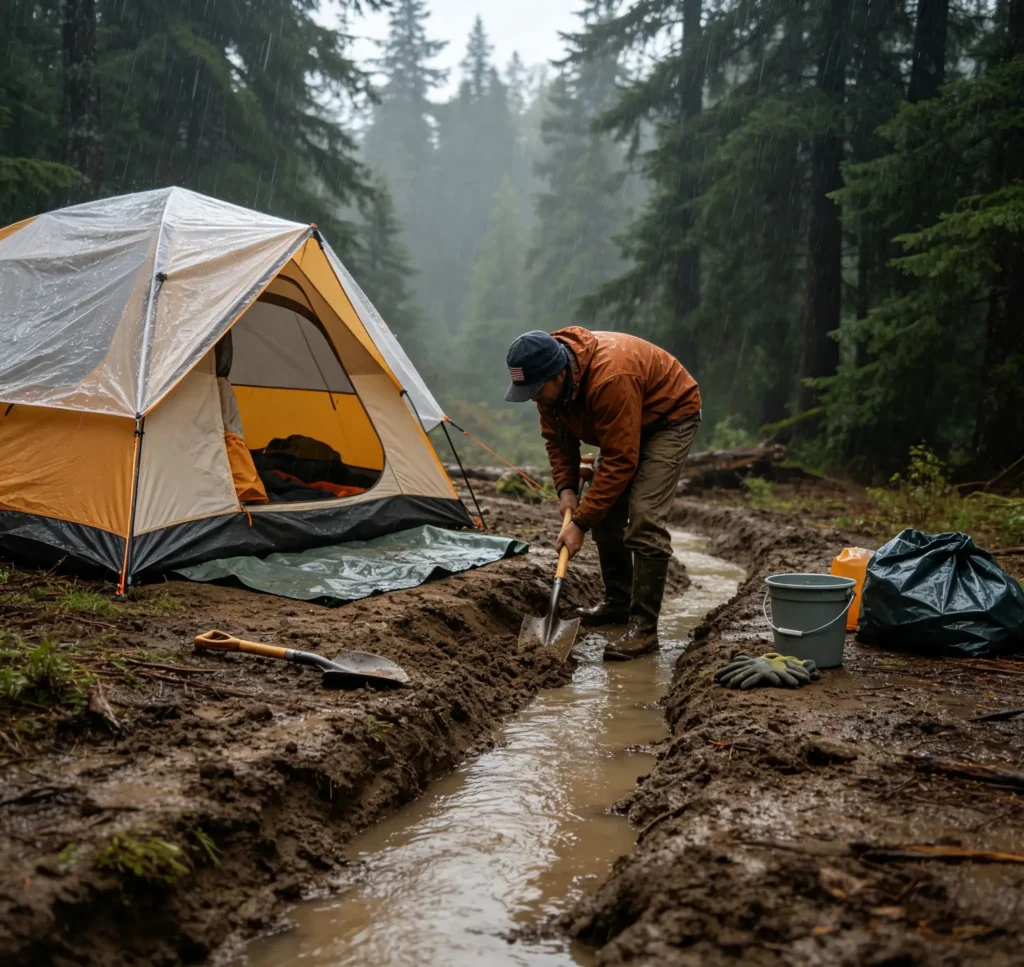
Table of Contents

#1. Uphill Trench

Water runs downhill. This is the basic principle. Your tent sits in its path. The water flows right under your floor. You need to intercept it.

Dig a shallow V-ditch above your tent. Make it about four inches deep. Point the ends sideways. The ditch catches water before it reaches your tent. It channels it around your shelter.

Line the ditch with bark. The bark prevents erosion. It keeps the ditch from collapsing. Water flows smoothly along its length. Your tent stays dry. This is your first line of defense.

#2. Rainfly Trench Extension

Your rainfly keeps water off the tent. But water drips off the edges. It pools around the door. It seeps under the floor. You need to direct it away.

Stake the rainfly’s edge into a mini-moat. Angle the stakes downhill. Create a small trench along the fly’s edge. Water drips into this trench. It runs away from the door.

This simple extension guides water away. It keeps your entry area dry. You do not step into a puddle. Your tent floor stays dry. This works with any rainfly design.

#3. Rock Gutter Line

Water runs along the high side of your tent. It collects and pools. It seeps under the wall. You need to redirect it. Rocks can do the job.

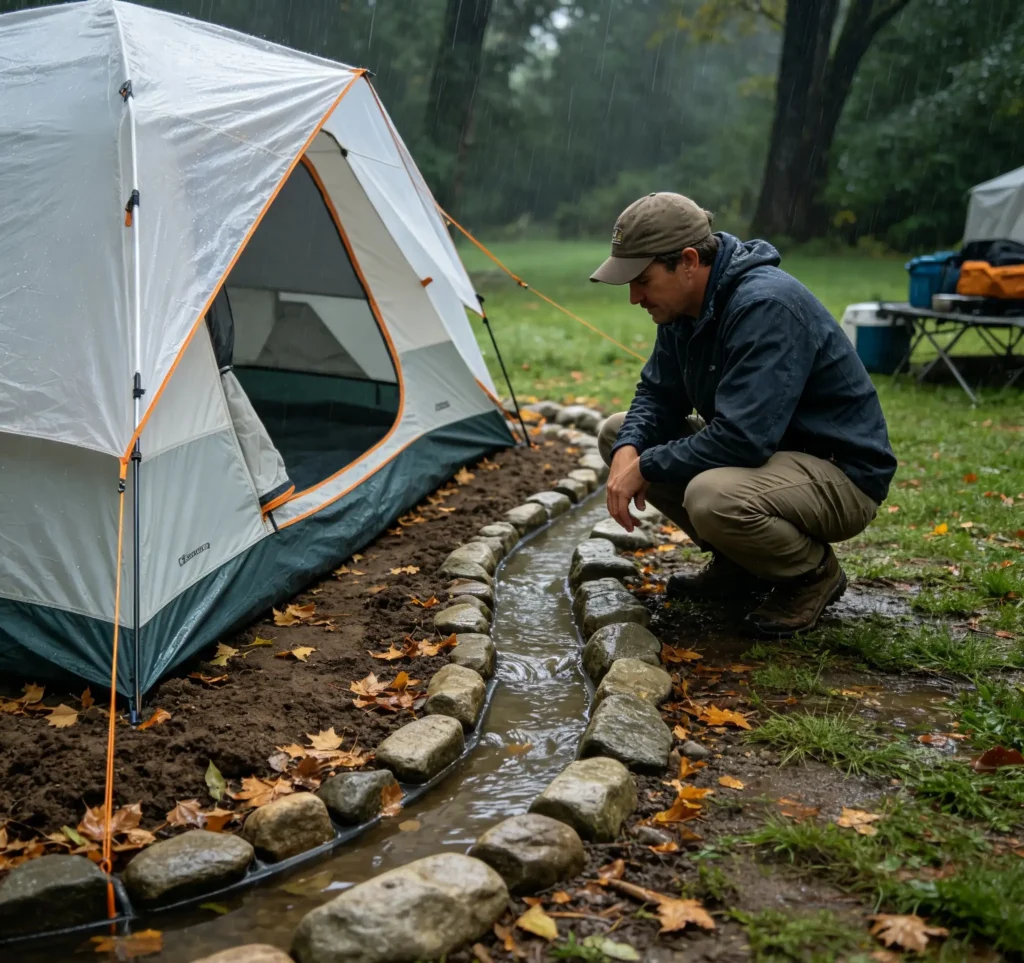
Place a row of flat stones along the high side. Angle them slightly outward. The stones act like a gutter. Drips fall onto the stones. They run along the edge. They flow around the tent.

This is a passive solution. No digging required. It works well on rocky ground. The stones redirect drips effectively. Your tent stays dry.

#4. Leaf Dam Diversion

Nature provides materials. Use them to your advantage. Wet leaves are available everywhere. They can create a diversion system.

Pile wet leaves into a low berm. Place it on the uphill side. Shape it to push water sideways. Direct the flow into a natural gully. Keep it away from your tent.

This is quick and easy. It uses local materials. It requires no tools. The leaf dam slows and redirects water. Your tent stays dry.

#5. Footprint Tail Trench

Your groundsheet protects your tent floor. But water can flow over it. It can flow under it. You need to stop this.

Leave the groundsheet extended on the uphill side. Make a “tail” of fabric. Dig a shallow trench under this tail. Water flows onto the tail. It drops into the trench. It runs away from the tent.

The tail catches the flow. The trench carries it away. This is a smart and effective hack. It uses the gear you already have.

#6. Jacket Rain Gutter

This is an improvised solution. It uses your rain jacket. You can make a gutter system.

Hang your rain jacket from trekking poles. Position it above the tent. Create a slope. Water falls onto the jacket. It funnels into a bucket or hole. The water is contained.

This works well in short bursts. It protects a specific area. It is creative and effective. Your jacket becomes a rain gutter.

#7. Log Spillway

A fallen log can be your friend. It creates a natural channel. Water follows its curve. You can use this to your advantage.

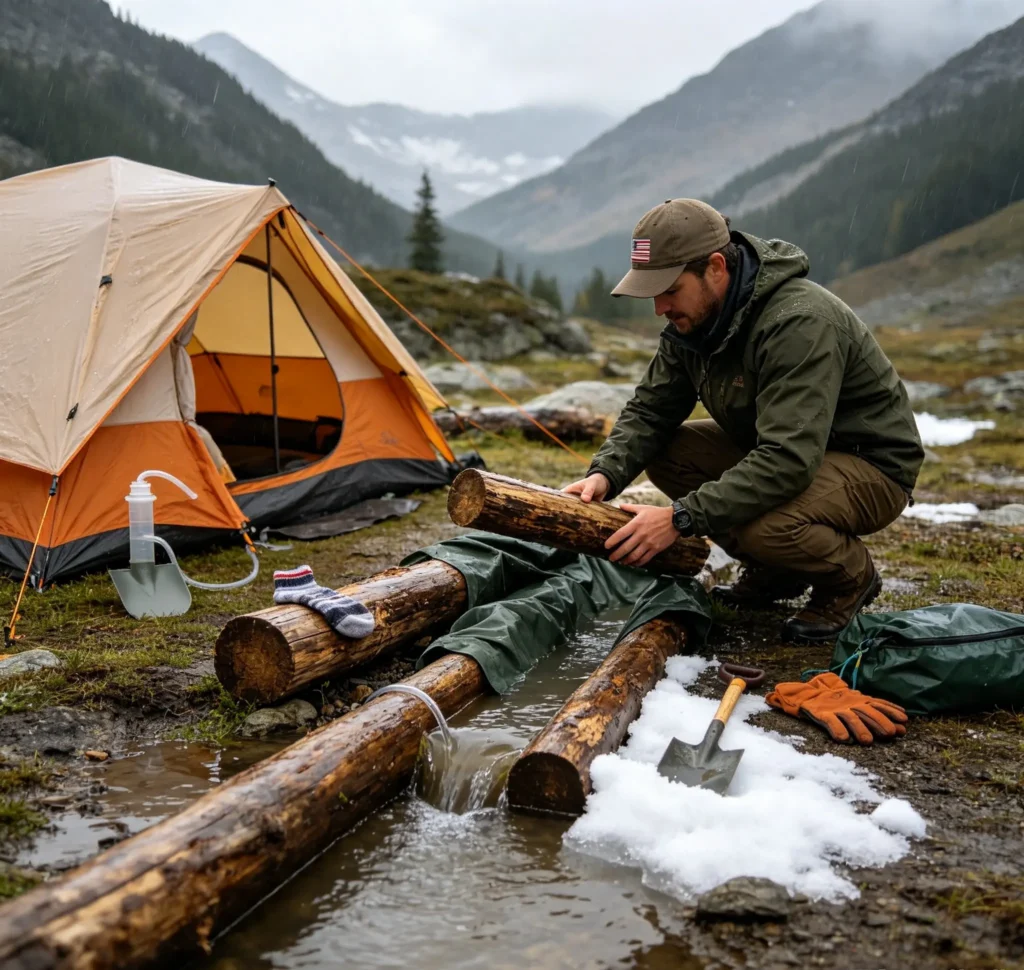
Lay a fallen log parallel to your tent. Place it on the uphill side. Water hits the log. It follows its length. It flows away from your tent.

The log acts as a spillway. It diverts water effectively. It is a natural solution. It requires no digging.

#8. Sock Siphon

This is a clever trick. It uses capillary action. It pulls water away from your tent.

Bury one end of a wet sock in the trench. Place the other end downhill. The moisture creates a siphon. Water travels along the sock. It flows down the hill.

This works for small amounts of water. It is a simple and effective hack. It requires only a spare sock. Your tent stays dry.

#9. Snow Trench for Melting

Winter camping presents a different problem. Snow melts around your tent. Water pools on the ground. You need to manage this.

Dig a moat around your tent. Create a trench in the snow. The melting snow drips into the trench. It is collected there. It does not soak your tent floor.

The moat catches the meltwater. It keeps your tent dry. It is essential for winter camping. This is a simple and effective solution.

Conclusion

A flooded tent is a miserable experience. It ruins your trip. It saps your morale. But you can prevent it. Use these smart drainage hacks. Dig an uphill trench. Create a rainfly moat. Build a rock gutter. Make a leaf dam. Use a groundsheet tail. Rig a jacket rain gutter. Lay a log spillway. Bury a sock siphon. Dig a snow trench.

These solutions are simple. They use what you have. They keep water away from your tent. You stay dry and comfortable. Practice these techniques before you need them. When the rain comes, you will be ready. Your tent will stay dry. You will sleep soundly through the storm. Happy camping.

Leave a Comment

Your email address will not be published. Required fields are marked *

Scroll to Top