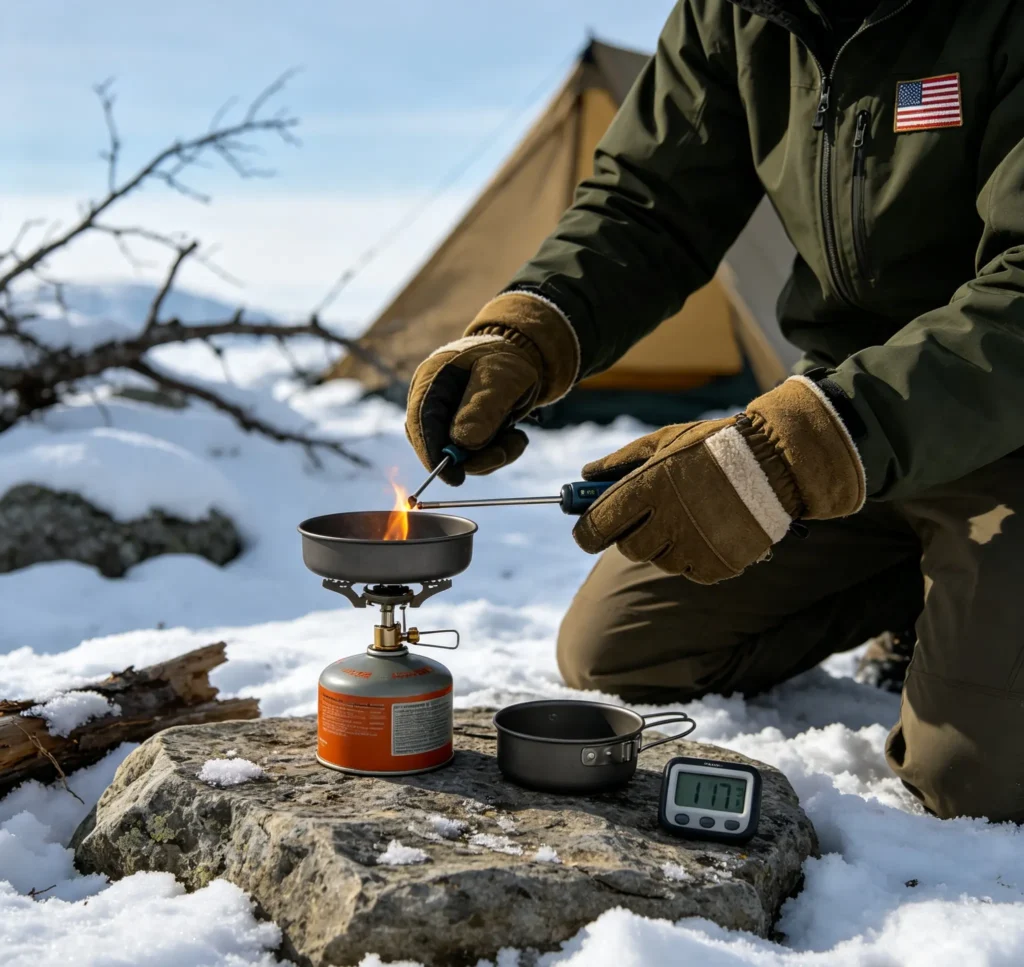
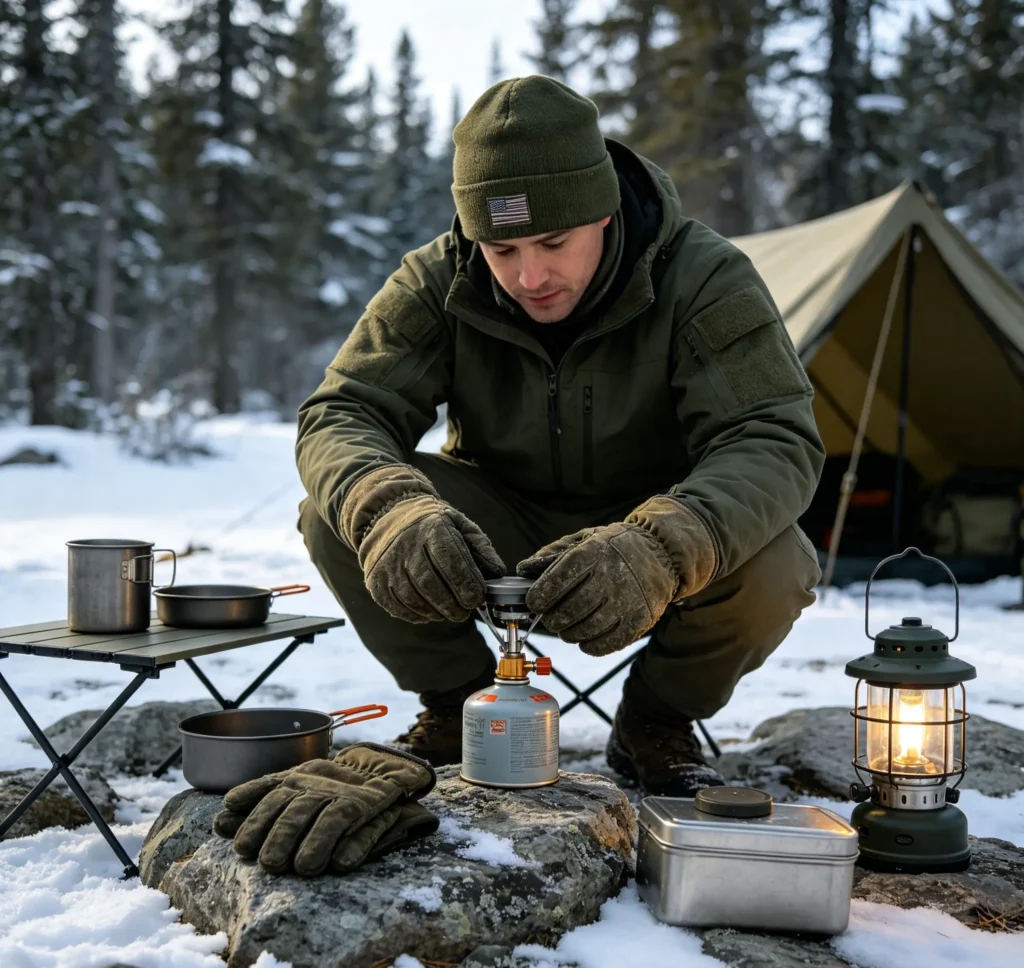
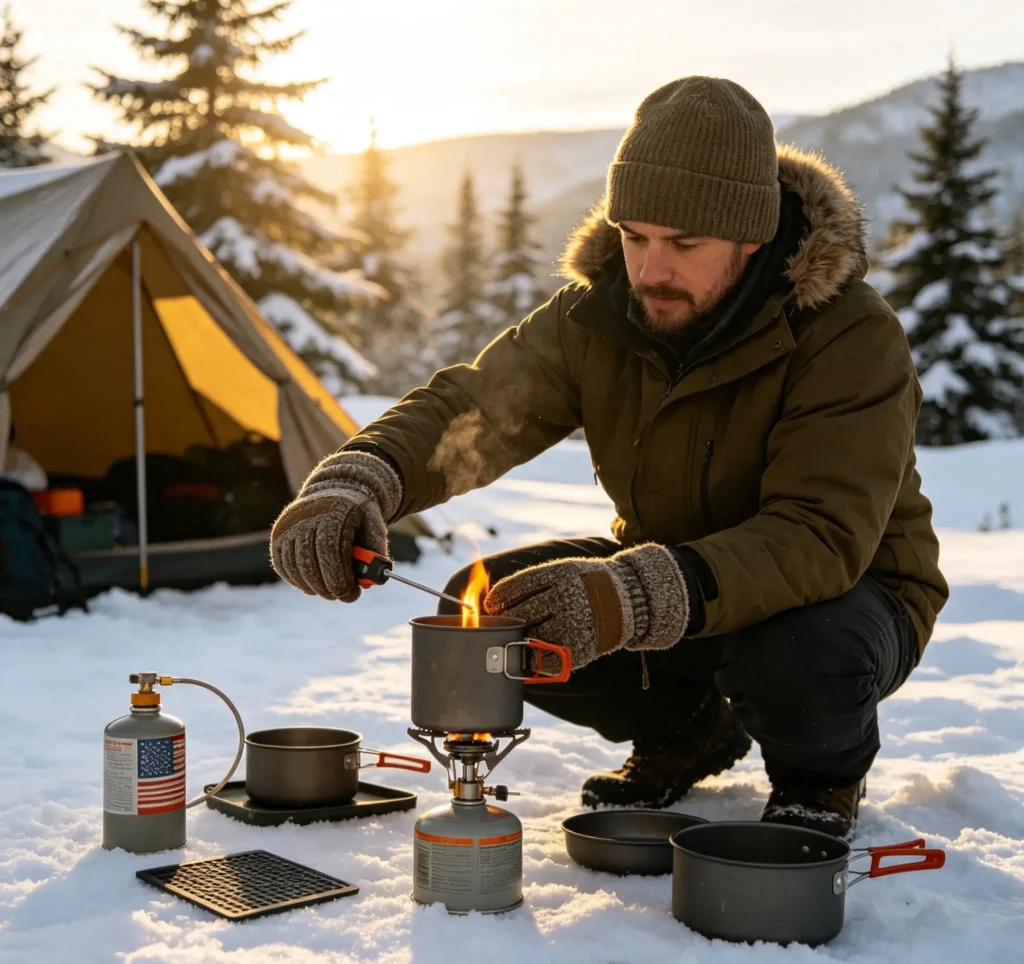
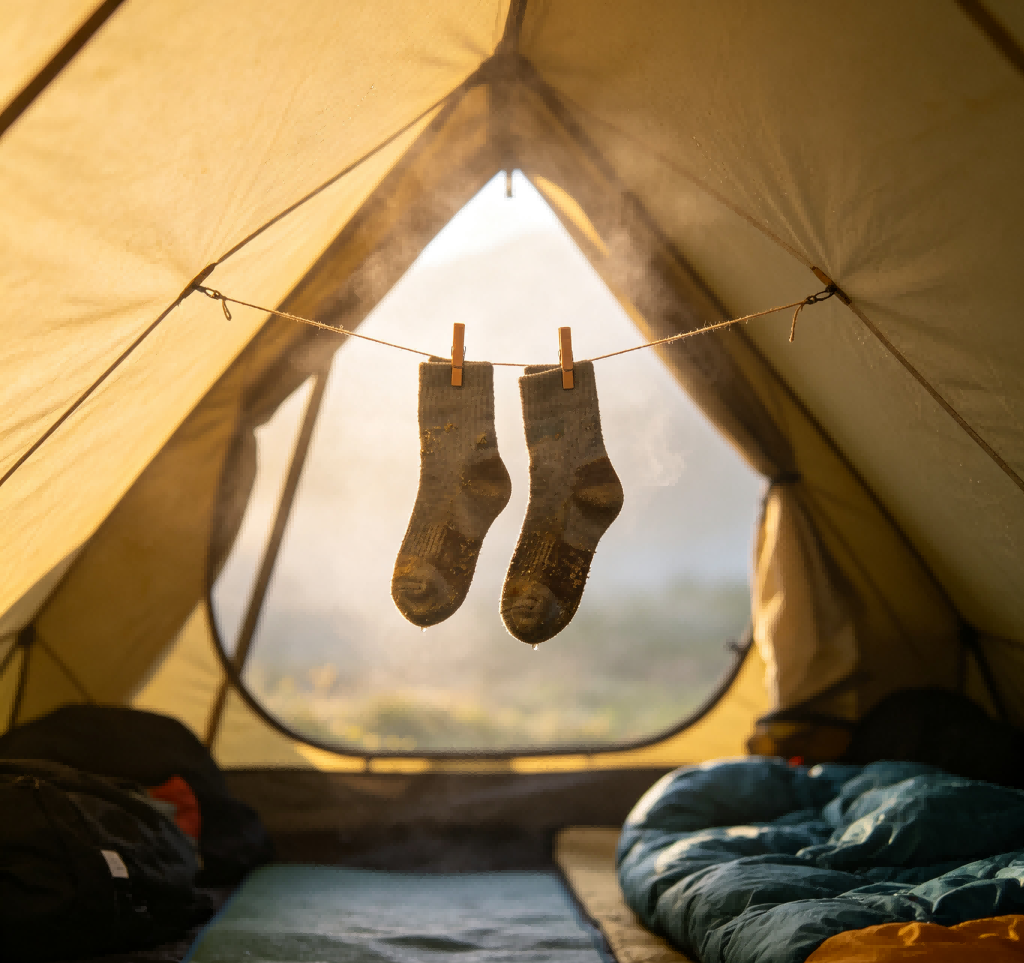
You are on a winter camping trip. The temperature is well below freezing. Your fingers are numb inside your gloves. You need hot water. You need to melt snow for drinking. You need to warm your core.
But your stove will not light. Your fingers cannot feel the controls. The fuel valve is stiff. The igniter is too small. You struggle for minutes. You grow colder. Your frustration mounts.
This is a common winter problem. It is also preventable. With practice and preparation, you can light your stove quickly. Even with thick gloves on. Here is how to master cold-weather stove ignition.
Table of Contents
#1. Practice Lighting Your Stove with Thick Gloves On
The time to learn is not in the field. It is at home. Put on the same gloves you will wear in freezing weather. Practice lighting your stove. Do it many times.
Train your fingers to feel for the control knob. Train them to find the igniter. Your sense of touch is different with gloves. You need to learn these new sensations.
This practice builds muscle memory. When you are on the trail, your hands will know what to do. You will not fumble. You will not hesitate. You will light the stove with confidence.
#2. Adjust the Fuel Valve Without Removing Gloves
The fuel valve is a critical control. It is often small and smooth. Numb fingers struggle to grip it. You cannot turn it easily. You need help.
Wrap a rubber band around the valve knob. Use textured tape. This adds grip. Your gloved fingers can turn it more easily. The texture grabs the glove material. You get more torque.
This simple modification makes a huge difference. You do not need to remove your gloves. You keep your hands warm. You save precious time. You reduce frustration.
#3. Use a Long-Neck Lighter or Ferro Rod
Short lighters are terrible in winter. Your thick gloves cannot hold them. Your fingers cannot press the trigger. You risk burning your gloves or your hand.
Switch to a long-neck lighter. It has a handle. You can hold it easily. The flame reaches the burner safely. Your hand stays away from the heat.
A ferro rod is another excellent option. It works in any weather. It is reliable and durable. You can operate it with gloves on. It is a backcountry essential.
#4. Pre-Loosen the Stove's Pump or Fuel Cap at Home
Fuel caps can be very tight. Your numb hands cannot grip them. You struggle to open them in the cold. This wastes time and energy.
At home, practice unscrewing the cap with gloves on. Make sure you can do it easily. Mark the “open” position with a dab of nail polish. This gives you a visual reference.
You can also pre-loosen the cap slightly. Just a fraction of a turn. This makes it easier to open in the field. Be careful not to loosen it too much. You do not want fuel to spill.
#5. Simulate Cold Stiffness by Freezing Your Gloves
Home practice is good. Cold practice is better. You need to experience how stiffness affects your hands.
Dip your gloves in water. Place them in the freezer. Let them freeze solid. Then put them on. Wear them for five minutes. Your hands will be cold and stiff. Your dexterity will be poor.
Now try to light your stove. This is realistic practice. You will experience the actual challenge. You will adapt and find solutions. This preparation is invaluable.
#6. Keep Thin Liner Gloves Inside Your Thick Mitts
Sometimes you need fine adjustments. You need to feel a small part. You need to manipulate a tiny control. Thick gloves make this impossible.
Wear thin liner gloves inside your thick mitts. When you need fine control, remove one thick glove. Keep the liner on. Your fingers have better dexterity. You can make the adjustment quickly.
Then replace the thick glove immediately. Your hand stays warm. You get the best of both worlds. This system is efficient and effective.
#7. Set Up Your Stove on an Unstable Surface
Your stove does not always sit on flat ground. You might be on a frozen lake. You might be on a snow mound. The surface is often unstable.
Practice setting up your stove on a snow mound at home. Make an uneven surface. Set up your stove. Balance it while wearing gloves. Get the feel of it.
This is a critical skill for winter camping. You will need it at dusk. You will need it in the dark. Practicing now prevents problems later.
#8. Time Yourself
Speed matters in winter. The cold saps your energy. Your hands grow numb quickly. You need to work fast.
Time yourself. Aim to light your stove in under 90 seconds. This is a realistic goal. If you cannot do it, simplify your setup. Modify the controls. Practice more.
A quick ignition means less exposure. You stay warmer. You stay safer. You get hot water faster. This is a key winter skill.
Conclusion
Lighting a stove in winter is a challenge. It is also a skill you can master. Practice with thick gloves at home. Modify your stove controls for better grip. Use a long-neck lighter or ferro rod. Pre-loosen caps and mark open positions. Simulate cold stiffness with frozen gloves. Keep thin liners inside your thick mitts. Practice setting up on unstable surfaces. Time yourself to achieve speed.
These eight steps build your confidence. They prepare you for real winter conditions. You will light your stove quickly. You will stay warm and hydrated. You will enjoy your winter trips. Do not wait for the cold to test you. Prepare now. Your future self will thank you. Stay warm. Stay safe. Happy winter camping.