“Which tent is better?” my friend Steve asked, with the earnest confusion of a golden retriever presented with two identical sticks. “This one or this one?”
I opened my mouth to deliver my well-rehearsed, annoyingly nuanced outdoorsperson spiel. “Well, Steve, it depends on the weather conditions, the terrain, the trip duration, your personal tolerance for condensation-related discomfort, the phase of the moon…”
But then I stopped. One was a sleek, geometric dome that looked like it could double as a Mars lander. The other was a simple, sloping A-frame that wouldn’t have looked out of place on a 1970s Scout trip.
Why did they look so different? What series of ancient, primal arguments led to these two very different solutions to the simple problem of “I don’t want rain on my face while I sleep”?
This wasn’t just a question for a gear-nerd deep-dive. This was a 10,000-year-old question.
And I was determined to find the answer. So, I embarked on a journey—not into the woods, but into the bizarre, wind-whipped, and often absurd history of the humble tent.
Join me, as we answer the ultimate question: what is the best tent design?
Table of Contents
The Modern Tent Zoo: A Field Guide to Your Nylon Prison
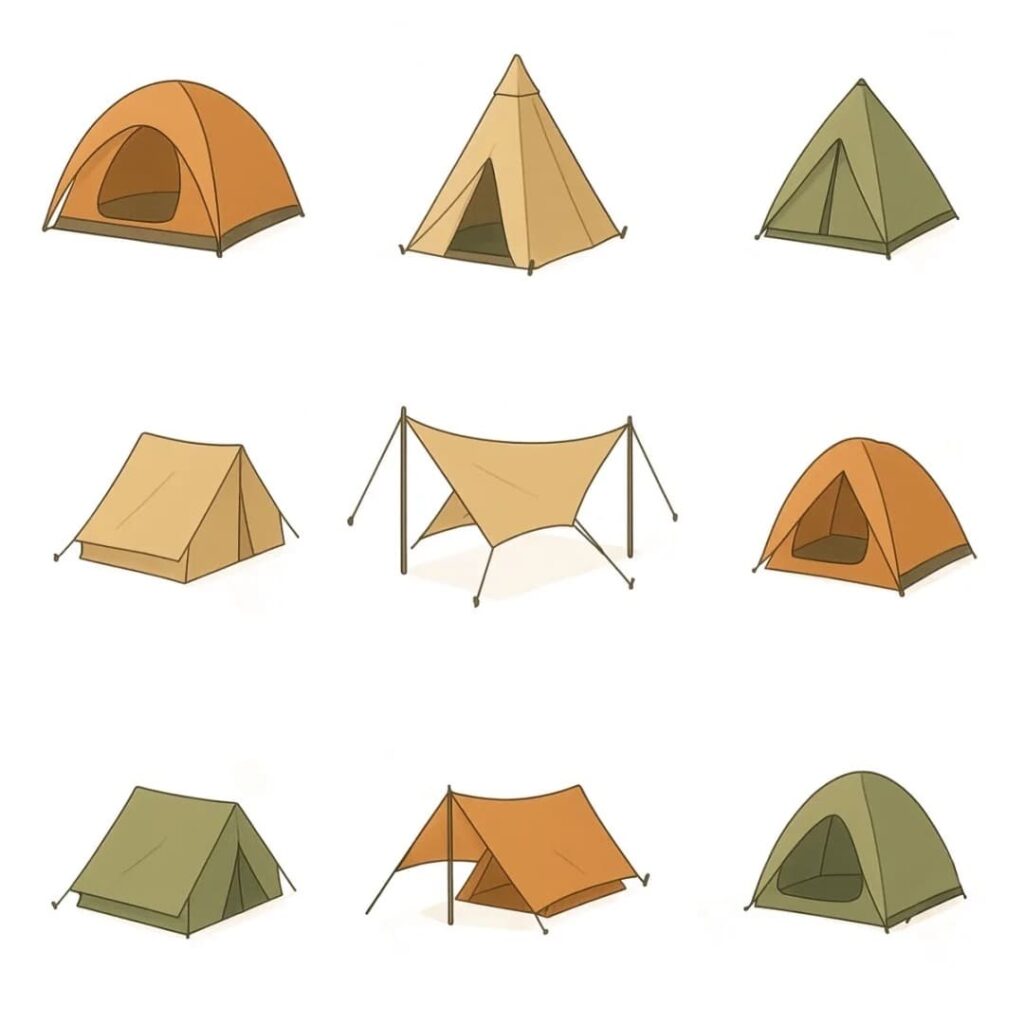
Before we can understand where we are, we need to see what’s in the cage. Modern tent designs are a glorious menagerie of shapes, each promising to be your home away from home, provided your home is 20 square feet and smells of yesterday’s socks.
The main contenders in this geometric cage match are:
• The A-Frame: The classic. The OG. It’s the tent you drew as a child. Two poles at either end, a rainfly, and you’re done. It’s basically a house roof plopped on the ground.
• The X-Frame Dome: The sporty one. It looks like a series of croquet wickets got tangled up and decided to become architecture. It’s the default for most car campers and casual backpackers.
• The Tunnel Tent: The stretch limo of tents. Long, tubular, and popular in Europe, it promises maximum living space, provided you enjoy living in a corridor.
• The Lean-To: The minimalist’s dream. Or the lazy person’s solution. It’s just a sheet of fabric propped up at an angle. Great for watching the sunset, less great for a surprise hailstorm from the side.
• The Pyramid Tent (or Mid): The sophisticated tipi. A single pole in the center holds up a elegant, sloping canopy. It’s all about that central headroom.
• The Geodesic Dome: The dome’s beefier, smarter cousin. With more poles crossing over each other to form triangles, it’s the tank of the tent world, built for punishment.
And let’s be clear: these are just the purebreds.
For every one of these, there are a hundred hybrids, mutants, and “what-on-earth-were-they-thinking” variations.
But staring at this lineup, the question becomes even more pressing: why does the simple A-frame still exist alongside the hyper-engineered geodesic dome?
A Roast of Modern Tent Designs (You’re All Beautiful, In Your Own Way)
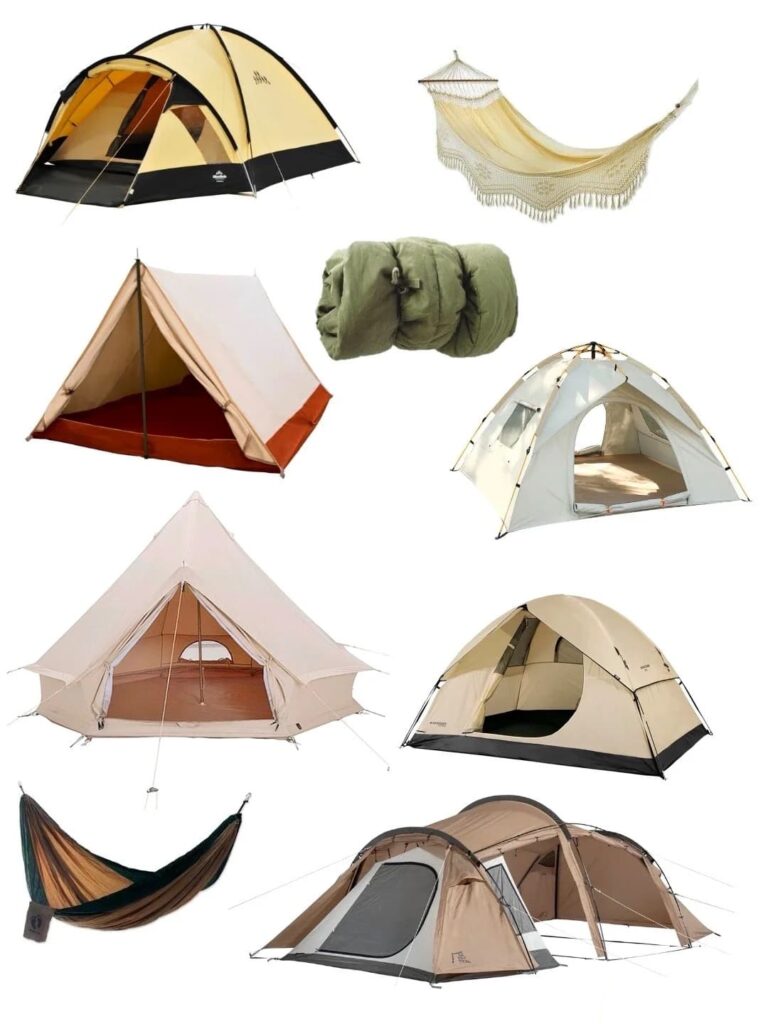
Let’s put these popular designs on the couch and see what makes them tick, and more importantly, what makes them tick us off.
• The Pyramid: So simple, so lightweight. One pole! You feel like a genius setting it up. Then you try to sleep in it. You and your partner will spend the night in a frantic, elbow-throwing battle for the one spot where you can actually sit up—directly under the pole. It’s also about as aerodynamic as a grocery bag, catching wind like a sail. A gentle breeze becomes a full-body flapping experience.
• The A-Frame: The two-pole design fixes some of the pyramid’s floppiness, but introduces new problems. The pole at the entrance is a guaranteed shin-buster. The long, vertical side panels are a magnet for sagging in the rain, leading to that special “damp fabric gently caressing your face” sensation at 3 AM. Headroom? What headroom? The only place you can stand up is in your dreams.
• The X-Frame Dome: Ah, the people’s champion. It’s freestanding, which means you can pitch it and then carry it around like a giant nylon turtle shell. It’s strong and stable. The trade-off? It’s a veritable pole-apalooza. You’ll spend 20 minutes just figuring out which elastic-shock-corded end goes into which grommet, and the weight adds up. It’s the tent equivalent of a Swiss Army knife: convenient, but a bit heavy for what it is.
• The Tunnel Tent: The space is glorious. You can have a “living room” and a “bedroom.” You can almost do yoga in there. But get ready for the coffin-core aesthetic. Once you’re in your sleeping bag, the world outside ceases to exist. The walls slope down sharply, and the feeling of being sealed in a fabric tube is… profound. It’s also a nightmare in a crosswind, wanting to roll down a hill like a runaway burrito.
Digging Deeper: When Your Landlord Was a Woolly Mammoth

Let’s travel to circa 15,000 BC, central Ukraine. It’s cold. There are massive, hairy elephants wandering around that you definitely do not want to annoy.
What’s a nomadic human to do? Build a dome hut, of course! But not just any dome hut. Archaeologists in 1965 found four huts constructed from… wait for it… woolly mammoth bones and hides.
Let’s just pause on that. The poles were mammoth femurs. The guylines were probably mammoth tendons. This wasn’t about shaving grams or having a “fast pitch time.” This was about survival.
The design priorities were, in order:
1. Warmth (mammoth hide is toasty).
2. Not being eaten.
3. Using what was lying around (which, conveniently, was the remains of the things that wanted to eat you).
This pattern repeats globally. The Tepees of the Great Plains were brilliant for ventilation and smoke release, perfect for a fire-warmed life on the move.
The Igloos of the Arctic were masterclasses in insulation and structural integrity using only the material at hand: snow.
These weren’t just shelters; they were homes. They prioritized livability—space for the family, a place for the fire, storage for food. Portability was a factor, but it was balanced against the need to, you know, actually live.
They were heavy, took time to build, and were deeply connected to the environment and materials.
Our modern obsession with speed and weight hadn’t been invented yet. We were too busy trying to prevent our structural supports from wandering off.
The Shift to Mobility: “I’m Not Living Here, I’m Conquering Here”
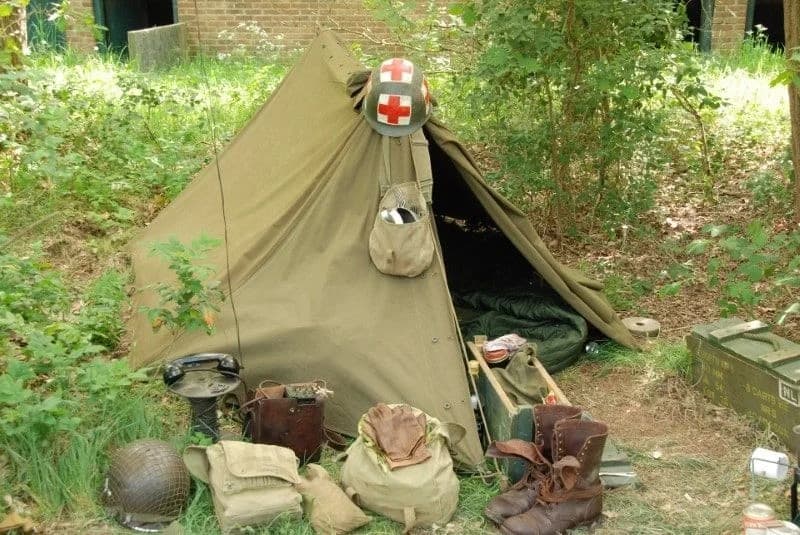
As humans got more organized (and more interested in stabbing other humans from faraway lands), the tent’s purpose shifted.
The Roman army didn’t need a winter home; they needed a mobile barracks they could set up and tear down every night from Scotland to Syria.
Enter the Roman field tent: heavy canvas, A-frame design, built for speed, standardization, and weather protection.
This was a seismic shift. The tent was no longer a family’s dwelling; it was a soldier’s piece of infrastructure.
The same logic applied to the Mongol Yurts (efficient, portable homes for an empire on horseback), the lavish Ottoman Pavilions (mobile palaces to impress the locals), and the British Bell Tents (simple, robust, and perfect for colonizing things).
The new holy trinity was: Mobility, Repeatable Setup, and Mass Production. The design was now in service of the campaign, not the community.
The soul of the tent was being streamlined for war.
Technological Thunderbolts: Thank You, World War II
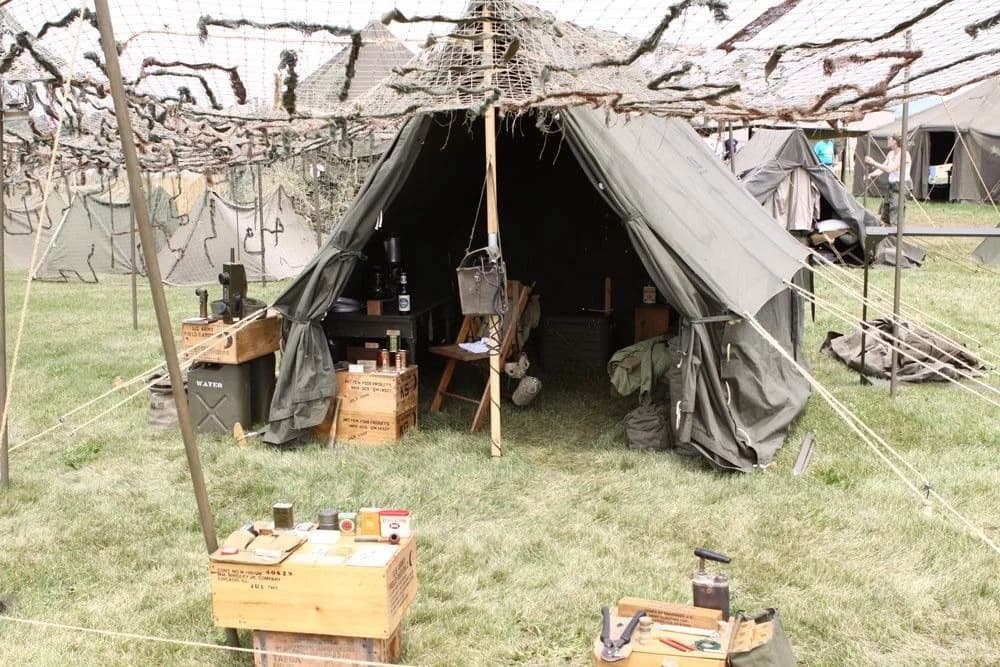
If the military standardized the tent, World War II supercharged it. This was the era of massive, material science leaps, and tents were along for the ride.
The two big ones:
1. Aluminum poles replaced heavy steel.
2. Nylon fabric replaced rot-prone, water-absorbing canvas.
This was a bigger deal than the invention of sliced bread for the camping world. Suddenly, tents got radically lighter and stronger.
Designers were no longer constrained by the sheer dead weight of their materials. They could experiment.
They could add more poles, create more complex shapes, and push tents into more extreme environments.
The tent was shedding its skin, evolving from a simple shelter into a piece of performance equipment. Weight and strength were no longer just desirable; they were the entire point.
The Age of Exploration: Taking the Tent to the Ends of the Earth
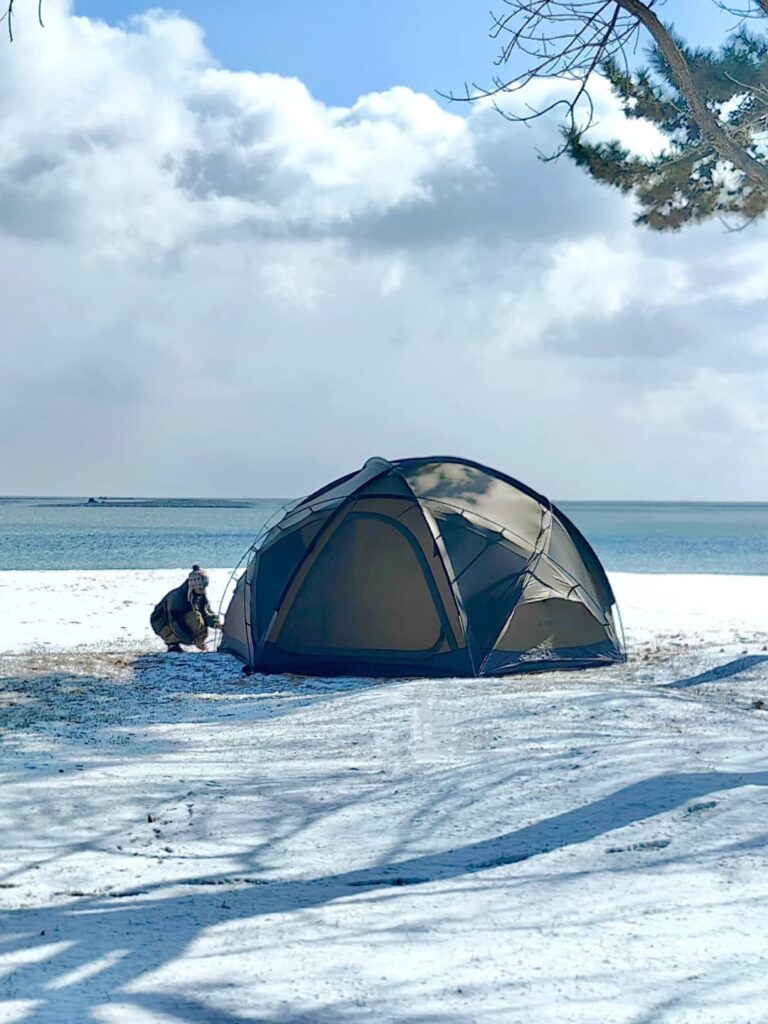
With these new materials in hand, the most ambitious humans on Earth turned their eyes to the planet’s last great frontiers: the North Pole, the South Pole, and the summit of Everest.
These weren’t solo adventures; they were large-scale, state-sponsored operations with scientists, cooks, and—crucially—designers.
They needed a tent that wouldn’t just survive a storm; it would laugh in the face of a katabatic wind that could peel the paint off a tank. The solution? The Geodesic Dome.
By creating a network of interlocking triangles, the geodesic dome distributed stress evenly across the entire structure.
It was phenomenally strong for its weight, and it could shed wind from any direction. It was the absolute pinnacle of “bomb-proof” design.
The 1953 British Everest expedition used a version of this, and it’s considered the birth of the modern, high-performance tent.
The tent had finally become a piece of serious mountaineering equipment, a life-support system in nylon and aluminum.
The 2000s Ultralight Revolution: Because Ounces Equal Pain
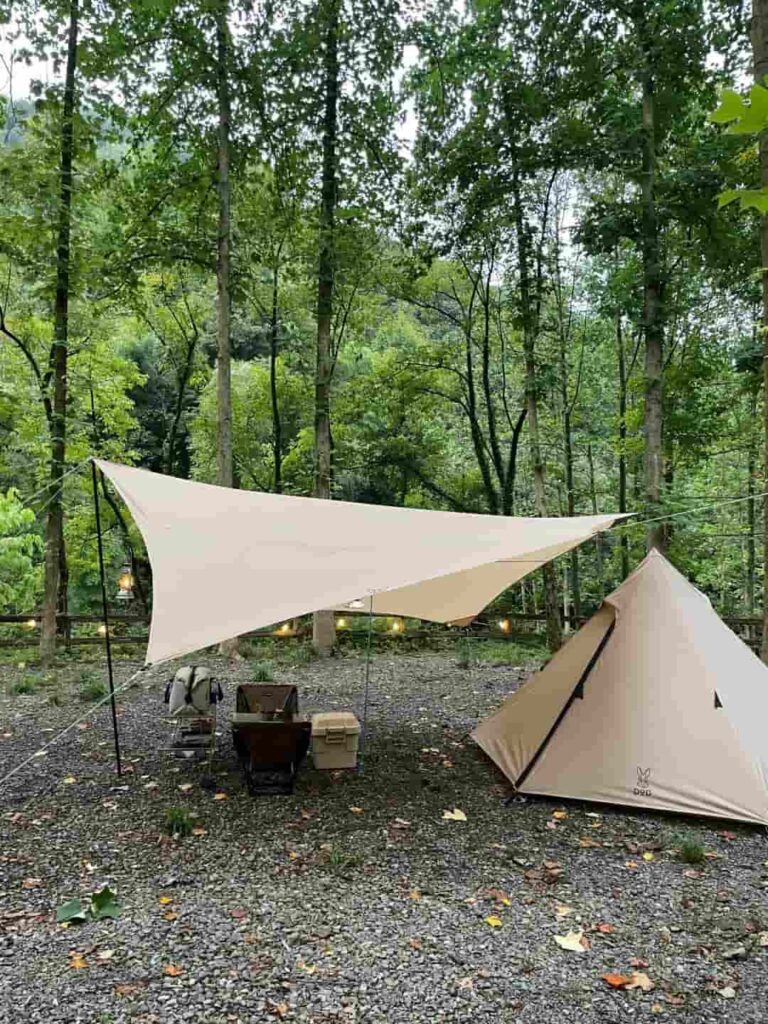
Just when tent design seemed to have peaked with the complex, pole-heavy geodesic dome, a counter-culture emerged from the long-distance hiking trails.
These weren’t military men or sponsored explorers; they were people hiking 20+ miles a day, for months on end, on the Appalachian Trail or the Pacific Crest Trail.
For them, every single ounce was agony. They looked at the geodesic domes and saw over-engineered heavyweights.
This “Ultralight” revolution was led by cottage-industry brands—tiny operations run out of garages by obsessive hikers. Freed from the constraints of mass-market appeal, they started experimenting wildly.
Their genius innovations?
• Trekking Pole Tents: Why carry tent poles when you’re already carrying two perfectly good poles in your hands? This one move hacked a pound off your pack weight instantly.
• Exotic Materials: Carbon fiber poles, and most famously, Dyneema Composite Fabric (formerly Cuben Fiber). This stuff was mind-boggling: stronger than steel for its weight, completely waterproof, and ridiculously light (and expensive).
The focus was no longer on bomb-proof durability, but on minimalist efficiency.
And here’s the hilarious, beautiful irony: in their quest for the simplest, lightest solution, these modern alchemists often ended up circling right back to ancient designs.
The single-pole pyramid tent? It’s a tipi. The A-frame tarp? It’s a classic.
After 10,000 years of innovation, we’d used space-age materials to reinvent the wheel. Or, more accurately, the woolly mammoth bone hut
The Grand Secret: It’s All About the Angles

So, after all this—from Pleistocene bones to Dyneema—what is the secret to a great tent design? It’s not magic. It’s geometry.
The perfect tent is a balancing act between four virtues:
1. Lightweight
2. Durable/Strong
3. Stable in wind
4. Simple to pitch
You can usually have three, but never all four. The designs that truly excel, especially in the performance-backpacking world, are the ones that master this geometry.
And right now, the king of the hill is a modern, highly refined version of the oldest design in the book: the A-Frame.
Look at the top-tier, performance-oriented tents from brands like Gossamer Gear, Zpacks, and Hyperlite Mountain Gear.
What do you see? The A-Frame. But it’s been to finishing school. It has short, steep walls that shed wind and rain instead of sagging.
It has sharp angles that create incredible strength from a simple shape. It often uses trekking poles, making it simple and lightning-fast to pitch. And it provides just enough usable headspace without wasting an ounce.
Dome designs are still viable and popular, but for the pure, weight-conscious, “I need to move fast and far” backpacker, the A-frame dominates.
The irony is so thick you could cut it with a titanium spork: thousands of years of human innovation, from mammoth bones to moon-landing fabrics, have led us right back to the simple, elegant strength of a triangle.
The Future: Is the Tent… Finished?

So, where do we go from here? Has tent design reached its peak? Is the A-frame the platonic ideal of a shelter, and we’re just fiddling with the details?
Probably not. The current trends point to a few areas of innovation:
• Inflatable Poles: Why fiddle with sections when you can just… pump? Air-beams promise incredibly fast setup and a unique strength profile.
• Laminate Fabrics: The continued pursuit of the holy grail: light, strong, and affordable.
• Cottage Industry & Cross-Pollination: The real innovation is still happening in garages. The next breakthrough material might come from the sailboat industry or aerospace, adapted by a gear-obsessed hiker in their workshop.
• AI and Computational Design: Imagine software that can run a million simulations to find the perfect balance of geometry, material, and stress points that a human brain would never conceive. The tent of the future might be a bizarre, organic-looking structure, optimized by an algorithm.
Conclusion: From Bones to the Beyond
So,“Which tent is better?” It depends. But now you know why it depends.
The choice between that sleek dome and that simple A-frame is the latest skirmish in a 10,000-year-old war against the elements.
We’ve journeyed from survival shelters built from the bones of giants, through the standardized kits of history’s greatest armies, to the material science miracles that conquered the world’s highest peaks, only to arrive back at a simple, profound truth: the best designs are often the ones that respect fundamental geometry.
The core of a great tent isn’t in its gadgetry or its hype. It’s in the angles. It’s in the marriage of a timeless shape with modern materials. It’s the triangle, perfected.
Now, I turn it over to you, dear reader. Do you think tent design has peaked? Are we just endlessly refining the A-frame and the dome? Or is there a radical, world-changing design lurking just over the horizon, waiting for its moment? Let me know in the comments below.