My journey into wilderness skills began not with a noble call to connect with my ancestors, but with a deep-seated, pragmatic fear of being cold and eating a cold can of beans.
The romantic vision of me, a rugged sage, conjuring flame from nothing to brew pine-needle tea is, in reality, a video reel of me swatting mosquitoes, muttering unprintable words, and accidentally setting my own eyebrow hair alight.
But through trial, error, and several small claims to dignity, I’ve learned that making fire isn’t about one perfect method.
It’s about having a bag of tricks, some elegant, some absurd, for when the universe decides your lighter should roll into a river.
So, strap in, pour a hot beverage (cherish it), and join me as I recount my adventures with ten ways to yell “PROMETHEUS WAS A WUSS!” at the sky.
Table of Contents
1. The Ferrocerium Rod (Ferro Rod): The People’s Champion
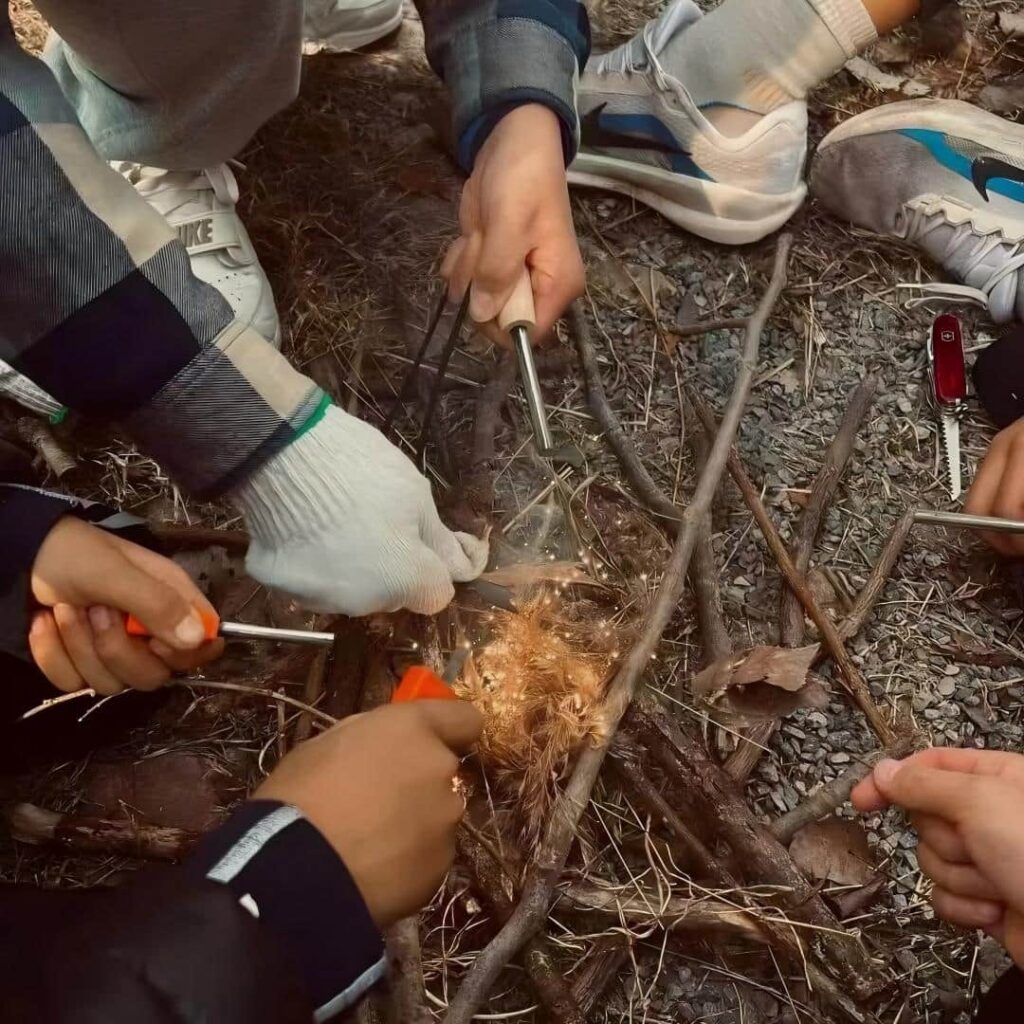
The Pitch: “Works wet, cold, and in almost all conditions!” the internet yelled at me. I bought one the size of a small candy bar, feeling 300% more survivable.
My Reality: The first time I used it, I learned a critical lesson: producing sparks and producing fire are different sports.
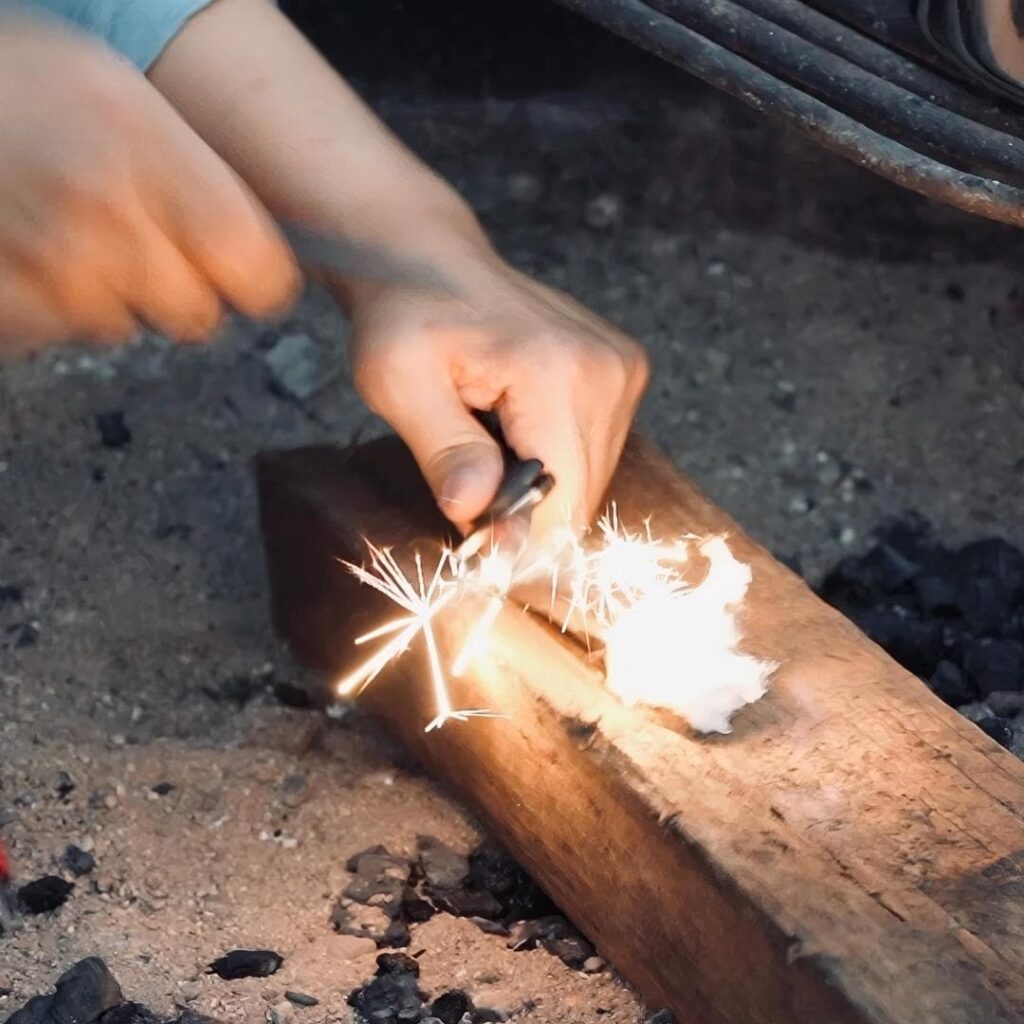
I scraped my striker down the rod with the enthusiasm of a kid on Christmas. A glorious fountain of blinding, white-hot sparks (seriously, they’re like 3,000°F) erupted… and died a centimeter above my perfectly prepared tinder bundle, which remained as cold and lifeless as my last dating profile.
The Humble Pie: The ferro rod doesn’t care about your enthusiasm. It cares about aim, tinder, and pressure.
You’re not starting a fire with the spark; you’re delivering an ember. You need to scrape a solid, focused stream of sparks directly onto a bird’s nest of ultra-fine, bone-dry tinder (think birch bark shavings, jute twine fuzz, or store-bought tinder quicks).
Hold the striker close, scrape slowly and firmly, and aim for a pile no bigger than a pencil eraser.
When To Use It: Always. It’s in my pocket on every hike. When your matches are soggy and your fingers are too numb for a lighter, the ferro rod is your metallic, spark-shouting buddy.
Just practice in your backyard first. My neighbors still talk about the “mad scientist fireworks” phase.
2. Flint & Steel: For When You Want to Feel Like a Pilgrim
The Pitch: The OG spark method. This is what got the Pilgrims through their first brutal winter (that and, you know, appropriating indigenous corn knowledge).
My Reality: I sourced a beautiful piece of knapped flint and a carbon steel striker. I felt incredibly historical.
Then I spent 45 minutes creating a pathetic shower of dull, cold sparks that wouldn’t have ignited a gas leak. I was ready to trade it all for a single potato.
The Secret Sauce: Char cloth. This is the magic. You take 100% cotton cloth (denim, t-shirt), seal it in a tin with a small hole, and bake it in a fire until it’s a black, crispy, but structurally intact square. This stuff is a spark vampire.
A single, sad spark from your flint and steel will land on it and glow into a perfect, red ember. You then gently place this ember into your tinder bundle and blow it into flame.
It’s a two-step process, but watching that ember glow feels like real magic.
When To Use It: When you want to slow down and feel a tangible connection to every fire made before 1900.
Also, it’s stupidly reliable once you have the char cloth. The steel striker also doubles as a can opener for your beans of triumph.
3. The Bow Drill: The Everest of Friction Fire
The Pitch: The classic “rubbing sticks together” method. The crown jewel of primitive skills. Achieve this, and you earn the right to never listen to a motivational speaker again.
My Reality: My first attempt looked like a dying otter having a seizure on a stick. I assembled my kit: a spindle (straight, dry stalk of something like mullein or cedar), a fireboard (a flat piece of the same soft wood with a notch), a socket (a stone or piece of hardwood to hold the top of the spindle), and a bow (a curved stick with a paracord string).
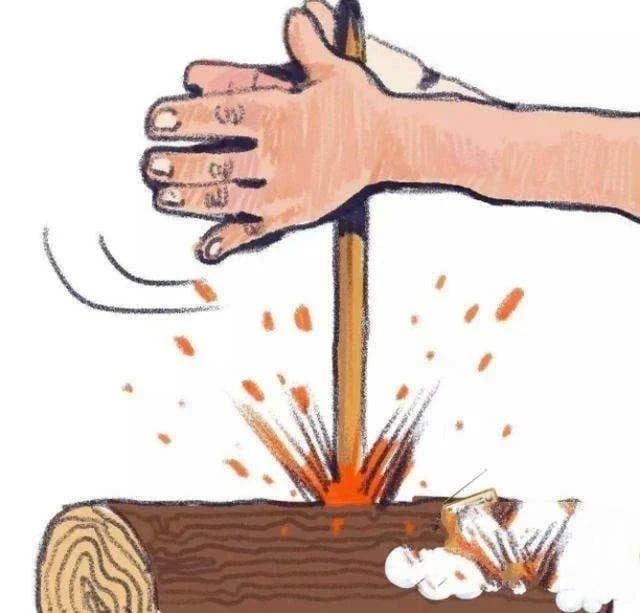
The theory is simple: wrap the bowstring around the spindle, place the spindle point in the fireboard’s notch, press down with the socket, and saw the bow back and forth.
Friction creates dust, dust heats up, and voilà—an ember.
The practice? I produced smoke, a lot of sweat, a blister that had its own ZIP code, and a profound sense of existential despair.
No ember. Just the sound of my own heavy breathing and the judgmental silence of the forest.
The Breakthrough: It’s all about form, materials, and patience. Your spindle and fireboard must be bone-dry, preferably from the same piece of soft, non-resinous wood.
Your body must be a stable, efficient machine. Slow, even, full strokes with the bow. Steady, firm downward pressure.
The moment you see smoke, you increase speed and pressure. When you stop, you should have a tiny pile of black dust in the notch.
If you’re lucky, it will glow. You then delicately transfer this precious coal to your tinder nest.
When To Use It: When you need to prove something to yourself, or to that friend who thinks they’re “so outdoorsy” because they own a Patagonia vest.
It’s a skill of last resort, but mastering it feels like unlocking a cheat code to the ancient world.
4. The Hand Drill: The Bow Drill’s Masochistic Cousin
The Pitch: Even more primitive! No bow, just your bare hands and a stick. The ultimate minimalist flex.
My Reality: I tried this once. Once. After 90 seconds, the skin on my palms felt like overcooked pepperoni. I produced a faint wisp of smoke and the distinct smell of regret.
I have since watched people do this with effortless grace. They are not human. They are mythical woodland spirits with palms made of aged leather.
The Theory: It uses the same principle as the bow drill but requires a thinner spindle and a fireboard with a wider, shallower notch.
You spin the spindle between your palms, rapidly moving them down the shaft as you spin, then quickly bringing them back to the top to repeat.
It requires insane speed, perfect downward pressure, and hands that have forgotten what pain is.
When To Use It: If you are stranded on a tropical island with only cattails and a lifetime of callus-building ahead of you.
Or if you want to win a primitive skills competition. For the rest of us, it’s a fascinating spectacle best enjoyed on YouTube.
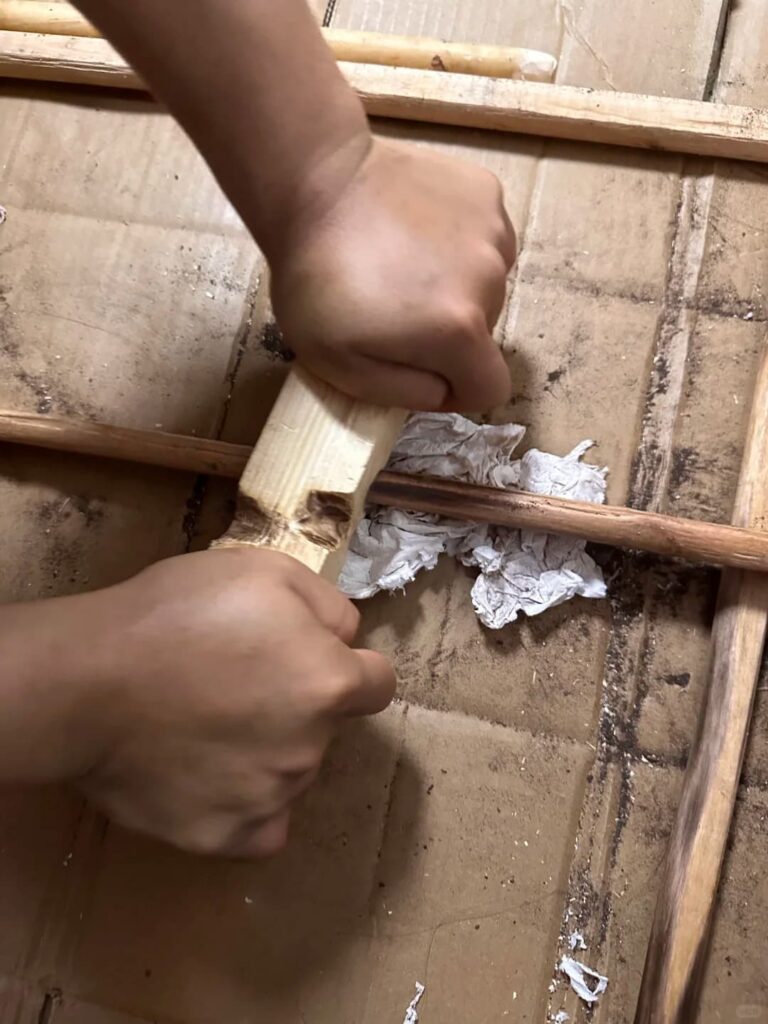
5. The Fire Plow: For the Linear Thinker
The Pitch: Instead of spinning, you just… plow. Take a hard spindle and rub it back and forth in a groove in a softer fireboard.
My Reality: This method felt more intuitive to me than the spinning ones. You get into a rhythmic, almost meditative groove (pun intended).
The constant back-and-forth motion piles up the wood dust at the end of the groove, where it eventually (theoretically) ignites.
My experience was a lot of smoke, a sore arm, and a groove that looked like a beaver had tried to write its memoirs.
I’ve never gotten a true ember from it, but I’ve come closer than with the hand drill. The key is using the right combo of woods (soft fireboard, hard plow) and maintaining a furious, consistent pace.
When To Use It: In environments where making a bow or finding a perfect spindle is difficult. It’s a straightforward, linear motion that’s easier to conceptualize.
Good for a change of pace when the bow drill is making you question your life choices.
6. The Fire Saw: The Unexpected Carpenter
The Pitch: Exactly what it sounds like. You “saw” one piece of wood against another.
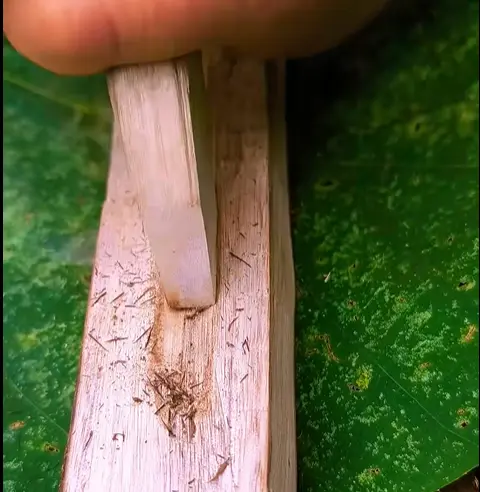
My Reality: I attempted the “Bamboo Fire Saw” method. You split a piece of bamboo, notch one half (the “hearth”), and use the sharp edge of the other half as the “saw.”
You fill the notch with tinder and saw like a maniac along the groove. The friction-dust falls into the tinder and should ignite.
What happened? I got a lot of fine, brown dust and a profound appreciation for the structural integrity of bamboo.
No fire. But it was fun! It feels active and aggressive, like you’re physically wrestling the fire into existence.
When To Use It: In bamboo-rich environments (Southeast Asia, etc.) where it’s a traditional and highly effective method.
It’s another great “plan C” that uses different materials than the spindle-based techniques.
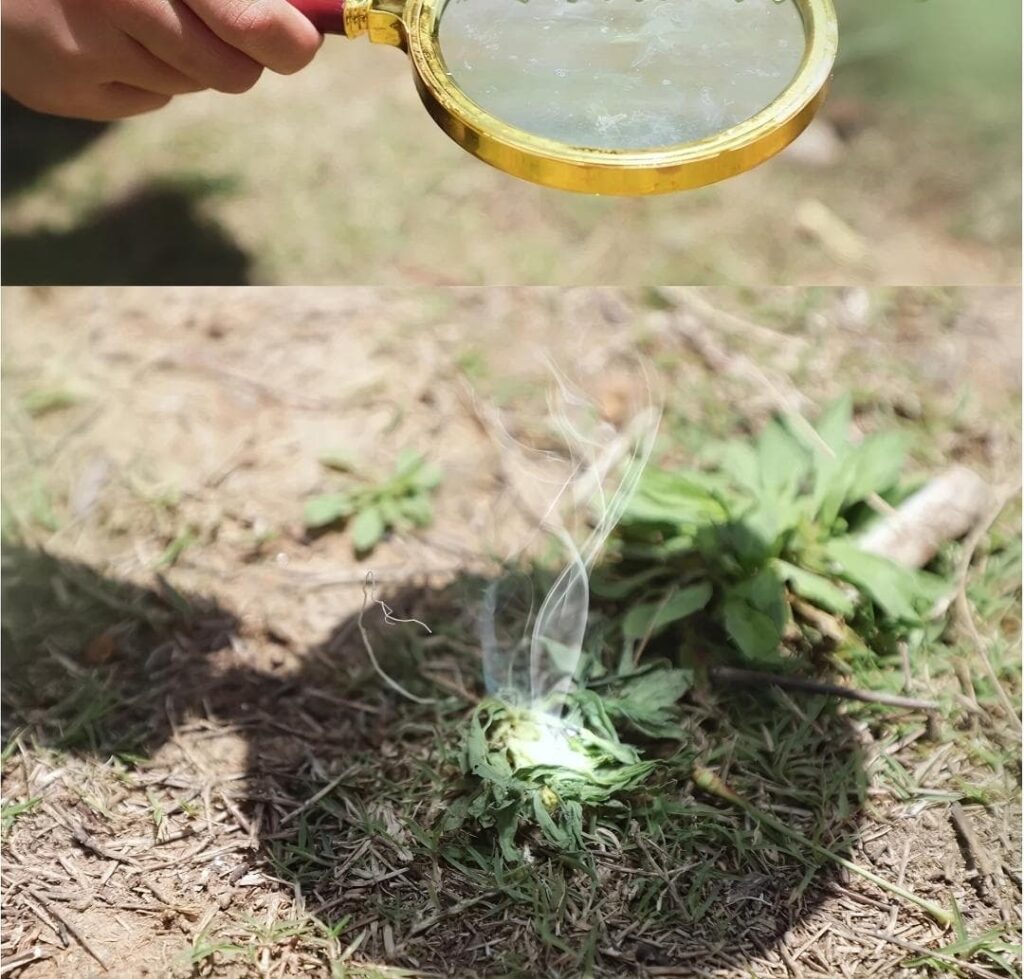
7. Solar Ignition: Playing God with a Magnifying Glass
The Pitch: The lazy person’s paradise. Use a lens to focus the sun’s rays into a searing point of heat on your tinder.
My Reality: This is the most satisfying method when it works. I’ve used a dedicated magnifying lens, the lens from a broken pair of reading glasses, and even the bottom of a soda bottle filled with water (it works in a pinch!).
There’s no smoke, no sweat, just silent, focused power. You see the bright dot, a wisp of smoke rises, and then—poof—a tiny flame winks into existence. It feels like science sorcery.
The Crucial Caveat: You need direct, bright sunlight. Overcast day? Forget it. Dusk? Nope. High noon in the desert? Perfect.
Your tinder also needs to be spectacularly fine and dark (char cloth is king here). This method taught me patience and precision.
Fiddle with the focus until the dot is the smallest, brightest point possible, and hold it utterly still. Any movement resets the heat clock.
When To Use It: On a sunny day when you want to feel like a benevolent (or malevolent) sun deity.
It’s also completely silent, which has its own tactical advantages if you’re into that sort of thing.
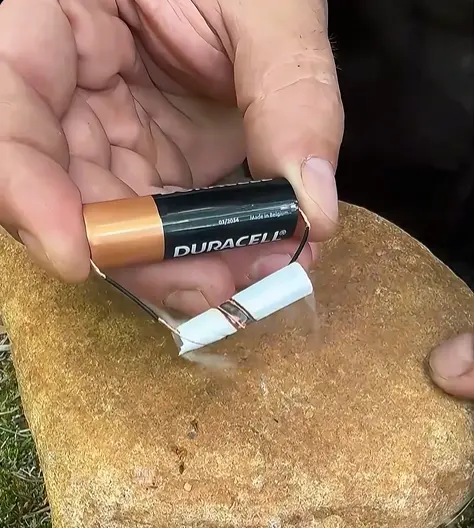
8. Battery + Steel Wool: The Garage Hack
The Pitch: Modernity fights back! Touch the terminals of a battery to a piece of fine-grade (0000) steel wool.
My Reality: This is less “wilderness skill” and more “MacGyver’s party trick,” but it’s so stupidly effective it must be mentioned.
I used a standard 9-volt battery. The moment the steel wool bridges both contacts, it completes the circuit.
The fine strands have high resistance, and they heat up instantly, glowing orange and bursting into brilliant, sparking flames. It’s immediate and almost alarming.
Important Safety Dance: This creates a very aggressive, short-lived ignition source. Have your tinder bundle ready to go before you do this.
And for the love of all that is holy, don’t do it near anything flammable you don’t intend to burn.
When To Use It: When you find an old toy or smoke alarm in a cabin and have some steel wool in your kit.
It’s a fantastic “oh crap” backup that requires almost zero skill or physical effort.
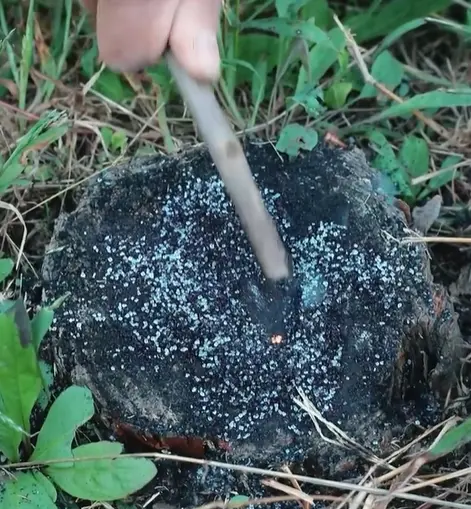
9. Chemical Fire: The Mad Scientist Method
The Pitch: Potassium permanganate (a common water-purifying chemical) + glycerin (a common first-aid antiseptic) = spontaneous fire after a few seconds.
My Reality: I did this once on a fireproof slab in my driveway, wearing safety glasses, with a bucket of sand nearby.
I am not a reckless man. I poured a small mound of the purple KMnO4 crystals, made a divot in the top, and added a few drops of glycerin.
We waited. Five seconds. Ten. Just as I thought I’d gotten the ratios wrong, a tendril of smoke curled up, followed by a sudden, vigorous WHOOSH of purple-tinged flame.
It was thrilling and vaguely terrifying.
The Verdict: This is a fantastic trick for your “chemistry set” kit, but it’s not a primary method. The chemicals need to be kept dry and separate.
But for sheer, dramatic reliability when sparked-based methods fail? It’s unbeatable.
When To Use It: In a true survival situation where you have these specific chemicals and need a guaranteed, weather-proof flame.
Or to win a bet about being a wizard.
10. The Char Cloth Ember Method: The Great Unifier
The Pitch: This isn’t a primary ignition method, but the ultimate force multiplier for any spark-based technique (Flint & Steel, Ferro Rod).
My Reality: Making char cloth was a revelation. It turned my frustrating flint and steel efforts into consistent successes.
That little black square is the ultimate spark catcher. The process of making it—the tin, the fire, the waiting—is a ritual that connects you to the preparation side of survival.
You’re not just making fire-starting gear; you’re time-traveling, preparing a tool that would be instantly recognizable to a frontiersman.
The method is simple: catch an ember on the char cloth from any spark. Then, place the glowing cloth into the heart of a softball-sized “bird’s nest” of ultra-dry, fluffy tinder (grass, shredded bark, etc.).
Fold the nest around it gently, and with slow, steady breaths—like you’re whispering secrets to a baby bird—nurse the ember into a flame.
When To Use It: Always. Char cloth is the bridge between a spark and a sustainable flame. Once you start carrying a small tin of it, every other method becomes exponentially easier. It’s the MVP of my fire kit.
Final Thoughts
After all this smoke, swearing, and occasional success, here’s my utterly non-glamorous conclusion: The best method is the one that works for you, right now, with what you have.
Your everyday carry should be a hierarchy of ease: A lighter (in a waterproof case). A ferro rod as a robust backup. Some char cloth and good tinder as your force multiplier. That covers 99.9% of scenarios.
The other methods—the bow drill, the flint and steel, the solar lens—are not about practical necessity for most of us. They are about knowledge as insulation.
They are about looking at the world and seeing not just objects, but potential: a battery, a lens, a stick, a chemical.