10 Tips Not to Be a Hot Mess for Your First Time Car Camping

Spread the love

Car camping—that glorious activity where you drive right up to your patch of dirt and unload your life for a few days—is one of the greatest joys known to humankind.
It’s like moving your living room into a national park, but with more bugs and significantly worse Wi-Fi.

So, you’ve decided to try car camping.
Maybe you saw a stunning Instagram reel of a misty morning over a glassy lake.
Maybe your significant other finally wore you down with promises of s’mores and starlight.
Or maybe you just really, really need a break from the soul-crushing cycle of doomscrolling and laundry.

Whatever the reason, welcome!
Here are 10 tips to make your first foray into the woods easier, less intimidating, and way more fun.

Table of Contents

Tip 1: Plan Ahead

Look, I’m spontaneous. I once decided on a Tuesday to drive to Canada for poutine.
But car camping is not the time for that brand of chaotic energy.

Spontaneity at a campground usually ends with you eating cold beans from a can in a Walmart parking lot because everywhere is full.

Step One: Where the Heck Are You Going?

Decide on a campground and, this is key, how to get there. This seems obvious, but you’d be surprised.

“It’s just off the Forest Service road,” can mean anything from “a well-paved path” to “a goat trail that will test your suspension and your marriage.”

The Reservation Rodeo

This is your first lesson in the brutal economics of outdoor recreation: everyone else had the same idea.

Many popular campgrounds, especially in national parks, require reservations six months to a year in advance. I’m not kidding.

Trying to book a spot at a place like Yosemite is more competitive than getting Taylor Swift tickets.

Research permits, availability, and rules before you go.

The goal is to avoid the heart-sinking sight of a “CAMPGROUND FULL” sign after a five-hour drive.

Meal Planning: A Love Story

You cannot wing food. Winging food leads to a cooler full of ketchup packets, a single onion, and profound regret.

Sit down and write out breakfast, lunch, and dinner for each day. This ensures you have enough food and keeps your cooler organized.

Group ingredients into meals in ziplock bags. Trust me, digging through a watery abyss of condiments and melting ice for the sausage links at 7 AM is a special kind of hell.

The Wildlife Briefing

Check local food storage regulations. In bear country, this isn’t a suggestion; it’s a rule written in the blood of stolen pic-a-nic baskets.

You’ll need a bear-proof container or a designated food locker. Failure to comply can result in a hefty fine or a very chonky, happy bear rifling through your Prius.

The Great Fire Debate

Finally, research fire restrictions. There is no sadness quite like the sadness of a man who has planned five consecutive “campfire-cooked” dinners, only to find a total fire ban.

Your dreams of charred hot dogs and soot-covered marshmallows will go up in smoke (or, more accurately, will not).

Plan some no-cook meals or bring a camp stove as a backup. The more research you do ahead of time, the smoother your trip will be.

Think of it as pre-gaming for nature.

Tip 2: Know Your Surrounding Area

You know that little dot on your Google Maps that represents you? In the deep woods, it becomes a liar.

It flickers and dies, leaving you digitally orphaned. So, before you go, do a little light stalking of the area.

Where is the closest town with a gas station? The nearest grocery store for that thing you inevitably forgot?

Most importantly, where is the nearest emergency center or ranger station?

You don’t need to be a cartographer, just keep a general sense of direction. In an emergency, “I think the town was… west-ish?” is less helpful than, “The ranger station is 15 miles back down the main road.” It’s about turning panic into a plan.

Tip 3: Share Your Itinerary

This tip is so simple and so important that it feels stupid to say, but I’m gonna say it anyway: TELL SOMEONE WHERE YOU ARE GOING.

Text a friend, your mom, your judgy cat-sitter: “Hey, going to Pinecone Gulch Campground, site 42. Be back Sunday afternoon.”

Include the name of the campground, your site number if you have it, and when you expect to return.

And for the love of all that is good, notify them when you’re back home safely. This is a non-negotiable, simple safety habit.

It’s the difference between a search party and a “glad you had fun!” text.

Tip 4: Think About Navigation

Let’s play out a scene. You’re driving down a beautiful forest road.

You round a bend. Boom. No service. Your GPS freezes.

You are now a pioneer, but without the useful skills like churning butter or forging for edible roots.

Your phone will betray you. It’s a fact. So, have backups.

  • A physical map: Yes, the paper kind. They feel weird and don’t let you zoom in.
  • A road atlas: Remember those giant books in the back of your parents’ car? They’re still glorious.
  • Download digital maps: Apps like Google Maps and Gaia GPS let you download areas for offline use. Do it.
  • Print out directions: Go full 2003 and print the MapQuest directions from your house to the campground.

Having multiple navigation options means you won’t be that person sobbing quietly in a ditch, trying to get a single bar of service to call for help.

Tip 5: Stay Organized

I learned this the hard way while living out of my car for a summer. My mom, a saint with the soul of a warehouse manager, visited once and had a minor heart attack.

She laid down the law: “A place for everything, and everything in its place.” It’s a rule that has saved my sanity.

Keep your food in one bin. Your clothes in a duffel bag. Your camping gear (headlamps, paracord, that weird multi-tool you bought but don’t know how to use) in another.

Be consistent. This prevents the “WHERE IS THE FREAKING LIGHTER?!” spiral that can consume precious campfire-building time.

It saves time, reduces stress, and keeps the tiny, mobile chaos-dungeon of your car somewhat orderly.

Tip 6: Plan for the Unexpected

Murphy’s Law is the unofficial god of camping: anything that can go wrong, will. Your car battery will die.

You will get a flat tire. You will realize you packed only one sock. The key is to prepare for these “just in case” scenarios.

For your vehicle: a jump starter (the little portable battery packs are lifesavers), a spare tire (and the knowledge to change it), and a basic toolkit.

For you: a well-stocked first aid kit. Not just for gushing wounds, but for headaches, blisters, and the existential dread of realizing you forgot the bug spray.

Bring extra food and extra water. I always keep a giant, gallon jug of water in the car, and I also pack a Sawyer Squeeze water filter—a tiny, brilliant device that lets me drink from basically any lake or stream without getting beaver fever.

If I run out of my clean water, I have a backup plan. The goal is to prepare both yourself and your vehicle so that a small hiccup doesn’t turn into a trip-ending catastrophe.

Tip 7: Be Mindful of Other Campers

At a designated campground, you are part of a fragile, temporary community. Some sites are secluded, but many are… intimate.

You will be able to hear your neighbor snore. They will be able to hear you argue about how to properly fold a tarp.

Please, for the love of all that is quiet and good, be courteous.

  • Keep noise levels down: Your Bluetooth speaker blasting dubstep at 11 PM is not everyone’s idea of “forest sounds.”
  • Supervise kids and pets: It’s not a free-range daycare. Prevent them from running through other people’s campsites. No one wants to trip over your giggling child while carrying a pot of boiling water.
  • Follow the rules: Check for and respect quiet hours. People come out here to relax and hear the birds, not your passionate, late-night debate about the best Star Wars movie.

Being a good neighbor creates a better experience for everyone, including you.

Tip 8: Pack a Few Luxury Items

Camping is about simplicity, but you don’t have to suffer. The beauty of car camping is that you have a car.

You can bring a few things that aren’t essential for survival, but are essential for your happiness. I call these “luxury items.”

The key is a few. Don’t bring your entire apartment. But one or two small comforts can transform the experience.

  • A real pillow: Stuffing a sack with clothes is a lumpy, sad substitute. A real pillow from your bed is a slice of heaven.
  • A coffee setup: Ditch the instant crystals that taste like dirt-water. A simple French press or an AeroPress makes a real, delicious brew that makes morning in the woods feel truly luxurious.
  • A book or a card game: For when you’re just sitting and being. It encourages actual relaxation instead of just staring at your hands.

These small joys reinforce the best part of camping: appreciating the simple, good things.

Tip 9: Pack Out Your Trash

This should be common sense, but based on the evidence I’ve seen at campsites, it is not.

People leave behind the most baffling trash: diapers, plastic bottle caps, wet wipes (which are NOT biodegradable, by the way), cans, you name it.

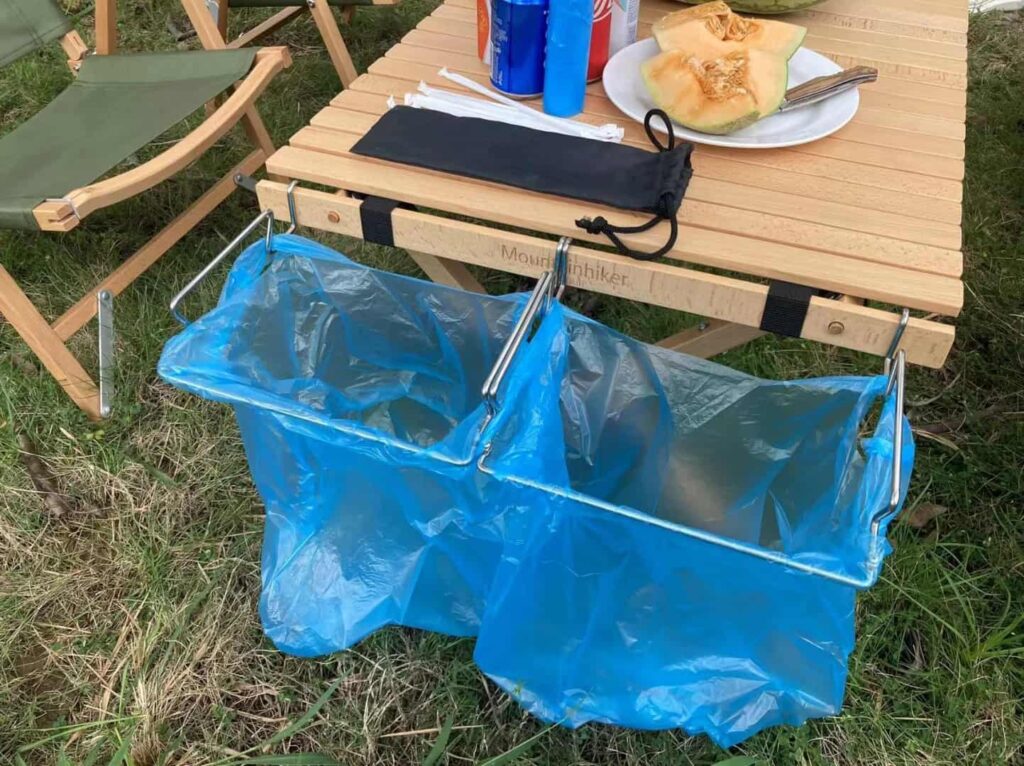
No one wants to arrive at a campsite that looks like a landfill annex. Always, always collect and secure your trash. Put it in a sturdy bag, tie it shut, and put it in your car or a designated bear-proof bin at night.

Don’t let the wind blow it around. Follow the principles of “Leave No Trace.” This means you take everything you brought in, back out with you. The forest is not your maid. Be better.

Tip 10: Disconnect and Be Present

Okay, we’ve talked logistics, fear, and organization. Now let’s talk about the magic. This is the core of the entire experience.

The reason you’re doing all this work.

Disconnect. I mean it. Put your phone on airplane mode. Hide it in the car. Let the notifications pile up like unread letters from a distant, stressful land.

Let go of the to-do lists, the work emails, the social media pressure cooker.

Camping is a chance to de-stress and recharge by plugging into a different grid: the grid of trees, sunshine, and quiet.

It’s about enjoying a book with your fancy coffee in the morning. It’s about having a real, uninterrupted conversation with the people you’re with.

Or, just as importantly, with yourself.

And at night, please, I beg of you, look up.

Find a spot away from the fire’s glow and just look at the sky. In a dark sky sanctuary, away from city lights, the universe puts on a show.

The sheer number of stars is humbling. I remember one night, wrapped in a blanket, I saw seven shooting stars in an hour. Seven.

It brings a perspective that no app can provide. It’s a quiet wonder that stays with you.

That’s the essence of camping. It’s the stillness. The deep breath of fresh, pine-scented air. The conscious decision to slow down.

Everything else—the tips, the gear, the planning—is just in service to that feeling.

Conclusion: You've Got This!

So there you have it. Ten tips to take you from a nervous newbie to a (somewhat) confident car camper.

Plan ahead, know your area, share your plans, navigate smartly, stay organized, prepare for the worst, be nice to your neighbors, pack a little luxury, leave no trace, and most importantly, disconnect and be present.

It might seem like a lot, but it becomes second nature. Now get out there, find a patch of dirt, and make some memories.

I promise, it’s worth it. Now if you’ll excuse me, I need to go try to book a campsite for six months from now.

The struggle is real. Happy camping

Leave a Comment

Your email address will not be published. Required fields are marked *

Scroll to Top