When most people think of “camping,” they picture roasting marshmallows, telling ghost stories, and communing with nature.
What they don’t picture is their leftover orange peel taking two years to decompose while a confused squirrel tries to eat it.
Eco-friendly camping is essentially the art of visiting nature without leaving a permanent fingerprint on it. Think of yourself as a nature ninja. You were there. You had a great time. But when you leave, the forest has absolutely no proof.
For beginners, this means moving beyond just “not littering.” It requires thinking about the lifecycle of your gear, the chemicals in your soap, and the impact of your actual footsteps. It’s about being a steward of the land while you’re sleeping on it.
Ready to become the James Bond of the backcountry? Let’s dive in.
Consider these the Ten Commandments, except there are only seven, and breaking them won’t send you to hell—just into the bad graces of park rangers.
These industry-standard guidelines cover everything. Waste disposal. Wildlife respect. Fire etiquette. They’re like the instruction manual for planet Earth.
Memorize them. Live them. Love them.
Your grandchildren will thank you. Or at least, the trees will.
Here’s a fun fact: plants really dislike being crushed by your tent.
Avoid “making” a new campsite. It sounds adventurous, doesn’t it? “We shall blaze our own trail!” No. Stop that.
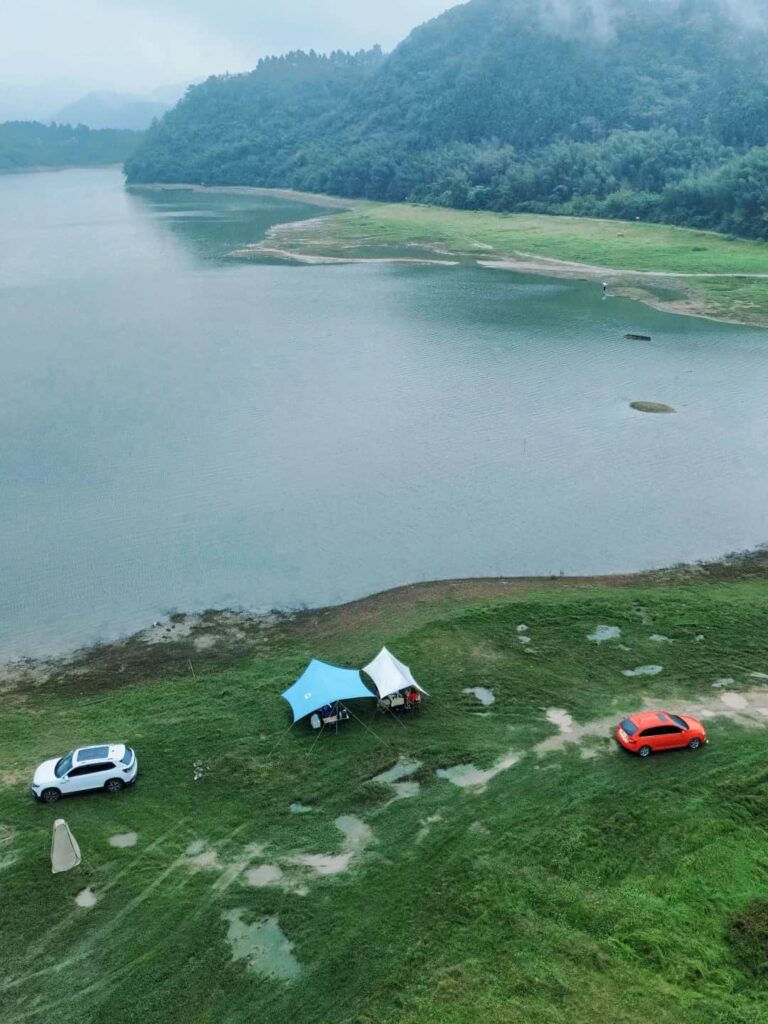
Stick to areas where the ground is already compacted and sad-looking. This prevents further soil erosion and plant damage. You’re not a pioneer. You’re a visitor.
Use the sites that previous campers have already sacrificed for you. They took one for the team. Honor their suffering.
Brand-new gear smells fantastic. It’s crisp, clean, and full of promise.
But here’s the hard truth: the most sustainable piece of equipment is the one that already exists. Someone else already bought it, used it twice, and shoved it in their garage.
Check thrift stores. Scour online marketplaces. Become a gear detective.
You’ll save money, and you won’t contribute to more plastic production. Plus, used gear has character. It has stories. That slightly stained sleeping bag? It saw things in Yosemite.
Biodegradable soap sounds wonderfully green, doesn’t it?
Here’s the catch: even “eco-friendly” soap can harm aquatic life. Fish don’t care if your soap smells like lavender dreams and organic rainbows. They just don’t want it in their gills.
Always wash yourself or your dishes at least 200 feet away from lakes or streams.
That’s about 70 big steps. Count them. Your fish friends will appreciate it.
Plastic water bottles are the vampires of the camping world. They never die.
Swap them for a sturdy reusable one. It’ll last forever, or at least until you accidentally drop it off a cliff.
Replace plastic cutlery with a lightweight bamboo or titanium set. Titanium sounds fancy, doesn’t it? Like you’re eating oatmeal with astronaut equipment.
But seriously. Single-use plastics have no place in nature. They’re ugly, they’re deadly to wildlife, and they make you look like an amateur.
That box of granola bars comes wrapped in cardboard, which is wrapped in plastic, which is wrapped in more box.
Remove all that nonsense before you leave.
Transfer snacks into reusable silicone bags or beeswax wraps. Not only does this minimize trail trash, but it also makes you feel incredibly organized and smug.
Plus, wrestling with crinkly plastic wrappers at 6 a.m. while trying to be quiet? Nobody needs that noise pollution.
“Social trails” are what park rangers call shortcuts made by impatient hikers.
They crush delicate vegetation. They create permanent scarring on the landscape. They’re basically nature’s stretch marks.
Stay on the designated path. It’s there for a reason.
Yes, the switchback is longer. Yes, going straight up the hill is faster. But erosion doesn’t care about your schedule.
I know. I know. Campfires are romantic.
But stoves are more efficient. They leave no ash. They don’t require you to strip the area of fallen wood that provides habitat for insects.
Those logs on the ground? They’re apartment buildings for beetles. You wouldn’t knock down an apartment building just to make s’mores, would you?
Well. Maybe you would. But you shouldn’t.
Sometimes, you just need a fire. I get it.
But never, ever transport wood from more than 50 miles away.
Why? Because invasive species like the Emerald Ash Borer are hitchhikers. They hide in firewood. They travel to new forests. They destroy everything.
You don’t want to be the person who brought the apocalypse on a log.
Buy local. Burn local. Save the trees.
Alright. Let’s talk about poop.
If no toilets are available, you must bury human waste. Dig a hole 6 to 8 inches deep. That’s about the depth of a standard trowel blade.
Do this at least 200 feet from water sources. Remember the 70 steps rule?
When you’re done, cover it up. Pretend it never happened.
Congratulations. You’re now a master of wilderness bathroom etiquette. Put that on your resume.
“But it’s just an apple core!” you protest. “It’s natural!”
Here’s the problem: an orange peel or apple core can take years to decompose in certain climates. Years.
Also, food scraps attract wildlife to campsites. Bears don’t understand that you left a granola bar wrapper as a “mistake.” They just know food appears near humans.
That’s how bears become problem bears. And problem bears get relocated. Or worse.
Pack it out. Every single crumb.
Batteries are toxic little cylinders of doom.
Swap battery-operated lanterns for solar-powered inflatable lights. They’re lightweight. They’re renewable. They make you look like a futuristic eco-warrior.
Plus, watching them slowly inflate as the sun goes down is oddly satisfying.
It’s the little things.
Observe animals from afar. That’s the rule.
Do not feed them. “Human food” disrupts their natural foraging habits. It can lead to aggressive behavior. It can get them killed.
Also, wildlife doesn’t need your pizza crust. They have their own diet. It’s called “natural selection,” not “please pass the pepperoni.”
Stay back. Use binoculars. Take photos.
Admire from a distance.
Traditional sunscreens contain chemicals. Those chemicals wash off in lakes and streams. They’re toxic to aquatic life.
Look for “reef-safe” or mineral-only options with zinc.
Yes, mineral sunscreen makes you look slightly ghostly. Yes, it takes forever to rub in.
But fish don’t care about your tan. They care about breathing.
Priorities.
Buying bags of ice seems harmless, right?
Those bags eventually leak. They require plastic disposal. They’re a one-time use nightmare.
Instead, use frozen reusable ice packs. Or freeze water jugs.
As they melt, you get cold drinking water. It’s efficient. It’s smart. It’s practically genius.
You’ll feel like MacGyver, minus the mullet.
Sound travels further in the wild than you think.
Keep music low. Better yet, use headphones. Keep voices down.
Why? Because wildlife has excellent hearing. Also, other campers didn’t drive hours into the woods to listen to your playlist.
Respect the quiet. That’s why you came here, right?
For peace? For serenity?
Don’t ruin it for everyone else.
This sounds obsessive. I know.
But here’s the thing: invasive seeds and fungi hitchhike on your soles. They travel from one park to another. They establish themselves. They wreak havoc.
Scrub your boots before you leave home. Scrub them again when you get back.
Be the barrier. Stop the invasion.
Your boots are weapons. Use them responsibly.
True eco-friendly camping isn’t just about neutralizing your impact. It’s about positive stewardship.
A great habit for any beginner is the “Plus-One Rule.” Always pack out your own trash. Then, find one piece of litter left behind by someone else. Pack that out too.
It’s simple. It’s powerful. It’s like karma, but with garbage.
When we treat the wilderness with the same respect we treat our own homes, the adventure becomes much more meaningful.
Plus, you get to feel incredibly virtuous while sipping your sustainably sourced cocoa.
Go forth. Camp lightly. Leave no trace.
And maybe pick up someone else’s apple core while you’re at it.