The desert is a landscape of stunning extremes, offering some of the clearest stargazing and most dramatic sunrises on the planet.
However, its beauty is matched by its harshness; the combination of intense heat, sudden cold, and scarce water makes preparation non-negotiable.
For those willing to learn the unique rules of the arid wilderness, desert camping provides a sense of solitude and wonder that is truly incomparable.
Table of Contents
1. Bring One Gallon of Water Per Person, Per Day
Let’s start with the obvious.
You need water. Lots of it.
The human body is basically a leaky water balloon. In the desert, it leaks faster. Much faster.
One gallon per person per day is the rule. Not the suggestion. The rule.
That’s for drinking, cooking, and emergency hygiene. Not for washing your hair. Not for rinsing dusty feet. Not for making “just a small sponge bath.”
Drinking water comes first. Everything else is a luxury.
Here’s a math problem for you. Three-day trip, two people. That’s six gallons.
Six gallons weigh about 48 pounds. Water is heavy. Deal with it.
Bring extra anyway. A spare gallon in the car costs nothing but peace of mind. Car trouble happens. Delays happen. Dehydration happens fast.
When you think you have enough water, add two more gallons. Then maybe another.
2. Avoid Camping in Dry Wash Beds
That sandy wash looks perfect.
Flat ground. Soft surface. No rocks poking up. What could go wrong?
Everything.
Dry wash beds are nature’s water slides. They look harmless when dry. They become raging rivers when wet.
Rain falling miles away creates flash floods. You won’t see it coming. You won’t hear it until too late.
A wall of water sweeps through canyons and washes without warning. It carries boulders, trees, and everything in its path.
Including your tent. Including you.
Camp on high ground. Look for elevated areas with clear drainage paths. Check for debris lines on canyon walls showing previous flood levels.
If you see charred wood stuck ten feet up, floods reach that high. Camp elsewhere.
Never sleep in a wash. Not even for one night. Not even if it hasn’t rained in months.
3. Time Your Activity Around the "Siesta"
The desert sun has opinions about your hiking plans.
Between 10:00 AM and 4:00 PM, those opinions are strongly negative.
This is siesta time. Learn it. Love it. Live it.
Hike early. Dawn is beautiful anyway. The light is soft. The air is cool. Wildlife appears.
Hike late. Sunsets paint the sky. Temperatures drop. Shadows grow long.
Midday is for napping. Find shade. Read a book. Take photos from your camp.
Moving during peak heat is foolish. You’ll sweat buckets. You’ll drink gallons. You’ll accomplish nothing except exhaustion.
Watch desert animals. They know the schedule. They vanish during midday for good reason.
Follow their example. Be lazy when the sun is angry.
4. Protect Yourself from "Reflected Heat"
Sunscreen on your face feels normal.
Sunscreen under your chin feels weird. Do it anyway.
Sand and rocks reflect UV rays upward. They bounce radiation like tiny mirrors. You get burned from below.
Wide-brimmed hats protect your neck and ears. Baseball caps leave too much exposed. Get something with circumference.
Apply sunscreen to your nose tip. Apply it to your nostrils. Apply it to your chin’s underside.
Don’t forget your ears. Ears burn terribly. They peel painfully. They look ridiculous peeling.
Lip balm with SPF matters too. Cracked lips in the desert hurt constantly. Every breath reminds you.
Reapply everything frequently. Sweat washes sunscreen away. Rub it off and put more on.
Your future skin will thank you. So will your mirror.
5. Check Your Boots and Sleeping Bag for "Hitchhikers"
Scorpions glow under UV light.
They also hide in dark places. Like your boots. Like your sleeping bag. Like the folds of your clothes left on the ground.
Spiders seek shelter too. So do snakes. They all love cool dark crevices.
Shake everything before use. Every single time.
Turn your boots upside down and bang them together. Inspect inside before inserting feet. Make this automatic.
Unroll your sleeping bag carefully. Check corners. Look before climbing in.
Tarantulas wander at night. They’re mostly harmless but surprising. Waking up with one on your chest creates memories.
Scorpions sting. Some species cause serious pain. A few are dangerous.
Prevention beats treatment. Shake everything. Every time.
6. Dress in Loose, Light-Colored, Long-Sleeved Clothing
Sunscreen works but fails eventually.
Clothing works all day.
Loose long sleeves protect skin without trapping heat. Air circulates underneath. Evaporation cools you down.
Light colors reflect sunlight. Dark colors absorb it. Wear white, tan, or light gray.
Breathable fabrics matter. Linen breathes wonderfully. Lightweight synthetics wick moisture. Cotton kills but at least breathes.
Wide-leg pants beat shorts. They protect legs from sun and cactus. They keep dust off skin.
Desert hiking isn’t a fashion show. It’s survival with style optional.
Bedouins figured this out centuries ago. They wear flowing robes in the hottest deserts. They know things.
Imitate them. Look like a ghost at a laundry day. Stay cool anyway.
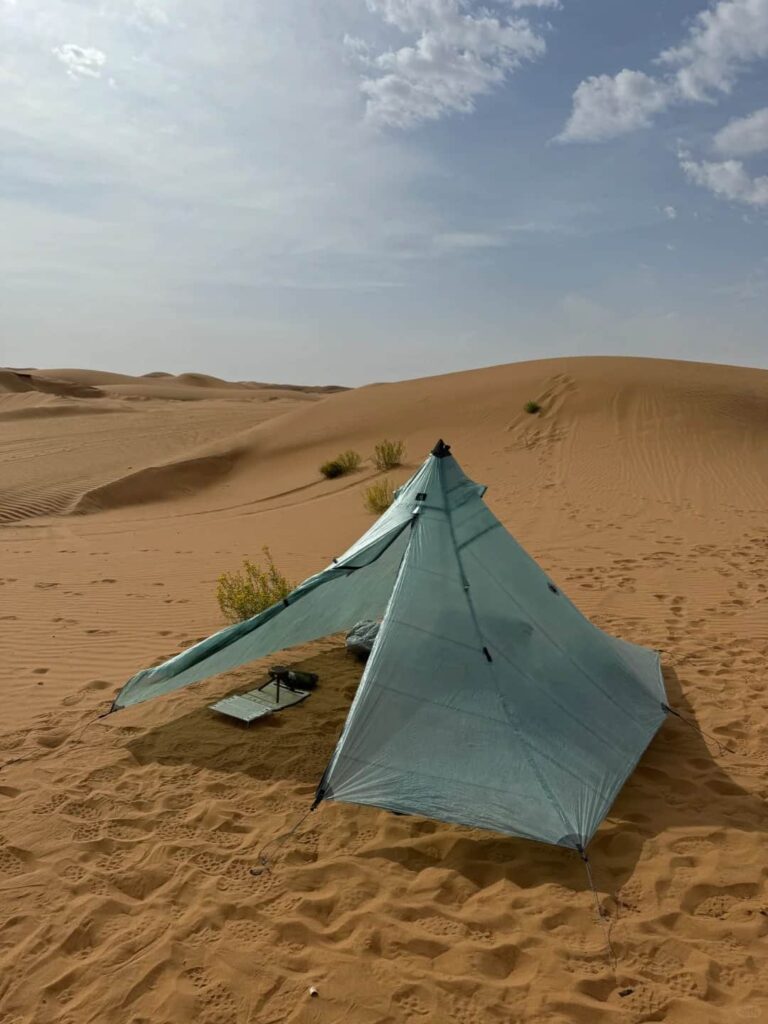
7. Stake Your Tent Securely for High Winds
Desert winds appear from nowhere.
Calm morning becomes chaotic afternoon. Gusts pick up tents like kites. You’ll chase your shelter across the landscape.
Regular tent stakes fail in sand. They pull out easily. They disappear completely.
Use sand stakes. They’re longer and wider. They hold better in loose ground.
Bury your stakes at angles. Drive them deep. Cover them with rocks for extra weight.
If rocks aren’t available, fill stuff sacks with sand. Tie them to guy lines. Create your own anchors.
Watch for wind direction. Position tent accordingly. Point the smallest profile into prevailing winds.
Don’t camp under unstable rock formations either. Wind loosens things. Gravity finishes the job.
Secure everything outside too. Chairs fly away. Hats disappear. Towels become tumbleweeds.
8. Pack a High-Quality Cooler with Block Ice
Regular ice melts fast.
Cube ice melts faster. In triple-digit heat, cubes become water in hours.
Block ice lasts days. Big blocks melt slowly. They keep food cold longer.
Freeze water bottles beforehand. They serve as ice packs and drinking water later. Two for one.
Pre-chill your cooler before loading. Put ice in overnight. Empty it right before packing cold food.
Open the cooler minimally. Every opening releases cold air. Plan meals to grab everything at once.
Keep cooler in shade. Move it as shade moves. Bury it partially in sand for insulation.
Dry ice works for longer trips but requires careful handling. Research proper use first.
Nothing ruins a trip like warm meat and melted cheese. Nothing.
9. Prepare for a 40-Degree Temperature Drop
Desert days burn.
Desert nights freeze.
That 100°F afternoon becomes 60°F after sunset. Sometimes colder. The drop happens fast.
Bring warm clothes anyway. A puffy jacket fits in small spaces. Wool hat prevents heat loss.
Sleeping bags rated for cold matter. Summer bags won’t cut it. Check ratings carefully.
Your sleeping pad insulates from below too. Cold ground steals heat relentlessly. Get adequate R-value.
Wake up cold and you’ll stay cold. There’s no warming up until sunrise.
Watch sunset times carefully. Temperature plummets immediately after. Have warm layers accessible.
Dinner cooked in shorts becomes dinner eaten shivering. Be ready.
10. Use a Comb to Remove Cactus Spines
Jumping cholla is evil.
It doesn’t actually jump. It just seems that way. Bristles attach at the slightest touch. They hurt immediately.
Never use fingers for removal. You’ll just attach more spines. You’ll regret everything.
Grab a fine-tooth comb. Slide it between spines and skin. Flick sharply upward.
The whole cluster comes off clean. Mostly painless. Surprisingly effective.
Tweezers work for individual spines. Comb works for cholla clusters.
Watch where you step. Watch where you sit. Watch where you lean.
Cactus spines find you anyway. Be prepared with removal tools.
Magnetic attraction to cactus seems real. The closer you look, the closer you get. Stay aware.
11. Keep Your Skin Covered to Prevent Moisture Loss
Sweat evaporates fast in dry air.
Too fast sometimes.
Your body loses water through exposed skin constantly. You don’t notice until dizzy.
Covering skin slows evaporation. Long sleeves trap humidity against your body. You retain more water.
Sounds counterintuitive in heat. It works anyway.
Desert cultures figured this centuries ago. Robes and head coverings dominate for reasons.
Sweat that evaporates instantly cools nothing. It just wastes water. Sweat that evaporates slowly cools effectively.
Cover up during peak hours. Uncover when sun drops. Find the balance.
Your water supply thanks you. Your skin thanks you. Everything wins.
12. Bring a Fine-Mesh Tent or "No-See-Um" Netting
Desert gnats are tiny.
Annoyingly tiny. Persistently tiny. They fly through regular screens like nothing.
Standard tent mesh fails against no-see-ums. They march right through. They invade your space.
Fine-mesh tents stop them. Look for “no-see-um netting” specifically. Read specifications carefully.
Without protection, you’ll hide in your sleeping bag all evening. Bugs win. You lose.
Head nets work for sitting outside. They look ridiculous. They function beautifully.
Gnats find your eyes and ears. They crawl everywhere. They drive sane people crazy.
Don’t underestimate tiny insects. They’re harder to defeat than big ones.
13. Don't Rely on Finding Firewood
Desert plants grow slowly.
A tree that looks dead is probably alive. A shrub that seems plentiful took decades to exist.
Burning them damages ecosystems permanently. Dead wood provides habitat for animals. Fallen branches enrich soil.
Bring your own firewood. Store-bought bundles work fine. Gas stoves work better.
Check fire regulations before your trip. Many desert areas ban open fires entirely. Fines are substantial.
Campfires feel primal but aren’t essential. Cook on stoves. Enjoy stars without smoke.
If fires are allowed, use established rings. Burn only dead and down wood. Keep fires small.
Leave remaining wood for others. Don’t scavenge everything in sight.
14. Navigate with a GPS and a Physical Backup
Desert landscapes look identical.
Every direction shows mountains, sand, and rocks. Nothing looks familiar. Everything looks similar.
GPS works great until batteries die. Batteries die faster in heat. Screens fail in direct sun.
Bring paper maps anyway. Learn to read them before leaving home.
Mark your route beforehand. Identify landmarks. Note distances between features.
Compasses don’t need batteries. Learn basic navigation. Practice before relying on it.
Tell someone your planned route too. Leave maps with them. Check in when returning.
Getting lost in desert kills quickly. Heat, dehydration, and exposure work together.
Two navigation methods minimum. Three is better.
15. Pack Salty Snacks and Electrolytes
Water alone isn’t enough.
You lose salt through sweat. Lots of salt. Replace it or suffer.
Electrolyte powders dissolve in water. Sports drinks work too. Salty snacks help immensely.
Pretzels, nuts, jerky, and chips all work. Canned soups contain salt and water together.
Watch for heat exhaustion signs. Headaches, dizziness, and nausea signal trouble.
Cramping means low electrolytes too. Muscles seize painfully. They won’t stop without salt.
Drink water constantly. Eat salty things regularly. Maintain balance.
Sugar helps with energy but doesn’t replace salt. Get both.
Your body runs on chemistry. Maintain the chemistry.
16. Keep Your Food Sealed to Deter Clever Scavengers
Coyotes are smart.
Ravens are smarter. Kangaroo rats are determined little geniuses.
They’ll open unsecured food bags. They’ll chew through containers. They’ll steal anything left out.
Coolers need locking or weighting down. Ravens open latches. They’ve learned.
Store food inside vehicles when possible. Hard-sided containers otherwise.
Never leave food unattended. Never assume animals won’t find it.
They’ll find it. They’ll eat it. They’ll leave you hungry.
Trash needs securing too. Smells attract animals regardless of edibility.
Pack everything out. Leave no traces. Don’t feed wildlife accidentally.
A fed animal becomes problem animal. Problem animals get removed. Keep wildlife wild.
17. Always Check the Underside of Your Vehicle
Shade is precious in desert.
Animals find it wherever available. Under your car works great.
Rattlesnakes rest there. Lizards hide there. Rodents seek shelter there.
Check before driving away. Look underneath. Tap the hood. Make noise.
Starting the engine with animals underneath harms them. It also terrifies you when they scramble out.
Kittens sometimes shelter in engine compartments too. Stray cats seek warmth anywhere.
Morning checks matter most. Night creatures shelter until sunrise. They’re slow to move.
Rocking the vehicle alerts occupants. Give them time to leave. Wait before driving.
Wildlife encounters while driving are bad. Prevent them entirely.
18. Bring a Portable Shade Structure
Natural shade is rare in desert.
Trees don’t grow everywhere. Rocks don’t always shelter. Sun finds you eventually.
Pop-up canopies solve this problem. Easy setup. Instant shade. Life-saving comfort.
Secure them against wind though. Canopies become missiles in gusts. Stake everything thoroughly.
Tarp and rope setups work too. Learn knots beforehand. Practice rigging.
Shade structures lower temperatures significantly. Twenty degrees cooler underneath is common.
Escape the sun during peak hours. Nap comfortably. Eat without baking.
Your campsite becomes livable rather than survivable. Worth the weight.
Set up shade before anything else. Priorities matter.
19. Learn to Recognize the Signs of Heatstroke
Heat exhaustion progresses to heatstroke.
Heatstroke kills.
Confusion signals trouble. If you or companions act strangely, stop everything.
Lack of sweating means crisis. Skin stops cooling itself. Body temperature skyrockets.
Rapid pulse indicates distress. Heart works overtime. Nothing helps.
Nausea and vomiting worsen dehydration. Can’t keep fluids down. Can’t recover easily.
Treatment requires immediate cooling. Get out of sun. Remove excess clothing. Apply water to skin. Fan vigorously.
Seek medical help urgently. Heatstroke is emergency. Minutes matter.
Prevention beats treatment. Drink constantly. Rest frequently. Seek shade regularly.
Know the difference between uncomfortable and dangerous. Act accordingly.
20. Leave the "Desert Crust" Alone
That dark crust on soil looks dead.
It’s very much alive.
Biological soil crusts contain cyanobacteria, lichens, and mosses. They hold desert together. They prevent erosion. They take decades to grow.
One footprint destroys centuries of growth. One tire track lasts generations.
Stay on established trails. Camp on durable surfaces like rock or gravel. Avoid walking on crust.
It crunches underfoot when dry. That crunching sound is destruction.
Recovery takes forever in desert. Slow growth means slow repair. Some damage never heals.
Respect the crust. Walk around it. Preserve what you can’t replace.
Future visitors deserve intact landscapes too.
Conclusion
Desert camping is a masterclass in minimalism and respect for the environment. It demands that you pay close attention to your body’s needs and the subtle shifts in the landscape.
While the environment may seem unforgiving at first, coming prepared allows you to move past the challenges and experience the profound peace of the dunes and the cacti.
Respect the sun, treasure your water, and the desert will reveal its magic to you.