15 Survival Shelters Building Hacks in the Wilderness For Beginners

Spread the love

Let’s be honest. My idea of “roughing it” usually involves a hotel room where the mini-bar is only partially stocked.

But I needed to build a shelter, or I was going to have a very long, very damp night arguing with an owl.

What wasn’t a graceful display of wilderness prowess.

It was a slapstick tragedy of errors, a masterclass in what not to do.

I emerged at dawn, damp, leaf-covered, and humbled, but also weirdly educated.

I’ve since learned from people who actually know things.

So, here’s my hard-earned, humorously traumatic guide to building a survival shelter.

Think of me not as Bear Grylls, but as your slightly clumsy, metaphor-prone friend who wants you to avoid sleeping in a puddle.

Table of Contents

1. Location, Location, Location

My first instinct was to build my mansion in the first flat, clear spot I saw. It was lovely. It was also, I later realized, the architectural equivalent of building a house in a bowl.

At 2 AM, that bowl became a very cold, very shallow swimming pool.

The Lesson: Your shelter’s location is its number one feature. Before you lift a single stick, play real estate agent.

  • Look for natural protection. A big rock wall to block the wind? Gold. A dense thicket of evergreens that breaks the breeze? Prime property. A hillside you can nestle against? Suburban dream. A fallen log you can use as a backbone? We’re talking waterfront views. The goal is to let nature do half the work. Why build a wall when a hill is already there, rent-free?

  • Think like a water droplet. Where would rain flow? Not into your living room, ideally. Avoid depressions, gullies, or any spot that looks like it could double as a stream bed after a good drizzle.

  • Look up, then down, then around. UP: Are there dead branches precariously dangling over your chosen spot? These are charmingly called “widowmakers” for a reason. A gust of wind could turn your shelter into a pancake. DOWN: Is it an animal highway? A game trail might be convenient for deer, but you don’t want a confused raccoon mistaking your foot for a tunnel exit. AROUND: A windy ridgeline might have a great view, but you’ll spend the night as a human windsock. A sheltered spot 50 feet down the slope is cozier.

2. The Ground Truth: A Pre-Build Inspection

You wouldn’t buy a house without an inspection. Don’t build one without one either. I learned this after my “bowl” experience.

Now, I do the S.W.A.B. (Soggy, Wildlife, Above, Breeze) check.

  • Soggy: Press the ground. Does it squelch? See any signs of old water lines or dark, damp soil? Just walk away.
  • Wildlife: Look for scat, holes, worn paths. You’re the visitor here. Don’t squat in someone else’s commute.
  • Above: Reiterating the widowmaker point because it’s that important. Also, check for bee or wasp nests.
  • Breeze: Feel the air. A constant, gentle flow is good to keep bugs away. A howling gale is bad. Find the Goldilocks zone.

3. The Lazy Genius’s Best Friend: Natural Frames

My early shelters failed because I tried to be an engineer. Nature is the ultimate engineer. Be its appreciative intern.

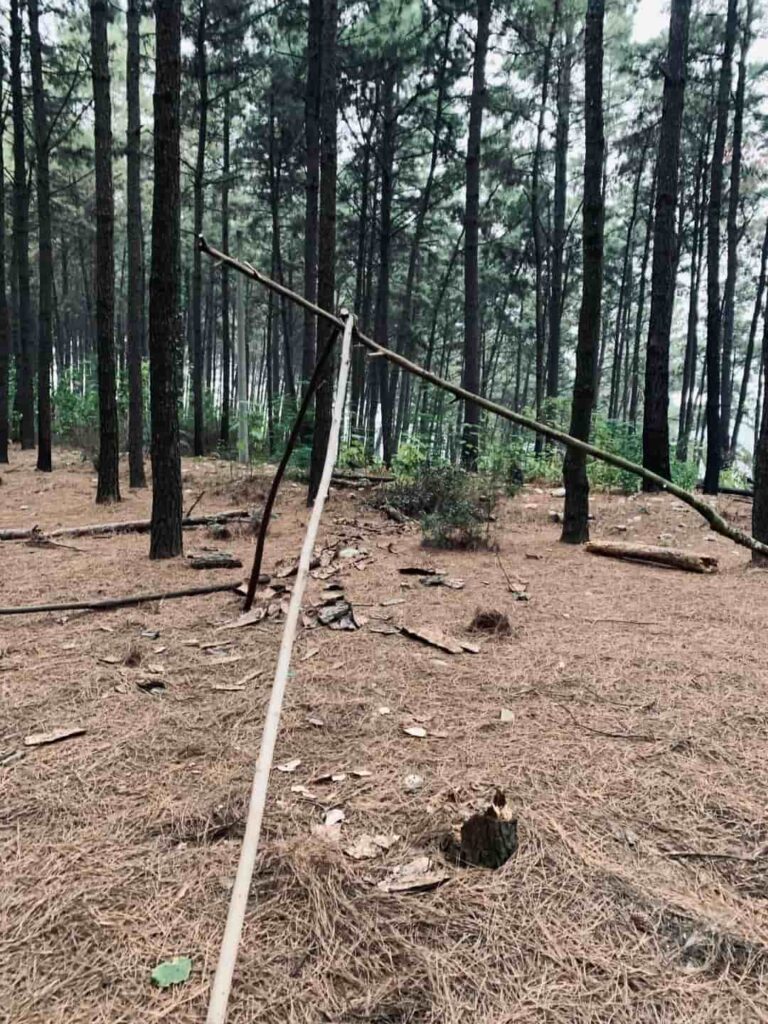
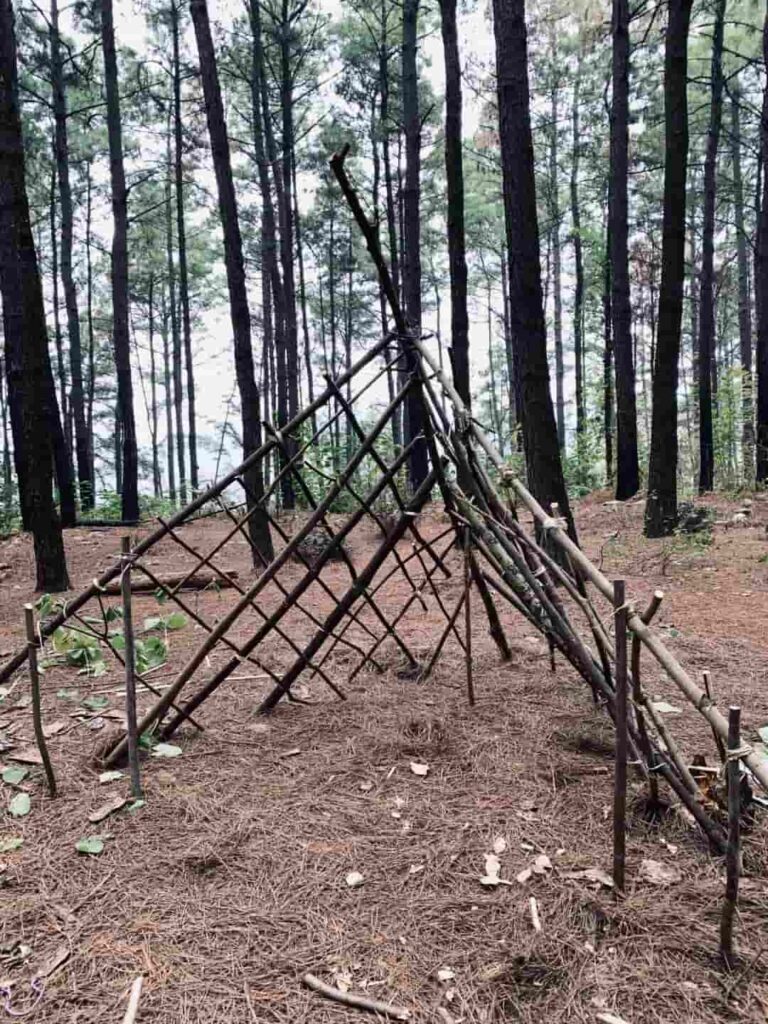
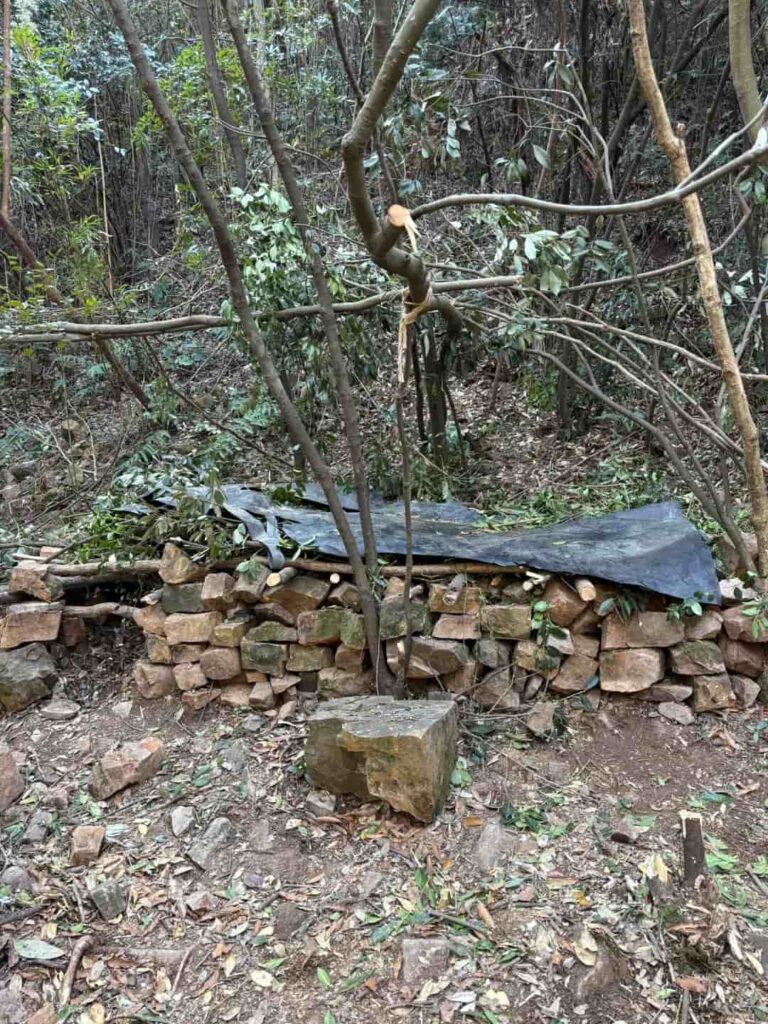
A fallen tree propped up on a stump or rock is a ready-made A-frame. A low, sturdy branch on a living tree is a perfect ridge pole holder. A forked trunk is nature’s drill-free shelf bracket.

Your job isn’t to invent the wheel; it’s to find the roundest rock and claim credit. Using a natural frame saves calories, time, and your already-frayed sanity.

4. Roof Pitch: Don’t Be Flat, Be Fabulous

My first “roof” was flatter than my motivation after the third hour of this ordeal.

Rain didn’t shed; it pooled, then slowly seeped through like a cold, deliberate torture.

The magic number is 45 degrees. For a simple lean-to, angle your roof poles steeply.

Imagine you’re trying to make a slide for a very timid water droplet.

If it’s too flat, the droplet gets lazy, settles in, and invites its friends over for a pool party in your sleeping bag.

A steep pitch evicts them immediately.

5. The Debris Pile: There’s No Such Thing as Too Much

I gathered what I thought was a “mountain” of leaves. It was a decorative pillow’s worth.

The first breeze blew half of it away, and the rain treated the rest as a mere suggestion.

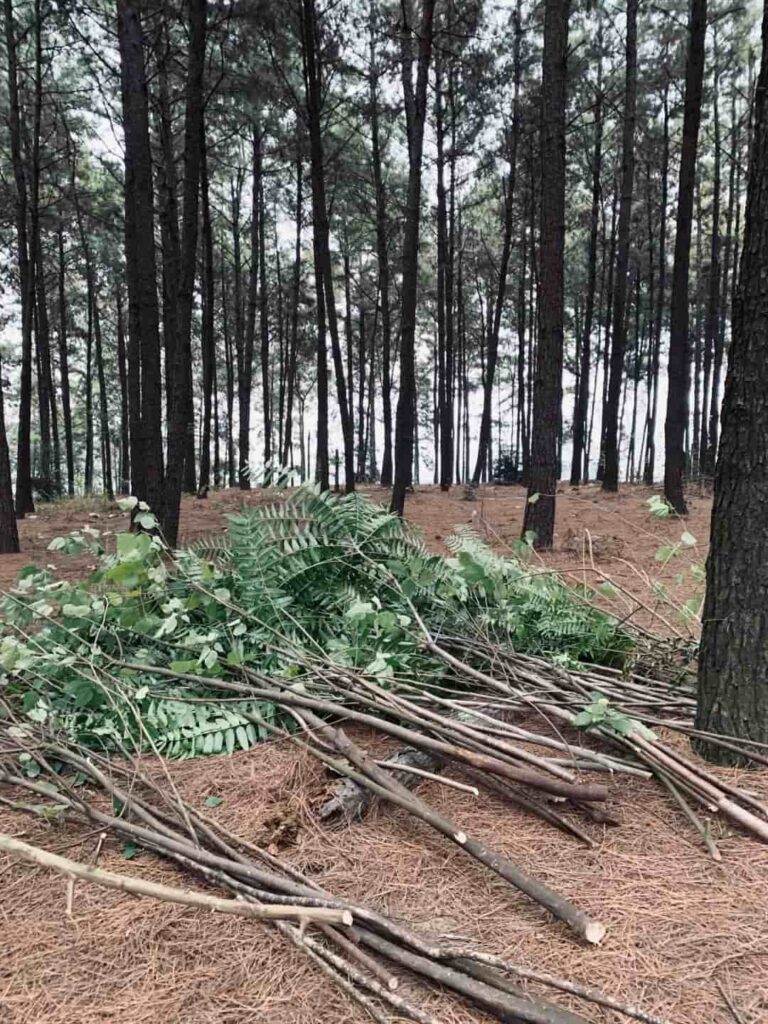
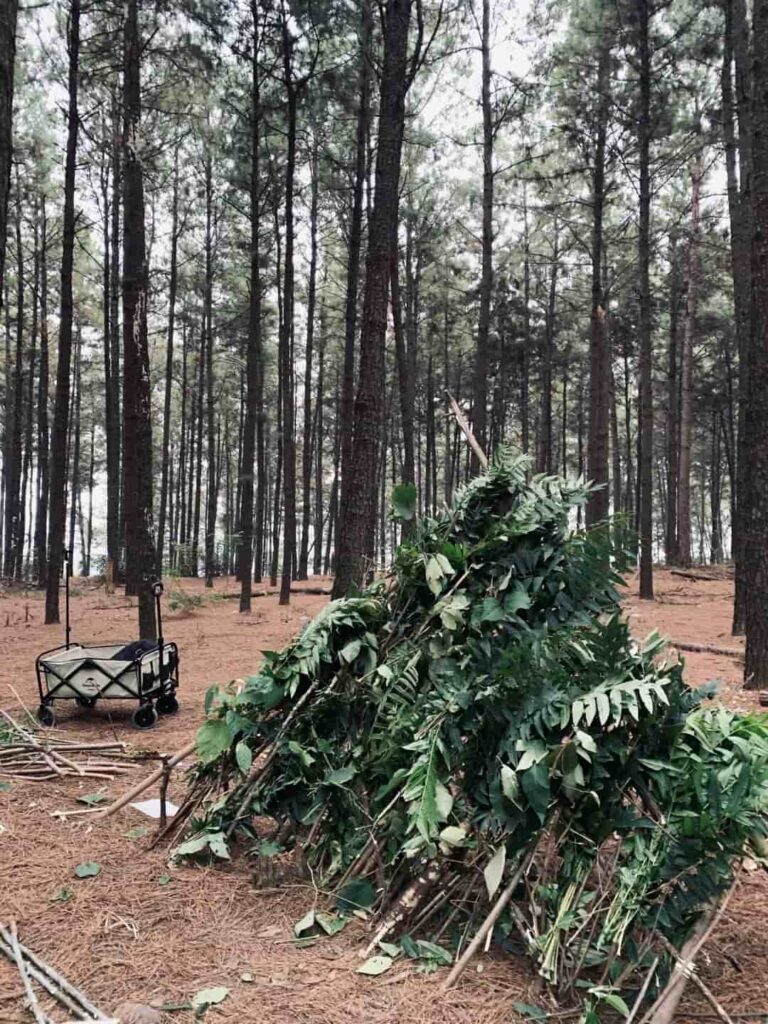
You need a THICK layer—12 to 18 inches minimum. Not a sprinkling. A substantial layer. Pile on leaves, pine needles, ferns, moss, dry grass.

When you think you have enough, get three times more. This debris is your insulation and your waterproofing.

It’s your down jacket and your Gore-Tex shell. Pat it down. Walk on it. Make it dense. A thin layer is a cruel lie.

6. The Cozy Cocoon Principle: Build Small

My initial design was a “spacious studio apartment.” It was drafty, impossible to heat, and took forever to build. Misery.

Build a coffin. Seriously. Your shelter should be just big enough for you to curl up inside. You’re not hosting a dinner party.

A smaller space is easier to heat with your body, requires exponentially less material, and is faster to construct. Embrace the cocoon.

You’re a burrito, and the debris is your tortilla. Snug is survival.

7. The Backbone: The Mighty Ridge Pole

This is the spine of your A-frame or the key support of your lean-to. A weak spine equals a collapsed shelter on your head at midnight.

Find a long, strong, straight-ish branch. It must be sturdy. Test it. Would you trust it to hold a confused, sleepy version of you? Secure it well.

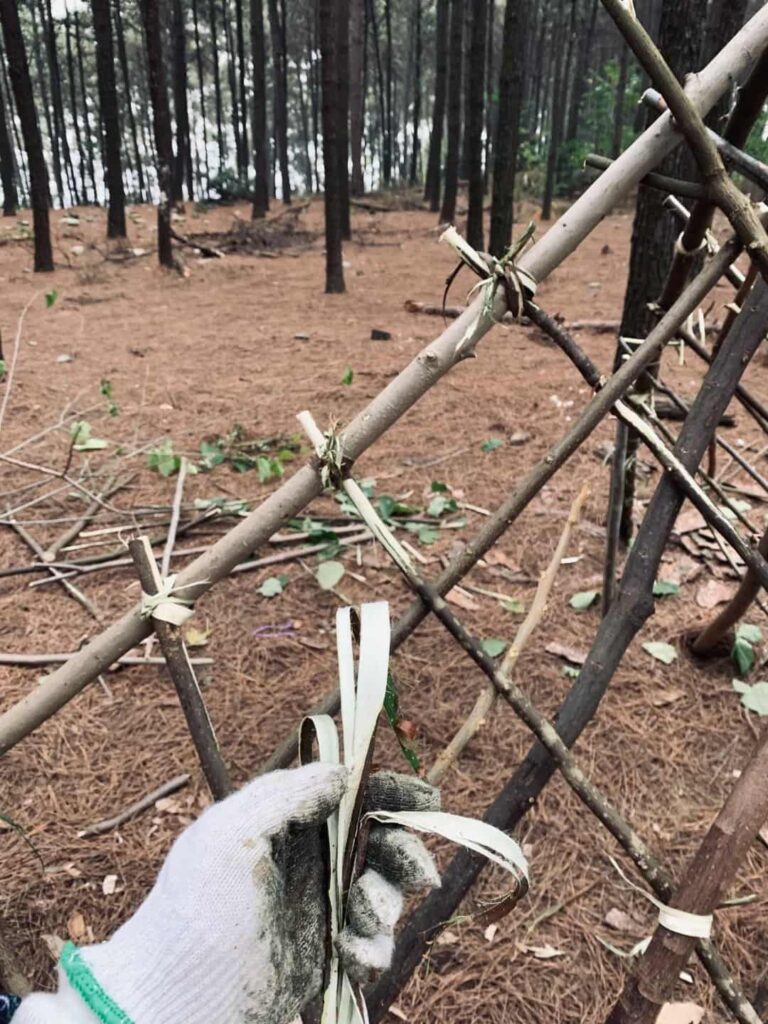
Jam it between two close trees, lash it to a forked branch, or support it on sturdy Y-sticks pounded into the ground.

This pole holds the weight of your roof and your dreams of dryness. Don’t skimp.

8. Material Gathering: The Triple Rule

See Point #5, but let’s make it a commandment. The Triple Rule: Gather what you think you need.

Now, triple it. Your first estimate is born of optimism and ignorance. Your second load is born of realism.

Your third load is born of the cold, hard truth of thermodynamics and precipitation. The squirrels will judge you for denuding their neighborhood. Ignore them. They have fur coats and stockpiled nuts.

You have poor life choices and a damp shirt.

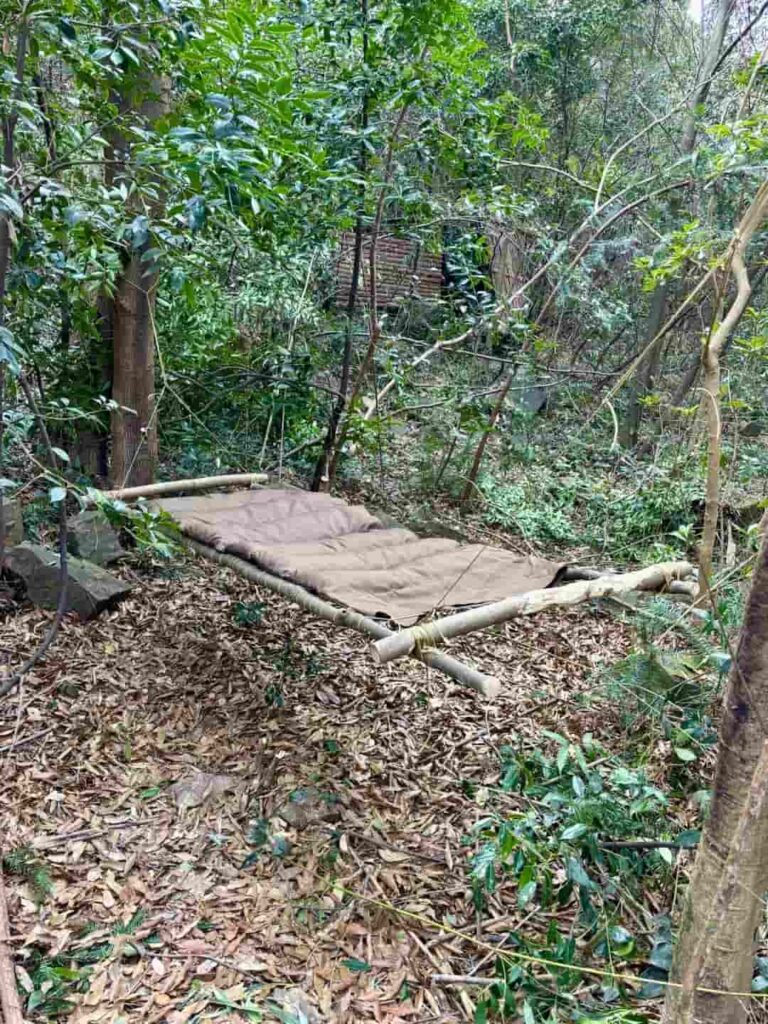
9. Get Off the Floor! The Elevated Bed

The ground is a thief. It steals your body heat with shocking efficiency. My first night, I felt like I was lying on a slab in a morgue (which, poetically, I was working toward).

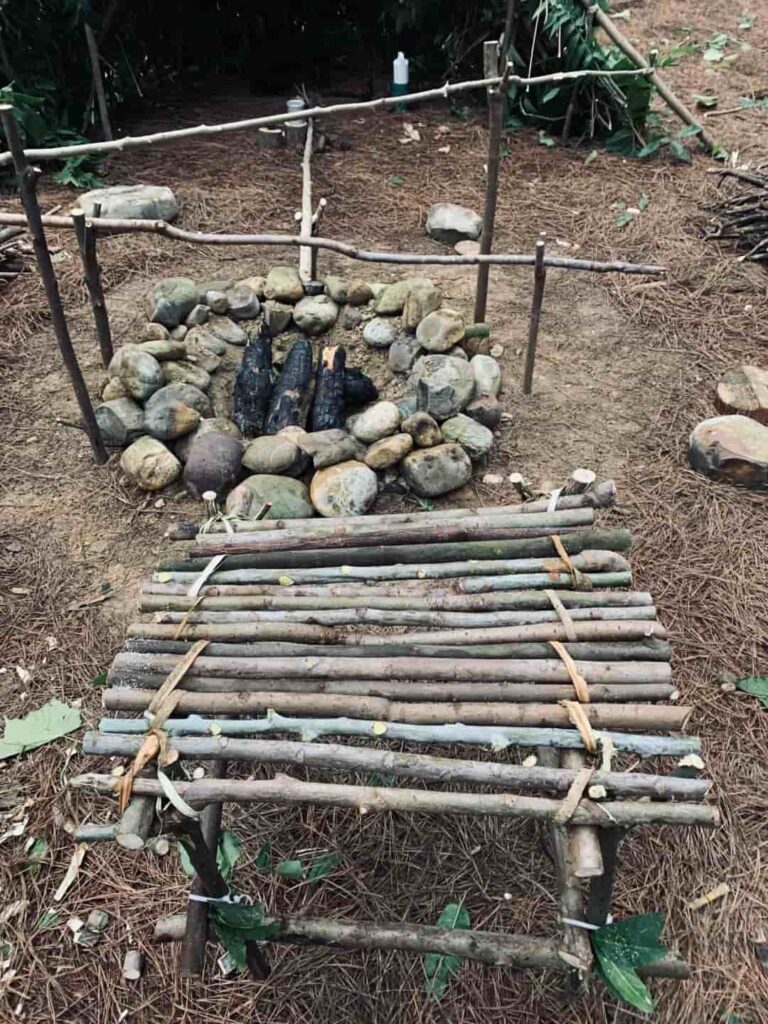
Even a 6-inch platform makes a world of difference. Lay down parallel logs, criss-cross branches into a lattice, or pile a thick mound of debris and then compress it. This creates a crucial air gap.

You are no longer in direct conductive dialogue with the planet’s cooling system. It’s the difference between a mattress and a sidewalk.

10. Nature’s Shingles: The Bark Bonus

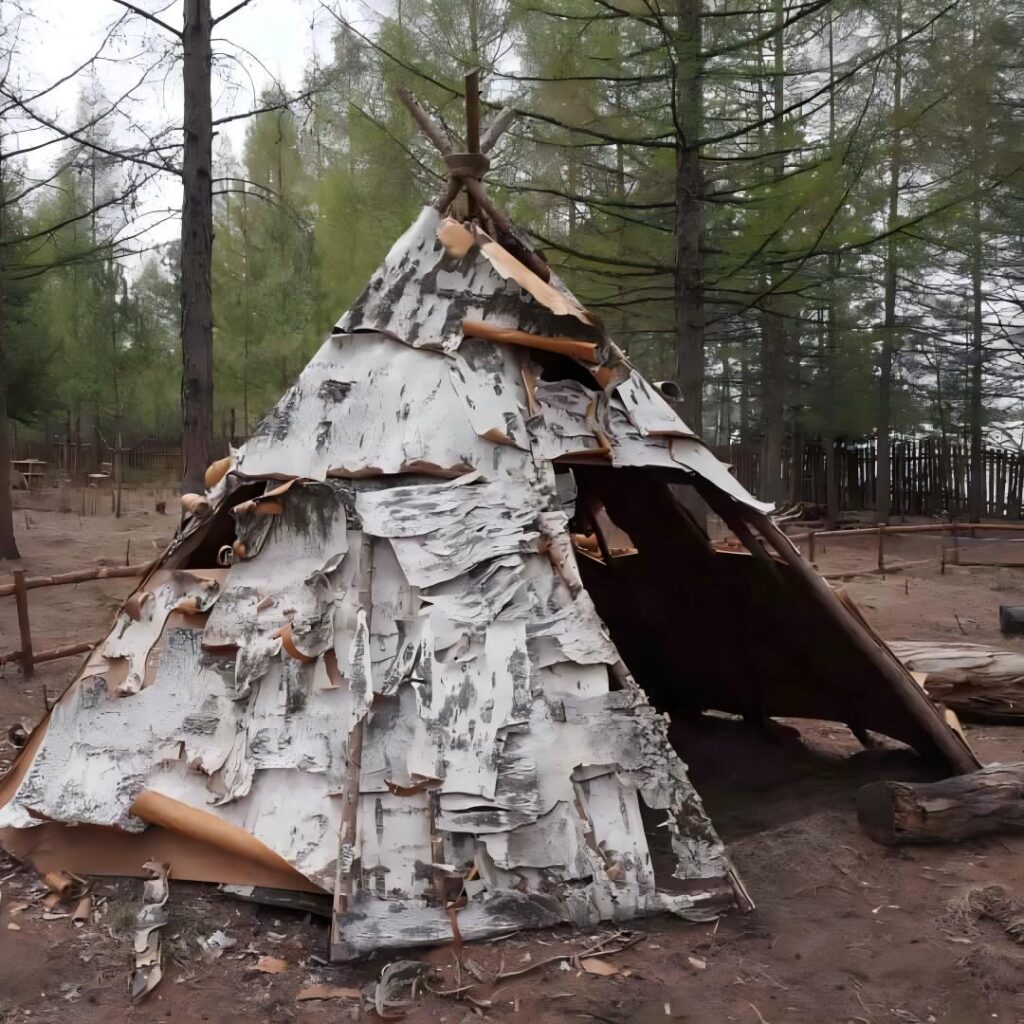
If you’re in an area with birch, cedar, or certain pines, you’ve won the shelter lottery. Large sheets of bark are nature’s perfect shingles.

Carefully pry them off (from already fallen trees if possible, don’t maim a live one!). Layer them on your roof frame like tiles, starting at the bottom and overlapping as you go up.

Water will channel down beautifully. It feels wildly competent, like you’ve unlocked a secret level of wilderness living.

11. The Winter Wonder-Insulator: Snow

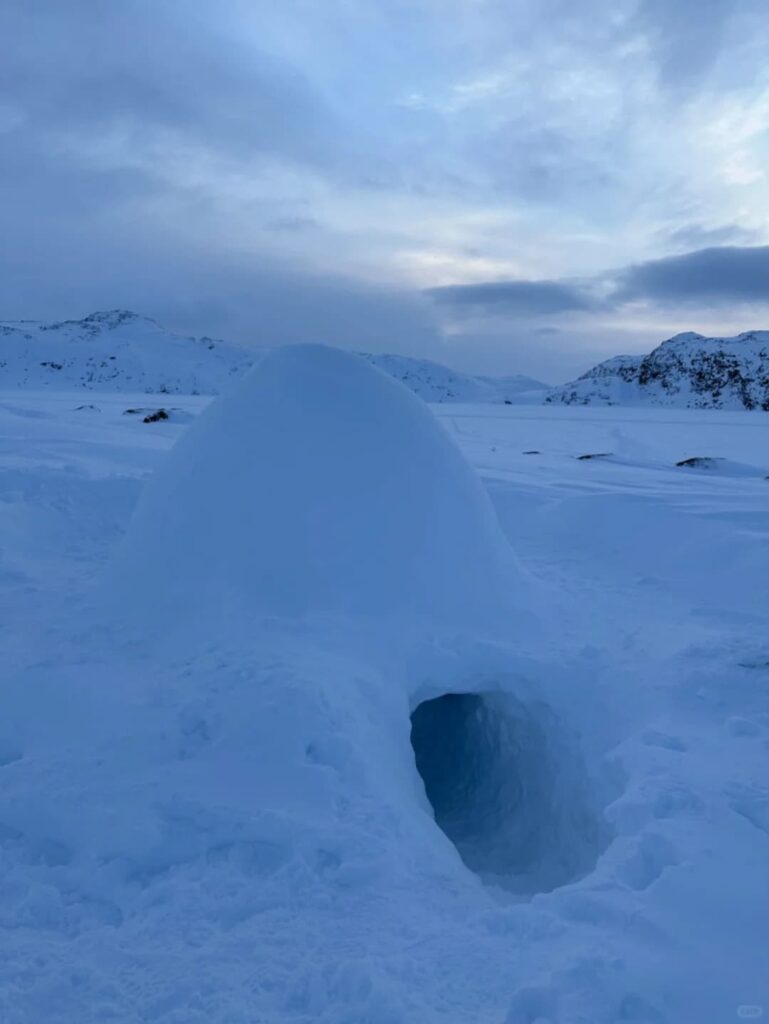
This one blew my mind. If you’re in a snowy environment, snow is not just an obstacle; it’s a building material.

It’s full of trapped air, making it an incredible insulator.

A properly made snow cave or quinzee (a pile of snow you hollow out) can stay at or near freezing inside while it’s sub-zero outside.

Your body heat does the work. The key is to make the roof dome-shaped and smooth inside so drips run down the walls, and to poke a small ventilation hole to prevent CO2 buildup.

It’s quiet, surprisingly warm, and makes you feel like a savvy Arctic hobbit.

12. Breathe Easy: Ventilation is Vital

Speaking of ventilation: YOU NEED AIRFLOW. Even—especially—in the cold. In a tiny, sealed shelter, your breath creates condensation.

Soon, everything is damp, and dampness kills insulation. Worse, if you bring a candle or small heater into an airtight space, you risk carbon monoxide poisoning.

Always leave a small vent hole near the top, opposite your entrance.

It’s a trade-off: a tiny bit of draft for staying dry and alive. A good trade.

13. The Heat Bouncer: The Reflector Wall

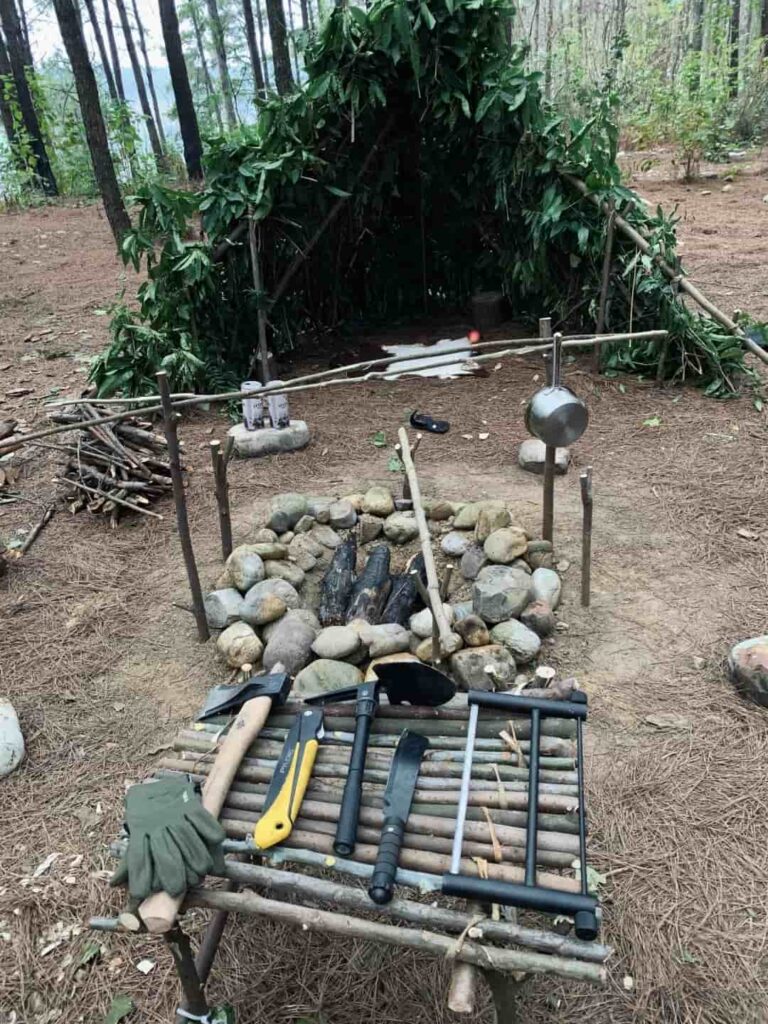
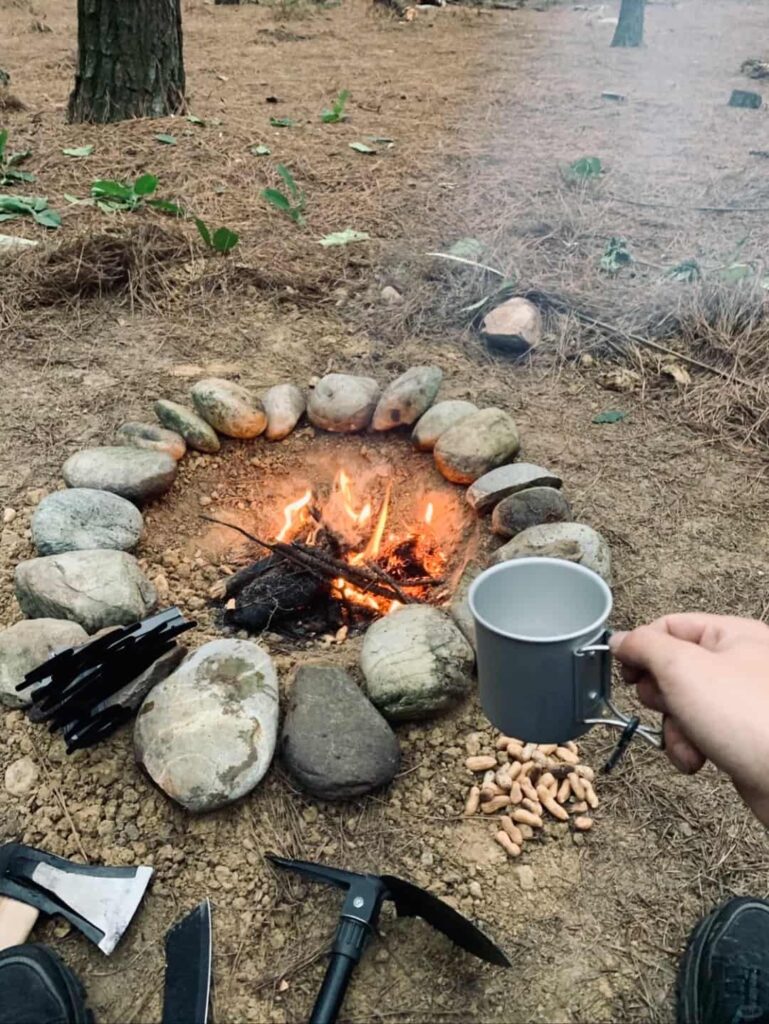
If you’re lucky enough to have a fire, don’t let its warmth wander off into the woods. Build a reflector wall behind it.

Stack logs, rocks, or even pack snow into a wall about 3-4 feet high, positioned between your fire and your shelter’s open side.

This wall does two things: it protects the fire from wind, and it acts like a radiator, reflecting heat back toward you.

It’s like giving your fire a purpose and direction. “Heat, go that way, toward the shivering human.”

14. Door Duty: The Entrance Plug

Your shelter entrance is a major heat leak. Once you’re settled in for the night, plug the hole. Weave a mat of branches, roll up a tarp or your emergency blanket, or use your backpack (if it’s not serving as a pillow).

Block that wind. It turns your shelter from a drafty cave into a semi-sealed pod of gradually warming air. The difference in coziness is profound.

15. Waterproofing Logic: Work Like a Squirrel

When layering your debris, start at the bottom and work up, overlapping each layer like shingles.

Imagine how a squirrel builds its nest, or how roofers lay tiles. The goal is to create a path of least resistance for water to run down and off, not in.

If you start at the top and work down, you create little channels that guide water right into your lap. Bottom-up.

Always. It’s a simple rhythm that makes everything more effective.

Final Thoughts

Building a survival shelter isn’t about epic, man-versus-wild conquering. It’s about humility, observation, and working with nature, not against it.

The goal isn’t comfort; it’s safety. It’s creating a tiny pocket of less awful in an otherwise challenging situation. It’s the difference between a miserable, energy-sapping night and an uncomfortable but survivable one.

It’s the knowledge that you can look at a bunch of sticks, leaves, and your own poor planning and say, “Not tonight.” And then build a weird, lumpy, incredibly effective leaf coffin to prove it.

Leave a Comment

Your email address will not be published. Required fields are marked *

Scroll to Top