10 Weather Prediction Hacks By Using Nature Method

Spread the love

I love a good weather app as much as the next person. There’s something deeply satisfying about watching a little animated sun smugly dictate your plans.

But let me tell you a story. I was three days into a solo backpacking trip, deep in a valley where my phone’s only function was as a very expensive pocket warmer.

The forecast had promised sunshine, but my gut—and the ants frantically building a skyscraper next to my tent—said otherwise.

I got soaked. I spent the night in a semi-functional lean-to that channeled rainwater directly onto my sleeping bag.

It was a soggy, profound lesson: when technology fails, you need to become your own meteorologist.

Using nature to predict the weather is the ultimate bushcraft power move. It’s not about pinpoint precision (“scattered showers at 3:42 PM”); it’s about understanding the mood swings of the atmosphere 12 to 24 hours in advance.

After years of trial and error (mostly error), I’ve compiled 10 of my favorite nature hacks. 

Table of Contents

1. The “Red Sky” Riddle

We’ve all heard the rhyme: Red sky at night, sailor’s delight. Red sky in morning, sailor take warning.

As a former skeptic, I dismissed this as folklore for people who also believed in leprechauns. Then I saw it in action.

One evening on the coast, the horizon looked like it was on fire, a breathtaking palette of pinks and deep reds.

My buddy, a grizzled old sailor type (okay, he was a kayak instructor named Steve), just grinned. “Fair winds tomorrow,” he said.

Sure enough, the next day was flawless. The science is shockingly straightforward. A red sunset means the sun’s light is passing through a high concentration of dust and dry particles in a stable air mass to our west.

Since weather systems typically move from west to east, that dry, stable air is headed your way.

The morning red sky is the ominous flip side. It means that clear, dry air has already passed you to the east, and the rising sun is illuminating the moisture-laden clouds of an approaching low-pressure system from the west.

I now treat a fiery morning sky as the atmosphere’s polite but firm text message: “Bring a jacket. Seriously.”

2. The Moon’s Halo

This one feels like pure magic. You’re out for a midnight bathroom break (the bushcraft version of a luxury spa visit), and you look up to see the moon wearing a perfect, ghostly halo.

It’s stunning. It’s also the moon tattling on the weather.

That halo is caused by the moon’s light refracting through millions of tiny ice crystals in high, thin cirrostratus clouds.

These clouds are often the vanguard of a warm front, which brings—you guessed it—moisture.

A pronounced ring means rain or snow is likely within the next 24 hours.

I’ve learned to never ignore this celestial heads-up. It’s more reliable than my uncle’s fishing stories.

3. Cloud School

Clouds are the atmosphere’s body language. You just need to know what they’re saying.

The Cirrus Cabal: It starts with wispy, feathery cirrus clouds (“mare’s tails”). They look harmless, like someone smeared cloud across the blue.

Don’t be fooled. They’re the gossips of the troposphere, whispering of change.

When they thicken into a milky, diffuse veil of cirrostratus (the one causing the moon halo), they’re saying a weather front is about 12-36 hours out. This is your first, gentle alert.

The Cumulus Conundrum: Everyone loves puffy, friendly cumulus clouds—the sheep of the sky. But watch them like a hawk (a very damp hawk).

If these fluffy guys start bulking up earlier than late afternoon, and their tops begin to boil upwards into towering “cauliflower” heads, they’re transitioning into cumulonimbus.

This is the cloud’s final form: the thunderstorm. The earlier this vertical growth spurt happens, the angrier and more energetic the storm will be.

I once watched a benign puffy cloud turn into a thunderhead before I’d even finished my morning coffee.

I spent the next hour in a mad dash to take down my tent. I lost the race.

4. Campfire TV

Forget Netflix. The most informative program in the woods is the behavior of smoke from your campfire. It’s a live feed of atmospheric pressure.

The Zen Stream: Smoke that rises in a thin, straight, unwavering column is broadcasting fantastic news.

It indicates stable, high-pressure air. The air is calm and sinking, creating perfect conditions for the smoke to ascend peacefully. This is the meteorology of a good day.

The Lazy Loiterer: If your smoke seems lethargic, sinking back down, or spreading out horizontally like it just can’t be bothered, pay attention.

This signals low atmospheric pressure. The air is moist and rising, causing the smoke to get trapped and drift low.

It’s the atmosphere’s way of saying, “Things are getting unstable. Rain is likely.” I’ve canceled fishing trips based solely on the lazy drift of my morning fire’s smoke.

It has saved me from being a human lightning rod more than once.

5. The Eerie Calm & The Wind Shift

This is the classic “calm before the storm,” and it’s unnervingly accurate. When a steady breeze suddenly dies into a dead, heavy silence, and the forest goes weirdly quiet, the hair on your neck should stand up.

Similarly, a sudden, pronounced shift in wind direction (especially if it swings to come from the east) often means a boundary between air masses—a front—is on your doorstep.

I experienced this profound calm on a lake once. The water went from choppy to mirror-flat in minutes.

The silence was so thick it felt loud. An hour later, the sky opened up.

It’s nature hitting the mute button before cranking the volume to eleven.

6. The Pinecone Hygrometer

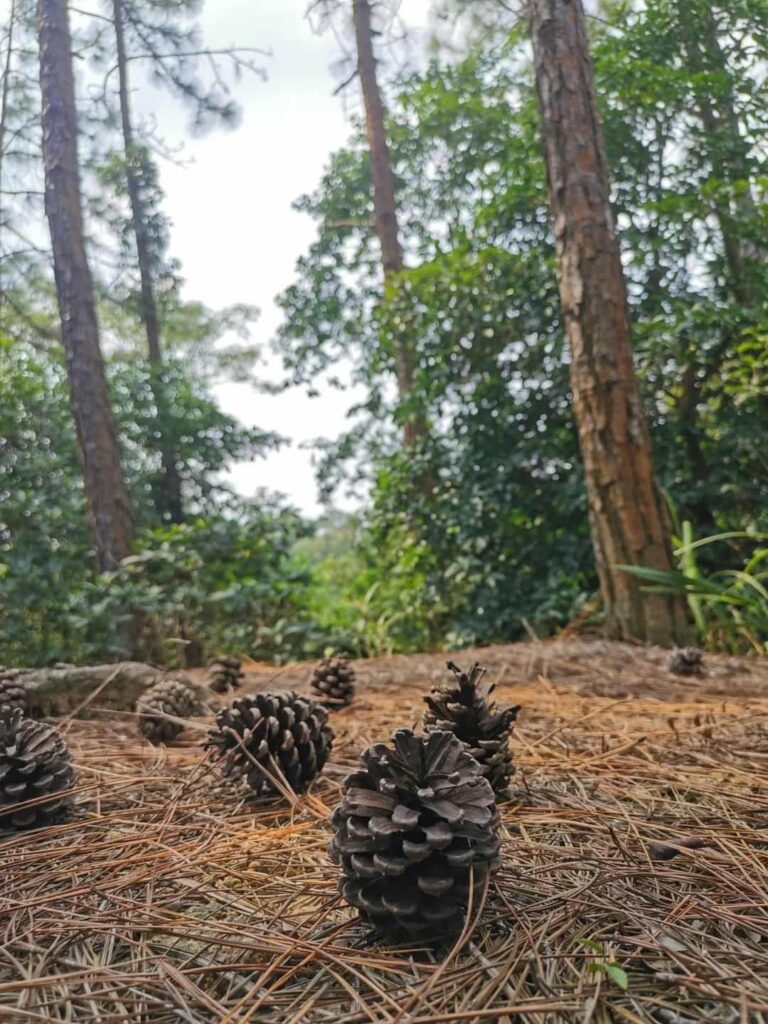
Behold, the humble pinecone: part tree offspring, part weather station. Its scales open and close in response to humidity.

In dry, fair weather, the scales open wide (perfect for scattering seeds). When the air becomes damp before a rain, the scales absorb moisture and swell shut, protecting the seeds inside.

I keep a pinecone near my camp. It’s my woody little consultant. If it’s tight-fisted and closed, I batten down the hatches.

If it’s splayed open and relaxed, I relax too. It’s a simple, genius system that has never tried to sell me a premium subscription.

7. Flower Power

Next time you see a dandelion, don’t just see a weed. See a micro-barometer. Many flowers, including dandelions, chicory, and tulips, close their petals in response to increasing humidity and decreasing light as a storm approaches.

They’re protecting their precious pollen from being washed away.

If you walk through a meadow in the morning and see the clover and dandelions tightly closed, they’re giving you a silent warning.

They’ve sensed the moisture in the air. I’ve learned to trust the floral “closed” sign more than my own optimism.

8. Low-Flying Birds

Swallows and swifts are the aerobatic jets of the bird world. They feed on tiny insects caught mid-flight.

Before a storm, air pressure drops. This drop makes it harder for these birds to fly at their usual high altitudes (and apparently makes the insects fly lower to the ground).

So, if you see birds that are typically high-flyers zipping around at ankle height, they’re not being quirky.

They’re capitalizing on a bug buffet that’s been forced down by the impending low pressure. It’s a clear sign that the air is “getting heavier,” and trouble is brewing upstairs.

9. The Mosquito Barometer

We all know mosquitoes are nature’s tiny vampires. But did you know their aggression level is a weather forecast?

High humidity, which commonly precedes a rainstorm, is perfect for them. It keeps their delicate wings from drying out and allows them to fly more easily.

So, if you notice the biting pests becoming insufferably persistent and bold, it’s not your imagination—it’s humidity.

They’re getting their last meals in before the rain grounds them. Ironically, they often vanish minutes before the rain starts.

Their sudden absence is your final, buzzing warning to take cover.

10. Ants

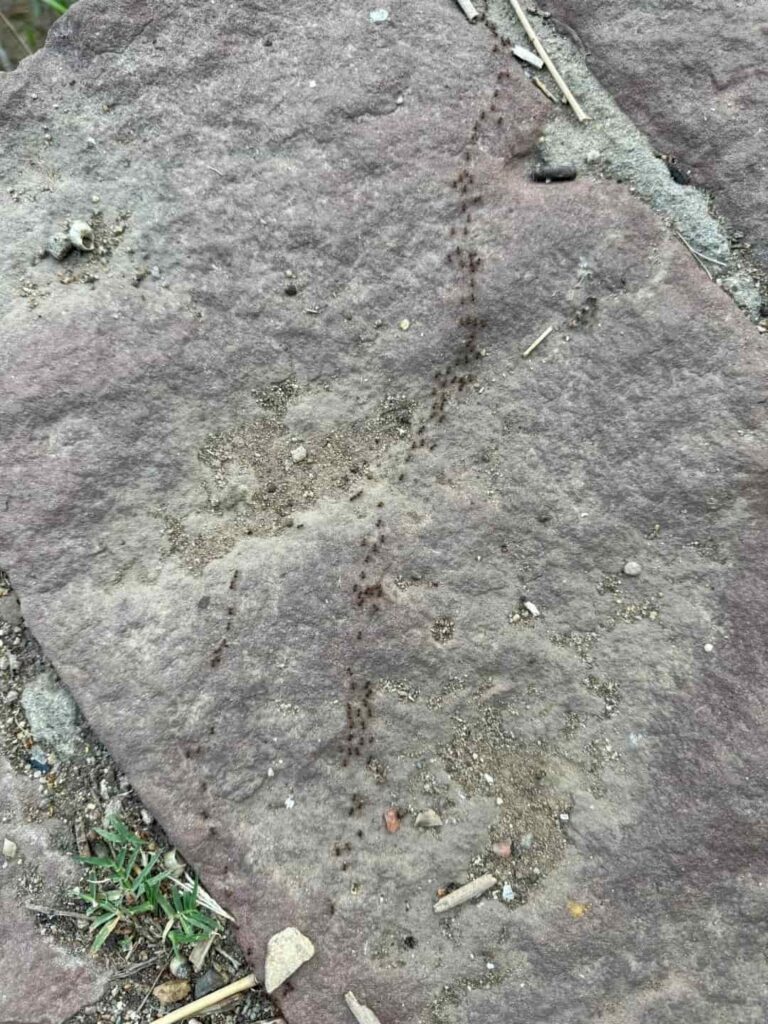
Ants are incredible engineers, and their construction codes are written by atmospheric pressure. In stable, high-pressure weather, they go about their business at a normal pace.

But when low pressure (which often brings rain) moves in, they sense the change in the air.

You’ll see two things: their activity levels skyrocket into a frantic hustle, and they often build higher mounds or reinforce the entrances to their nests with finer soil.

They’re building flood barriers.

I once sat for an hour watching an ant colony work in a frenzy. They were like a six-legged construction crew before a union deadline.

I moved my tent to higher ground. It rained for two days straight, and their mound stood proud and dry. I felt a deep respect for my tiny, over-caffeinated neighbors.

Putting It All Together

Here’s the golden rule of bushcraft weather forecasting: Never trust a single sign.

Nature works in concordance. A single red sky is a hint. A red sky plus closed pinecones plus lethargic smoke plus frenzied ants is a five-alarm meteorological emergency.

Watch the sunset. Check a pinecone. Observe the birds. The goal isn’t to replace modern forecasting, but to build a dialogue with the natural world.

This knowledge turns a potentially miserable, soggy ordeal into a manageable—and even fascinating—situation. You stop being a passive victim of the weather and start being a prepared participant in the wilderness.

Leave a Comment

Your email address will not be published. Required fields are marked *

Scroll to Top