Camping is one of those rare activities that feels both like a step back in time and a fresh start every time you pitch a tent.
Whether you’re a minimalist backpacker or a “glamping” enthusiast, the appeal of the great outdoors is timeless.
The ritual of unzipping a tent to crisp morning air, the communal effort of building a fire, the way food tastes like it was prepared by Michelin-starred elves—it never seems to lose its luster.
While city life spins faster every year, the campsite remains stubbornly, gloriously still.
What is it about sleeping on the ground, surrounded by bugs and the distinct possibility of raccoon theft, that keeps millions flocking to state parks and backcountry trails?
The answer lies in a beautiful collection of simple truths.
Table of Contents
1. The Digital Detox
Camping provides a rare, socially acceptable excuse to turn off notifications and disconnect from the relentless hum of the internet. In normal life, ignoring a text message for three hours is considered antisocial behavior, possibly even a cry for help.
At a campsite, however, doing the same thing is called “immersing yourself in nature.” Phones become pocket-sized bricks useful only for taking blurry photos of squirrels.
The constant pinging, buzzing, and demanding dings that hijack attention spans suddenly cease.
What remains is quiet—the kind of quiet that initially feels unsettling, like something is wrong, until the brain realizes it can finally finish a single thought without interruption.
The digital leash gets unhooked, even if just for a weekend, and the sense of liberation is oddly intoxicating.
2. Circadian Rhythm Reset
Sleeping under the stars helps realign your internal clock with natural light cycles, often leading to some of the most restorative sleep imaginable.
Modern humans have developed a bizarre relationship with blue light, staring at screens until the brain is confused into thinking midnight is a lovely time for a game of fetch.
Camping fixes this nonsense immediately. When the sun goes down, the world becomes genuinely dark, and the body produces melatonin like a responsible factory. Waking at dawn stops feeling like a cruel punishment and starts feeling natural.
There is something deeply satisfying about being wide awake at six in the morning, sipping coffee while the rest of the world snoozes, and realizing the grogginess that usually haunts mornings has mysteriously vanished.
3. The "First Sip" Magic
There is a specific, unmatched quality to coffee brewed over a campfire or a portable stove in the crisp morning air.
Back home, coffee is often a mechanical act performed while half-asleep, stumbled toward with the enthusiasm of a zombie.
Camp coffee, however, arrives with ceremony. The water must be boiled just right, the grounds must be managed without a proper filter, and the resulting brew often contains a surprising amount of sediment that crunches gently with each sip.
Somehow, it tastes like victory. Perhaps it is the smoke that drifted into the pot, or the chill in the air demanding warmth, or the simple fact that it was made with one’s own two hands while a curious blue jay watched judgmentally.
Whatever the reason, that first sip hits different.
4. Culinary Creativity
Food simply tastes better outdoors; whether it’s a charred marshmallow or a gourmet cast-iron meal, the environment enhances every flavor.
A hot dog roasted over an open flame, held on a stick that was sharpened with a pocket knife, achieves a level of deliciousness that a stove-top frankfurter could never dream of reaching.
The stakes are higher when cooking outside—literally, if one considers the smoke in one’s eyes—and that effort translates into appreciation.
Vegetables that would be ignored at home become acceptable when tossed in foil with butter and thrown into coals.
Meals become events rather than chores, and the inevitable mishap of dropping a pancake into the dirt is met not with frustration but with laughter and a quick scrape.
5. Minimalist Perspective
Camping reminds you how little you actually need to be happy—just shelter, warmth, food, and good company.
The average home is stuffed with gadgets, trinkets, and furniture that demands constant maintenance and dusting.
The campsite operates on a radically different philosophy: if it doesn’t fit in the car or serve an immediate purpose, it stays home.
Life becomes refreshingly simple. The to-do list shrinks to gathering firewood, finding water, and not getting lost.
There are no bills to pay in the woods, no emails to answer, no lawns to mow.
The realization dawns slowly that modern life has accumulated an enormous amount of unnecessary baggage, and that the stripped-down version feels suspiciously like freedom.
6. Unstructured Time
Away from the “9-to-5” grind, you regain the freedom to let curiosity, rather than a calendar, dictate your day.
In the city, time is chopped into thirty-minute increments, scheduled and optimized until every moment has a purpose assigned by an overachieving planner.
Camping destroys that tyranny. A morning might involve staring at a lake for two hours, watching light dance on the water while the brain takes an unscheduled vacation.
An afternoon could be spent following a random trail just to see where it goes, with no regard for efficiency or return on investment.
The clock becomes a suggestion rather than a master.
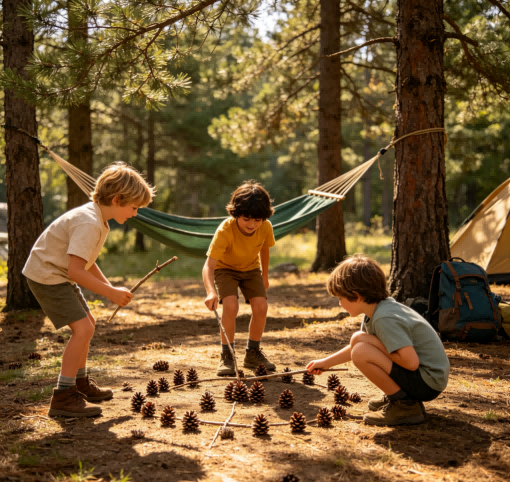
Children of all ages remember, suddenly, what it feels like to be bored, and then what it feels like to solve boredom with imagination.
7. Skill Mastery
There is a deep sense of primal satisfaction in successfully building a fire, navigating a trail, or setting up a weather-proof camp.
Modern work often feels abstract—emails sent into the void, spreadsheets updated for reasons that grow hazy.
Camping provides immediate, tactile feedback. A fire either burns or it doesn’t. A tent either stays dry or becomes an indoor swimming pool.
Success is visible, tangible, and earned through effort and know-how. Mastering the art of coaxing flames from damp wood or reading the sky for incoming weather taps into something ancient.
The ego gets a quiet boost, whispering, “Look at this. You did this. You are basically a pioneer now, albeit one with a comfortable sleeping pad.”
8. The Soundtrack of Nature
Trading traffic noise and sirens for rustling leaves, flowing water, and birdsong provides an immediate neurological “sigh of relief.” Cities are loud.
The constant hum of machinery, the honking of impatient drivers, the bass from someone’s car stereo—it all accumulates in the nervous system like unpaid debt.
Nature’s soundtrack operates on a different frequency. Water gurgles instead of roars. Wind whispers instead of screams.
Birds sing songs that are actually pleasant to hear, unlike the emergency vehicle siren that seems to live permanently outside the window.
The brain, freed from the task of filtering out irrelevant noise, relaxes its guard. Sleep comes easier. Thoughts come clearer.
The silence between sounds becomes just as valuable as the sounds themselves.
9. Stargazing Clarity
Away from urban light pollution, the night sky reveals its true scale, offering a humbling and awe-inspiring perspective on our place in the universe.
City dwellers grow accustomed to seeing maybe a dozen stars on a good night, the brightest ones fighting through the orange glow of streetlights.
Camping in a dark sky location rewrites that limited view entirely. The Milky Way splashes across the heavens like spilled glitter, dense and impossible to ignore. Satellites crawl slowly across the blackness.
Shooting stars appear with such frequency that making wishes becomes a full-time hobby. The sheer scale of it all tends to shrink personal problems down to their proper size.
That argument at work or the minor financial worry becomes genuinely tiny when measured against infinite space.
10. Strengthened Bonds
Without the distraction of screens, conversations around a campfire tend to go deeper, fostering stronger connections with friends and family.
Sitting around a fire is humanity’s oldest social network, predating Wi-Fi by several thousand years.
The flickering light creates an atmosphere of intimacy, where faces look softer and secrets feel safer. Phones, useless without service, remain in pockets where they belong.
Talk drifts naturally from surface topics into more meaningful territory. Stories get told.
Old jokes get resurrected and laughed at again. The fire demands attention, requiring occasional poking and feeding, which gives natural pauses to conversation.
By the time the flames die to embers, connections have been reforged, strengthened by the shared experience of simply being present together.
11. Physical Engagement
Hiking, chopping wood, and setting up camp provide “functional fitness” that feels like play rather than a chore.
The gym, for all its benefits, can feel like a hamster wheel—running nowhere, lifting things, and putting them back down.
Camping exercise comes with purpose. Walking to a waterfall is motivated by the desire to see something beautiful, not by a calorie counter.
Splitting firewood produces heat and a sense of accomplishment, not just sore arms. Pitching a tent requires problem-solving and movement that feels natural rather than prescribed.
Bodies remember what they were designed to do: move through space, carry weight, adapt to terrain.
The soreness the next morning feels earned, like a trophy rather than a punishment.
12. Wildlife Encounters
Seeing a deer at dawn or watching a hawk hunt reminds us that we are guests in a vibrant, living ecosystem.
The city convinces humans that they are the main characters, the only show worth watching.
A chance encounter with a wild animal corrects that assumption immediately.
The deer browsing at the edge of the meadow does not care about the stock market or the latest celebrity gossip.
The raccoon attempting to break into the cooler operates on a completely different set of priorities.
These encounters bring a sense of perspective, a reminder that the world is far larger and more interesting than the human dramas that usually consume attention.
Even the jump scare of a squirrel rustling leaves can produce a laugh and a hand placed over a suddenly pounding heart.
13. Adaptability and Resilience
Dealing with a sudden rainstorm or a forgotten piece of gear builds problem-solving skills and a “can-do” attitude.
Camping is life with the safety nets removed, or at least with the nets packed in a place that is currently inconvenient.
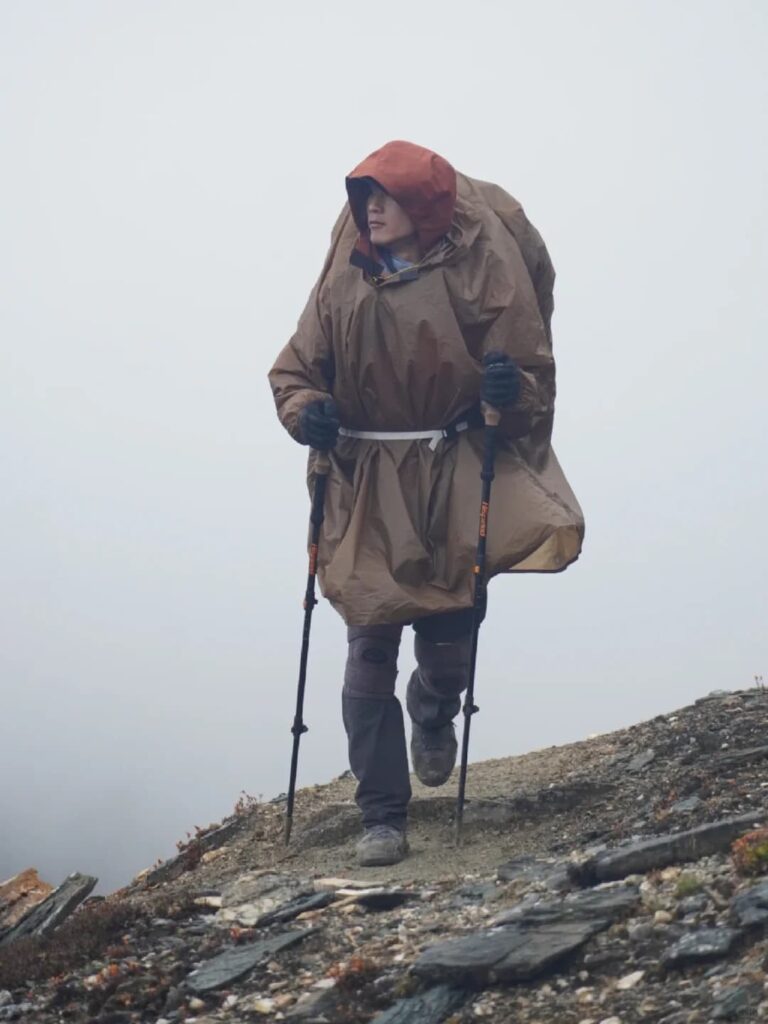
When the weather turns nasty, there is no Uber home, no delivery app that brings dry clothes. Solutions must be improvised.
Tarps become shelters. Bandanas become pot holders. Ingenuity kicks in, often fueled by stubbornness and the refusal to let a little rain ruin a good time.
Overcoming these small adversities produces a confidence that carries back to regular life.
If a broken tent pole in the dark can be handled, maybe that difficult work project can be handled too.
14. Seasonal Variety
No two trips are the same; the sights, smells, and challenges change dramatically between the blooming spring and the golden hues of autumn.
Camping is not a single experience but a constantly rotating gallery of natural art. Spring brings wildflowers and the optimistic songs of returning birds.
Summer offers long days, swimming holes, and the buzz of insects that occasionally get too curious about dinner. Fall paints the world in colors that seem almost artificial, with crisp air that smells like apples and woodsmoke.
Even winter camping, for the truly committed, reveals a silent, stark beauty entirely its own.
Returning to the same campsite in different seasons feels like visiting an old friend who keeps changing outfits and telling new stories.
15. Sensory Grounding
The smell of pine needles, the feel of cool lake water, and the heat of the fire help pull you out of your head and into the present moment.
Modern life happens largely in the mind—planning, worrying, ruminating, scrolling.
Camping drags attention firmly into the body and its surroundings. The rough texture of bark under fingertips.
The shock of cold water on skin. The warm weight of a coffee cup held in chilly hands. These sensations demand presence.
Worrying about next week’s meeting becomes difficult when a loon is calling across the lake and the sunset is turning the sky into a watercolor painting.
The senses, dulled by years of screen-staring, wake up and start paying attention again.
16. Affordability
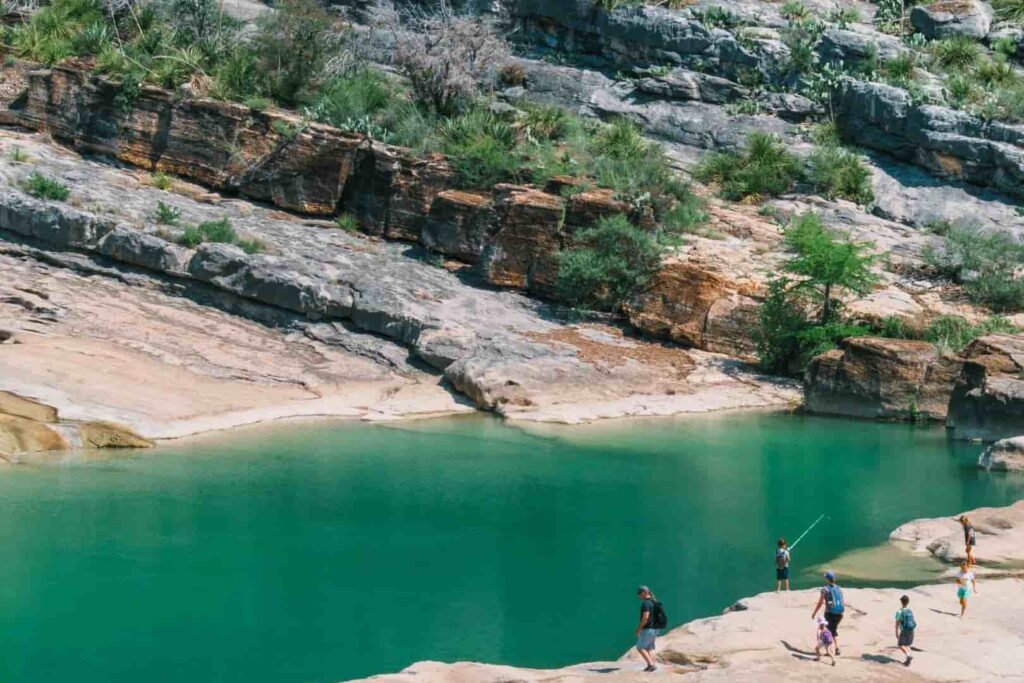
Compared to luxury resorts, camping remains one of the most accessible ways to travel and see the world’s most beautiful landscapes.
The economics are almost laughably favorable. A hotel room in a scenic location can cost hundreds per night, plus taxes, plus parking fees, plus the mini-bar that somehow charges eight dollars for a bag of peanuts.
A campsite often costs less than a dinner out. The views, however, are reserved for billionaires and backpackers alike.
National parks and forests belong to everyone, their mountains and lakes available to anyone willing to sleep on the ground.
Camping democratizes beauty, making the spectacular accessible to the modest budget.
17. A Legacy of Wonder
It’s an intergenerational bridge; the same joy a child feels catching their first fish is the same joy a grandparent feels watching them.
Camping experiences echo through time, connecting moments across decades. The smell of a campfire can transport an eighty-year-old back to childhood trips that happened seventy years ago.
Teaching a child to toast a marshmallow, to paddle a canoe, to spot a constellation—these are acts of passing down wonder.
The laughter around the fire joins a long chain of laughter from previous generations around their own fires.
In a world that changes faster every year, camping offers continuity, a living link to simpler times and to the people who first introduced us to the magic of the outdoors.
Conclusion
Ultimately, camping never gets old because it isn’t just a hobby—it’s a homecoming. It strips away the complexities of modern life and leaves us with the essentials: fire, stars, and the people we love.
As long as the woods are quiet and the fire is warm, there will always be a reason to head back out into the wild.
The gear may get lighter, the backs may get stiffer, but the pull of the campsite remains as strong as ever, calling us back to the simplicity that our busy lives so desperately need.