11 Solo Camping Tips for Safety and Confidence

Spread the love

The first time you decide to go solo camping, a small part of your brain will inevitably whisper, “This is how horror movies start.”

It’s fine. Everyone thinks it.

You’ll lie in your tent, staring at the nylon ceiling, and every rustle of a leaf will sound exactly like a bear unzipping your tent to ask for a cup of sugar. But here’s the secret the seasoned solo campers don’t tell you: that fear is normal. More importantly, it’s manageable.

Solo camping isn’t just “camping without friends.” It’s a masterclass in self-reliance. It’s you, the stars, and the delightful absence of someone snoring in the next tent. Without a buddy to double-check the stove or investigate that mysterious “bump in the night,” your preparation becomes your partner.

The goal isn’t to be fearless. The goal is to move from hyper-vigilance—where every noise signals imminent doom—to situational awareness, where you simply acknowledge the noise and go back to your book.

So, how do we get there? By focusing on redundant safety systems and a little mental conditioning, you can transform a daunting trip into a confidence-boosting retreat. Let’s break it down.

Table of Contents

Phase 1: Preparation & Communication

They say failing to prepare is preparing to fail. In the solo camping world, failing to prepare is preparing to have a very long, very anxious night staring at the tent door.

1. The "Leave No Doubt" Itinerary

You are not James Bond. You cannot disappear into the wilderness without a trace, nor should you try.

Before you leave, find a trusted person. This could be a parent, a sibling, or that one friend who actually checks their text messages. Give them the full download.

Tell them exactly where you are parking. Tell them the trail you’re taking. And here’s the crucial part: give them a specific “trigger time.”

This isn’t just a “I’ll call you Tuesday” vague plan. This is a hard deadline. Say something like, “If you haven’t heard from me by 8:00 PM on Sunday, call the ranger station at this number.”

This serves two purposes. First, it ensures someone will actually look for you if something goes sideways. Second, it gives you incredible peace of mind. Knowing that the cavalry has a scheduled start time allows you to relax. The burden isn’t entirely on your shoulders; you’ve delegated the worrying.

2. Master Your Gear at Home

Here’s a scene you want to avoid: It’s dusk. The temperature is dropping. The wind is picking up. You’re holding a brand-new tent, a bag of poles, and a look of profound confusion.

Do not let your first gear test be a survival scenario.

Take the new gear out of the packaging at home. Set up the tent in your living room. Your cat will be confused. Your roommates will judge you. That’s fine. Cook a meal on your camp stove in the backyard. Run water through your new filter in the kitchen sink.

Focus on the “Big Three”: shelter, stove, and water filtration. Practice until these tasks become muscle memory.

When you’re at the actual campsite and it’s getting dark, you don’t want to think about how the tent poles connect. You want your hands to just do it. Competence breeds confidence. And confidence keeps the panic at bay.

3. Invest in a Satellite Messenger

We live in the future. It’s time to use the future.

Cell service is a fickle friend in the wilderness. It will abandon you exactly when you need it most. Relying on a cell phone for safety is like relying on a chocolate teapot for hydration.

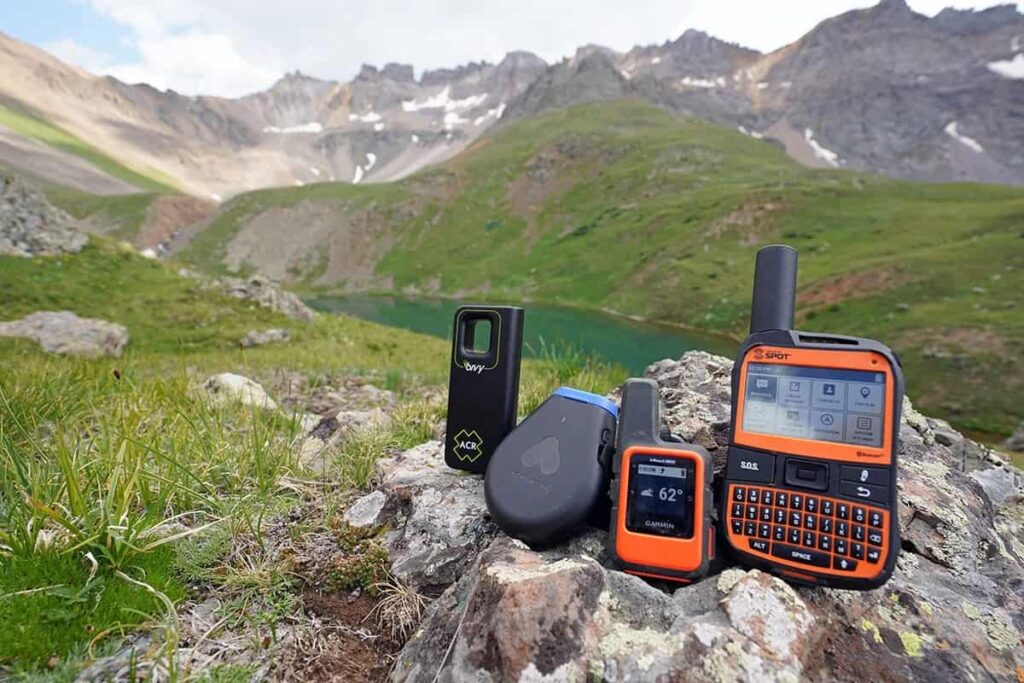
Consider investing in a satellite messenger. Devices like the Garmin inReach or Zoleo are game-changers. They connect to satellites, allowing you to send two-way text messages from anywhere. Want to tell your mom you saw a cool bird? Done. Need to update your trigger-time contact that you’re staying an extra night? Easy.

And yes, they have the big red SOS button. That button is your panic button. It’s the ultimate insurance policy.

Knowing it’s there—literally at your fingertips—does wonders for your anxiety levels. It’s a tangible reminder that you are never truly alone, even when you’re miles from the nearest road.

Phase 2: On-Site Safety & Strategy

You’ve planned. You’ve packed. You’ve practiced. Now you’re actually in the woods. The real test begins.

4. The "Arrive by 2:00 PM" Rule

Rushing is the enemy of good judgment. When you’re racing against the sunset, you make mistakes. You forget to stake down the tent properly. You miss the subtle signs of a nearby animal den. You set up camp in a low spot that becomes a pond at 3:00 AM.

Make it a hard rule: arrive at your campsite by 2:00 PM.

This gives you a luxurious window of daylight. You can drop your pack and just walk around. Scout the area. Look up. Check for “widow-makers”—those are dead trees or large branches that look like they might fall on your tent during a windstorm. Spoiler: you don’t want to be under them.

Get comfortable with the local geography. Find the water source. Note the landmarks. By the time the sun starts to dip, your site won’t feel like an alien planet. It will feel like your temporary home.

5. Trust Your "Gut-Check"

Your brain is a powerful computer that processes millions of subconscious cues. Sometimes, it will send you a summary report in the form of a feeling. Listen to it.

You pull into a campsite. Maybe it’s beautiful on paper. But something feels off. Maybe there’s a strange person loitering nearby. Maybe the vibe is just… heavy. It doesn’t matter.

Trust the gut.

In solo camping, your intuition is a valid safety metric. You don’t need a logical reason to leave. You don’t need to justify it to anyone.

There is no shame in a tactical retreat. Pack up. Move to the next site. Go back to the car and find a campground. A bad night in a questionable location isn’t brave; it’s just bad decision-making. Live to camp another day.

6. Maintain a Clean Camp (Wildlife Safety)

When you’re solo, you are the entire cleaning crew, the security team, and the food manager. There’s no one to blame but yourself if you mess this up.

Wildlife, particularly bears and raccoons, are driven by one thing: the relentless pursuit of calories. Your tasty snacks are calorie gold.

You must manage your smells. Use bear canisters where required, or learn how to hang a proper bear bag. Store all food, trash, and even scented items like toothpaste and deodorant away from your sleeping area. And this is the golden rule: no snacks in the tent.

Not one granola bar wrapper. Not a single crumb.

Your sleeping area must be a “scent-free zone.” A bear doesn’t want to eat you. But it might investigate the source of a delicious smell, and you just happen to be in the way. Keep it clean, and you drastically reduce the chances of unwanted midnight visitors.

7. Layered Lighting

Darkness is often the biggest psychological hurdle for solo campers. When the sun goes down, the world shrinks to the size of your headlamp beam. Imagination runs wild.

Combat this with light. Lots of it.

Don’t just bring one light source. Bring three.

  • Primary: A solid headlamp. This keeps your hands free for camp chores.
  • Backup: A small flashlight. Tuck it in your pocket or your sleeping bag. If you drop your headlamp in the creek, you’re not plunged into darkness.
  • Ambiance: A small lantern for the tent.

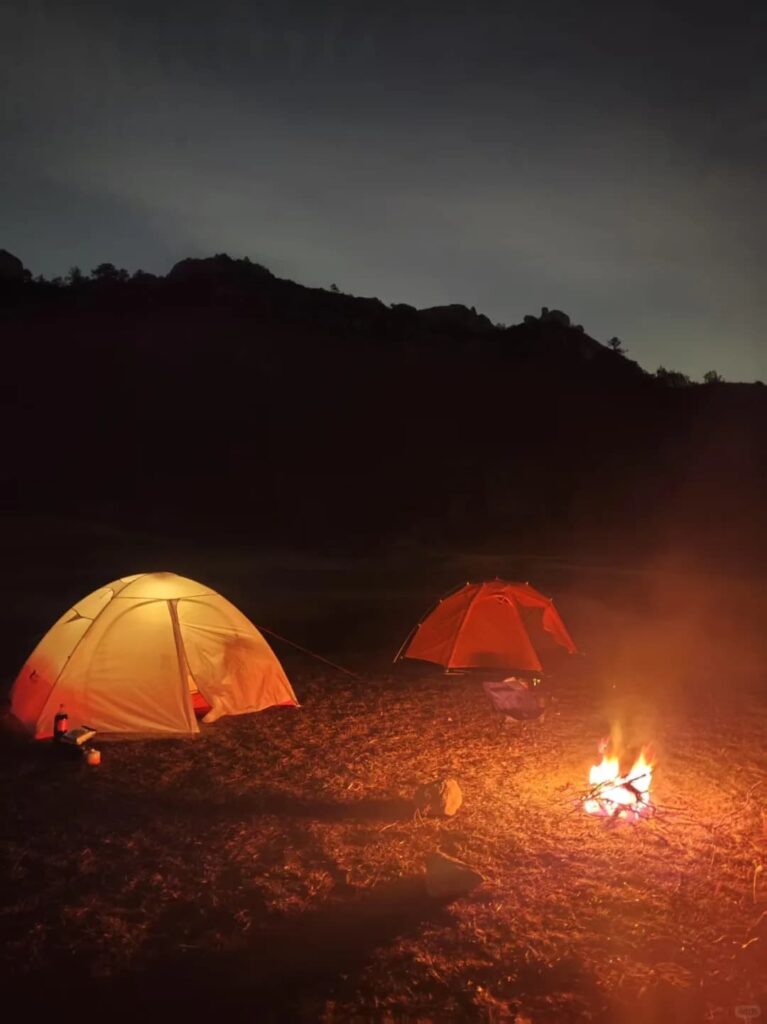
Hanging a lantern inside your tent transforms it from a dark cave into a cozy den. It softens the edges. It chases away the shadows. Having multiple ways to “tame” the night keeps your confidence sky-high. Darkness loses its power when you can switch it off with a button.

Phase 3: The Mental Game

This is the most important phase. You can have the best gear and the perfect site, but if your brain turns against you, the trip is over.

8. Rationalize the Night Noises

You’re lying in your tent. It’s 2:00 AM. You hear a loud CRACK outside. Your heart stops. Your mind immediately conjures an image of a massive bear, or possibly Bigfoot, stepping on a branch right outside your door.

Here’s the reality check: small rodents sound like bears in the leaves. A mouse scurrying through the undergrowth can sound like a linebacker. A squirrel jumping from a tree sounds like a branch breaking.

Squirrels don’t have a stealth mode.

Before your trip, spend a few minutes learning about local nocturnal sounds. Watch videos of raccoon noises or owl calls. When you hear a strange sound, you can run through the mental checklist. “Was that an owl? Probably an owl. Could also be a frog. Definitely not a bear. Bears are louder and also, statistically, don’t care about me.”

Remind yourself of the physics. That sound is likely small, scared of you, and already a mile away.

9. The "Self-Talk" Technique

If you feel the panic starting to rise—the tight chest, the racing heart—don’t just lie there and let it spiral. Fight back.

Talk out loud to yourself.

Yes, it feels a little crazy. But it works. Narrate your actions in a calm, steady voice.

“Okay. I hear a noise outside. I am now reaching for my headlamp. I am turning it on. I am unzipping the tent just a little bit. I am shining the light. Oh, look. It’s a raccoon. A very small, very surprised raccoon. Now I am zipping the tent back up. Now I am getting back into my sleeping bag. Everything is fine.”

This simple act of narration engages the logical part of your brain—the prefrontal cortex. It suppresses the amygdala, which is the part responsible for the “fight or flight” response. You’re literally talking yourself down from the ledge.

10. First Aid & Self-Rescue Skills

Nothing boosts your “trail-cred” and peace of mind like knowing you can actually handle a minor emergency.

Take a basic Wilderness First Aid (WFA) course. It’s usually just a weekend long. They teach you practical skills: how to clean and dress a wound, how to recognize the signs of hypothermia, how to splint an ankle with trekking poles and a jacket.

The knowledge itself is useful. But the confidence it provides is invaluable.

When you’re out there alone, you’re not thinking, “Oh no, what if I fall?” You’re thinking, “If I fall, I know how to handle it. I have a kit. I have a plan.” That shift in mindset is transformative.

11. Entertainment is Essential

We often romanticize solo camping as a time for deep meditation and oneness with nature. And sometimes it is. But sometimes, the silence just gets… heavy.

The “witching hour” is that period between finishing dinner and actually falling asleep. The camp chores are done. It’s dark. Your mind has nothing to do but wander. And it will wander straight into scary territory if you let it.

So, don’t let it.

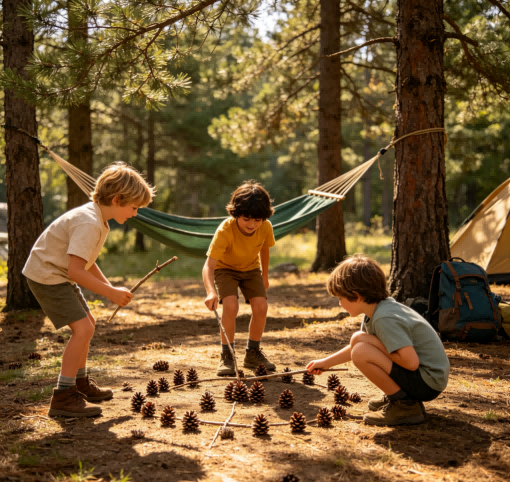
Bring a book. Download a few podcasts or an audiobook on your phone (put it in airplane mode to save battery). Bring a journal and write down your thoughts.

Occupying your mind with a story or a task prevents your imagination from running wild. It bridges the gap between the busyness of the day and the peace of sleep. It’s not cheating at nature; it’s simply managing your mental state.

Conclusion: From Fear to Flow

Here’s the truth about confidence in the woods: it isn’t the absence of fear. It’s the presence of a plan.

Fear will always be there, lurking in the back of your mind. It’s an ancient survival mechanism that kept our ancestors alive. You can’t turn it off. But you can override it.

By checking the boxes of communication, gear proficiency, and mental fortitude, you build a fortress of preparation around yourself. You stop being a guest in the wilderness, nervously waiting for something to go wrong. You start becoming a part of it.

You learn to read the land. You learn the rhythms of the night. You discover that the woods aren’t out to get you; they are simply indifferent to you. And in that indifference, there is a profound freedom.

Your first successful solo night will likely be one of the most empowering moments of your life. You’ll wake up with the sun, unzip the tent, and look out at the world with a quiet, knowing smile.

You did it. You faced the dark. You faced the silence. And you found yourself entirely capable.

Now, go book that campsite. Adventure is waiting. And it’s pretty great.

Leave a Comment

Your email address will not be published. Required fields are marked *

Scroll to Top