Something strange happens to people in their thirties.
Rational humans suddenly want to sleep on the ground. In the woods. On purpose.
They’ll pay good money for this privilege. They’ll drive for hours. They’ll battle insects and weather and their own questionable judgment.
All in the name of “getting back to nature.”
But here’s where things get complicated. Two paths lead into the wilderness. Both involve sleeping outside. Beyond that, they share almost nothing in common.
Tent camping and RV life sit on opposite ends of the outdoor recreation spectrum. They’re like cats and dogs trying to share a water bowl. They’re like Marvel and DC fans attempting a civil conversation. They’re like people who love pineapple on pizza facing off against those with actual taste buds.
After countless nights spent both on the ground and in climate-controlled comfort, here’s everything you need to know about choosing your adventure.
Grab a camp chair. Or a leather driver’s seat. Let’s dive in.
Table of Contents
1. Initial Investment and Ongoing Costs

Let’s address the financial elephant. Or rather, the elephant-shaped vehicle parked in driveways everywhere, slowly depreciating while its owners wonder where they went wrong in life.
Tent Camping:
A quality tent setup costs about two hundred dollars.
That’s it.
That money buys a tent, a sleeping bag, a camp stove the size of a shoebox, and a flashlight guaranteed to die seventeen minutes into your first night.
Tent camping is the ramen noodle of vacation options. You can spend less on your entire sleeping arrangement than you’d pay for one night at a budget hotel with questionable sheets and a “continental breakfast” that’s really just stale muffins.
Campsite fees run twenty to forty bucks a night. Fire ring included. Picnic table thrown in like a bonus prize.
Financially speaking, tent camping wins by knockout.
RV Life:
Buying an RV isn’t a purchase. It’s a second mortgage with wheels attached.
This decision requires a serious conversation with your bank. And your spouse. And probably a therapist.
The purchase price ranges from “nice used car” to “small house in a less desirable school district.”
Insurance costs enough to make you consider just trusting fate.
Fuel economy? Let’s just say you’ll become best friends with the gas station attendant. You’ll learn their names. You’ll ask about their kids. You’ll see them more than your actual family.
Maintenance deserves its own therapy session.
This isn’t a hobby. It’s a luxury lifestyle brand that convinced you that you need a fifty-thousand-dollar vehicle to sleep outside.
It’s like buying a yacht because you enjoy tuna sandwiches. Possible? Sure. Financially responsible? Not even close.
2. The Nature Factor

Tent Camping:
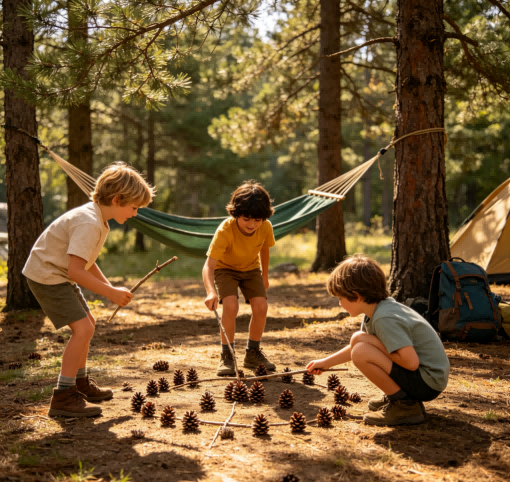
Tent campers don’t visit nature. They live in it.
Whether they like it or not.
Around 3 AM, when something large snuffles outside those nylon walls, “like it or not” becomes a very real question.
You hear the wind in the leaves. You smell the pine needles and damp earth. You feel the temperature drop because your only protection from the elements is a millimeter of polyester and your own rapidly cooling body heat.
The wildlife becomes intimate. Squirrels scrabbling for acorns at 5 AM. Owls hooting. The couple three sites over arguing about who forgot the marshmallows and whether this marriage was a terrible mistake.
You’re in the soup, as they say. Part of the ecosystem.
It’s magical. Right up until a raccoon tries to join you for breakfast and looks disappointed by your lack of pastries.
RV Life:
The RV delivers what can only be called “Nature Lite.”
It’s the seltzer water of outdoor experiences. It hints at nature without fully committing. Some people find it disappointing. Others claim it’s their favorite thing ever.
Hard walls create a barrier between human and environment. Double-pane windows add another layer. Insulation completes the separation.
You exist in a climate-controlled bubble. You observe nature like it’s a documentary on a screen you can’t change.
The rain becomes background noise. Pleasant ASMR rather than a personal attack on your shelter.
You feel like a zoo animal in reverse. You’re in the enclosure. The trees look in at you, wondering why a human needs a microwave to appreciate a sunset.
3. Comfort and Sleep Quality

Tent Camping:
Sleeping in a tent is gambling. Pure and simple.
It’s the craps table of slumber. The house always wins.
Even with an expensive sleeping pad, you’re at the ground’s mercy. And the ground shows no mercy whatsoever.
Roots appear. Rocks materialize. That one divot finds your hip every single time. You wake every forty-five minutes to shift positions like a rotisserie chicken seeking perfection.
Middle-of-the-night rock discoveries are practically a rite of passage.
You thought you cleared the area. You used the little broom. You performed a thorough hand-sweep, feeling for irregularities like someone reading braille made of dirt.
Then 2:47 AM arrives. You roll over. Something stabs you like buried treasure guarded by a vengeful dwarf.
Congratulations. You’ve earned your badge. A painful, sleep-depriving badge.
RV Life:
Then there’s RV sleep. Glorious, wonderful, climate-controlled RV sleep.
You get a real mattress. Not a glorified yoga mat. An actual mattress with springs and padding and everything.
Climate control means options. Hot? Turn on the air conditioning. Cold? Fire up the furnace.
Sleeping on a slope becomes irrelevant. If the ground tilts, you level the entire house.
You’re essentially sleeping in your bedroom. It just happens to be in a different zip code this morning.
Yes, it’s cheating. Yes, it’s absolutely glorious.
Guilt might appear around night three of uninterrupted sleep. Most people quickly decide guilt is for those who still have back pain.
4. Mobility and Site Accessibility

Tent Camping:
Tent campers are mountain goats. Nimble adventurers unencumbered by vehicular limitations.
They hike into the backcountry. They find secluded spots next to pristine alpine lakes. They pitch their humble nylon shelters where no car has ever gone.
They become one with the wilderness.
They also get lost. They get hungry. They start suspecting the trail markers were installed by someone with a cruel sense of humor.
But that’s part of the charm.
They snag those small, secluded, first-come-first-served sites tucked into national forests. The ones requiring high-clearance vehicles and a certain disregard for suspension systems.
The world is their oyster. Provided they can carry that oyster on their back and don’t mind sleeping next to it.
RV Life:
RV drivers are cruise ships. Large, ungainly cruise ships with the maneuverability of beached whales at low tide.
Physics limits them. Common sense limits them. The actual width of the road limits them.
They stick to paved paths and wide turns. They need campsites with “full hookups.” That’s camper-speak for “electricity and a place to dump your poop without shame or legal trouble.”
They can’t just pull over anywhere. Planning is essential. Scouting is required.
Prayer becomes important. Specifically, prayer that Google Maps’ “shortcut” isn’t actually a dirt road with low-hanging branches. Branches that will decapitate the air conditioning unit and potentially your marriage along with it.
They’re magnificent beasts. But they’re not agile. And everyone behind them on the road knows it.
5. Weather Protection

Tent Camping:
Tent campers don’t appreciate their vulnerability until the first major storm hits.
When weather arrives, you experience it. Every fiber of your being participates.
Rain on a tent is deafening. A thousand tiny drummers compete to annoy you while you try to sleep.
Heavy storms require action. One hand grips the tent pole. Sweet nothings get whispered to the fiberglass. You beg it to hold strong.
Extreme heat transforms your tent into a solar oven. Excellent ventilation, zero cooling capability.
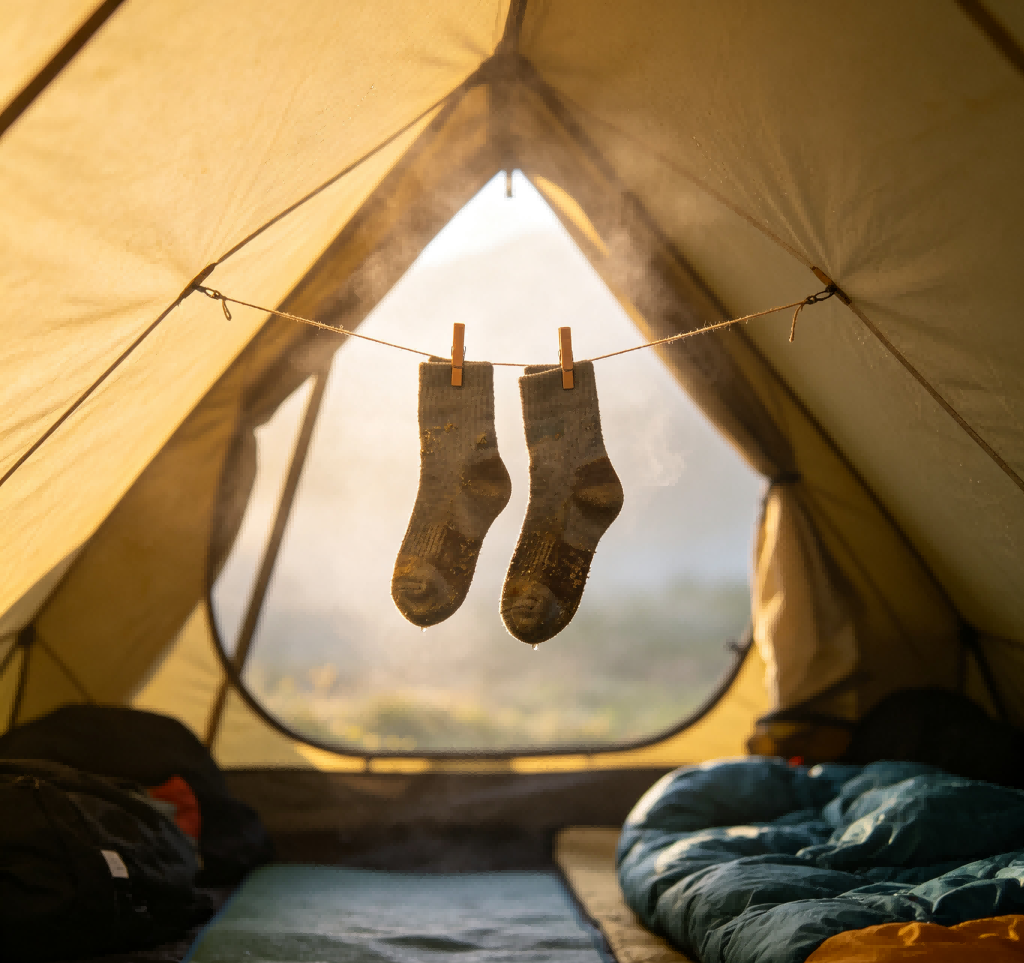
Extreme cold creates its own special hell. Your breath condenses on the rainfly. Then it rains on you from within. You achieve the unique state of being simultaneously cold and wet while technically indoors.
This isn’t camping. It’s survival training with nylon walls and damp optimism.
RV Life:
RV dwellers live in fortresses. Fiberglass and aluminum fortresses with rubber seals and double-pane windows.
Rain becomes background noise. Barely worth mentioning.
Wind creates a slight rock. Like being on a very slow boat with wheels.
Snow turns cozy. Provided the heater works.
Hail gets a little loud. Roof damage becomes a concern. But you stay dry and safe while worrying about your investment.
Bears? Let them try getting through that reinforced door with multiple locks. (Please don’t test this theory. Bears are persistent and sort of have opposable thumbs.)
The outside world becomes a suggestion. A movie playing on your windows. Observable at your leisure, without any accompanying discomfort.
6. Culinary Capabilities

Tent Camping:
Cooking while tent camping combines simplicity with smoke inhalation. Often simultaneously.
You own a single-burner camp stove. It balances precariously on a picnic table. The slightest breeze threatens to tip it. Enthusiastic stirring poses equal danger.
Your menu has limitations. Hot dogs. Hamburgers. Beans from a can. S’mores requiring a stick of exactly the right length and greenness.
A five-course meal? Not happening.
Searing a scallop? Don’t make yourself laugh. You’ll be lucky if the hot dogs are warm in the middle.
Everything tastes faintly of propane and bug spray. You accept this reality with stoicism. You chose this life.
You embrace the smokiness. You’re a caveman now. You’re proud. Even as you choke on campfire smoke for the third time in an hour.
RV Life:
RV kitchens deserve respect.
Running water without pumping. A refrigerator that stays cold without ice. A stovetop with multiple burners. An oven for baked goods. A microwave for radiation-heated food.
Some fancy RVs include dishwashers. This raises philosophical questions about what “camping” even means anymore.
You can prepare Thanksgiving dinner in the woods. Full turkey. Gravy. The works.
Fresh vegetables that never wilted in a cooler. That never became sad, limp versions of themselves.
Meal preparation mirrors home. Wonderfully convenient. Deeply disorienting.
Pass the salt. Also, look outside. A moose is watching us eat. He’s judging our gravy consistency.
7. Maintenance and Logistical Effort

Tent Camping:
Tent maintenance is gloriously simple.
Get home. Set up the tent in the backyard. Let it dry completely so it doesn’t become a science experiment featuring alarming mold colonies.
Wipe off the tent stakes.
Done. That’s it. The entire maintenance routine.
Next trip preparation: pack tent into its bag. Swear at the difficulty of fitting it back the way it came out. Forget about it until adventure calls again.
RV Life:
RVs come with homework. Lots of homework. All of it due immediately. All of it carrying severe consequences for failure.
Meet the “black water” tank. It holds toilet waste. The name alone deserves a content warning.
Meet the “gray water” tank. Sink waste. Slightly less terrifying but still requiring attention and eventual disposal.
Winterization demands pink antifreeze pumped through every pipe. This prevents explosions when temperatures drop.
Engine maintenance awaits. Oil changes. Tire pressure. Generator operation. Awning care. Roof seals. Battery charge levels.
About forty-seven other things can and will go wrong at the worst possible moment.
It’s like owning a house and a car that had a baby. That baby needs constant attention. It makes expensive demands. It never sleeps through the night.
8. Privacy and Security

Tent Camping:
Tent privacy is an illusion. Not even a convincing one.
Fabric walls block exactly none of the sound. Only some of the light.
You hear everything. The family next site arguing about dish duty and missing soap. The guy two sites down snoring like a chainsaw attacking a sequoia. The couple on the other side… well, you learn things. Things you’ll carry forever. Like trauma.
Security? Tent zippers don’t have locks. A determined toddler could enter, provided they figured out the zipper pull.
You trust humanity’s inherent goodness. You trust statistical probability. Most people are too lazy to unzip a stranger’s tent at night.
RV Life:
RV doors lock. Solid, slam-able, satisfyingly secure doors that close with a thunk instead of a whisper.
Walls actually dampen sound. They don’t just suggest it.
Private conversations stay private. No broadcasting to the entire campground.
Clothing changes happen without entertaining the local squirrel population. Without accidentally providing a show to the family parked nearby.
In crowded campgrounds, the RV becomes sanctuary. A personal bubble. Escape from communal chaos.
Pretend you’re alone on a private estate. Never mind that you’re parked twenty feet from a family of eight whose children run screaming past at 6 AM.
9. Storage and "Stuff" Capacity
9. Storage and "Stuff" Capacity

Tent Camping:
Tent camping forces minimalism. Physics and trunk space demand it.
If it doesn’t fit in the car, it doesn’t come. Simple.
You learn to live with less. You discover you need fewer possessions than society claims.
One book. One change of “camp clothes” that will get dirty within hours anyway. Survival essentials.
It’s liberating. No choices means no stress about wrong choices.
You don’t need different outfits for each day. You don’t need a French press and specialty beans. You need a spoon and a can of beans. Both will taste slightly of campfire smoke. Acceptance brings peace.
RV Life:
The RV represents anti-minimalism.
It’s a siren song for possessions. “Oh, we have room for kayaks! Mountain bikes fit! Pack the full-sized coffee maker! Extra dishes! Board games for rainy days! Camping chairs AND rocking chairs! That decorative throw pillow really ties the space together!”
You don’t pack for a trip. You relocate your entire life. All the accumulated stuff you rarely use at home comes along.
Not liberating. Enabling.
The first hour of any camping trip gets spent deciding where to store everything you brought but probably won’t need.
10. The Setup and Teardown Dance

Tent Camping:
Tent setup can crush your soul. Especially in suboptimal conditions.
Doing it in the dark by flashlight while mosquitoes feast on your skin. Doing it in the rain while everything gets wet and poles turn slippery and uncooperative. Doing it after a six-hour drive while children asked “Are we there yet?” every four minutes.
You wrestle poles that developed sentience. They strongly oppose assembly.
You attempt matching color-coded clips while your fingers grow cold and numb.
You stake everything down. The ground proves either too soft to hold stakes or too hard to accept them.
A rite of passage. Frustrating, sweaty, expletive-filled. The entry fee for that two-hundred-dollar vacation.
RV Life:
RVs offer “park and play.” Tent campers can only dream.
Yes, there’s a dance. Level the vehicle. Disconnect the tow vehicle if applicable. Hook up electric, water, and sewer connections.
But it’s faster. Much faster.
Pull into the site. Push a button for auto-leveling. It feels like actual magic, even after the tenth time.
Plug in cords and hoses. Done.
Minutes later, you’re sitting in climate-controlled comfort. Beverage in hand. Watching the sunset through actual windows.
Tent campers are still figuring out which pole goes where. Still wondering who packed the mallet.
A little guilt might appear. Mostly, though, superiority wins.
The Verdict
After extensive investigation, countless nights on the ground, and enough campfire stories for several lifetimes, a conclusion emerges.
Tent camping serves the purists. The minimalists. Those who want to earn their view and feel the earth’s grit beneath their sleeping bags. Budget-conscious adventurers. People who don’t mind significant discomfort in exchange for total immersion. Complete with bugs, rocks, and middle-of-the-night existential crises.
RV life serves the comfort-seekers. The gadget-lovers. Those who want to bring their entire house along. People who want to see the country without surrendering memory foam mattresses, satellite television, or indoor plumbing access without putting on shoes. Those who accept they’ll worry more about black water tanks than bears. Who find this trade-off acceptable.
Some weekends call for rain on the tent and rocks in the spine.
Other weekends call for Netflix in the woods with climate control and a real mattress.
Both approaches have their place. Both offer something valuable to those willing to embrace their particular flavor of adventure.
Nature is wonderful, after all.
So is indoor plumbing.
The choice comes down to which kind of wonderful matters more on any given weekend.