15 Advanced Animal Tracking Hacks: Become a Wilderness Sherlock

Spread the love

For years, my “tracking” skills began and ended with pointing at a vague depression in the mud and declaring, with the confidence of a medieval cartographer, “Creature was here.”

I could tell a deer track from a raccoon’s if my life depended on it (probably), but the deeper secrets of the forest?

The gossip told in twisted grass and musky scents? I was illiterate.

That all changed when I decided to go beyond the basic “footprint ID” and dive into the advanced, species-specific dirt-reading that makes you feel less like a clumsy human and more like a furry, four-legged FBI agent.

So, grab your metaphorical magnifying glass (and maybe some scent-eliminator), as I present my journey into 15 advanced tracking hacks that turned my walks in the woods into a continuous episode of nature’s true crime drama.

Table of Contents

1. The Tarsal Gland Scent Mark: The Buck’s Musky Love Letter.

Forget pretty perfume; the rut is all about stank communication. I learned to look for dark, wet patches on saplings and low branches, about buck-nose-height.

I found my first one near a creek—a patch on a maple twig that smelled like a barnyard had a stressful day.

This isn’t just “a deer was here.” A dark, heavily rubbed tarsal gland mark is a buck’s equivalent of slapping his cologne on and posting a 10-minute-old “I’m right here, come find me” story.

Freshness is key: if it’s still pungent and the bark is oozing slightly, you might be breathing the same air he was a few hours ago.

It’s less tracking, more following a trail of hormonal arrogance.

2. The Heart-Shaped Track: More Than Just a Cliche.

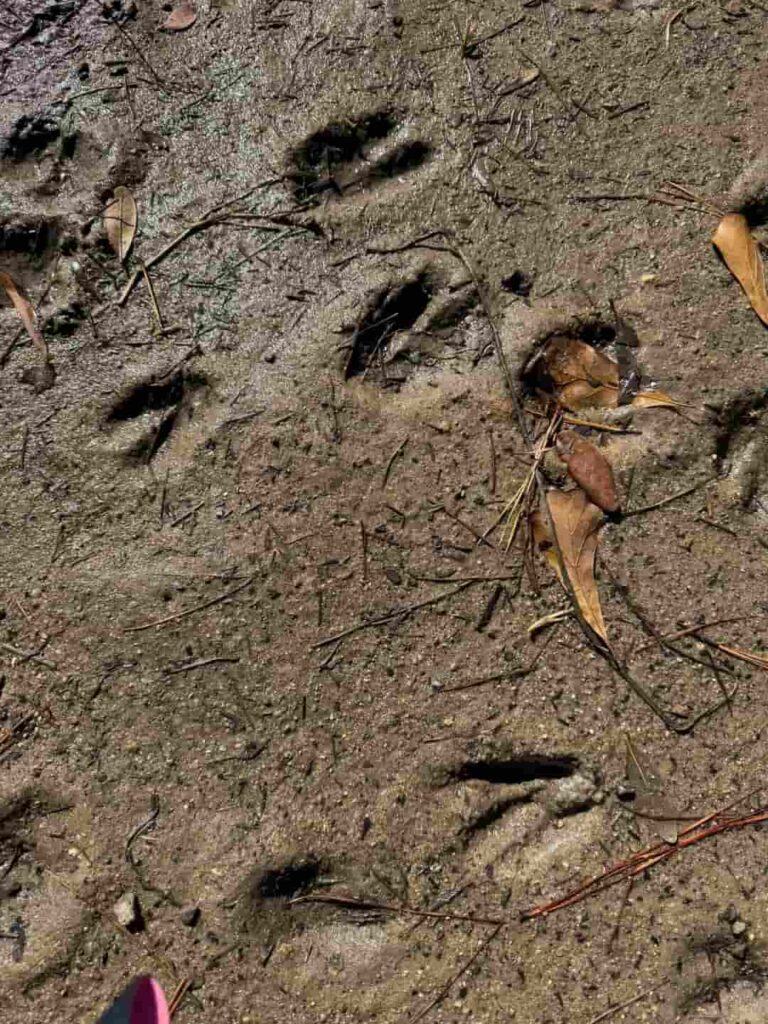
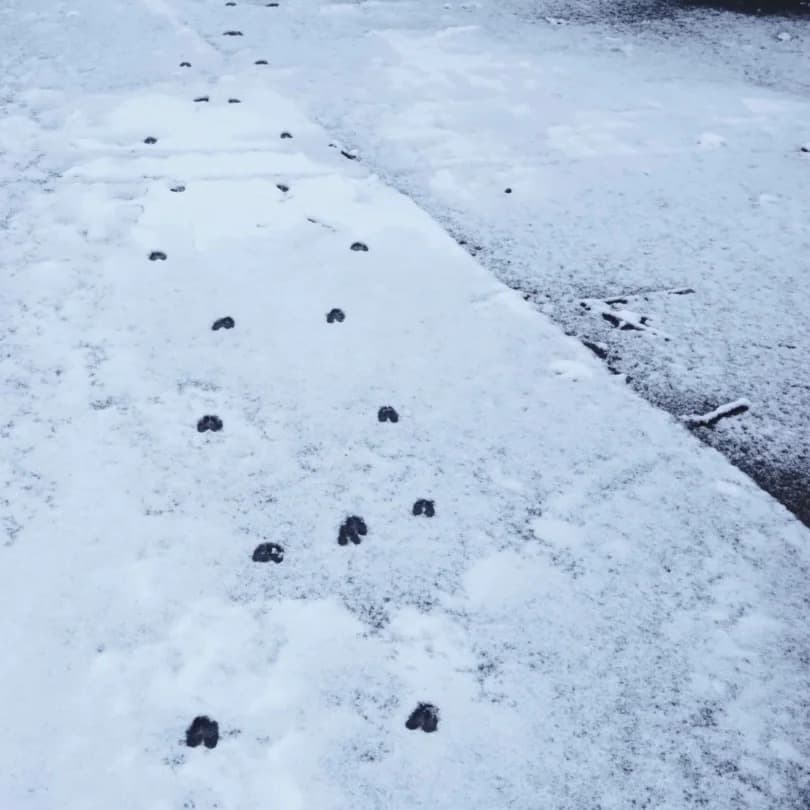
Yes, deer tracks look like hearts. But staring at one like a lovestruck teenager can actually tell you a lot.

The pointed end is the toe—it points the direction of travel. Now, get judgy about that heart’s proportions.

A wider, rounder, more “matronly” heart often belongs to a doe. That track says, “I am practicality.”

The track of a heavy buck, however, is like a sharp, exaggerated Valentine—deeper at the point, often with the dew claws punching in behind from the weight.

It’s a track that says, “I am chest puffs and neck swelling.” Comparing the two side-by-side (once you see it) is the difference between seeing a sensible sedan and a lifted truck in the mud.

3. The “Elk Staircase”: The Path of Least (But Heavy) Resistance.

Elk are not dainty trail-switchers. On a steep hillside, I once found what looked like a giant had dug a staircase into the earth with their boots.

These are not subtle deer trails. These are highways—deep, step-like depressions worn by the sheer, repeated tonnage of the herd moving from feed to bed.

Following an “elk staircase” is the tracking equivalent of finding the main escalator in a department store; it’s almost guaranteed to lead you straight to a bedding bench or a ridge-top lounge area where they can chew their cud and judge your climbing form.

4. Rub Height: Measuring Bull Swagger.

An elk rub makes a deer rub look like a kitten scratching a post. We’re talking saplings demolished, bark shredded into confetti.

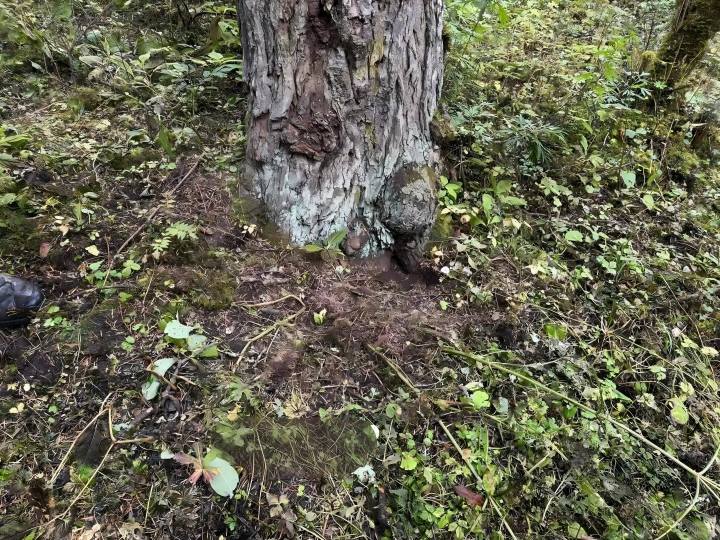
But the key isn’t just the violence—it’s the height. I found a pine tree where the carnage started at my collarbone.

That’s a mature bull, literally throwing his weight around.

A rub at your knee or thigh? That’s a younger bull, a teenager practicing his signature.

It’s like walking through a gym and judging strength not by the weights lifted, but by how high up the wall the dumbbells were thrown.

5. Toe Spread: The Bear’s Emotional Barometer.

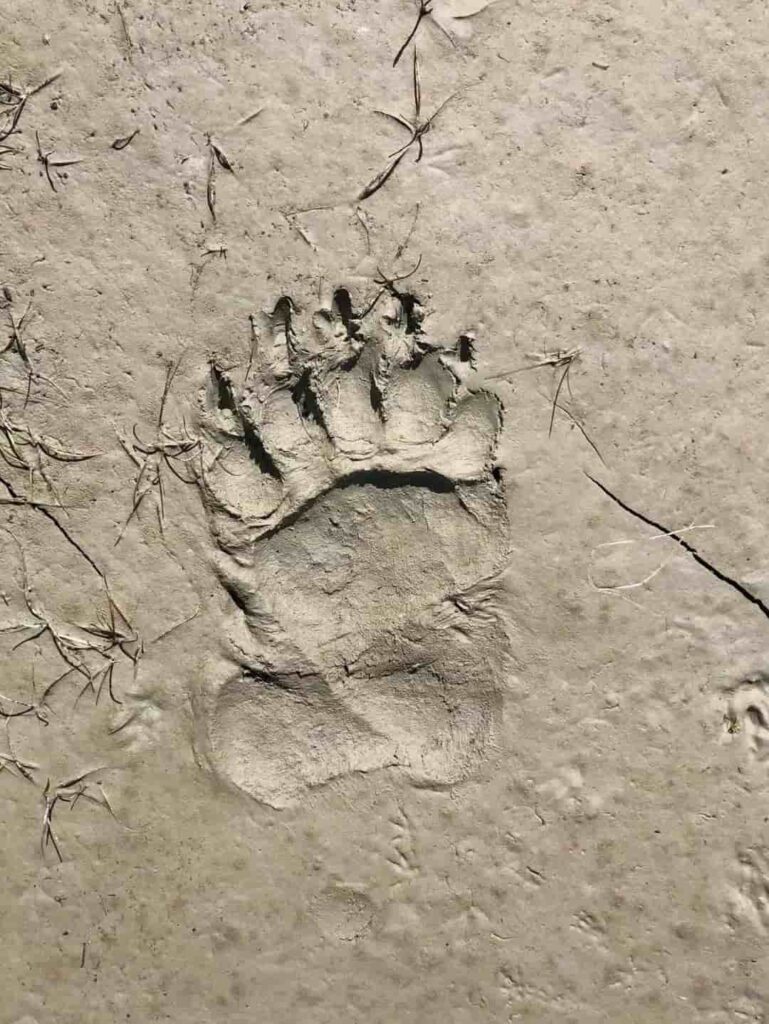
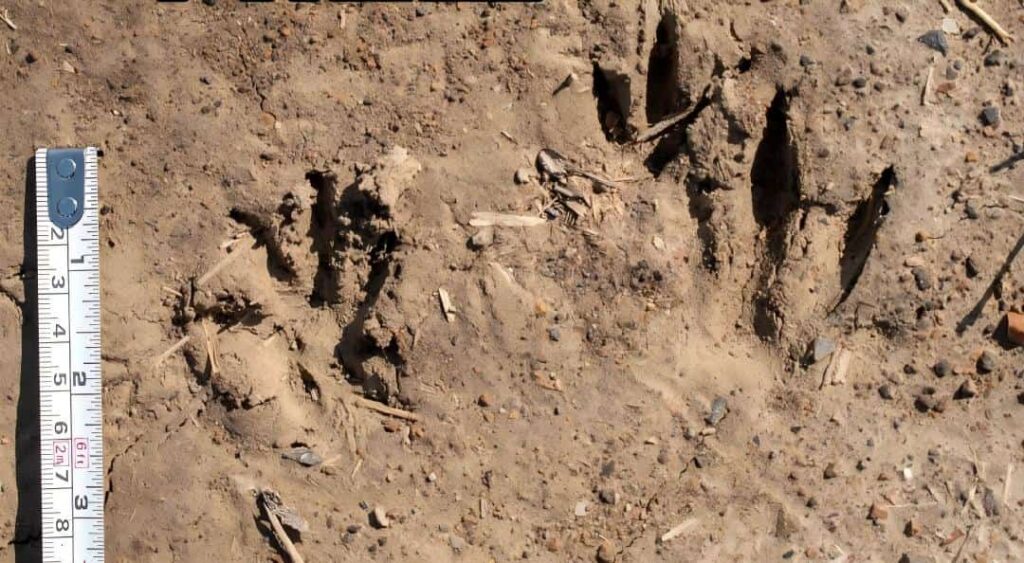
A bear track is impressive, sure. But next time, look at the toes. Are they neat, tight, and close together?

That’s a relaxed bear, just out for a leisurely amble, probably thinking about berries.

Now, imagine that same track, but the toes are splayed wide, claws digging deep like it’s trying to grip the planet.

That’s a stressed, startled, or running bear. It’s the difference between a human’s relaxed palm print and the splayed-finger slam of someone who just saw a spider.

One says “meander,” the other says “MANIACAL ENERGY.”

6. The Rototiller Sign: The Gourmet Grub Hunter.

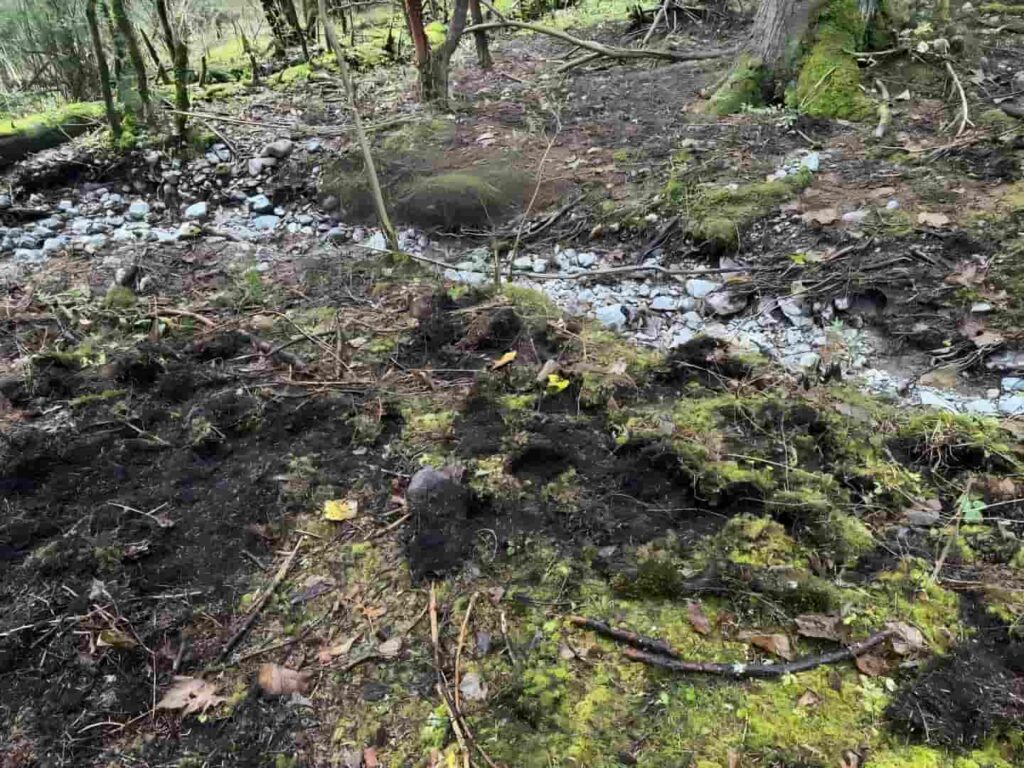
I used to see a torn-up forest floor and think “what a mess.” Now I see a bear’s fine dining review. When a bear is hunting grubs and beetles, it doesn’t nibble—it excavates.

It will flip over a 200-pound log like a pancake, shred a stump into kindling, and peel back turf like carpet. Fresh “rototiller” sign has a distinct, damp, fragrant soil smell.

If the upturned earth is still moist and the wood splinters are bright, you’ve just missed the world’s hungriest, furriest landscape gardener.

7. Asymmetrical Stride: The Stalker’s Tell.

Cats are ghosts. But even ghosts leave clues when they’re hunting. A mountain lion traveling will often direct-register (back foot in front foot print) neatly. But when it switches to stalking mode, everything changes.

The stride shortens. The rear foot lands just outside the front track. The toes might point out slightly.

It’s a tense, controlled, coiled-spring gait. Finding this pattern in a set of tracks is like suddenly seeing the pause button pressed in a nature documentary—you know the predator has seen prey, and the drama is about to unfold.

8. Scrapes: The Feline’s Multi-Media Billboard.

A cat scrape isn’t just a hole. It’s a combined visual and scent billboard. They drag their hind paws backward, leaving a distinct fan-shaped area of disturbed ground.

The real intel? Check the uphill or dominant side of the scrape.

A fresh, strong-smelling urine spray there is a male saying, “This is MY news feed, and the algorithm is set to ‘territorial.’”

A scrape without strong scent might be older or from a female. It’s a comment section written in pee.

9. Direct Register: The Purposeful Path.

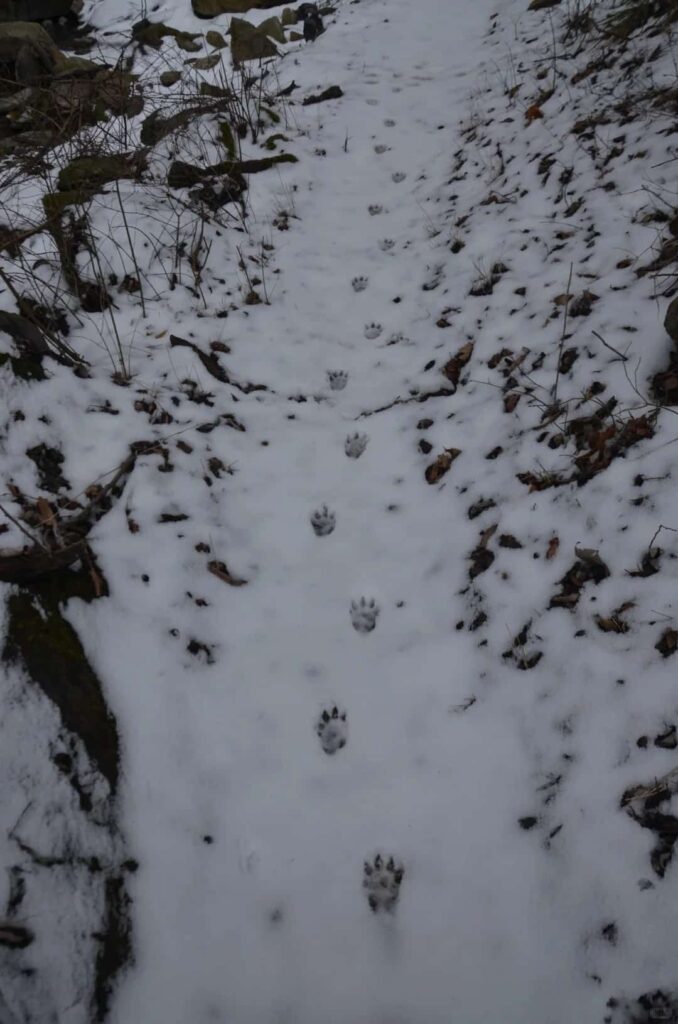
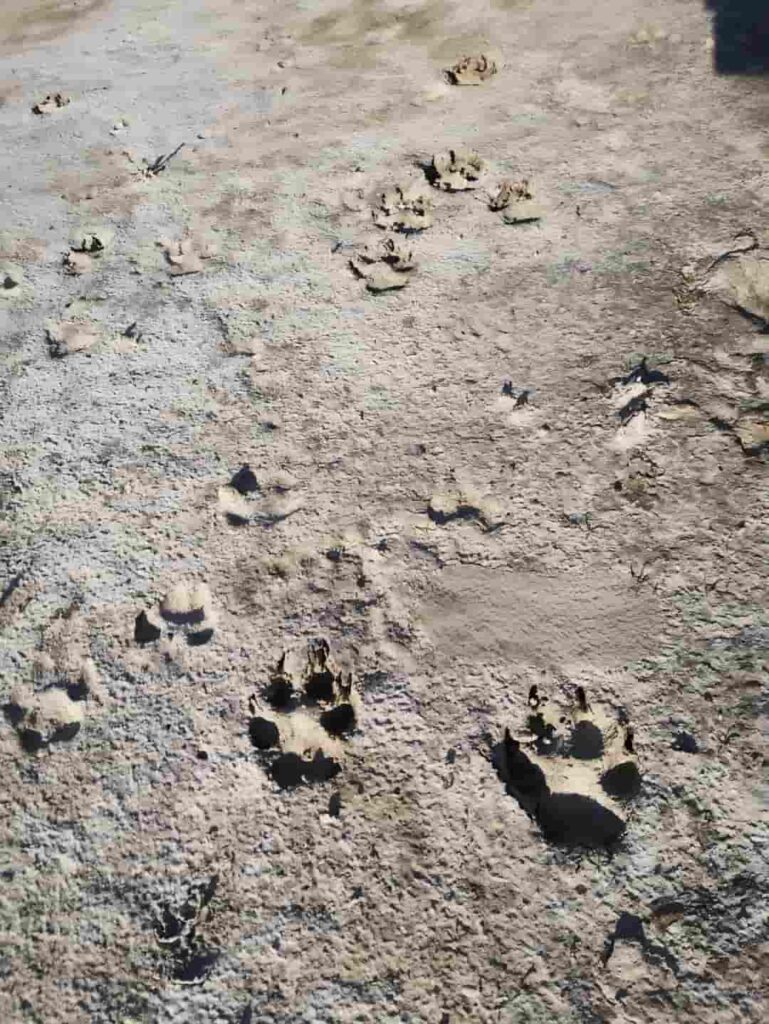
Wolves and coyotes are marathon runners. When they’re moving with intent—covering miles to a rendezvous point or patrolling territory—they use a brutally efficient “direct register” walk.

The back foot lands precisely in the print of the front foot, creating a single-file line of tracks that looks like a two-legged creature passed through.

A perfect, unwavering straight line of these, mile after mile?

You’re almost certainly looking at wolf travel.

It’s the stride of an animal with a deadline and a destination.

10. Track “Drift”: The Species Snitch.

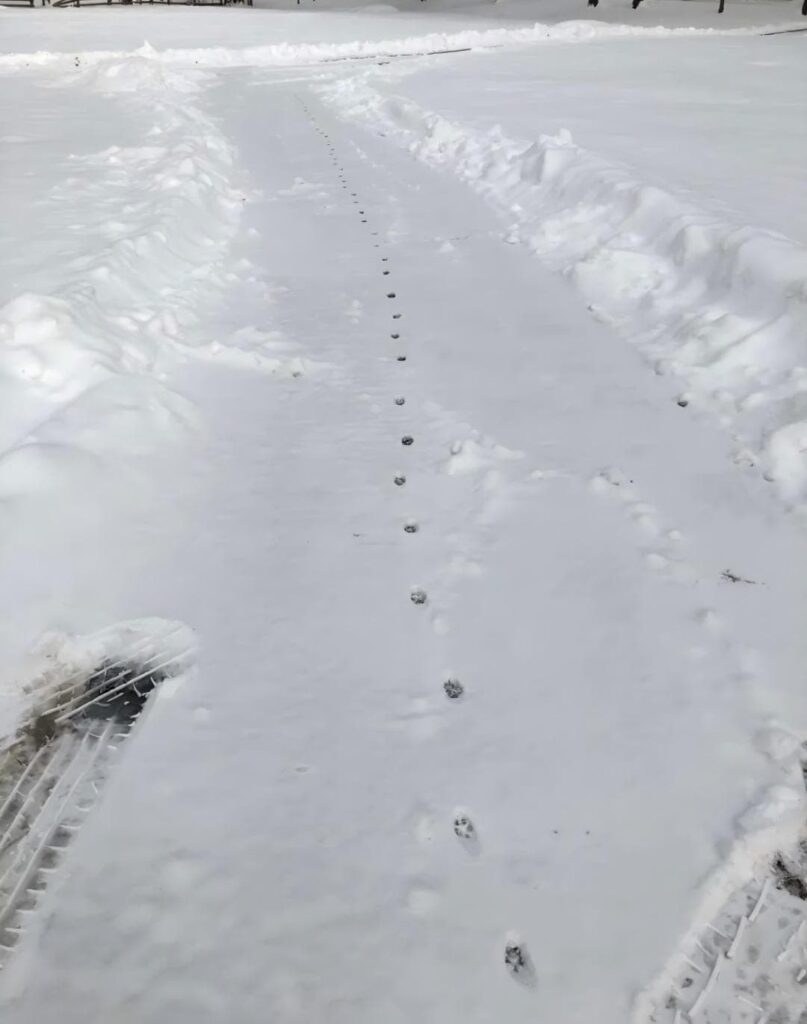
Now, watch for the “drift.” A coyote, being the curious, opportunistic cousin, will still direct register, but its line will gently zig-zag.

It’s investigating a smell here, veering to check a bush there. A domestic dog’s track pattern is pure chaos—wide meanders, random stops, loops.

The wolf’s line is a laser, the coyote’s is a gently winding stream, and the dog’s is the scribble of a toddler with a crayon.

The spacing between tracks also tells a story: even and measured for wolves, variable and curious for coyotes, utterly unpredictable for Fido.

11. Moose: The Drag Line of Fatigue.

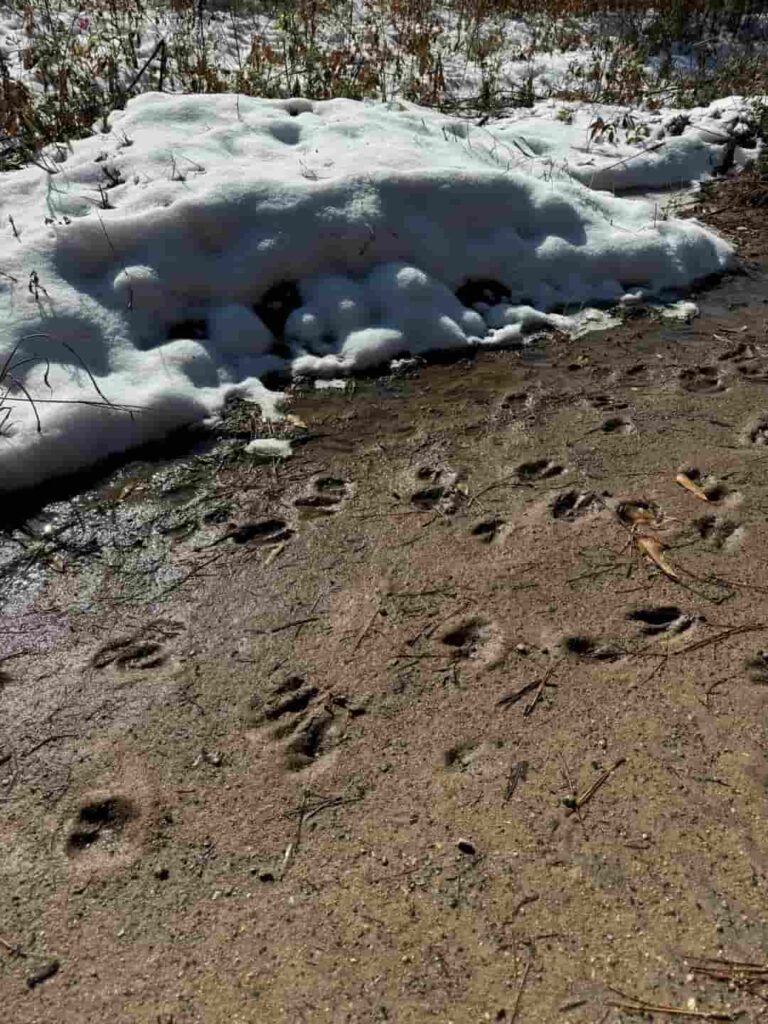
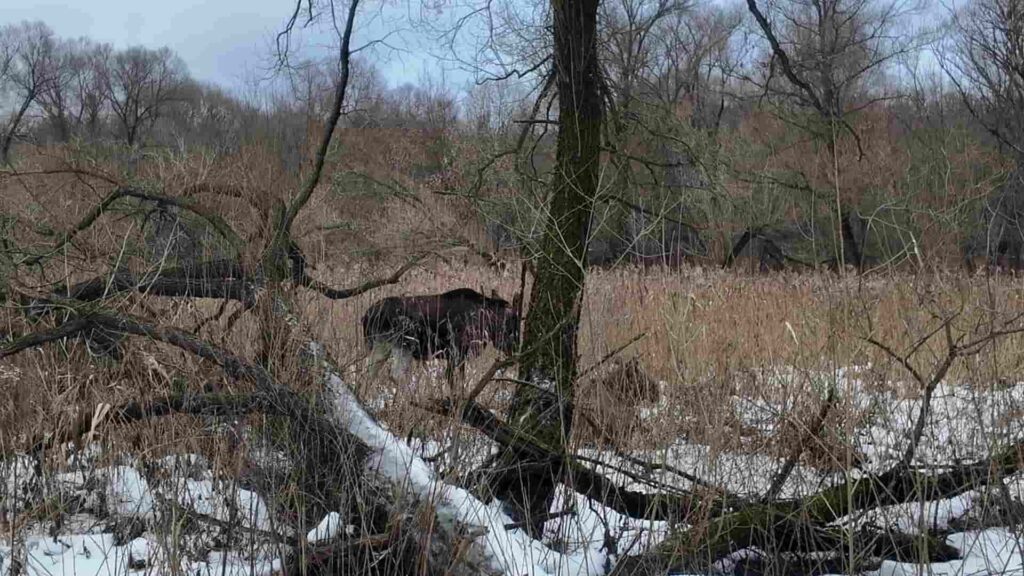
A healthy moose lifts its dinner-plate hooves cleanly. But when you see subtle, continuous drag lines between those deep impressions in snow or mud, pay attention.

This moose is tired, maybe overheated, or unwell. It’s not lazy; it’s conserving energy.

This clue can help predict it might be bedded down soon or sticking to easier terrain—vital info for both observation and safety.

12. Rabbit: The “Y” Points the Way.

The rabbit track pattern is a perfect hieroglyph. The two large rear feet land ahead, side-by-side.

The smaller front feet, landing behind, form the stem of a “Y.” The open top of the ‘Y’ points the direction of travel.

The stem points back to where it came from. It’s nature’s perfect arrow, stamped in snow.

13. Wild Turkey: The Middle Toe Compass.

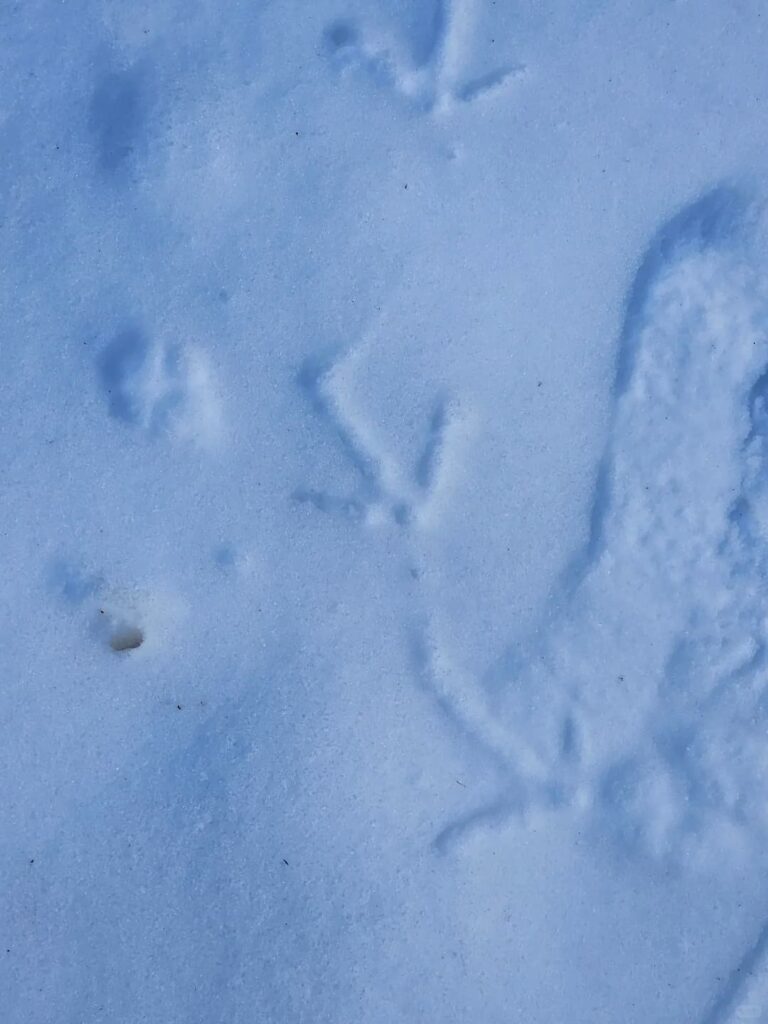
Turkey tracks look like three-pronged arrows. That long, central toe is your compass needle. It points exactly where the bird was headed.

Find a patch of overlapping, fan-shaped tracks (a “track bomb”), and you’ve found a flock’s feeding zone.

Follow the middle toes out, and you’ll see their exit strategy.

14. Fox: The Perfect “X” Mark.

Separating a small fox track from a small dog track is the tracker’s rite of passage.

Here’s the cheat code: Look at the negative space between the toes and the main pad in a clear print.

A red or gray fox will show a neat, clean “X” shape. Most dogs show a muddled, rounded, or amorphous shape.

Plus, fox tracks are dainty, narrow, and almost in a straight line. Dog tracks are wider, rounder, and sloppier.

The fox is wearing ballet flats; the dog is wearing worn-out sneakers.

15. Beaver: The Tail-Tale Sign.

Beavers are engineers, and their construction reports are written in mud. A wide, smooth tail drag mark leading toward the water, accompanied by wood chips and stripped sticks, is a beaver on a building supply run.

The same drag mark leading away from the water, maybe toward a stand of aspens, is a beaver on a dinner mission.

The tail tells the tale of its purpose.

Final Thoughts

Learning these hacks didn’t just teach me about animals; it taught me to see.

The forest floor stopped being dirt and leaves and started being a living, breathing social media feed, a newspaper, a drama series.

Every musky scent post, every asymmetrical stride, every perfectly formed “X” became a sentence in a story I was finally learning to read.

It’s humbling, hilarious, and utterly captivating. You start to feel the weight of the bull elk in the rub height, the focused tension of the stalking cat, the weary plod of the moose.

You stop just looking for animals, and start reading their lives.

And honestly, it’s the best reality show you’ll ever binge—no subscription required, just a bit of mud on your knees and the willingness to look a little closer.

Leave a Comment

Your email address will not be published. Required fields are marked *

Scroll to Top