15 Ways to Turn Your Camping Trip Into a Photography Masterpiece

Spread the love

Capturing the great outdoors while camping is a rewarding challenge. One deals with shifting light, unpredictable weather, and the logistics of keeping gear safe in the dirt.

Whether shooting on a high-end DSLR or a smartphone, the goal remains the same: bottle up that feeling of fresh air and adventure.

The wilderness doesn’t hand out second chances easily. A perfect moment appears, then vanishes.

But with the right tricks up one’s sleeve, anyone can bring home images that make friends ask, “Wait, did you Photoshop that?” Grab that camera. Let’s head into the woods.

Table of Contents

1. Utilize the "Blue Hour" for Campfire Scenes

Timing is everything in photography. Just after sunset, something magical happens. The sky turns a deep, saturated blue. It provides a stunning backdrop. Now picture this: a warm, crackling campfire glowing orange against that cool sky. The contrast is absolutely mouthwatering for the eyes.

This window lasts barely twenty minutes. Set up before the sun fully disappears. Position the camera so the fire isn’t overwhelming the frame. Let the dying light in the sky balance with the flames. The result looks like something from a fantasy film. S’mores have never looked so heroic.

2. Pack a Lightweight Travel Tripod

Let’s talk about weight. Hiking with gear sometimes feels like punishment. But skimping on a tripod? That is a rookie mistake.

A compact travel tripod is worth its weight in gold. It enables long-exposure shots of stars twinkling above. It captures waterfalls turning into silky smooth ribbons. It even saves group photos from the dreaded “stretched arm selfie” angle.

Modern tripods fold down smaller than a water bottle. They clip onto backpacks easily. Yes, every ounce counts on the trail. But carrying this tiny accessory transforms possibilities. Besides, it doubles as a great walking stick when needed.

3. Use a Wide-Angle Lens for Scale

Grand Canyon photos rarely do it justice. Why? Because standard lenses cannot capture the “bigness.”

A wide-angle lens solves this problem beautifully. It swallows entire landscapes whole. It makes viewers feel tiny and insignificant—in the best way possible.

Mountains loom. Valleys stretch forever. Skies feel infinite. This lens invites the eye to wander around the frame. It creates a sense of being there.

Nobody ever returned from a trip wishing they had captured less of the scenery. Go wide. Let the wilderness breathe within the frame.

4. Protect Your Gear from Humidity and Dust

Nature hates cameras. This is a universal truth. Morning dew creeps into every opening. Dust from the trail finds its way inside lenses. Pine needles appear in the strangest places.

Sealed dry bags are the solution. They cost little but save fortunes. When the camera isn’t actively shooting, it lives in a waterproof cocoon.

Consider this: moisture ruins electronics faster than a bear ruins a food stash. Silica gel packets thrown into the bag add extra protection. They absorb that sneaky humidity.

Clean gear works better. It lasts longer. It doesn’t fail when that elk suddenly appears at dawn.

5. Master the Rule of Thirds with Tents

Tents serve as shelter. They also serve as storytelling devices.

Place that tent in the bottom-left or bottom-right third of the frame. Let the massive landscape fill the rest. This creates a powerful narrative: “Here is my tiny home in this enormous world.”

The rule of thirds works because it mimics natural vision. Eyes don’t usually stare dead-center at things. They wander. They explore.

Positioning the tent off-center adds balance. It gives the scenery room to show off. Suddenly, a simple camping photo becomes a visual story about adventure and scale.

6. Bring Extra Batteries and Keep Them Warm

Cold kills batteries. This is not an opinion; it’s physics.

That perfect starry night shot requires power. But freezing temperatures drain lithium-ion cells faster than a hungry hiker drains a water bottle. The camera dies. The moment passes. Regret sets in.

Smart campers pack spares. Genius campers keep them warm. Sleeping bags make excellent battery warmers. Body heat preserves charge levels.

Tuck those backups close at night. Rotate them during shooting sessions. A warm battery shoots longer. A dead battery shoots nothing at all.

7. Capture "Candid" Camp Life

Grand landscapes impress. But camp life tells the real story.

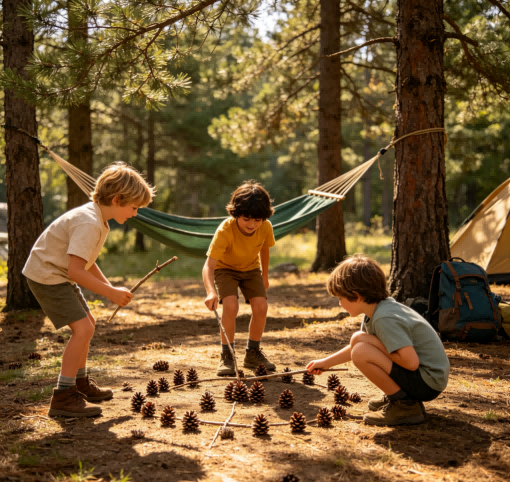
Photograph the steam rising from morning coffee. Capture hands splitting wood for the fire. Document the messy process of rolling out sleeping bags. These images become treasures later.

These moments feel ordinary during the trip. Back home, they become the heart of the album. They remind everyone of the smell of pine and the sound of the crackling fire.

Action shots beat posed portraits every time. Real life happens in between the big moments. Point the camera there.

8. Use a Polarizing Filter

Glare ruins water shots. Flat skies disappoint. A polarizing filter fixes both problems instantly.

This simple piece of glass screws onto the lens front. It rotates to cut reflections. Suddenly, underwater rocks become visible. The sky deepens to a richer blue. Forest greens look almost unreal in their saturation.

The effect cannot be replicated in editing. No filter? No problem—just point and shoot. But with the filter? The images practically jump off the screen.

It also protects the front lens element from scratches. Two benefits in one twist.

9. Look for Natural Frames

Frames exist everywhere in the woods. Branches arch overhead. Cave openings beckon. Tent flaps create perfect borders.

Using these elements adds depth instantly. The viewer’s eye travels through the frame into the scene beyond. It creates layers.

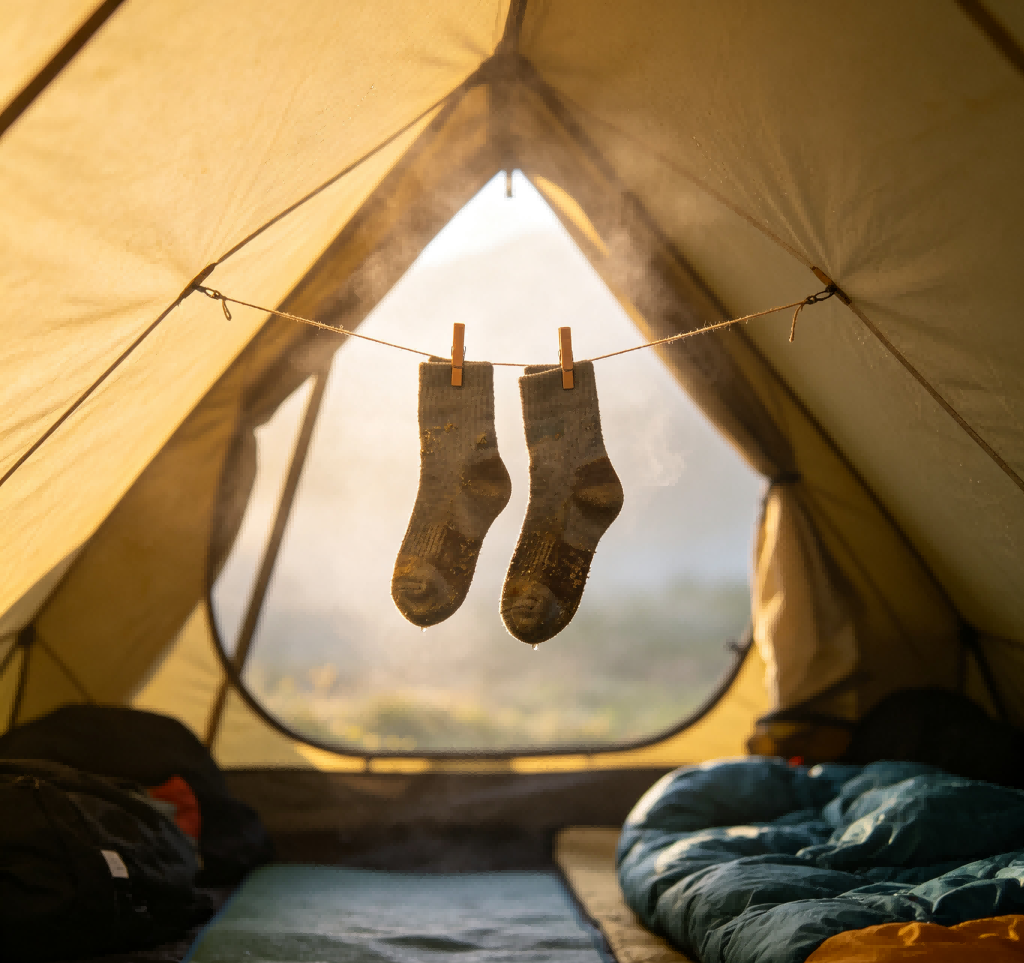
A mountain seen through a gap in the trees feels more intimate. A sunset viewed through a tent opening becomes personal. Nature provides these compositional tools freely. Just look around.

Framing also solves the “flat photo” problem. It gives the image structure and purpose.

10. Experiment with Light Painting

Night falls. The campfire dies down. Most people go to sleep. Photographers grab their headlamps.

Long exposures at night allow for light painting. Point a flashlight at trees during a thirty-second exposure. “Paint” light onto the tent fabric. Write names in the air with a colored beam.

The results look like magic. They also provide endless entertainment around camp. Everyone wants to try. Everyone makes mistakes. That’s part of the fun.

Start with low power on the light source. Too much light ruins the effect. Practice helps. The stars above stay patient.

11. Shoot in RAW Format

JPEGs are fine for quick sharing. But RAW files hold secrets.

Harsh sunlight creates deep shadows. Bright skies blow out highlights. Shooting RAW captures all that hidden data. Later, during editing, those shadows lift. Those highlights recover.

The flexibility feels like cheating. Mistakes become fixable. White balance adjusts after the shot. Details emerge from darkness.

Memory cards cost less than ever. Buy bigger ones. Shoot RAW. Thank this advice later.

12. Incorporate a Human Element

Mountains look big. But without comparison, the brain struggles to comprehend scale.

Place a friend in the frame. Position them on a distant ridge. Have them stand near a giant tree. Suddenly, the size becomes obvious.

The human element also adds life. A landscape without people feels empty. A landscape with a tiny figure feels epic.

Waves at the camera from far away. That speck of color gives the image proportion. It also reminds viewers that humans belong in nature too.

13. Clean Your Lens Constantly

Smoke drifts from the fire. Dust rises from boots. Fingerprints appear from nowhere.

A dirty lens ruins sharp photos. Period.

Microfiber cloths weigh nothing. Pack several. Use them often. Check the lens before every important shot.

That blurry spot in the corner? Probably smoke residue. That hazy look across the whole image? Definitely a smudge.

Clean glass produces crisp images. Crisp images win photo contests. It’s that simple.

14. Focus on the Details (Macro)

Wide shots impress. But tiny details move the soul.

Dew drops clinging to a leaf. Pine bark texture up close. Frost patterns forming on the rainfly at dawn. These images require slowing down.

Macro photography forces observation. It reveals worlds within worlds. Insects become monsters. Water droplets become lenses themselves.

The vast landscape isn’t going anywhere. The tiny details might melt or blow away. Capture them first.

15. Be Patient with Wildlife

Animals don’t pose on command. They don’t repeat performances.

Fast shutter speeds help. Silence helps more. Sitting still for an hour sometimes produces the shot of a lifetime.

Chasing wildlife guarantees failure. Blending in guarantees possibilities. Let the deer approach. Let the birds forget humans exist.

Patience separates tourists from photographers. The best wildlife images happen when the photographer becomes part of the landscape.

Conclusion

Camping provides a unique backstage pass to nature. It allows seeing the world in lighting conditions that day-hikers usually miss.

By balancing technical preparation—like managing battery life—with creative composition, a standard camping trip transforms into a professional-grade portfolio.

The forest awaits. Pack those bags. Charge those batteries. Go make some memories worth printing.

Leave a Comment

Your email address will not be published. Required fields are marked *

Scroll to Top