The primary goal of wildlife safety is deceptively simple. Keep animals wild. Keep humans safe. That’s it.
Most negative interactions boil down to one of two scenarios. Either an animal has learned to associate humans with food—a condition known as “habituation”—or some poor soul accidentally startled a creature that really did not want to be startled.
Follow these proactive steps. Enjoy the local fauna. Do it from a safe, respectful distance.
And whatever you do, do not invite them into your sleeping quarters.
Bedbugs are bad enough.
Table of Contents
Know Thy Enemy: Research Local Inhabitants Before You Go
Different regions house different furry (or scaly) roommates.
Black bear country requires one approach. Grizzly country demands another. Cougar territory? That is a whole different ballgame. And let’s not forget snake country, where the grass literally hisses back.
Each species comes with its own safety protocol. Each requires a specific defensive toolset. Showing up in Montana with the same game plan used in the Florida Everglades is a recipe for disaster. The Everglades have reptiles with attitude. Montana has bears with muscle. Know the difference. Study up. The local wildlife will appreciate not being misidentified by a clueless visitor.
The Sacred Sanctity of the Clean Camp
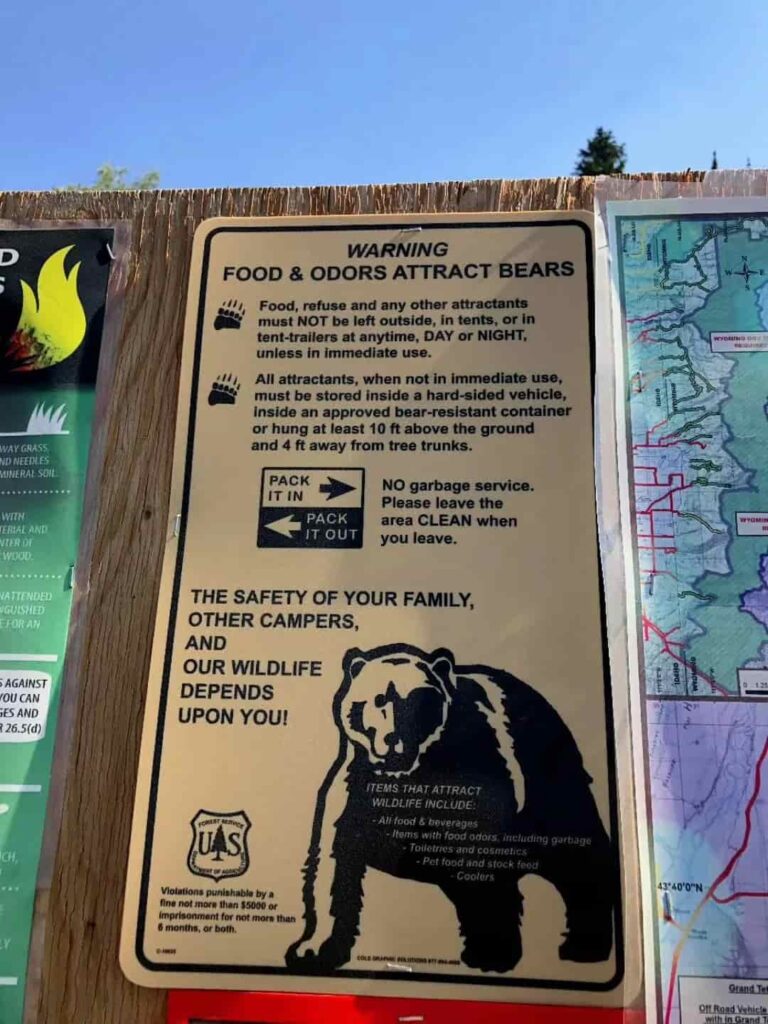
Never leave food unattended. Not for a minute. Not even for thirty seconds while running back to the car for the ketchup.
Scavengers are fast. Raccoons move like tiny, masked ninjas. Crows have excellent eyesight and absolutely zero shame. These critters will raid an unattended cooler faster than a seagull steals french fries on the boardwalk. And here is the kicker: their presence draws in larger predators. A raccoon is a dinner bell for a bobcat. A crow is an airborne advertisement for a free meal. Keep the campsite clean. The food goes in the cooler. The cooler stays attended. No exceptions.
The Bear Triangle: Geometry That Saves Lives
Imagine a triangle. Not the dramatic kind involving romantic entanglements. The camping kind.
Set up the cooking area at one point. Store the food at another point, approximately one hundred yards away. Place the tent at the third point. Ensure the food storage area is downwind from the sleeping area. This keeps food odors drifting away from the tent rather than wafting directly into the nostrils of anything that wanders by.
Sleep soundly knowing the local bear population is sniffing around last night’s spaghetti pot instead of the tent zipper. Geometry class finally paid off.
The Smellables: It's Not Just Food, People
Toothpaste goes in the bear canister. Deodorant too. Chapstick? Absolutely. Sunblock? You bet.
Anything with a scent is a “smellable.” Anything with a scent attracts animals. Bears possess noses powerful enough to detect a granola bar from three counties away. They do not distinguish between “delicious salmon scent” and “minty fresh toothpaste scent.” Smells are smells. Food is food.
Lock it all up. Every last scented item. The wilderness does not care about oral hygiene or sun protection factor. It just smells dinner.
The "Cute" Trap: Never Feed Wildlife
That chipmunk looks adorable. Those birds are charming. Resist the urge.
Feeding wildlife disrupts their natural diet. It teaches them that humans equal handouts. Campers become walking vending machines in the minds of these animals. Future generations learn to harass every hiker who walks by.
Nobody wants a demanding chipmunk. Nobody wants a squirrel with entitlement issues. Keep the snacks to oneself. The wildlife will survive just fine without the processed goodness.
The Singing Hiker: Make Noise on the Trail
Most animals want nothing to do with humans. They will move away if they hear approach. Give them that chance.
Clap hands periodically. Talk loudly about the weather. Sing that annoying song stuck in head. Belt out show tunes if necessary. Dense brush requires extra volume. Rushing water drowns out footsteps, so crank up the noise near streams and waterfalls.
Startling a bear is bad. Startling a moose is worse. Startling a mountain lion? Nobody wants to find out. Make noise. Announce presence. Let the wildlife vacate the premises before arrival.
Bear Spray: The Great Equalizer
Buy bear spray. Keep it accessible. Practice using it.
A holster on the belt works. A strap on the pack works. Inside the backpack, buried under three layers of gear and last week’s laundry? That does not work.
Purchase a canister of inert practice spray. Practice the draw. Practice the spray motion. Muscle memory matters during moments of genuine terror. When a bear charges, there is no time to read instructions. There is no time to fumble with zippers. Draw, aim, spray. Live to hike another day.
The Nursery Rule: Stay Away from Babies
Mother animals are protective. Mother animals do not appreciate strangers getting near offspring.
Moose are particularly unhinged about this. Elk too. Bears also fall into this category. Getting between a mother and her young triggers defensive attacks. These are not predatory attacks. These are “I will end you for threatening my child” attacks.
Give families space. Lots of space. Observe from afar. Use binoculars. Take photos with zoom lenses. Do not approach the adorable baby anything. The mother is watching. She is not amused.
Site Inspection: Read the Signs
Before setting up the tent, look around.
Fresh scat tells stories. Tracks reveal recent visitors. Claw marks on trees indicate climbing activity. If the ground looks like a highway for local wildlife, move the camp.
Choosing a spot directly on top of an animal trail is poor decision-making. The animals will not reroute. They will arrive at the usual time and find a tent blocking the path. Awkward encounters ensue. Pick a different spot.
Boot Shake: The Bedtime Ritual
Scorpions love boots. Spiders love boots. Snakes occasionally love boots.
Shake out footwear before putting them on. Every single time. Even if the boots sat untouched for only an hour. Even if convinced nothing could possibly have moved in.
Check the sleeping bag too. Run a hand through it. Give it a quick sweep. Finding a scorpion before getting dressed is startling. Finding one after putting a foot inside is traumatic. Prevention wins.
Leash Laws Save Lives
Dogs love the outdoors. Dogs also love chasing things.
An off-leash dog encounters a coyote. The dog gives chase. The coyote runs. Then the dog remembers the owner exists and runs back. The coyote follows, now angry and committed to the conflict.
Suddenly, a wild animal charges directly toward humans because the dog led the way. Keep pets on short leashes. Protect the dog. Protect the wildlife. Protect everyone involved from this entirely preventable scenario.
Night Lights: Scan Before Stepping Out
Nature calls at 2 AM. That is inevitable.
Grab the headlamp before unzipping the tent. Scan the surrounding area. Look for reflective eyes shining back. Animals’ eyes glow when light hits them. That glow reveals their location.
Spotting a pair of eyes fifty feet away is useful information. Stumbling into an animal because the dark hid its presence is less useful. Scan first. Exit second. Relieve self third.
Exit Routes: Don't Trap Wildlife
Animals need escape options. Cornering them removes those options.
Trapped animals feel threatened. Threatened animals charge. It is not personal. It is panic.
Always ensure wildlife has a clear path away. Stand aside. Back off. Let them leave. The goal is a retreat, not a confrontation. Give them space to exit gracefully.
Trash Security: Pack It In, Pack It Out
Trash smells like food remnants. Food remnants attract animals.
Use bear-proof trash cans when available. When unavailable, store trash inside the bear canister. Use scent-proof bags. Keep everything contained.
Leaving garbage accessible invites trouble. The raccoons will party. The bears will investigate. The campsite will become a mess. Pack it in, pack it out. Take the garbage home. Leave the wilderness clean.
Cooking Clothes: The Midnight Snack Problem
Bacon grease smells amazing. Unfortunately, it smells amazing to bears too.
After cooking a fragrant meal, change clothes. The shirt worn while frying bacon now reeks of deliciousness. Sleeping in that shirt transfers the smell to the sleeping bag. The sleeping bag becomes a beacon.
Change into clean clothes for sleeping. Store the cooking clothes with the other smellables. Let the bears investigate the bear canister, not the tent fabric.
Snake Etiquette: Watch Your Step
Snakes blend in. Tall grass hides them. Rocky crevices conceal them.
Use trekking poles to probe ahead. Tap the grass. Tap the rocks. Give snakes a chance to move along. Most want nothing to do with humans. They will leave if given the opportunity.
Stepping on a snake provokes a strike. It is a reflex. The snake does not want to bite. The snake wants the giant foot removed from its personal space. Probe first. Step second. Avoid the whole situation entirely.
The Thumb Rule: Measuring Distance
Extend an arm. Stick out a thumb. Look at the animal.
If the thumb covers the entire animal, distance is acceptable. If the animal extends beyond the thumb, back up. That is too close.
Bears and wolves require one hundred yards minimum. All other wildlife require twenty-five yards minimum. The thumb test provides a quick visual check. Use it often. Maintain distance. Respect boundaries.
Conclusion
Wildlife safety ultimately comes down to humility. Respect the boundaries of trail-sharing creatures.
Preserve the “wild” in wilderness. Most animals genuinely have no interest in humans. Manage scents properly.
Stay alert. Ensure the only souvenirs from wildlife encounters are great stories and slightly blurry photos taken from very far away.
Everyone goes home happy. Especially the bears.