20 Camping Activities Ideas That Don’t Involve Hiking

Spread the love

For decades, society has sold us a lie. The great outdoors, they claim, is a brutal arena for physical punishment. You must conquer mountains. You must paddle until your arms fall off. You must return home looking like you survived a wilderness survival course.

We’re here to reject that nonsense.

The outdoors can also be a glorious place to simply exist. It’s a living room without walls. A coffee shop with better air circulation. This guide celebrates the stationary camper. The proud lounger. The person who drives five hours to sit in a folding chair and stare at a tree.

Because here’s the truth: doing nothing in nature is actually doing something important.

Table of Contents

1. Mastering Open-Fire Cooking: Beyond Burnt Wieners

Let’s talk about campfire cuisine. The hot dog has had its moment. It’s time to fire that tube steak and hire some real talent.

Dutch oven cobblers are the gateway drug to serious camp cooking. Dump in some canned fruit. Add cake mix. Plop butter on top. Let the coals work their magic. You’ll create a dessert so good you’ll consider canceling your home oven subscription.

Foil-pack salmon sounds fancy but requires approximately zero skill. Place salmon on foil. Add lemon. Add herbs. Add butter. Wrap it like a birthday present. Throw it near the coals. Eat like royalty while your friends struggle with burnt marshmallows.

Homemade pizza at a campsite is the ultimate flex. Pre-make your dough. Bring sauce in a jar. Top with whatever won’t melt in your cooler. The smokiness from the fire adds a flavor no restaurant can replicate.

The beauty here? You’re “cooking” but really you’re just sitting by the fire anyway. Efficiency at its finest.

2. Stargazing and Astronomy: The Original Reality Show

City dwellers forget that the sky actually contains more than three stars. Camping reminds us.

Bring a telescope if you’re fancy. Download a star-mapping app if you’re normal. Point your phone at the sky and watch it identify celestial objects like some sort of space Shazam.

You’ll find constellations you’ve only seen as zodiac memes. You might spot Saturn’s rings and feel genuinely emotional about it. The Milky Way will look like someone spilled glitter across black velvet.

Best part: this activity requires lying flat on your back. Possibly in a sleeping bag. Possibly snoring by accident.

3. Nature Photography: Get Dangerously Close to Things

Forget landscape shots. Everyone takes those. Your camera roll already contains seventeen identical sunset photos.

Go macro. Get low. Find a mushroom and treat it like a supermodel. Capture the tiny hairs on a caterpillar. Photograph tree bark like it’s fine art. Document a dew-covered spider web at 6 AM and pretend you woke up early on purpose.

The textures around your campsite are absurdly photogenic. Moss looks like velvet. Ferns unfurl like nature’s geometry homework. Rocks have more personality than most reality TV stars.

This activity keeps you within fifty feet of your chair. Maximum effort: kneeling.

4. Hammock Lounging: The Sport of Champions

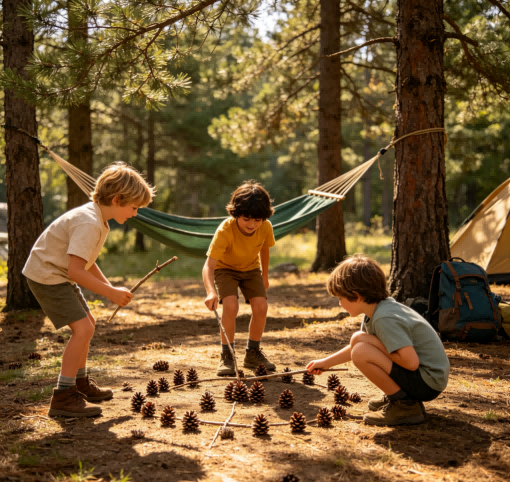
A hammock is not merely camping equipment. It is a lifestyle statement. It says, “I have achieved peak relaxation and you cannot disturb me.”

Find two trees approximately the length of your hammock apart. This sounds simple but campsite math challenges many. Adjust until comfortable. Test gently. Commit fully.

The hammock serves multiple purposes:

  • Napping platform (primary function)
  • Bird-watching theater (head swiveling optional)
  • Cloud cinema (best show in town)
  • “I’m meditating, please don’t ask me to chop wood” shield

Swaying gently while suspended between trees might be the closest humans get to experiencing zero gravity without government training.

5. Field Sketching or Journaling: Pretend You're a 19th-Century Explorer

Bring a notebook. Bring a pencil. Suddenly transform into someone who documents their surroundings like Lewis and Clark.

You don’t need artistic talent. Stick figures count. Draw the mountain as a triangle. Add squiggles for trees. Write “this is a tree” underneath if identification feels necessary.

Journaling works similarly. Write about the bird that yelled at you. Describe the way coffee tastes when surrounded by pine trees. Document your feelings about the guy in the next site who brought a generator to run his television.

Years later, you’ll find this notebook and remember exactly how that camping trip felt. The photos show what things looked like. The journal shows what mattered.

6. Board Game Tournament: Tabletop Thrills at the Picnic Table

Camping doesn’t mean abandoning civilization entirely. Bring the games.

Travel-sized versions exist for everything. Scrabble shrinks. Cards fit in pockets. Yahtzee requires only dice and questionable math skills.

The picnic table becomes your arena. The lantern serves as stadium lighting. The stakes feel higher because you’re playing in nature. A game of Uno can determine who collects firewood tomorrow.

Card games work wonderfully. Euchre, Spades, or Go Fish if children are involved. The sound of shuffling cards mixes beautifully with cricket chirps.

Tournament champions earn bragging rights. Losers earn dishwashing duty. Everyone wins because you’re outside playing games like civilized people.

7. Foraging Education: Look, Don't Munch

Foraging has become trendy. Everyone wants to eat free forest snacks. But eating the wrong plant ends your camping trip early.

Grab a guidebook. A real one with pictures. Spend time identifying what grows around you. That mushroom might be delicious dinner or emergency room visit. Knowledge gap matters here.

Find wild berries. Identify them with confidence. Take photos. Feel smart. Then eat the granola bar you brought because guessing games with poison are terrible.

Look for edible plants without harvesting. Notice the chives growing near the creek. Spot the dandelions that could become salad. Appreciate that nature provides groceries if you understand the system.

Becoming an expert forager happens over years. Becoming a person who can identify three plants happens this weekend.

8. Campsite Improvement Projects: Nesting Instincts Unleashed

Your campsite arrived functional. You can make it perfect.

Level your tent site. Remove the rock currently attacking your lower back. Fill that divot where water collects. Your future self will thank you at 3 AM when not rolling into a puddle.

Perfect your wood stacking. Create structures that would impress engineers. Try the log cabin style. Attempt the tepee. Build something unnecessarily complex that you’ll dismantle in an hour anyway.

Create a decorative stone perimeter. Circle your fire pit with carefully selected rocks. Arrange them by size. By color. By vibes. Pretend you’re landscaping professionally while actually just moving rocks around.

These projects satisfy the urge to improve things while keeping you firmly within arm’s reach of your cooler.

9. Lakeside or River Fishing: The Original Meditation App

Fishing requires minimal movement. Cast line. Sit. Wait. Repeat.

Find a spot near water. Not necessarily the best spot. Any spot works when your goal involves sitting quietly with a stick.

The rhythm soothes something ancient in humans. Water moves. Bobber floats. You breathe. Fish may or may not participate in this arrangement.

Catching nothing still counts as successful fishing. You watched water. You felt breeze. You existed without phone notifications for two hours. The fish staying wet is their choice.

Bring a book for when the fish ignore you. Bring snacks for when the book gets boring. Bring patience for when the bobber hasn’t moved since 2019.

10. Outdoor Yoga or Meditation: Pretend You're on a Retreat

Find flat ground. This search alone provides entertainment. Rocks everywhere. Roots plotting against your balance.

Yoga outdoors hits different. Downward dog with actual dogs watching. Tree pose surrounded by literal trees. Savasana on grass instead of overpriced studio mat.

The sounds replace studio music. Birds provide rhythm. Wind through leaves creates ambient tracks. No one plays Enya unless you brought the Bluetooth speaker.

Meditation works similarly. Sit comfortably. Breathe. Notice thoughts. Let thoughts go. Notice new thoughts about lunch. Return to breathing.

Practicing mindfulness outside costs nothing and requires zero equipment. Your mat is the earth. Your ceiling is infinite. Your instructor is the squirrel judging your posture.

11. Scavenger Hunts: Adult Hide-and-Seek

Make a list. Find things. Feel accomplished.

Create categories:

  • Something jagged (rock, branch, your tentmate’s patience)
  • Something red (leaf, flower, the emergency kit you packed)
  • Something soft (moss, feather, your sleeping bag)
  • Something that doesn’t belong (that one piece of trash you’ll dispose of heroically)

Search within immediate vicinity. No hiking required. The hunt happens around your chairs, your tent, that tree you’ve been staring at anyway.

This works wonderfully with kids but functions equally well for competitive adults. Race your partner. Create teams. Argue about whether that stick qualifies as “interesting shaped.”

The prize? Bragging rights and maybe the last s’more.

12. Reading a Themed Novel: Method Acting, Camper Style

Pack a book that matches your environment. Immersion intensifies.

Survival stories hit differently when you’re “surviving” in a pop-up trailer. Read about Arctic expeditions while wrapped in a fleece blanket. Learn how people starved while you eat your third s’more.

Nature-focused biographies pair well with actual nature. Read about John Muir while sitting near actual trees. Study Thoreau while ignoring that Walden involved much more solitude than your crowded campground.

Wilderness mysteries become scarier after dark. That creaking branch becomes the novel’s villain. Every shadow holds potential plot relevance.

The book keeps you stationary. The setting enhances the story. Your campsite becomes a reading nook with better ventilation.

13. Plein Air Painting: Fancy Words for Drawing Outside

Bring watercolors. Bring a small pad. Transform into an artist despite zero training.

Plein air just means painting outdoors. It sounds sophisticated. Use this term liberally. “I’ll be plein air-ing by the lake” makes you sound important.

Watercolors travel beautifully. Small kit. Tiny brush. Water from your bottle. Paint the view from your chair. Capture that tree. Document the sunset poorly but proudly.

The goal isn’t gallery-quality work. The goal is sitting still while looking at something beautiful and letting your hand move across paper.

Even bad paintings become cherished souvenirs. That weird purple mountain you painted? It’s how you remember feeling, not how the view actually looked.

14. Wildlife Observation: Sit Still, See Stuff

Grab binoculars. Grab guidebook. Sit quietly. Wait.

Birds will appear eventually. Cardinals dress dramatically. Jays announce themselves rudely. Hummingbirds hover like tiny helicopters with attitude.

Mammals might visit. Squirrels perform acrobatics. Deer materialize from nowhere. Chipmunks stuff their cheeks with your dropped snacks.

Keep a list. Check off species. Feel like a scientist despite wearing pajamas pants at 2 PM.

The guidebook helps identify your visitors. That brown bird becomes a “female red-winged blackbird.” That furry thing becomes an “eastern gray squirrel (annoying variant).”

Observation requires zero effort beyond staying in your chair and occasionally lifting binoculars.

15. Lawn Games: Competitive Lounging

Space permitting, bring games designed for minimal movement.

Cornhole involves throwing bags at a hole. Standing required but minimal. Walking to retrieve bags optional if you bring spares.

Ladder toss features bolas thrown at rungs. Points happen. Arguments ensue. The game ends when someone claims victory and someone else disputes the scoring system.

Bocce ball originated with people who really wanted to stay in one place. Roll balls toward smaller ball. Drink wine. Repeat for centuries.

These games create tournament energy without requiring trails, permits, or physical fitness. Perfect for campsites with enough flat ground to accommodate competition.

16. Geocaching: Treasure Hunting for the Modern Age

Open app. Find coordinates. Walk short distance. Find container. Sign log. Feel victorious.

Geocaching sends you on treasure hunts created by strangers. Containers hide everywhere. Some hold trinkets. Some hold logbooks. Some hold disappointment when you can’t find them.

The beauty? Most caches sit near parking areas or trails. You won’t summit mountains for these. A quarter-mile walk maximum. Often visible from your campsite.

Bring trinkets to trade if you want. Leave something small. Take something small. The real treasure was the short walk you took before returning to your chair.

This scratches the “adventure” itch while keeping effort levels manageable. You explored. You found. You sat back down.

17. Campfire Storytelling: Group Creativity Unleashed

Ghost stories work. Everyone knows the routine. Dim lights. Creepy voice. Generic scare.

Try something better: collaborative storytelling.

Sit in circle. Someone starts with one sentence. Next person adds one sentence. Continue until the story becomes ridiculous or everyone falls asleep.

Example start: “The raccoon approached our cooler with clear intentions.”

Next: “But this was no ordinary raccoon—it wore a tiny hat.”

Next: “The hat contained a miniature map leading to buried treasure.”

Next: “The treasure was actually more coolers.”

The story evolves based on group energy. Kids contribute wild ideas. Adults contribute worse ideas. Everyone laughs at the collective nonsense created together.

No preparation required. No memorization. Just sentences strung together by firelight.

18. Instrument Jam Session: Unplugged and Unbothered

Bring portable instruments. Acoustic works. Electric requires generator and we discussed generator guy earlier.

Guitar travels classically. Six strings. Unlimited potential. Strum campfire chords. Sing along badly. Pass to next person.

Ukulele offers smaller alternative. Four strings. Happy sound. Impossible to play sad songs on ukulele—it’s physics.

Harmonica fits in pocket. Adds blues vibes. Requires learning to breathe correctly or you’ll pass out dramatically.

The jam session doesn’t require talent. It requires participation. Strum one chord repeatedly. Hum along. Bang on a log rhythmically. Music happens when people make sounds together near fire.

Worst case: you annoy neighboring campers. Best case: you create memories accompanied by amateur soundtrack.

19. Whittling or Woodworking: Sharp Sticks for Grownups

Find fallen branch. Locate pocketknife. Create something from nothing.

Whittling involves removing wood you don’t need until shape appears. Start simply. A point. A curve. A shape vaguely resembling something.

Spoons make excellent beginner projects. Everyone needs spoons. Your creation will be imperfect. Imperfect spoons hold soup just fine.

Walking sticks require less precision. Remove bark. Smooth handle. Add grip marks. Present to someone who actually walks places.

Safety matters here. Sharp tools plus relaxation equals distracted carving. Pay attention. Bandages ruin the camping vibe.

The rhythm soothes. Shavings pile. Shape emerges. You created object from tree using only hands and attention.

Conclusion: The Victory of Stillness

We’ve reached the end of our stationary journey. Twenty-one ways to camp without conquering anything.

The great outdoors welcomes all approaches. The marathon hikers have their trails. The peak baggers have their summits. And you? You have your chair, your hammock, your spot by the fire where the view requires no effort.

Restoration happens differently for everyone. Some find it in exertion. Others find it in existence. Both count. Both matter. Both end with s’mores.

So next time someone asks about your camping trip, tell them proudly: “I went nowhere. I did nothing. It was exactly what I needed.”

The trees won’t judge. The stars won’t care. And you’ll return home actually rested instead of needing a vacation from your vacation.

Now go forth and sit somewhere beautiful.

Leave a Comment

Your email address will not be published. Required fields are marked *

Scroll to Top