Somewhere along the line, we decided children need structured activities and constant supervision. We forgot that kids are basically tiny scientists designed to explore dirt, poke things with sticks, and ask “why” until adults cry.
Nature fixes this. The outdoors provides sensory overload in the best way. Textures to feel. Creatures to investigate. Mud to wear like expensive clothing.
These activities require minimal preparation and zero special skills. They cost almost nothing. They create memories that no screen can replicate. And bonus: they exhaust children naturally so bedtime becomes possible again.
Let’s get them outside before they ask to watch something on your phone.
Table of Contents
1. The "Color Match" Game: Paint Chips Go Wild
Visit any hardware store. Grab those free paint chips shaped like fans. The more shades, the better. Now hand them to your kids with a challenge.
Find something in nature that matches each color exactly.
Suddenly, the forest becomes a living paint catalog. “Match this sage green!” sends them scrambling for specific leaves. “Find this robin’s egg blue!” becomes a sky-scanning mission. “This peach shade exists somewhere!” creates determined little searchers.
The game teaches observation skills. Colors exist everywhere but matching them precisely requires attention. That moss isn’t just green—it’s specific green. That mushroom cap matches “warm taupe” perfectly.
Kids learn that nature contains every color humans invented. We just copied what already grew outside.
2. Bark Rubbings: Tree Texture Art
Paper plus crayon equals instant forest documentation.
Press paper against tree trunk. Rub crayon sideways across surface. Watch bark texture magically transfer like nature’s printing press.
Different trees produce different patterns. Oak bark creates deep ridges. Birch bark reveals smooth stripes. Pine bark offers rough, puzzle-piece textures.
Collect rubbings from multiple trees. Compare them later. Discuss why bark differs between species. The rough bark protects from fire. The smooth bark deters climbing insects. Trees have survival strategies and your kids just documented them.
This activity works for any age. Toddlers enjoy the rubbing motion. Older kids create collections. Adults secretly enjoy the satisfying texture transfer too.
3. Build a "Fairy House": Tiny Architecture for Imaginary Friends
Fairies require housing. Someone must provide it. Your kids accept this responsibility.
Collect fallen twigs. Gather moss like green carpet. Find acorn caps for bowls. Locate small leaves for roofing. Construct miniature dwellings at tree bases where fairies supposedly live.
The architecture varies wildly. Some houses resemble tiny cabins. Others look like moss-covered mounds. A few become fairy mansions with stick porches and pebble walkways.
Add details. Create fairy paths using small stones. Build fences from toothpick-sized sticks. Install acorn furniture for guests who will never arrive.
This activity sparks imagination. Kids design homes for invisible creatures. They problem-solve structural issues. They learn that moss makes excellent bedding if you’re thumb-sized.
The best part? Returning tomorrow to see if “fairies visited” (you sneakily add a tiny note or moved acorn).
4. Leaf and Flower Pressing: Plant Time Capsules
Foliage fades. Flowers wilt. But pressed plants last forever in books.
Collect fallen leaves. Find flowers past their prime. Choose interesting shapes and colors. Avoid picking live plants—plenty already dropped for your purposes.
Arrange specimens between paper towels. Slide inside heavy book. Stack more books on top. Wait several days like you’re aging fine wine.
Results emerge flattened but beautiful. Pressed leaves reveal vein patterns invisible before. Flowers become delicate, translucent versions of themselves. Use them for cards, art projects, or simply admiring.
Kids learn patience through this. Nature provides materials but transformation takes time. The waiting makes final reveal more exciting.
5. Nature Sound Scavenger Hunt: Listening Challenge
Sit silently. This alone challenges most children. Add purpose to the quiet.
Create sound lists beforehand or simply challenge kids to identify everything they hear. Bird chirps count. Leaf rustles qualify. Buzzing insects earn points. Distant water adds bonus excitement.
Two minutes feels like eternity to active kids. But focusing on sounds transforms silence into adventure. “I heard three different birds!” becomes victory declaration. “Something crunched leaves over there!” sparks imagination about mysterious forest creatures.
Discuss sounds afterward. What made each noise? Why do leaves rustle differently than pine needles? How far away was that woodpecker?
The exercise develops listening skills rarely practiced in noisy modern life. Kids discover that forests create music if you pay attention.
6. Pinecone Bird Feeders: Free Restaurant for Feathered Friends
Find pinecones. Open scales work best. Tie string around top for hanging. Now prepare the bird buffet.
Spread peanut butter (or sunbutter for allergies) into crevices. Roll in birdseed until coated like delicious log. Hang from nearby branch. Watch avian customers arrive.
Bird watching becomes immediate entertainment. Species appear that kids never noticed. Chickadees dart in fearlessly. Nuthatches climb upside down to eat. Jays announce themselves rudely before swooping in.
The feeder teaches responsibility. Birds depend on your offering. Refilling becomes daily ritual. Kids feel important providing for wildlife.
Plus, peanut butter fingers require washing. Water play opportunity emerges naturally.
7. Rock Painting: Pet Rocks Return
Streams offer smooth stones. Collect several. Add paint. Create personalities.
Wash rocks first. Dry thoroughly. Apply designs using washable paints. Turn ovals into ladybugs. Transform flat stones into miniature landscapes. Create entire rock families with faces and names.
“Pet rocks” make perfect camping souvenirs. They don’t require feeding. They never need walks. They sit quietly on picnic tables looking adorable.
Use painted rocks as campsite markers. Assign each family member a color. Label tent spots. Create game pieces for outdoor activities.
The activity satisfies creative urges while keeping kids near camp. No hiking required. Just painting and imagination.
8. Bug Hotel Exploration: Check-In Time for Critters
Logs and rocks provide housing for tiny tenants. Your kids become property inspectors.
Find old log or large rock. Lift gently. Observe the scurrying community revealed. Rollie pollies curl defensively. Beetles scramble for cover. Centipedes wave many legs dramatically. Replace covering carefully afterward.
Discuss what lives underneath. Why do bugs seek these spaces? Moisture provides drinking. Darkness offers safety. Rotting wood supplies food. The log isn’t just log—it’s apartment complex.
Bring magnifying glasses for close inspection. Watch pill bugs unroll after disturbance. Count legs on passing millipedes. Observe ant highways carrying important ant cargo.
Replace everything exactly as found. The hotel must remain functional for current guests.
9. Shadow Drawing: Sun-Powered Art
Sunlight creates shadows. Paper captures them. Kids trace the results.
Place toy animal on paper positioned in sun. Watch shadow fall across page. Trace outline with pencil or crayon. Remove toy. Admire shadow drawing now permanent.
Try different objects. Leaves create delicate silhouettes. Sticks make abstract lines. Hands form recognizable shapes when positioned creatively.
Move paper throughout day. Shadows shift as sun travels. Morning drawings differ from afternoon versions. Kids learn about Earth’s rotation through simple observation.
Add details after tracing. Turn leaf shadows into fantasy plants. Transform toy outlines into adventure scenes. The sun provided foundation; imagination finishes work.
10. Puddle Stomping and Mud Pies: Embrace the Mess
Rain happens. Puddles appear. Stomping becomes mandatory by child law.
Let them splash. Really. Dress for mess or accept consequences. Puddle jumping exercises muscles and releases joy that adults forgot existed.
Extend activity with mud kitchen. Dirt plus water equals building material. Sticks become spoons. Leaves serve as plates. Acorn caps hold tiny portions of mud soup.
“Bake” mud pies arranged on flat rocks. Decorate with pebbles and flower petals. Serve imaginary guests who appreciate rustic cuisine.
Water play requires minimal equipment. Bucket provides water source. Ground supplies remaining ingredients. Kids create restaurant experiences from absolutely nothing.
Yes, laundry increases. But memory of unrestricted muddy fun lasts longer than clean clothes.
11. Nighttime Senses Walk: Dark Adventures
Day ends. Campground quiets. New world awakens for exploring.
Use red-light flashlights. Regular lights ruin night vision. Red preserves ability to see in darkness while providing enough illumination for safety.
Listen for owls calling territories. Watch for moths visiting flowers. Spot eyeshine from spiders lurking in grass. The darkness holds creatures invisible during daytime.
Walk short distances. Stay near camp. Let kids lead while adults supervise. The goal is sensory experience, not distance covered.
Discuss how nighttime differs from day. Cooler air carries different smells. Sounds travel farther in darkness. Animals active now slept through sunlight.
Kids feel brave experiencing dark intentionally. Fear transforms into fascination when approached as adventure.
12. Cloud Shape Gazing: Sky Theater
Lie on blanket. Look up. Watch clouds drift like slow-motion cartoons.
“What do you see?” launches imagination. That fluffy mass resembles dragon. The wispy streak looks like hair. The distant formation appears exactly like ice cream cone but melting.
Take turns describing. Build stories around cloud characters. Dragon chases rabbit across blue expanse. Ice cream melts into lake shape. Hair becomes waterfall tumbling from sky.
Clouds change constantly. New shapes emerge as old ones dissolve. The show never repeats. Each viewing offers unique performance.
This activity requires zero preparation. Just blanket, sky, and willingness to see animals in atmospheric water vapor.
13. Nature Crowns: Forest Royalty
Paper headband forms base. Nature provides decoration. Kids become woodland monarchs.
Cut brown paper strips. Measure head circumference. Tape into circle. Now gather royal decorations.
Small leaves attach easily. Feathers add sophistication. Grasses weave through paper. Flower petals provide color. Acorn caps become crown jewels.
Wear creations proudly. Forest royalty requires proper presentation. Photograph new king or queen of camping trip. Admire nature’s crown jewels adorning happy faces.
The crowns wilt eventually. Leaves dry. Petals fall. But royal memories persist.
14. Solar Oven S'mores: Sun Cooks Dessert
Pizza box plus foil equals cooking device. Sun provides heat. S’mores result from collaboration.
Line box with black paper (heat absorber). Cover opening flap with foil (reflector). Prop flap at angle using stick. Place s’mores ingredients inside. Close plastic wrap window. Aim at sun. Wait.
Chocolate softens. Marshmallows warm. Graham crackers toast slightly. The sun works slowly but effectively.
Kids learn solar power applications. Same sun warming their faces also cooks dessert. Renewable energy tastes delicious with chocolate involved.
Success requires patience. Solar ovens operate on sun’s schedule, not impatient children’s timeline. Use waiting time for other activities while checking progress occasionally.
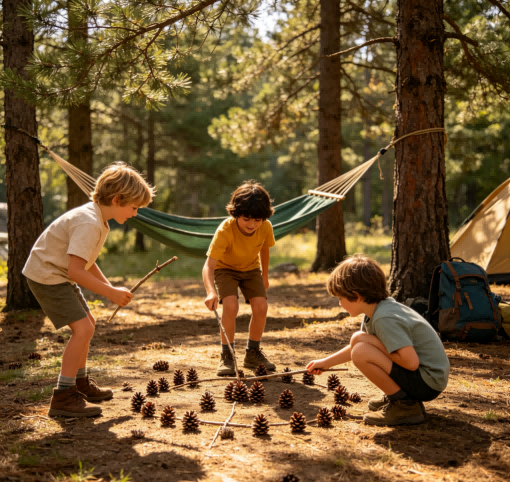
15. Pinecone Bowling: Forest Recreation
Set up pins. Find ball. Bowl in nature’s alley.
Use sticks as pins. Stand them upright in ground or lean against supports. Upright pinecones work similarly. Collect several targets arranged in formation.
Find bowling ball equivalent. Larger pinecone rolls adequately. Round rock works perfectly. Slightly-flattened stick becomes backup option.
Roll toward pins. Count strikes. Celebrate spares. Reset and repeat.
The game adapts to available materials. Flat area helps but uneven ground adds challenge. Nature’s bowling requires adjustments unknown in indoor alleys.
Competition emerges naturally. “I knocked down four!” “Watch me get five!” Tournament brackets form without planning.
16. Water Play in a Bucket: Portable Pond
Stream absent? No problem. Bucket provides aquatic entertainment.
Fill container with water. Add found objects. Sticks become boats. Leaves serve as rafts. Flowers decorate water surface.
Race stick boats across bucket ocean. Use breath as wind. Create waves with careful hand movements. Rescue sinking vessels dramatically.
Add rocks for depth. Pebbles create underwater landscape. Submarines (more sticks) navigate around obstacles.
Water play soothes children somehow. Splashing satisfies. Floating fascinates. The simplest container provides hours of aquatic engagement.
Add soap for bubble element. Wash forest finds. Create temporary cleaning station. Water adapts to whatever play requires.
17. The "Micro-Hike": Tiny Trail Adventures
Magnifying glass transforms ordinary ground into wilderness.
Mark one square foot of grass. Crouch low. Examine miniature world within.
Ant highways traverse the space. Tiny plants grow between grass blades. Soil particles form mountains at this scale. Mini-beetles navigate obstacle courses invisible to normal vision.
The “hike” covers inches but reveals universes. Kids discover that small things contain complexity matching larger world. Every square foot hosts complete ecosystem.
Move to new square. Compare populations. Shaded areas differ from sunny spots. Bare ground supports different creatures than grassy sections.
Magnification changes perspective. Kids learn that exploration requires only curiosity, not distance.
18. Stick Whittling with Spoons: Magic Wand Workshop
Sticks become wands. Children become wizards. Safety matters most.
Provide plastic knives for young kids. Blunt tools remove bark without removing fingers. Older children manage sharper options with supervision.
Peel bark in strips. Reveal smooth wood beneath. Shape ends into points or curves. Add notches for decoration. Create unique wand representing personal magical style.
The process requires focus. Whittling demands attention to tool angle and pressure. Kids concentrate deeply while transforming branch into treasure.
Discuss wand purposes. Will it cast helpful spells? Does it glow during magic use? What powers does this specific wood provide?
Finished wands accessorize costumes. They cast imaginary spells all weekend. They return home as souvenirs representing forest magic.
Conclusion: Dirt Washes Off, Memories Don't
These activities share common elements. They cost little. They require no screens. They place children directly in contact with natural world.
Kids learn through these moments. Bugs deserve careful handling. Trees have personalities expressed through bark. Clouds tell stories constantly changing. Mud feels wonderful between toes.
The relationship with environment develops early. Respect for nature grows through interaction, not lectures. Kids who built fairy houses protect real forests later.
And somewhere between pinecone bowling and solar s’mores, families connect. Laughter happens. Memories form. The campsite becomes backdrop for childhood’s best moments.
Dirt washes off eventually. The memories stay forever.