Camping has a bit of an image problem.
You open social media, and there they are. Perfectly coiffed influencers sipping pour-over coffee in front of a $800 canvas tent. They wear matching flannel. Their camp kitchen looks better stocked than your actual kitchen.
It’s enough to make your wallet whimper.
But here is the secret they don’t tell you. The trees don’t care what tent you sleep in. The stars look exactly the same whether you’re using a $1,200 GPS-enabled smartwatch or just… looking up.
Camping isn’t about the gear. It never was. It is about connection. Connection to nature, to the people around the fire, and to the simple joy of not being at work.
Adopting a “frugal woods” mindset is freeing. It removes the pressure. You stop shopping and start experiencing. You realize that the best sound in the world isn’t the crinkle of a new jacket; it’s the crackle of a free fire.
So, how do we do it? How do we sleep under the stars without emptying our bank accounts?
Grab your (probably borrowed) camping mug. Let’s dive into the art of the budget campout.
Table of Contents
1. Borrow Before You Buy
We all have that friend.
You know the one. They were “really going to get into camping” three years ago. They bought the whole REI catalog. Now, that tent is gathering dust in their garage, dreaming of sunlight.
Be that friend who liberates it.
Asking to borrow gear is a win-win. Your friend gets their dust-collector used for its actual purpose. You get to test-drive the lifestyle without a down payment.
Think of it as a “starter pack” loan. Ask for the big stuff first. A tent. A camp stove. That weirdly specific lantern they swore they needed.
Here is the golden rule, though. Return it cleaner than you found it.
Nothing kills a borrowing relationship like returning a tent that smells like last summer’s tuna melt. Clean it. Air it out. Maybe throw in a six-pack as a rental fee.
If you borrow something and realize you hate camping? Great! You dodged a financial bullet. If you love it? Now you know exactly what to look for when you buy.
2. Shop Secondhand Markets
So, you’ve borrowed a tent. You’ve decided you like sleeping on dirt. It’s time to join the ownership society.
But don’t run to the fancy outdoor mall yet. Run to your phone.
Open Facebook Marketplace. Open OfferUp. Open Craigslist (carefully, and in a well-lit parking lot). These platforms are gold mines for used gear.
People buy expensive hobbies and quit them all the time. It’s a sad fact of life. But it’s great for your wallet.
You can find high-quality gear for pennies on the dollar. Look for cast iron skillets that look like they have a story. Find tents that are only missing one unimportant pole. Grab sleeping pads from someone who decided “glamping” is actually just a hotel.
Thrift stores are also fair game. Check the home goods section for heavy pots. Look in the random bin for cheap flashlights. Sometimes you find amazing stuff.
Just inspect everything. Check for mold in tents. Make sure zippers work. A little dirt is fine. A colony of mildew is a dealbreaker.
3. Camp on Public Lands
Here is where the big savings happen.
Private campgrounds are nice. They have showers. They sometimes have little stores. They also charge forty bucks a night.
Forty dollars. To sleep on the ground.
Stop doing that.
Look for public lands instead. Specifically, look for Bureau of Land Management (BLM) land. Look for National Forests.
These vast areas often allow what is called “dispersed camping.”
What does that mean? It means you find a spot, usually off a dirt road, and you set up camp. For free. No reservations. No check-in desk. Just you and the wilderness.
There are no hookups. There is no bathroom (bring a trowel, please). But the price is right.
Apps and websites like iOverlander can help you find these spots. Just remember the principles of Leave No Trace. Pack out what you pack in. Don’t be the person who ruins free camping for everyone else.
4. Stay Close to Home
Gas is expensive. We all know this.
It hurts to watch the dollars tick away as you drive three hours to that “perfect” spot you saw on Instagram.
So, don’t.
Look closer. Way closer.
Find the state park thirty minutes from your house. Explore the county park you’ve driven past a thousand times. Is there a patch of woods within an hour? Go there.
Staying local slashes your biggest variable cost: fuel.
You save money. But you also save time. No marathon drive means you arrive relaxed. You can set up camp in daylight. If you forget something? Who cares? You’re twenty minutes from home.
It also helps you appreciate your own area. You play tourist in your own backyard. It’s surprising how much beauty hides just down the road.
5. Use Kitchen Gear from Home
Walk into a camping store. Look at the “camp kitchen” section.
You will see tiny pots that cost fifty dollars. You will see collapsible silicone cups. You will see titanium sporks.
Now, go home. Open your kitchen cabinet.
See that old pot? The one with the slightly wobbly handle? That is your new camping pot. See that cast iron skillet grandma gave you? It’s heavy, but it’s perfect for fires.
You do not need specialized equipment to boil water.
Seriously. Water boils in any container. Food cooks in any pan.
Bring a sturdy plate from home. Bring a mug that holds coffee. The bears won’t judge your dishware. They only care about your food storage habits.
Just don’t bring your fine china. Or your non-stick pans you love. Campfires are harsh. Bring the stuff you aren’t scared to scratch.
6. Repurpose Bedding
Sleeping bags are weird.
They are shaped like mummies. They cost a fortune. And they stuff into tiny sacks that are impossible to repack.
For summer camping, skip them entirely.
Look at your bed at home. See those quilts? See that old comforter? They work outside too.
Bring your own pillows. Seriously, neck support is non-negotiable. Grab a couple of heavy blankets from the linen closet.
Layers are your friend. Put a blanket down for padding. Use another for warmth.
If it gets really cold, you can always wear a hat to sleep. Or steal your friend’s borrowed gear.
Obviously, if you’re camping in the snow, buy a sleeping bag. But for mild summer nights? Your bed at home is a gear closet waiting to happen.
7. The "Dollar Store" Supply Run
Here is a rule: never buy gear at the campground store.
That store knows you forgot something. They are counting on it. They charge five dollars for a lighter there.
Beat them at their own game.
Before you leave home, hit the dollar store.
Seriously. Walk those aisles.
You need glow sticks for the kids? Dollar store.
You need wet wipes for… well, everything? Dollar store.
You need aluminum foil for cooking? Dollar store.
You need cheap lighters, citronella candles, and rope? You get the idea.
The quality is fine. It’s camping. Things get dirty. Things break. You want the cheap stuff to break, not your expensive gear.
Stock up on the disposables here. Spend five bucks and get everything. Laugh at the campground store prices later.
8. DIY Fire Starters
Starting a fire can be frustrating.
Wet wood. No kindling. Fingers that are suddenly all thumbs.
You can buy chemical fire starters at the store. They smell weird and cost money.
Or, you can raid your laundry room.
Dryer lint. It’s free. It’s everywhere. It burns like crazy.
Take a cardboard egg carton. Stuff each little cup with lint. If you want to get fancy, pour melted candle wax over it. Cut the cups apart.
You now have a dozen fire starters for zero dollars.
Another trick? Cotton balls dipped in petroleum jelly. They burn for a surprisingly long time. Stick them in a small film canister (if you still have one) or a ziplock bag.
Fire is free warmth. The starter should be too.
9. Plan a Simple, One-Pot Menu
Dehydrated backpacking meals are cool.
They are also eight dollars for a pouch of pasta that tastes like salt.
Stop buying astronaut food. You are camping, not climbing Everest.
Eat normal food. The food from your pantry.
Oatmeal for breakfast. It costs pennies.
Peanut butter and jelly for lunch. Classic.
Pasta and jarred sauce for dinner. One pot. Done.
Beans and rice with some spices. Filling and cheap.
Stick to pantry staples. Stuff that doesn’t mind being in a cooler or a bear bag.
Cooking over a fire is fun. But cooking a complicated, five-course meal is a chore. Keep it simple. One pot means less cleanup. Less cleanup means more time staring at the flames.
10. Freeze Water Bottles for Ice
Ice is a camping scam.
You buy a bag for five bucks. You put it in the cooler. It melts in six hours. Your food gets wet. You have to buy more ice.
Stop the cycle.
Before you leave home, grab your water bottles. The big plastic ones. Fill them about 3/4 full (water expands when it freezes). Throw them in your freezer.
Now you have ice blocks.
Put these frozen jugs in your cooler. They keep things cold for days. They don’t turn into watery soup as fast. And the best part? As they melt, you have ice-cold drinking water.
No waste. No soggy sandwiches. No overpriced ice bags.
11. Bring Your Own Firewood
Campgrounds sell firewood bundles.
They charge ten dollars for four pieces of wood. Sometimes it’s wet wood. It’s always expensive wood.
Plan ahead.
On your drive in, look for roadside stands. Locals often sell wood for half the price. They stack it high. It’s usually dry.
Check the rules, though. Some parks ban outside wood to stop pests. If they allow it, buy local but buy early.
Better yet, if the campground allows it, gather your own. Look for downed wood. Dead and dry. Never cut live trees.
Gathering wood is part of the experience. You wander. You forage. You build your pile for free. The fire feels more earned that way.
12. Prep Food at Home
Camp cooking is messy.
You have limited water. Limited counter space. Lots of bugs.
Make it easy on future-you.
Before you leave the house, chop the veggies. Put them in a reusable bag or container.
Marinate the meat at home. Seal it in a leak-proof bag.
Pre-mix your pancake dry ingredients. Just add water at the site.
This does two things.
First, it saves space in your camp tub. No cutting boards needed. No bottles of spices scattered everywhere.
Second, it reduces waste. You aren’t stuffing onion skins into your trash bag at the site. You dealt with that at home, where disposal is easy.
Future-you will be very happy. Present-you just has to remember to grab the bags from the fridge.
13. Use Reusable Dishes
Paper plates are convenient.
But you have to buy them over and over. And over. And then you have a bag of soggy paper plates to carry out.
Break the cycle.
Bring dishes from home. The lightweight plastic ones. Or the enamel ones from the thrift store.
They weigh almost nothing. They wash easily. Bring a small tub, some biodegradable soap, and a scrubber.
Washing dishes at camp is oddly satisfying. Hot water, a view of the trees, and the knowledge that you aren’t creating a mountain of trash.
Plus, real plates don’t blow away in the wind. They hold actual food. It feels more like a meal and less like a picnic.
14. Camp Mid-Week
This is a schedule hack.
Everyone wants to camp on Friday and Saturday. It’s just a fact. Demand is high. Prices reflect that.
If you can, shift your trip.
Show up on Sunday. Leave on Thursday. Camp Tuesday night.
Many campgrounds charge less for these “off-peak” nights. The price drops significantly. You might save ten or twenty bucks a night.
But the savings aren’t just money.
The park is emptier. The trails are quieter. You get a better site. The weekend crowd noise is gone. It’s just you and the squirrels.
If you have the flexibility, use it. Mid-week camping is the VIP section of the woods.
15. Take Advantage of Free Entertainment
Campgrounds love to sell you “experiences.”
Guided hikes. Boat rentals. Shuttle tours. They all add up.
But look around. The entertainment is already there.
The campfire is a show. The stars are a movie. The woods are a playground.
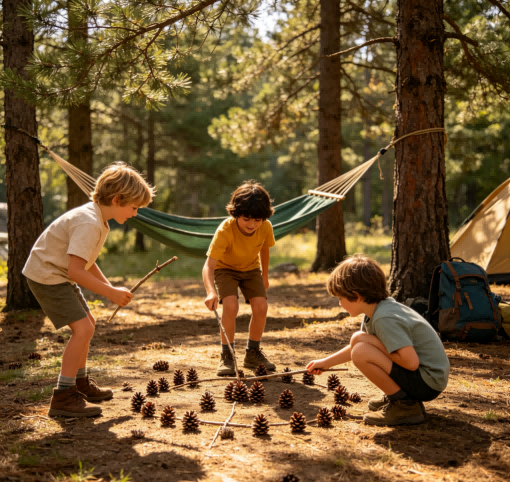
Bring a deck of cards. Play gin rummy by lantern light. Bring a paperback book you’ve been meaning to read. Bring a simple ball or a frisbee.
Throw rocks in the lake. Identify clouds. Stare at a bug for twenty minutes.
Nature doesn’t charge admission. The best things in the woods are free. Actually, they are priceless.
16. Group Up
Camping alone is peaceful. Camping with friends is economical.
Find a few buddies. Split a large campsite.
That forty-dollar site now costs ten bucks per person. Gas for the drive gets split four ways. You can share food. One person brings the stove, another brings the tent, another brings the bacon.
It builds community. You share the workload. Someone else cooks breakfast.
Group camping is louder. It’s sillier. It’s often more fun.
And it lets you stay in that nicer campground with the view, because the cost per person drops to almost nothing.
17. Invest in a Multi-Park Pass
This sounds counter-intuitive. Spend money to save money?
Hear me out.
If you camp more than three times a year, look into passes.
A State Park annual pass. A National Parks pass (like the America the Beautiful pass).
Entrance fees add up. Ten bucks here, thirty bucks there. It hurts.
A pass covers that. You drive up, flash the card, wave goodbye to the fee booth.
For federal lands, the pass often covers entrance fees and standard amenity fees. Do the math. Three or four visits usually pay for the whole thing.
If you’re a regular camper, it’s a no-brainer. It pays for itself. Then it just feels like free entry for the rest of the year.
18. DIY Lanterns
Camp lighting is expensive.
Fancy LED lanterns cost a lot. Propane lanterns are bright but hiss all night.
Here is a cheap trick that actually works.
Take a clear gallon water jug. The big plastic one.
Strap a headlamp to it. Face the light inward. Turn it on.
The water diffuses the light. Suddenly, the whole jug glows. It lights up the entire picnic table with a soft, ambient light. No glare. No harsh shadows.
It’s like magic. You can also use a regular flashlight. Just point it into the jug.
When you’re done, you have drinking water. Or you empty it and pack it flat. Free, reusable light.
Conclusion: It’s About the Stars, Not the Stuff
So, there you are.
You’re sitting on a log. You’re wearing a sweatshirt from high school. You’re eating pasta from a chipped plate. Your tent is borrowed. Your light is a water jug.
Look up.
The stars are out. They are brilliant. They are infinite.
They look exactly the same from your borrowed tent as they do from a $5,000 luxury canvas palace.
The squirrels don’t know your gear budget. The trees don’t care. The fire doesn’t judge.
Camping cheap isn’t about deprivation. It’s about focus. You strip away the consumer noise. You boil it down to the essentials: shelter, warmth, food, and company.
You don’t need to spend a lot to find that. You just need to go.
So pack the car. Grab the dollar store loot. Head for the hills. Your wallet will thank you. Your soul will thank you more.