Let’s be clear from the outset: winter camping is the final boss of camping.
It’s not the charming, gentle camping of summer, where your biggest worry is a mildly aggressive mosquito.
No, winter camping is camping with the difficulty sliders cranked to “Masochist.”
It’s a beautiful, serene, and profoundly stupid thing to do if you’re not prepared.
And I speak from a place of deep, personal, and shiver-induced wisdom. My first winter camping trip was less of a serene wilderness experience and more of a three-day-long shudder, punctuated by the sound of my own teeth chattering.
I made every mistake in the book, and then I think I invented a few new ones.
So, grab a hot beverage, and allow me to guide you through the seven most common, logic-defying mistakes of winter camping.
Learn from my misery. Don’t be the human popsicle I once was.
Table of Contents
Mistake #1: The Snow-Water Illusion (Or, How I Spent 4 Hours Melting a Thimble of Water)
On my inaugural freeze-fest, I looked at the pristine, foot-deep blanket of snow and thought, “Perfect!
An endless, free supply of water. I’ll just leave the water filter at home and save weight.”
This was, without a doubt, one of the top three worst ideas I’ve ever had, right up there with “sure, I can eat that entire ghost pepper pizza.”
The Reality: Snow is a lying, deceitful substance when it comes to hydration. It looks like solid water, but it’s mostly trapped air.
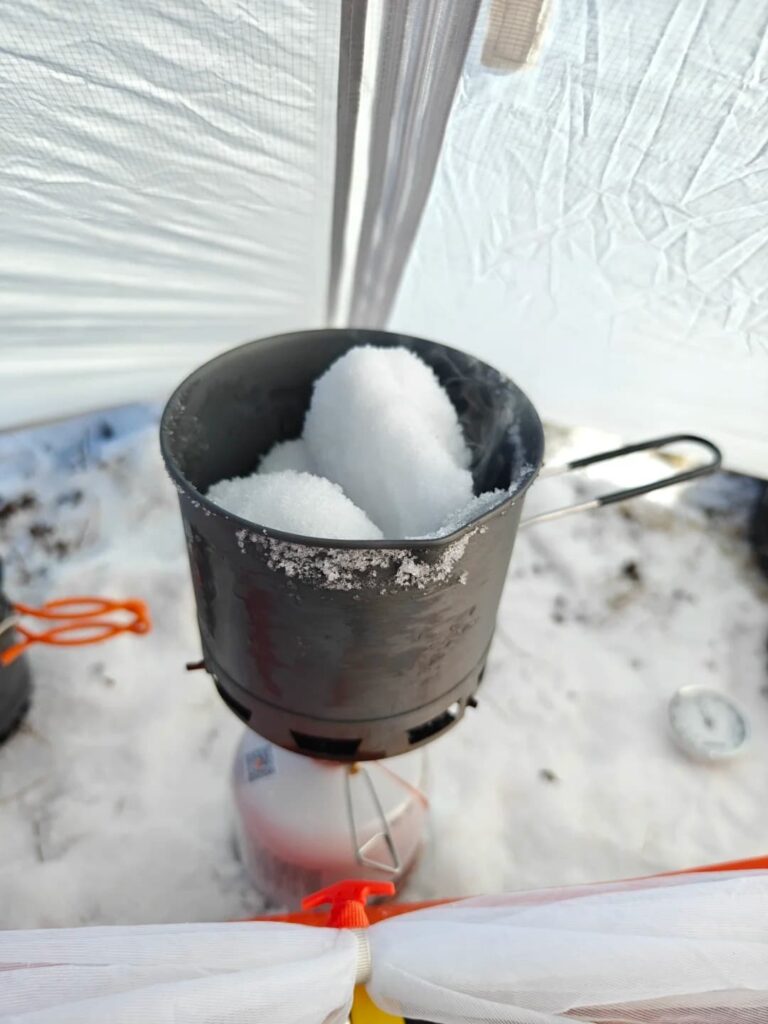
Melting it is a lesson in profound patience and fuel consumption. I set up my little stove, filled my pot with a fluffy mound of snow, and lit the flame with the confidence of a Norse god.
Ten minutes later, I had a pot with a sad, slightly damp bottom and a cavern forming in the middle where the snow had sublimated away from the heat.
It was like trying to boil a cloud.
The physics are simple: snow is a fantastic insulator. It takes a tremendous amount of energy to turn solid, airy snow at 0°F into liquid water at 32°F, and then more energy still to heat it to a drinkable temperature.
You will burn through your precious fuel canisters at an alarming rate, all while slowly dehydrating because the process is so. Incredibly. Slow.
How to Not Lose Your Mind:
There is a trick, a sacred rite passed down from frostbitten gurus. Always start with a little liquid water in the bottom of your pot.
Heat it until it’s almost boiling, then start adding snow gradually, like you’re making a gritty, cold-water risotto.
The liquid water transfers heat to the snow far more efficiently than the pot’s metal does to the snow directly.
It’s the difference between watching paint dry and watching grass grow. Marginally better!
And even after you’ve finally melted your pot of life-giving water, you’ll discover it’s a murky broth of pine needles, a stray beetle, and what I can only assume is a tiny, frozen ghost of a past camper’s regret.
Boiling will make it safe to drink, but filtering is what makes it palatable.
The Pro-Tip to End All Pro-Tips:
If you do bring a filter (and you should), treat it like your newborn child.The water inside the filter element will freeze, expand, and crack the delicate internal fibers, rendering it useless.
The solution? On frigid nights, your filter gets a sleeping bag, too.
Keep it in a Ziploc bag and tuck it inside your sleeping bag at night. It’s a little weird, but so is explaining to a park ranger that you’re licking trees for moisture.
Mistake #2: The Great Fuel Freeze-Out
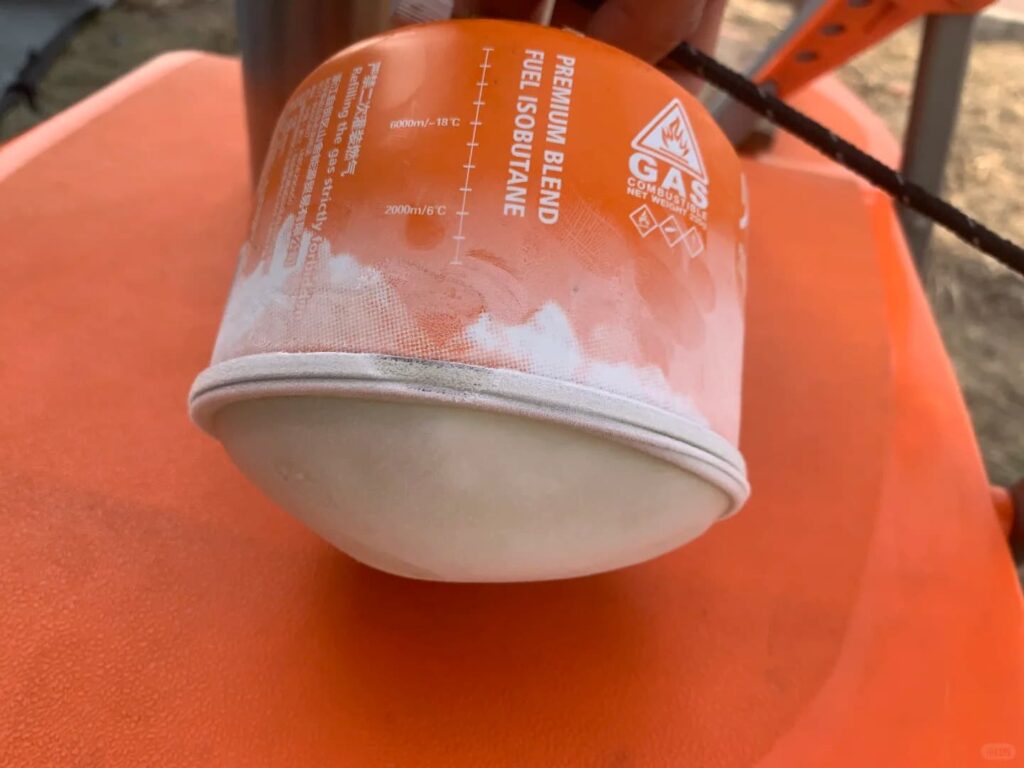
I learned this lesson the hard way on a morning where the temperature hovered around a brisk 10°F (-12°C).
I went to make my morning coffee, the only thing standing between me and a complete descent into caveman-like grumpiness.
I pumped my stove, lit the flame, and was rewarded with a weak, sputtering yellow fart of a flame that promptly died.
My fuel canister was colder than my ex’s heart.
The Reality: Standard isobutane fuel canisters are divas. They perform beautifully in mild weather but throw a tantrum when it gets cold.
As the temperature drops, the pressure inside the canister plummets. Around that 11°F (-12°C) mark, they often just give up entirely.
The gas won’t vaporize, and your stove becomes a very expensive, very cold paperweight.
The Solutions for the Frosty Gourmet:
For serious winter camping, you have two main paths:1. Liquid Fuel Stoves: Stoves like the classic MSR WhisperLite are the workhorses of the frozen world. They run on white gas, which is less affected by cold, and you can pressurize the bottle yourself.
The beauty of the WhisperLite is its pre-heating tube, which vaporizes the liquid fuel before it hits the burner. It’s a roaring, reliable beast of a flame. You can also run it on kerosene or even unleaded gasoline in a pinch, making it incredibly versatile.
2. The Upside-Down Trick: If you’re committed to your canister stove, all is not lost. You can use a stove designed to work with the canister inverted.
By flipping the canister upside down, you feed liquid fuel into the stove instead of gas. The key is that your stove must have a pre-heat loop or a fuel line that passes through the flame to vaporize that liquid before it burns.
Stoves like the Fire Maple Blade 2 are built for this. It’s a neat physics hack that feels like you’re getting away with something.
Mistake #3: The Face-Bag Death Spiral

When the cold seeps into your bones and the tip of your nose feels like it might snap off, the instinct is primal: retreat.
And so, you turtle. You pull your entire head, face and all, deep inside your sleeping bag, creating a warm, dark cocoon.
It feels like a moment of pure genius. It is, in fact, the beginning of the end.
The Reality: Your body is a humidifier that you can’t turn off. Every time you exhale, you’re releasing a significant amount of water vapor into the air.
When you do this inside your sleeping bag, that moisture has nowhere to go. It gets trapped in the insulation.
Most high-quality winter bags use down, and down is a miracle of nature—until it gets wet. A damp down cluster clumps together and loses its loft, which is its ability to trap warm air.
No loft, no warmth. You start the night toasty, but as the hours wear on, the moisture from your breath soaks into the down around your head and shoulders.
You’ll wake up in the early hours, shivering uncontrollably, with a damp bag and a profound sense of betrayal. You were colder because you tried to be warmer.
The Key Takeaway: Be brave. Keep your face outside the bag. Use the hood to draw a tight circle around your face, but let your exhaled breath escape into the great outdoors where it belongs.
Your future, dry, warm self will thank you.
Mistake #4: The Soggy Slumber Party

In summer, if you’re a little sweaty when you crawl into your bag, it’s no big deal. In winter, it’s a critical error.
I once made the foolish decision to sleep in the base layers I’d hiked in, thinking, “Eh, they’ll dry out from my body heat.” They did not.
The Reality: Those clothes are damp with sweat, and that moisture is a thermal assassin. Once you’re stationary in your bag, that dampness acts as a conduit, pulling heat away from your body at an alarming rate.
Furthermore, it transfers that moisture into the inner lining and insulation of your sleeping bag, compromising its entire thermal system.
You’re essentially turning your warm, dry sanctuary into a damp, chilly cave.
The Simple, Life-Saving Ritual:
Always, always, always bring a dedicated set of dry base layers to sleep in. This is non-negotiable.Before you bed down, take a moment to change out of your hiking clothes (which can be slightly damp from sweat or snow) and into your clean, dry sleepwear.
It feels like a hassle when you’re cold and tired, but the instant you zip up your bag, you’ll be enveloped in a wave of dry warmth.
You are protecting both your own body heat and the integrity of your most important piece of sleep gear.
Mistake #5: The Sweaty Puffy Jacket Parade

I see this all the time on the trail: a newcomer, bundled up in a magnificent, marshmallow-like puffy down jacket, marching up a snowy incline.
They look warm. They are also, secretly, building a sauna inside their own jacket.
The Reality: Puffy jackets, especially down-filled ones, are fantastic at trapping heat. They are not designed for activity. They have minimal breathability.
The moment you start working hard—like, say, hiking up a hill with a pack—your body generates heat and sweat.
Your puffy jacket traps all of that moisture like a sponge. Down, as we’ve established, becomes useless when wet.
Even synthetic insulation, which handles moisture better, will become a clammy, cold weight when saturated with sweat.
The Proper Layering System (A Quick Recap):
Managing sweat is the name of the game in winter. You need a system that moves moisture away from your body.• Base Layer: Wicks sweat from your skin. (Merino wool or synthetic).
• Mid Layer: Pulls that moisture outward and provides warmth through breathable insulation (e.g., a grid fleece or thin synthetic jacket).
• Shell Layer: Protects from wind and snow while ideally allowing vapor to escape (a breathable hardshell or softshell).
You should be constantly micro-adjusting. Start your hike feeling slightly cool.
As you warm up, remove a layer before you start sweating profusely.
Your puffy jacket should live in your pack, only coming out when you stop for a break or set up camp. I’ve made entire videos breaking down this layering system because it’s that important.
Trust me, it’s less exciting than a ghost pepper pizza, but far less painful.
Mistake #6: The Rating Deception
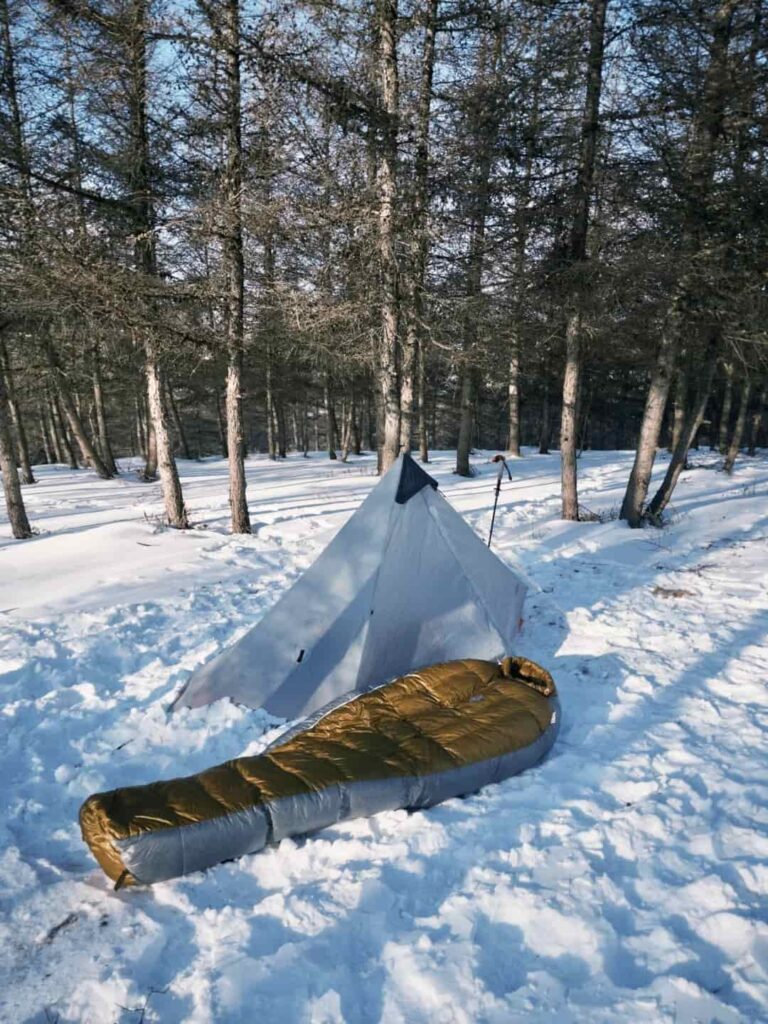
You buy a sleeping bag rated to 0°F. You assume this means you will be snug as a bug at 0°F. Oh, my sweet summer child.
Winter is here, and it has news for you.
The Reality: Sleeping bag ratings are a minefield of marketing and misunderstood standards.
Often, the big, bold number on the tag is the “Limit” rating, which is defined as the temperature at a standard woman can sleep for 8 hours in a curled position without waking up, but feeling cold.
It is not a comfort rating. It is the “you probably won’t get hypothermia” rating.
The Rule of Thumb: For a realistic expectation of comfort, add 10-20°F to the stated rating. So, that 0°F bag is likely a comfortable 15-20°F bag.
Even better, look for bags that are advertised with their EN/ISO comfort rating, which is a much more reliable metric.
But here’s the part everyone forgets, the part that left me shivering on a bed of snow: Your sleeping pad is half of your sleep system.
It doesn’t matter if you have a -40°F expedition sleeping bag from a secret Himalayan monastery—if your sleeping pad has a low R-value, you will be cold.
The R-value measures resistance to heat flow. The higher the number, the better it insulates you from the cold ground.
In winter, the ground is a massive heat sink, and it will suck the warmth right out of you. For winter camping, you need a pad with an R-value of 5 or higher.
Anything less, and you might as well be sleeping directly on a glacier. That fancy inflatable pad you use in summer? Its R-value of 2.5 isn’t going to cut it.
It’s the forcefield between you and the frozen earth. Don’t cheap out on it.
Mistake #7: The Condensation Crypt

The wind is howling. Snow is drifting against your tent fly. Your every instinct screams: “Batten down the hatches!”
So, you zip every zipper, close every vent, and seal yourself into your synthetic womb, proud of your airtight fortress.
You have just built yourself a very expensive, personal igloo… from the inside.
The Reality: Just like in your sleeping bag, you are a human humidifier. In a sealed tent, all the moisture from your breath, your sweat, and your damp gear has nowhere to go.
It condenses on the coldest surface available—the tent walls and fly. In sub-freezing temperatures, this condensation instantly turns to frost.
Then, when you brush against the wall or when the sun comes up, it showers down on you in a glittering, miserable snowfall of your own making.
You’ll wake up to a soggy sleeping bag and a tent that looks like the inside of a freezer.
The Counter-Intuitive Wisdom:
You must ventilate. Even—no, especially—when it’s cold and windy. Four-season tents are built with robust vents for this exact reason.Crack the top vent, or open a small section of a door away from the wind. Yes, it lets in a little cold air, but it allows the warm, moist air to escape.
A small, consistent draft is far preferable to a torrent of internal frost. A well-ventilated tent will be drier, and a dry tent is a warmer tent in the long run.
Conclusion
Winter camping is hard. It’s a constant battle against the elements, and more importantly, against your own misguided instincts.
The desire to seal yourself in, to bundle up, to retreat—these are the very things that will amplify your misery.
But if you can learn to defy that logic, you unlock something magical.
The silence of a snow-covered forest, the brilliance of the stars on a crisp, cold night, the profound satisfaction of being warm and comfortable in a world that is actively trying to freeze you.
It’s all there for the taking.