Here is a radical concept: you are not the main character. When you enter a National Park, you aren’t just a tourist buying a sticker for your yeti cup.
You become a temporary steward of a living, breathing ecosystem. Responsible camping isn’t about how many miles you crushed or how epic your sunset photo looked.
It is about balancing your deep desire for adventure with the park’s mission of preservation.
Follow these rules. Practice “Leave No Trace” until it hurts. Do this, and you might just help ensure these iconic landscapes remain wild enough for the next century of idiots to enjoy.
Table of Contents
Make Reservations Months in Advance: The Hunger Games of Camping
So, you woke up this morning and thought, “Gee, I’d love to camp at Yosemite next weekend.” That is adorable. It is also laughably delusional.
National Park campsites fill up faster than a Taylor Swift concert. They disappear instantly. You need to be on Recreation.gov at the exact moment the booking window opens, clicking with the frantic energy of a squirrel crossing a highway. If you hesitate, the site is gone.
Here is the harsh truth: do not attempt to “stealth camp.” Do not pull your van into a quiet pullout at 2:00 AM thinking you are slick. Park rangers possess a sixth sense for this. They will find you. They will wake you up. And they will issue a citation that costs more than a nice hotel.
Plan ahead. Set calendar reminders. Beg your friends to help you click. Treat it like a concert ticket, because in the world of National Parks, the campsite is the show.
Validate Your Permits: That Little Paper is Your Golden Ticket
You have hiked eight miles. Your feet hurt. Your backpack feels like it is filled with bricks. Finally, you see the backcountry campsite. It is beautiful. You drop your pack.
Then, a ranger appears from behind a tree like a magical forest wizard. He smiles. He asks for your permit.
You pat your pockets. You check your bag. You realize the permit is sitting on your kitchen counter 200 miles away. Suddenly, that magical forest wizard turns into a very disappointed man holding a citation pad.
Many backcountry areas require specific permits. You must carry them. Keep a physical copy in a waterproof bag. Take a digital screenshot on your phone. Laminate it and wear it around your neck if you have to. Be prepared to show it at any moment. Rangers are not being mean; they are managing impact. Without that paper, you are just a squatter in the wilderness.
Store Food in Bear-Resistant Containers: You Are Not a Disney Princess
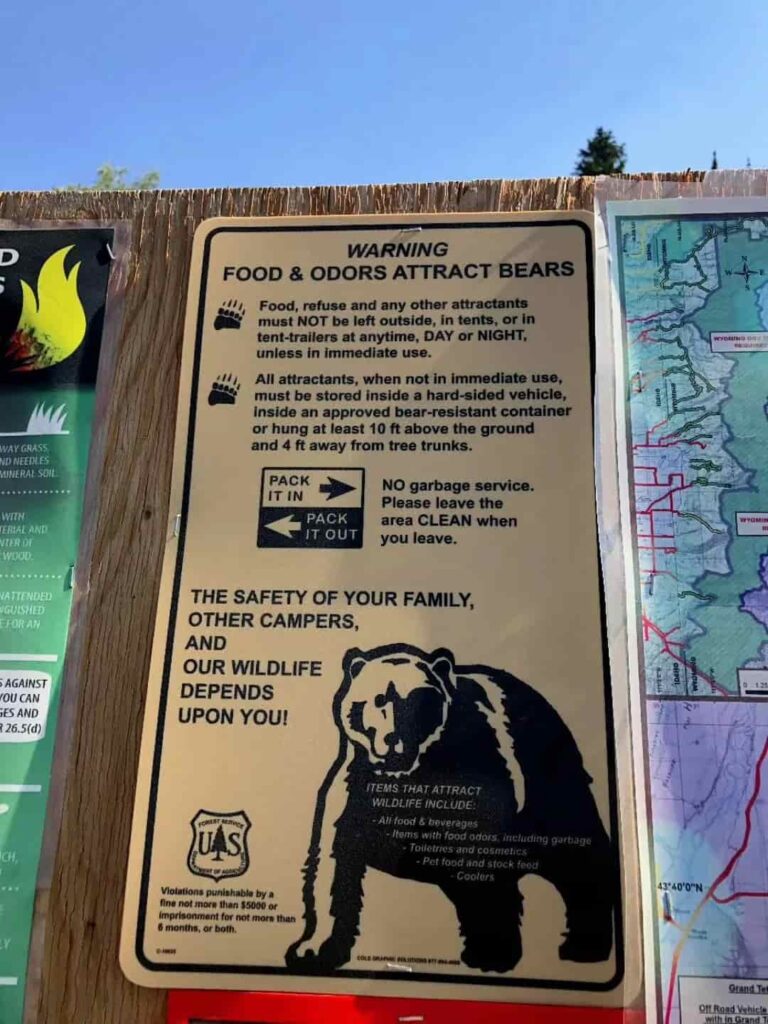
Listen. We need to have a serious talk about bears. They are not your friends. They are not gentle giants who want to hug you. They are 400-pound eating machines with a nose that can smell a granola bar from three counties away.
Most parks require hard-sided bear canisters. Some provide metal “bear boxes” at campsites. Use them. This is not a suggestion.
Never, ever leave a cooler in your tent. Do not leave food in your car with the windows cracked. Do not leave a bag of chips on the picnic table while you go for a “quick walk.”
Bears can open car doors. They understand coolers. They have watched humans for years and learned our sloppy habits. If a bear gets human food, it often has to be euthanized. Is that bag of gummy worms worth killing a bear? No. It is not. Store your food properly, or you are basically an accomplice to murder.
Respect "Quiet Hours": The Mountains Are Listening
Here is a fun fact about canyons and valleys: they are giant amplifiers. Sound travels in ways you cannot comprehend. If you are talking at a normal volume at midnight, someone camping half a mile away is hearing your entire conversation about your coworker Brenda.
Most parks enforce “Quiet Hours” from 10:00 PM to 6:00 AM. This means no loud music. No yelling. No drunken philosophical debates about the universe.
Keep your voices low. Whisper if you have to. Turn off your phone notifications. Let the natural sounds of the night take over. The owls will thank you. Your neighbors will definitely thank you. And you might actually hear the profound silence that makes these places so special.
Use Only Heat-Treated Firewood: The Insect Apocalypse
You love a campfire. We all love a campfire. It is primal and cozy and perfect for roasting marshmallows. But you cannot just bring firewood from your backyard.
Here is why: bugs. Specifically, invasive insects like the emerald ash borer. These tiny terrors hide inside firewood. You transport them to the park, they escape, and suddenly an entire forest dies.
Parks require heat-treated firewood. Buy it locally. Buy it inside the park. There is usually a bundle for sale near the camp store. It costs a few dollars. Pay it.
Do not pick up dead wood from the forest floor either. In many parks, that wood is part of the ecosystem. It provides habitat for insects and small animals. Plus, burning random wood might be illegal.
Stop the insect apocalypse. Buy the fancy bundled wood. Your conscience will feel lighter, even if your wallet does not.
Follow the "Rule of Thumb" for Wildlife: Selfies Aren't Worth It
Bison look fluffy. They look like giant, shaggy cows that might let you pet them. This is a lie. Bison are fast. They are strong. They will absolutely gore you if you get too close.
Here is a simple test: hold your arm out straight. Stick up your thumb. If you cannot cover the entire animal with your thumb, you are too close.
This applies to everything. Bears. Elk. Moose. Even those cute marmots might bite your finger off if you try to hand-feed them.
Never approach wildlife for a selfie. I do not care how good the lighting is. I do not care about your Instagram grid. The animal does not want a photo. It wants to eat grass and be left alone.
Back away slowly. Use a zoom lens. Admire from a distance. The only thing you should share with a wild animal is the trail, not your personal space.
Keep Pets on Leash and on Pavement: Fido is a Predator
You love your dog. I love dogs. Dogs are wonderful. But in a National Park, your fluffy friend is a predator.
Birds see dogs as threats. Squirrels panic. The scent of a dog can stress out local wildlife for hours after you leave. Many parks have strict rules: dogs on leash, and dogs only on pavement.
Check the specific park’s “B.A.R.K.” ranger program. Some parks allow dogs on certain trails. Most do not. Do not be the person who sneaks their dog onto a hiking trail “just this once.” You are stressing out the ecosystem, and you are also probably breaking the law.
If you want to hike with your dog freely, consider National Forests or Bureau of Land Management land. They are often more pet-friendly. Save the National Parks for walks on paved paths and short loops.
Use Provided Dump Stations: The Ground is Not a Toilet
This section is gross, but necessary. We need to talk about your RV waste.
You have a gray-water tank (soapy water from your sink and shower). You have a black-water tank (sewage from your toilet). Under no circumstances should you dump either of these on the ground.
It seems obvious, right? Yet every year, rangers find soapy water dumped behind campsites. They find bags of… well, you know… left in the woods.
It is disgusting. It is unsanitary. And it attracts animals.
Campgrounds provide dump stations. They have concrete pads and hoses and proper drainage. Use them. It might cost a few dollars. It might be a little inconvenient. That is the price of not turning the beautiful forest into a toxic waste site.
Dispose of Waste in Animal-Proof Bins: The Lid is Not Optional
National Parks use heavy-duty trash cans. They have latches. They have locks. They are designed to keep raccoons and bears from turning your garbage into a buffet.
Here is the rule: put your trash inside the can. Close the lid. If the can is full, do not leave your bag on top. Do not set it next to the can. Do not hope that the “trash fairy” will come and take it away.
If the bin is full, you have two choices: keep your trash in your vehicle until you find an empty bin, or take it with you when you leave the park.
Leaving trash on the ground is how animals learn to associate humans with food. That leads to aggressive animals. That leads to animals being killed. Put your trash where it belongs. It is not complicated.
Stick to Durable Surfaces: That Crust is Older Than Your Grandmother
In some parks, the ground is alive. In places like Arches National Park or Yellowstone’s thermal areas, the soil has a biological crust. It is a fragile community of mosses, lichens, and bacteria. It took decades to form.
One footstep can destroy a hundred years of growth.
Stay on the boardwalks. Stay on the paved trails. When they tell you not to step off the path in thermal areas, they are not being controlling. They are trying to stop you from falling into a boiling hot spring and dying horribly. (That happens, by the way. It happens a lot.)
The crust is fragile. The ground might be thin. The water might be scalding. Follow the trail. It is there for a reason.
Practice "Night Sky" Etiquette: Let There Be (Less) Light
National Parks are some of the last places on Earth where you can see a truly dark sky. The Milky Way stretches overhead like a river of stars. It is breathtaking.
Then someone turns on a white headlamp and ruins everyone’s night vision.
Use a red-light filter on your headlamp. Red light preserves your ability to see in the dark. It also does not blind your neighbors.
Turn off outdoor lanterns when you are not using them. Put away your phone. If you must check something, shield the screen.
Stargazing is a shared experience. Do not be the person who turns the campsite into a Walmart parking lot. Let the darkness embrace you. It is beautiful out there.
Check the "Ranger Board" Daily: Nature Changes Its Mind
National Parks are not static museums. They are dynamic, wild places. Trails close. Weather changes. Predators move through areas.
Every visitor center has a “Ranger Board.” It is usually a whiteboard or a bulletin board with handwritten updates. Check it. Read it. Absorb the information.
Maybe a bear was spotted on the trail you wanted to hike. Maybe a bridge washed out. Maybe there is a heat advisory.
Rangers post this information to keep you safe. They are not trying to ruin your plans; they are trying to keep you alive. Be flexible. Have backup plans. Nature does not care about your itinerary.
Never Collect "Souvenirs": Leave It for the Next Guy
You found a cool rock. You spotted a beautiful fossil. You discovered an old arrowhead. Congratulations! Now put it back.
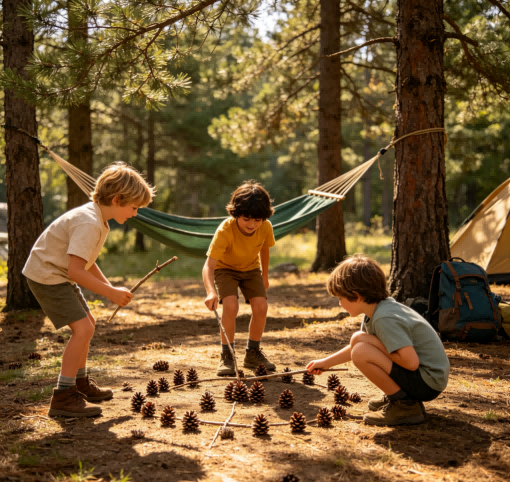
It is illegal to remove anything from a National Park. Rocks, plants, fossils, artifacts, antlers, pinecones—none of it belongs to you.
Take a photo. Draw a picture. Write a poem. But leave the object exactly where you found it.
If every visitor took one rock, the park would be empty in a decade. The landscape is a shared treasure. Admire it, appreciate it, and leave it for the next person to discover. Plus, the fines for removing artifacts are hefty. Not worth it.
Use Dedicated Dishwashing Stations: Soap is Not Food
You made a delicious pasta dinner. Your pot is greasy. You walk to the drinking water spigot and start scrubbing.
Stop. Do not do this.
Food scraps wash off your pots. Those scraps attract rodents, raccoons, and bears. If you wash your dishes at the drinking water spigot, you are basically setting up a buffet line for wildlife.
Many campgrounds have dedicated dishwashing sinks. They are usually near the restrooms. They have drains that go somewhere appropriate. Use those.
If your campground does not have a dishwashing station, use a basin. Carry your wash water at least 200 feet from any water source. Strain out the food scraps and pack them out with your trash. It is more work, but it keeps the critters away from the drinking water.
Be Prepared for No Cell Service: You Are On Your Own
Here is a shocker: deep canyons and remote valleys do not have great cell reception. In fact, they often have zero reception.
Download offline maps before you enter the park. Apps like AllTrails, Gaia GPS, or even Google Maps allow you to download specific areas for offline use.
Tell someone your plans. Write down your itinerary. Leave a note on your dashboard if you are hiking.
When you lose service, you lose your ability to call for help. You become responsible for your own navigation and safety. It is empowering and terrifying at the same time. Be ready for it.
Yield to Uphill Hikers and Horses: Gravity is a Thing
Trail etiquette is simple, yet people mess it up constantly.
Hikers going uphill have the right of way. They are working hard. They have momentum. If you are heading downhill, step aside and let them pass.
Everyone yields to horses and pack animals. Mules, llamas, horses—they all get priority. Step off the trail on the downhill side. Stay quiet. Let the animals pass without startling them.
It is about safety and courtesy. The animals are working. The uphill hikers are struggling. Be a decent human and let them go.
Pay Your Entrance Fees: It Costs Money to Run a Park
National Parks are not free. They cost money to maintain. Trails need repairs. Rangers need salaries. Bathrooms need cleaning.
When you pull up to the entrance booth, have your payment ready. If the booth is empty, use the self-pay kiosk. Put the envelope in the box. Display your pass on your dashboard.
These fees go directly toward conservation and maintenance. Skipping out on the fee is stealing from the park. It is stealing from yourself, really, because you are robbing the park of the funds it needs to stay beautiful.
Pay the fee. Buy the annual pass. Support the system that protects these places.
Conclusion: Becoming a Part of the Legacy
National Parks thrive when visitors act as partners rather than consumers. You are not just buying a ticket to look at a view.
You are accepting a role in a long, ongoing story of conservation. Camp responsibly.
Follow the rules. Reduce the burden on the rangers. Help maintain the integrity of these wild spaces.
The highest compliment you can receive as a camper is simple: it looks like you were never there at all.
Disappear into the landscape, and let the wilderness remain exactly as it was.