Hello, fellow purveyors of pain and enthusiasts of exhaustion!
Let’s be honest: hiking can be a glorious, soul-affirming experience, but it can also be a sweaty, blister-ridden, gear-scattering mess.
I’ve spent years on trails, from serene day hikes to multi-day slogs where I’ve questioned all my life choices.
Through this extensive research (read: making every mistake possible), I’ve learned a crucial truth.
It’s not always the grand, expensive gear or Herculean fitness that makes the difference.
Nope. It’s the tiny, almost-silly habits.
The little things you do without thinking that separate a sublime nature connection from a comedy of errors starring you.
Alright, let’s get into these 13 smaller-but-mightier-than-a-mouse-in-a-hiking-boot habits that will transform your trail life.
Table of Contents
1. Reusable Zip Ties: The Duct Tape of Organization
Let’s start with something so simple, so cheap, and so gloriously versatile that you’ll slap your forehead for not thinking of it sooner: the humble reusable zip tie.
I’m not talking about the single-use plastic ones you have to cut off. I mean the wonderful, clicky, release-and-reuse kind.
These little wonders weigh nothing and solve a multitude of problems.
My favorite use? Attaching my horrifically damp, post-river-crossing socks to the outside of my pack to dry while I hike.
No more fumbling with carabiners or hoping they’ll stay clipped on.
Just zip-tie those stinky beauties right to a daisy chain and let the sun and wind work their magic.
It’s like a little laundry flag announcing, “A Tired Hiker Passed This Way.”
They’re also brilliant for securing loose straps that keep whipping you in the face, bundling tent poles, or, my personal pro-tip, keeping your backpack off the ground when you’re using a trekking pole tent.
Just loop one through a strap and around your trekking pole handle. It’s a simple trick that keeps creepy crawlies, damp earth, and curious rodents from treating your expensive pack like a new apartment complex.
2. The “Journey Home” Care Package
You’ve summited. You’ve soaked in the views. You’ve hobbled back to the trailhead on feet that feel like overstuffed sausages.
The hike is over! Now comes the two-hour drive home. This, my friends, is where many a triumphant hike turns into a grim, silent ordeal of discomfort.
Do not underestimate the power of the “Journey Home” care package stashed in your car.
This isn’t just a bag; it’s a beacon of hope. Inside, you will find:
- Crocs or Sandals: The moment you unlatch those hiking boots, your feet will sigh with a relief so profound it might create its own weather system. Crocs are perfect because they accommodate swollen feet and let your battered toes breathe. Plus, they’re hygienic. You do not want to drive in the same boots you’ve been sweating in for 12 hours.
- A Fresh Water Bottle: Not your trail-filtered, slightly-funky-tasting water. A crisp, cold, store-bought bottle of water waiting for you is liquid heaven.
- Clean Clothes and Snacks: A soft cotton t-shirt and comfortable pants feel like a five-star spa treatment after days in technical fabric. Pair that with a snack that isn’t a granola bar or trail mix (I’m partial to a bag of salty chips), and you’ve just upgraded your post-hike life by about 500%.
The simple act of washing your feet with a water bottle and sliding them into those Crocs is a ritual so cleansing, it borders on the spiritual.
3. Foot Care: A Love Story (With Breaks)
Your feet are your tires, your shock absorbers, your trusty steeds. Treat them poorly, and they will rebel in the most painful way possible: blisters.
I’ve learned that proactive foot care is less of a chore and more of a mandatory romance.
This means taking dedicated sock-and-shoe-off breaks. Every few hours, find a nice rock, plop down, and free those puppies.
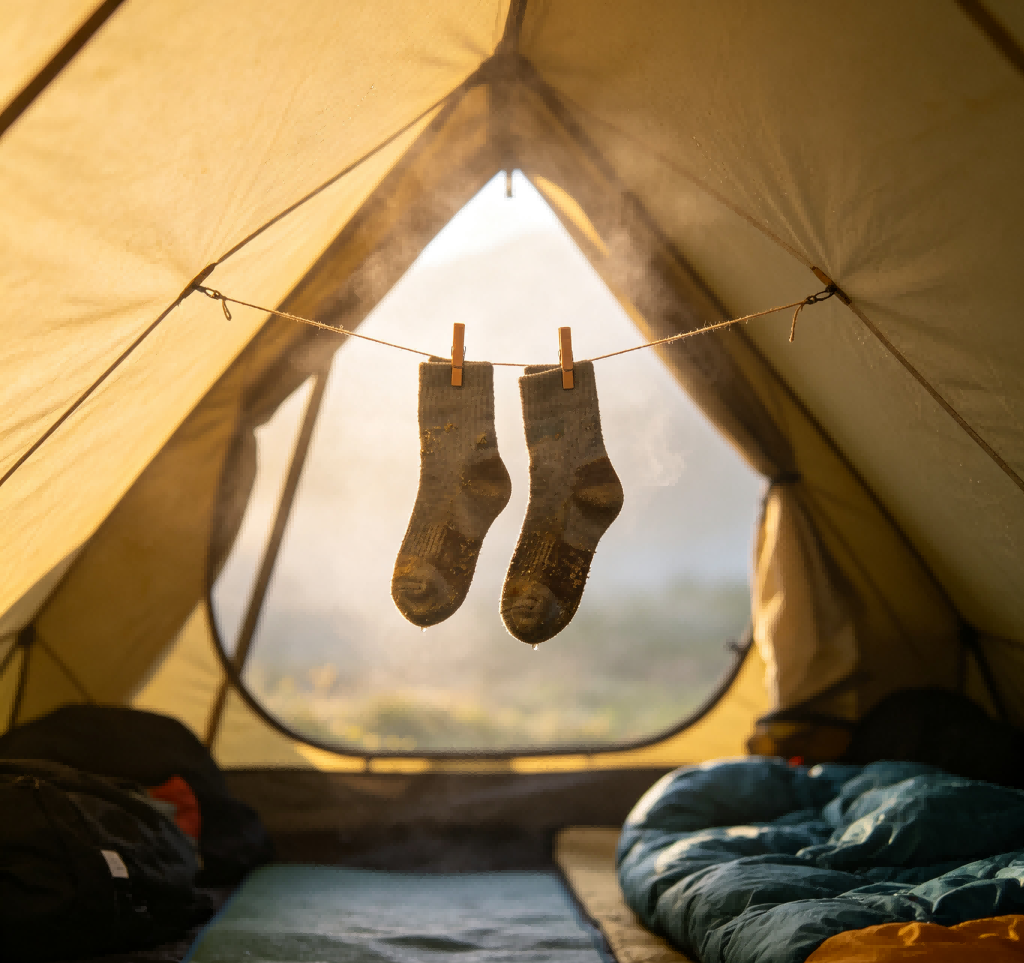
Let them air out. Then, take your damp socks and turn them inside out. Drape them over a sun-drenched rock or a branch.
In 15 minutes, you’ll have noticeably drier, happier socks. It’s like hitting the reset button on your foot comfort.
I also plan these breaks, whenever possible, near a water source.
Why? Because being able to wash the grime and sweat off your feet and ankles before putting your socks and shoes back on is a game-changer.
It reduces friction and grit, the two main architects of blister-town. It feels decadent, but it’s just smart hiking.
4. The Sacred Ritual of the Sleep Sock
After a long day on the trail, slipping into your sleeping bag is a top-tier life experience.
But slipping into that bag with a clean, fresh pair of socks? That’s nirvana. This is non-negotiable.
The trick, of course, is having a clean, dry pair. This is where Habit #4 dovetails with Habit #1.
During the day, when you stop for lunch by a stream, wash the socks you slept in the night before.
Wring them out, and then, using a reusable zip tie (see?!), secure them to the outside of your pack.
As you hike, they’ll dry in the sun and breeze. By bedtime, you have a pristine pair of sleep socks ready to cradle your feet in soft, odor-free comfort.
It makes your sleeping bag feel like a clean sanctuary, not just a sweaty cocoon.
5. The “Don’t Lose Your Mind” Sack
Mornings on the trail are a special kind of chaos. You’re bleary-eyed, possibly cold, and trying to pack up efficiently.
This is when small, crucial items have a tendency to vanish into the void. Your headlamp, your lighter, your spoon, your sanity.
My solution? The “Don’t Lose Your Mind” sack. It’s a simple stuff sack or, even better, the empty bag your tent came in.
Throughout the evening and morning, every small, essential item goes directly into this sack. Instead of having a dozen tiny objects scattered around your tent site, you have one single, easy-to-spot bag.
When it’s time to pack up, you just grab the sack and stow it. No more frantic pat-downs or the dreaded, “Has anyone seen my…?”
It’s the ultimate defense against morning-brain.
6. The Paranoid Double-Check
We’ve all been there. You’re a mile down the trail, feeling good, when a cold dread washes over you.
Did I leave my favorite knife on that log? The “Paranoid Double-Check” is designed to eliminate this specific flavor of agony.
Before you hoist your pack and march off from any rest stop, lunch spot, or campsite, do a visual sweep of the area.
Then, do a second one. Walk a slow circle around where you were sitting. Look under rocks, behind trees.
I’m not saying you need to do a full-on forensic investigation, but those two deliberate scans will catch 99% of forgotten items.
It takes 30 seconds and saves you the frustration of backtracking or, worse, losing a piece of gear you’re deeply fond of.
7. Earplugs: A Silent Night for a Solid Sleep
I used to be a purist. “I want to hear the sounds of nature!” I’d proclaim. And then I spent a night listening to a mouse rustle a leaf approximately 47,000 times, two inches from my head.
The romance of nature’s symphony quickly fades when the symphony is just one rodent with a persistent cough.
Enter: earplugs. My initial hesitation was about safety, but if you’ve properly stored your food (away from your tent, in a bear canister or hang), there’s no smell to attract large animals.
The sounds you’re blocking out are the tiny, sleep-shattering ones—the crinkling of your tent mate, the wind flapping the nylon, that mouse.
The silence they create is profound. You’ll sleep deeper and wake up more refreshed. The funny thing is, after a few weeks on a long trail, you get so tired that you become accustomed to the noises, and you might not need them anymore.
But for those first few crucial nights, they are a sleep-saver.
8. An Unpleasant Topic: The Trail Trots
Let’s talk about something no one wants to talk about, but every hiker fears: diarrhea. The dreaded “Trail Trots.”
It’s uncomfortable, dehydrating, and can ruin a trip faster than a bear eating your breakfast.
The cause is often poor hygiene, not bad water. You’re touching dirty tent straps, muddy trekking poles, and then… making dinner.
The solution is militant hand sanitizing. I keep a small bottle right in my “Don’t Lose Your Mind” sack and use it religiously before I touch any food.
But here’s a hack I learned the hard way: boil your utensils. After you’ve cooked your meal, drop your spork or knife into the hot water still in your pot for a minute.
It kills any bacteria. Also, avoid those super-short backpacking toothbrushes. If your fingers are touching your mouth while you brush, you’re just transferring bacteria.
A longer-handled brush is a simple, effective defense.
9. The Headlamp Hang
You’re cozy in your tent, ready for sleep. Where does the headlamp go?
If you leave it lying around, it’s the first thing you’ll fumble for in the dark.
If you wear it around your neck, you’ll accidentally activate the blindingly bright LED straight into your own retinas.
The solution is elegant in its simplicity: hang it. I always hang mine from a zipper pull at the very top of my tent door.
It’s perfectly positioned to provide ambient light for reading or finding something, and it’s the first thing my hand touches when I need to get up in the middle of the night.
No fumbling, no accidental face-blinding. It’s a tiny detail that makes the tent feel more organized and civilized.
10. The Mighty Fanny Pack (or Bumbag)
I can hear the fashion police sirens already. I don’t care. The fanny pack, worn over the shoulder or around the hips, is the single best piece of “quick-access” gear you can own.
It saves you from the exhausting ritual of taking your backpack on and off a dozen times a day.
What goes in the fanny pack of power? The essentials you need throughout the day:
- Hand sanitizer
- Phone (for photos, not calls!)
- Sunscreen
- Wallet/ID
- Lip balm
- Spare headlamp batteries
- Headphones
And here’s the bonus tip: always carry a gallon-sized Ziploc bag in your fanny pack. When the heavens open up, you can put the entire fanny pack inside the Ziploc.
Instant rain protection for your most vital items.
11. Silica Gel: The Unsung Hero of Electronics
You diligently pack your phone, power bank, and GPS in a waterproof dry sack.
Good! But what happens if that sack gets a tiny, unnoticed puncture, or moisture gets in from the humid air? Condensation can be a killer.
The solution is to toss a few of those little silica gel packets (the “Do Not Eat” desiccants you find in shoe boxes and electronics packaging) into your dry sack with your electronics.
They actively absorb ambient moisture, providing an extra layer of protection for your expensive gear.
It’s a zero-cost, zero-weight insurance policy against a very expensive problem.
12. Bonus: Summer Hiking Sleep Hacks
Summer hiking brings its own special hell: the sweltering, sticky, pre-sleep misery.
You’re too hot for your sleeping bag, but the bugs are out if you unzip the tent. My secret weapon? A small, lightweight microfiber towel.
Right before bed, give yourself a quick wipe-down with the dry towel. It gets the slick layer of sweat off your skin, and the evaporation provides an instant cooling effect.
It’s shocking how much fresher you feel. During a brutally hot day hike, you can even dampen the towel in a stream and drape it over your head or neck.
It’s a personal, portable air conditioning unit.
13. The Coffee & Tent Tango
My final habit is about the morning routine. I am a coffee devotee. My morning cup is sacred.
But I used to make a critical error: I’d brew and drink it before breaking down my tent.
This led to a leisurely, drawn-out morning that often meant hiking in the hottest part of the day.
I flipped the script. Now, I break down my entire camp first. I pack everything except my stove and mug.
Then, and only then, do I boil water for coffee. The reward for my efficiency is a hot cup of coffee that I can enjoy unburdened, often while walking or at a much nicer viewpoint further down the trail, bathed in morning sun.
It makes the departure faster and the coffee feel more like a reward than a prerequisite. Experiment with your own routine—this small timing shift can make mornings infinitely smoother.
Conclusion
So, there you have it. 13 seemingly minor habits that, when combined, create a hiking experience that is more comfortable, more efficient, and infinitely more enjoyable.
From the organizational genius of a reusable zip tie to the life-altering comfort of a post-hike Croc, it’s the little things that pave the way for the big adventures.
What about you? What are your tiny, brilliant hiking hacks? Share them in the comments below—I’m always looking for new ways to optimize my trail life.