Camping at night is terrifying.
You zip yourself into a thin nylon cocoon while the wilderness outside transforms into a live-action horror movie soundtrack. Every rustle becomes a bear.
Here’s the thing, though. Real campsite security isn’t about being scared.
A secure campsite lets you sleep soundly. It protects your gear from wildlife, weather, and those occasional humans who think “finders keepers” applies to your expensive cooler.
We’re about to walk through fifteen essential steps that’ll transform your campsite from “potential snack bar for bears” to “impenetrable overnight fortress.”
Table of Contents
1. Store All "Smellables" in Bear-Resistant Containers
Here’s something the cartoons never told you. Bears have noses that make drug-sniffing dogs look like they have colds.
We’re talking about everything. Food, obviously. Trash, definitely. Toiletries, absolutely. That flavored lip balm you love? Yep, that too. Toothpaste, deodorant, even the granola bar wrapper you swear is empty.
Bears don’t care about your excuses. They smell minty freshness and assume there’s a toothpaste factory hidden in your tent.
These items need to go in bear canisters. Hard plastic containers that bears treat like frustrating puzzles. If you’re car camping, the trunk works too. Just remember: cars have windows. Bears have claws. Choose your storage wisely.
The golden rule here is simple. If it has a scent stronger than “dirt” or “pine needle,” it doesn’t sleep near you.
2. Utilize a "Bear Hang" or Cable System
Sometimes bear canisters aren’t available. Maybe you’re backpacking. Maybe you forgot yours at home because you were too busy remembering everything else.
Enter the bear hang. It’s like a piñata, except the prize for breaking it open is a bear getting really good at breaking into things.
Here’s the math problem nobody wanted. Your food bag needs to hang at least twelve feet up. That’s roughly two average adults standing on each other’s shoulders. It also needs to be six feet away from the tree trunk horizontally. Think of it as an “L” shape.
Why the distance? Because bears climb trees. They’re actually terrifyingly good at it. If your bag hangs close to the trunk, congratulations. You’ve just made a bear’s life easier.
The perfect branch is sturdy enough to hold the weight but too thin for a bear to crawl across. It’s a Goldilocks situation, except Goldilocks gets eaten if she guesses wrong.
Practice this during daylight. Nothing builds character like trying to throw a weighted rope over a branch at midnight while convinced something is watching you.
3. Keep a "Clean Camp" Throughout the Day
Here’s where most campers fail. They’re angels during meal prep. Everything gets put away. Surfaces get wiped. Then afternoon hits and suddenly there’s a goldfish cracker on the ground and nobody cares.
That single cracker matters.
Mice care about that cracker. Mice attract snakes. Snakes attract nothing good for your sleeping bag. Also, raccoons have apparently mapped every campground on earth and know exactly when careless humans leave snacks out.
Don’t wait until dark to clean. Pick up constantly. Check under tables. Scan around your chairs. That tiny piece of beef jerky that fell from your sandwich? It’s a dinner bell for every creature within a mile radius.
Micro-trash is real. Food drippings on tables matter. Wipe them down. A clean camp during the day means a quiet camp at night.
4. Lock Expensive Gear to Stationary Objects
People steal things. It’s sad but true. Even in nature, where we’re all supposed to be communing with trees and finding ourselves, someone’s looking for your bicycle.
Bikes disappear from campsites constantly. High-end coolers walk away. Kayaks suddenly decide to explore the world without their owners.
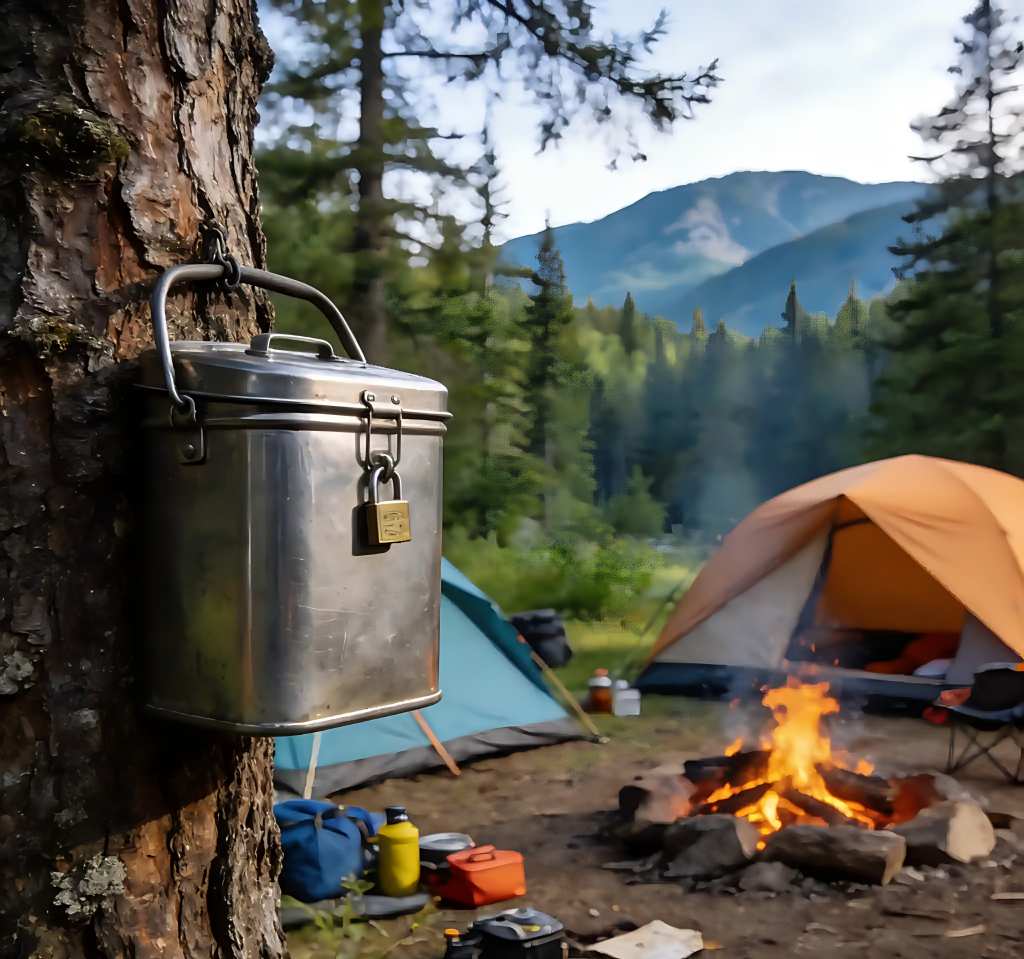
The solution is simple and cheap. Buy a lightweight cable lock. Thread it through your expensive items and around something that doesn’t move. Trees work great. Permanent campsite posts work even better.
Is it foolproof? No. Someone with bolt cutters can defeat any lock. But here’s the thing about thieves. They’re lazy. They want the easy score. When they see your bike secured to an oak tree, they’ll move on to the unlocked bike three sites down.
Make your gear the hardest target. That’s the whole game.
5. Stow Small Valuables in Your Vehicle or Tent
Electronics don’t belong on picnic tables overnight. Neither do wallets, keys, or that expensive headlamp you bought because it could signal passing satellites.
Here’s what happens at 2 AM. A raccoon discovers your iPhone. It’s warm. It has a shiny screen. The raccoon doesn’t care about your data plan. It cares about chewing something interesting.
By morning, your phone is either in a pond or scattered across the campground in pieces that resemble modern art.
Keys left out are even worse. Animals move them. Weather damages them. People steal them. Then you’re stuck in the wilderness explaining to a ranger why you need help because a squirrel relocated your car starter.
The rule is simple. If you’d cry if it disappeared, it sleeps where you sleep. End of discussion.
6. Set Up Motion-Activated Lights
Darkness is nature’s camouflage. Animals love it. Creepy humans love it even more. Take away the darkness and suddenly everyone’s a lot less comfortable.
Small battery-powered motion lights work wonders. Place them around your campsite perimeter. Point them at approaches, not at your tent unless you enjoy being blinded every time you roll over.
Here’s what happens. A curious raccoon wanders in at 3 AM. The light clicks on. The raccoon has a tiny heart attack and flees. You vaguely register some commotion but stay safely in your sleeping bag.
The lights serve two purposes. They scare off animals and alert you to movement. If something triggers your lights, you wake up. You assess. You grab your bear spray if necessary.
It’s perimeter security for people who don’t want to install actual fences. Plus, they make your campsite look like a miniature military installation, which is objectively cool.
7. Keep Your "Protection" Accessible
Bear spray in the bottom of your backpack helps nobody. It might as well be in another dimension when a curious bear investigates your tent at midnight.
Your protection needs to live inside your sleeping bag with you. Or at least in that tiny mesh pocket six inches from your head.
We’re talking about options here. Bear spray is the gold standard. It works on bears, obviously. It also works on two-legged threats if necessary. A high-lumen tactical flashlight blinds whatever’s out there and lets you identify threats. Personal alarms create noise that scares wildlife and alerts other campers.
The key word is accessible. You shouldn’t have to sit up, unzip things, and rummage around. You should be able to grab it while still horizontal and half-conscious.
Practice this. Seriously. Lie in your sleeping bag and reach for where your bear spray lives. If you can’t find it immediately, rearrange. Your midnight self will thank you.
8. Establish a "Kitchen" 200 Feet Away
Here’s the mistake beginners make. They cook right next to their tent. It’s convenient. It’s easy. It’s basically sending engraved invitations to every bear in the county.
Food odors linger. They soak into fabric. They drift on breezes. When you cook where you sleep, you’re telling the wildlife exactly where to find the human-flavored snacks.
The solution requires some walking. Set your kitchen up at least 200 feet from your tent. That’s about seventy adult steps. Count them if you’re unsure.
Cook there. Eat there. Clean up there. Then walk back to your tent alone, leaving the food smells behind.
Bears follow food smells. When they reach your kitchen area and find nothing but clean dishes and sealed containers, they get confused. They wander off. Your tent, upwind and uninteresting, never enters their consideration.
Distance creates safety. Use your legs to create it.
9. Zip and Secure Tent Doors
This sounds obvious. It’s not.
Campers get tired. They make one last trip to the bathroom. They leave the tent unzipped “just for a minute.” That minute becomes thirty. Meanwhile, nature explores.
Snakes seek warmth. They find your sleeping bag. Spiders explore new territory. They find your pillow. Scorpions, if you’re in certain areas, treat open tents like luxury condos.
None of these creatures intend harm. They’re just living their lives. But waking up with a scorpion on your chest tends to ruin the whole “peaceful nature experience” vibe.
Zip up every time. Even when you’re just stepping away for a moment. Even when it’s hot and you want airflow. Even when you’re absolutely certain nothing will happen.
Because nothing happens until it does. Then you’re the person screaming at 3 AM about a snake in your shoe.
10. Tidy Up the Campsite Perimeter
Trip hazards are real. Darkness amplifies them.
You wake up at 2 AM because nature calls. You stumble out of your tent, half asleep, relying on muscle memory. Then your foot catches a guy line you forgot existed. Then you’re face-down in the dirt wondering if your nose still works.
Beyond the personal injury aspect, clutter hides threats. A messy campsite has a hundred places where small animals can hide. Snakes love cluttered areas. Rodents build highways through scattered gear.
Clear paths matter. Arrange your gear so there’s an obvious route from tent to bathroom and from tent to car. Keep these paths free of obstacles.
The secondary benefit is visual. A tidy campsite looks occupied and organized. It signals that the people here have their act together. That alone discourages both wildlife and wandering humans from getting too comfortable in your space.
11. Retract or Secure Your Awning
This one’s for the van and camper crowd. Awnings are wonderful until they’re not.
Wind comes up fast at night. One gust catches your extended awning and suddenly you’re watching your vehicle get airborne. Okay, not airborne exactly. But the damage is real. Bent arms, torn fabric, possibly a flipped camper if things get really exciting.
The rule is simple. If you’re sleeping, your awning isn’t extended. Period.
Some people risk it on calm nights. Those people wake up at 4 AM to violent flapping sounds and the realization that they’re about to lose a thousand dollars worth of equipment.
Even if you secure it with straps and stakes, retracting is safer. Stakes pull out. Straps loosen. Metal fatigues. The only truly secure awning is the one tucked safely against your vehicle.
Sleeping inside means everything outside should be secured for sleep too.
12. Douse Your Campfire Completely
Campfires are magical. They’re also the number one cause of “oh no” moments in the outdoors.
Here’s what doesn’t work. A light sprinkle of water. Kicking dirt on top. Assuming it’ll burn out on its own. These methods create the illusion of safety while embers continue smoldering underneath.
The correct method is aggressive drowning. Pour water. Stir the ashes with a stick. Pour more water. Stir again. Feel for heat with your hand close to the mixture. If it’s warm, add more water.
Continue until the ashes are cool enough to touch comfortably. Not just cool enough to not burn the forest. Actually cool. Room temperature. Unambiguously extinguished.
Why does this matter? Wind shifts at night. It carries embers. Embers find dry leaves. Dry leaves find your car, your tent, or the entire forest you’re supposed to be enjoying responsibly.
A cold fire pit means safe sleep. Hot embers mean potential disaster. Choose wisely.
13. Introduce Yourself to Neighbors
This sounds like social anxiety fuel. It’s actually survival strategy.
Walk over to nearby campers. Wave. Say hello. Exchange basic information like where you’re from and how long you’re staying. That’s it. No commitment to friendship required.
Here’s what happens next. Those neighbors now know your face. They’ve heard your voice. When they see someone lurking around your site at midnight, they’re more likely to notice. More importantly, they’re more likely to say something.
Campgrounds operate on community watch principles naturally. People look out for each other. But they look out harder for people they’ve actually met.
A quick hello establishes presence. It says “we’re here, we’re paying attention, and we have neighbors who know us.” That alone discourages campsite thieves who prefer anonymous, disconnected setups.
Plus, you might make friends. Worst case, you exchange awkward pleasantries and never speak again. The security benefit remains either way.
14. Use "Do Not Disturb" Signs or Gear Markers
This is psychological warfare against campsite confusion.
In busy campgrounds, sites can look similar. Tired hikers wandering back from bathrooms might mistake your tent for theirs. “Site jumpers” looking for unoccupied spots might decide yours looks empty enough.
Prevent this with obvious occupancy markers. Leave a pair of boots by the tent door. Set a recognizable chair out. Hang something distinctive from your picnic table. These small signals say “someone lives here” without you having to stand guard.
The effect is subconscious but powerful. People see personal items and immediately register that the space is claimed. They move on without conscious thought about why.
For van dwellers, a simple “Do Not Disturb” sign on the door works wonders. It prevents the 6 AM knock from someone who “just wanted to see if anyone was inside.” Yes, that happens. Yes, it’s annoying.
Mark your territory. It’s not just for dogs anymore.
15. Check the Weather One Last Time
Weather lies. The clear sky at 10 PM means nothing at 3 AM.
Before you zip into your sleeping bag, do a final weather check. Look at the sky, sure. But also check your phone if you have service. Weather apps aren’t perfect, but they’re better than guessing.
Then secure accordingly. Put your rainfly on even if rain seems impossible. Tighten guy lines so they hum slightly in the breeze. Stake down anything that might catch wind.
The preparation takes five minutes. The alternative is waking up at 2 AM to rain directly on your face while you scramble for coverage in the dark.
Unexpected weather shifts happen constantly in mountains, near water, during season changes. The campsite that was perfect at sunset becomes a wind tunnel at midnight. Be ready.
Secure first, sleep second. Your future wet self will want to hug your past prepared self.
Conclusion
Take these fifteen steps before you zip into that sleeping bag. Make them habit. Soon you won’t even think about them.
You’ll just naturally secure things, check things, prepare things.
Then the only thing left to focus on is the good night’s rest you came here for. Well, that and the occasional acorn that sounds exactly like a bear outside your tent.
Some sounds you just have to learn to live with.