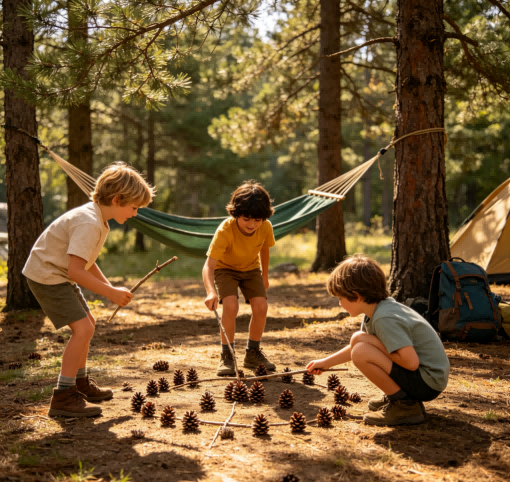
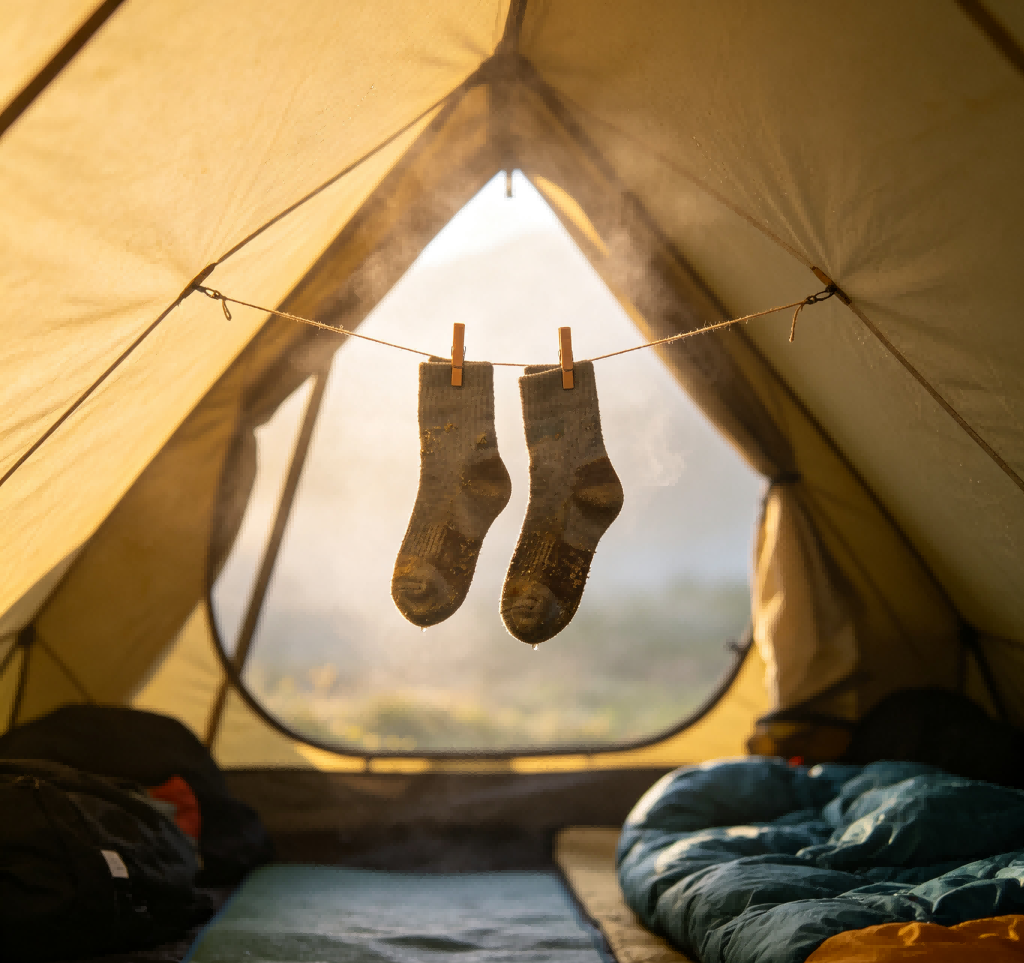
Rain is a natural part of the great outdoors. It might cancel your hike. It might soak your socks completely through. It might turn your campsite into a temporary swamp. It should never, ever cancel your fun.
With a little preparation and a genuinely positive attitude, rainy day activities can honestly become the highlight of your entire trip. Seriously.
Here are twenty-one incredibly detailed ways to save your camping trip from the rain, complete with tips, tricks, and warnings from those who learned things the hard way.
Table of Contents
1. Classic Board Game Tournament
Bring travel-sized versions of your favorite games. Settlers of Catan travels surprisingly well in its compact edition. Monopoly deals fits into tiny spaces with minimal pieces to lose. Scrabble slam comes in a card game format that works perfectly on a sleeping bag.
Hours of competitive fun await your group. The rain outside becomes pleasant background noise. Inside your tent, it’s all-out psychological warfare with dice and tokens.
Tournament style adds legitimate stakes to otherwise friendly gameplay. Keep a visible leaderboard on a paper plate with a marker. Award a champion’s title at the end of the rainy period. The winner gets the last s’more when the fire finally gets started again.
Important pro tip from experienced campers: Leave the thousand-piece jigsaw puzzle at home no matter how tempting it seems. Missing pieces and damp tent floors create unnecessary frustration. Nobody needs that energy. Stick to games that come with all their parts safely contained in one box.
Consider games that don’t require flat surfaces. Card-based games work wonderfully on uneven sleeping bags. Dice games can be played in small containers to prevent losing dice in the tent corners where they inevitably disappear forever.
2. Deck of Cards Marathon
A single deck of cards offers genuinely endless variety for any group size. Poker tests your bluffing skills against family members who know all your tells. Rummy challenges your memory while rain patters overhead. Go Fish delights the youngest campers endlessly. Speed gets hearts racing and hands flying.
Learn one new game together as a group. Watch tutorial videos before your trip and save them offline. Teach everyone else slowly and patiently. Watch the beautiful chaos unfold as rules get misinterpreted and arguments break out about what counts as a valid play.
Cards require absolutely zero batteries to function. They survive getting accidentally dropped in puddles if you dry them carefully. They fit in any pocket for immediate accessibility during sudden downpours.
Keep score on whatever paper you have available. Napkins work great. The back of a receipt works too. The winner buys snacks at the next gas station. The loser does dishes for the entire evening without complaining.
Consider learning classic games like Spades or Hearts for longer engagement. Teach younger players War or Old Maid for simpler entertainment. A single deck truly serves every age group simultaneously.
3. The "Rain Gauge" Experiment
Science saves the day when boredom threatens to win. Set up multiple containers outside your tent before the rain really starts coming down. Use cups of different sizes. Use pots from your cooking kit. Use empty water bottles cut in half carefully with adult supervision.
Measure rainfall every hour on the hour. Make it an event everyone anticipates. Have kids guess amounts before each measurement. How much water will be collected by lunchtime specifically? Who can predict closest to the actual amount without cheating?
Track your guesses on paper with columns for names and predictions. Compare actual results when you empty containers each time. Cheer the winner loudly enough that nearby campers wonder what’s happening inside your tent.
Learning happens accidentally during this activity. Kids genuinely think they’re playing a game. You know it’s education disguised as fun. This is the parenting win of the weekend.
Check containers safely without soaking yourself in the process. Use a long stick to retrieve containers from far away. Position them where you can read measurements through binoculars if necessary. Don’t sacrifice your own dryness for science.
4. Storytelling Relay
Start a story with just one simple sentence. Keep it extremely basic at first. “Once upon a time, a bear stole all our marshmallows while we were sleeping peacefully.”
Go around the circle in order. Each person adds one twist to the ongoing plot. The story goes wildly off the rails within three turns guaranteed.
Encourage absolutely ridiculous directions without any limits. Aliens can invade unexpectedly. Time travel can happen for no reason. Talking squirrels can appear as wise advisors. Nothing is too silly.
Record the entire story on your phone’s voice memo app. Read it back later around the campfire when the sun returns. Laugh at your collective creativity and the bizarre narrative you constructed together.
Kids absolutely shine at this activity. Their imaginations have no boundaries yet. Adults rediscover their own imagination through watching children create. Everyone bonds through shared nonsense that makes no logical sense.
Set a rule that every contribution must be family-friendly. Keep it appropriate for all ears present. The goal is laughter, not awkward silence.
5. Glow Stick Ring Toss
Crack some glow sticks to activate them. They illuminate instantly with satisfying chemical reactions. Dim the tent lights completely for maximum effect.
Set up upright water bottles as targets. Use empty ones for safety reasons. Place them on the flattest ground available inside your tent.
Try tossing glowing rings onto bottles from increasing distances. The rings must land perfectly around the bottle necks. It’s significantly harder than it looks when you’re competing.
Low light adds genuine challenge to every toss. Shadows dance everywhere across tent walls. Missed tosses cause uncontrollable giggles from everyone watching.
Play until sticks fade completely. This usually takes several hours of entertainment. Everyone wins eventually because the game ends when the light dies.
This works great as a pre-nap activity to tire out energetic kids. The dim lighting naturally transitions everyone toward resting afterward.
Important safety note: Keep glow sticks away from small children who might bite them. The liquid inside tastes terrible and shouldn’t be ingested by anyone.
6. Detailed Trip Journaling
Use downtime with genuine purpose. Sketch the rainy scenery outside your tent window. Draw what you remember from yesterday’s adventures before memory fades.
Write down specific memories from previous days. Capture funny moments with exact dialogue if possible. List everything you saw on the trail before the rain started.
Plan your next adventure carefully. Research future trails on downloaded maps. Dream about sunny returns to this very spot.
Use actual paper and pens for this activity. Phones eventually die completely. Pens never run out of battery unexpectedly. Pencils work even when damp.
Future you will thank present you sincerely. Memories fade faster than you expect. Journals don’t forget anything you wrote down.
Let kids illustrate their own versions. Their drawings beat photographs emotionally. Stick figures capture genuine feeling better than high-resolution images sometimes.
Create a shared journal where everyone contributes. Pass it around the circle. Read entries aloud for instant entertainment and nostalgia.
7. Nature Arts and Crafts
Collect items before the rain starts falling. Pinecones work great for multiple projects. Smooth stones are absolutely perfect for painting. Fallen leaves add beautiful natural color.
Create “pet rocks” together as a group. Paint faces on stones with markers or paint. Name your new rock friends appropriately. Build them tiny homes from sticks and leaves.
Make nature collages on paper plates. Arrange leaves artistically before gluing. Glue them to cardboard backing. Admire your finished masterpiece collectively.
Use natural glue if possible for authenticity. Flour and water paste works surprisingly well. Keep the recipe simple though. Nobody needs complicated chemistry during camping.
Clean up completely when finished. Nature stays outside where it belongs. Respect the environment by returning unused items to their proper places.
Bring basic craft supplies specifically for this purpose. Markers, glue sticks, and child-safe scissors pack flat. A small craft kit saves many rainy days.
8. Cardboard Box Construction
Your supplies came in boxes for a reason. Don’t throw them away immediately. Repurpose them for creative construction projects.
Turn boxes into elaborate “forts” together. Cut doors and windows carefully with scissors. Decorate walls with markers and found objects. Move your stuffed animals into their new homes proudly.
Build detailed dioramas of your campsite. Use real leaves for trees realistically. Use small stones for furniture appropriately. Use sticks for people creatively.
Create imaginary worlds limited only by available cardboard. Boxes become medieval castles. Boxes become futuristic spaceships. Imagination fuels everything when supplies are limited.
Collapse everything when finished with your play. Pack flat for responsible recycling later. Leave no trace of your cardboard civilization behind.
This activity keeps children occupied for hours continuously. Adults enjoy participating too. Everyone benefits from creative destruction and reconstruction.
9. Advanced Knot Tying
Learn essential camping knots that actually matter. Bowline creates loops that don’t slip ever. Clove hitch attaches things securely to poles. Figure eight stops ropes from pulling through completely.
Use a guidebook with clear diagrams. Follow instructions step by step patiently. Practice with spare rope repeatedly until muscle memory forms.
Test your knots by hanging something heavy. See what holds best under pressure. Learn from failures when knots slip unexpectedly.
Teach each other different techniques. Share knowledge generously. Compete for the tightest, cleanest knot possible.
These skills last forever once learned properly. Use them on your very next trip. Impress fellow campers with your newfound expertise.
Rope doesn’t mind rain at all. Practice continues despite weather. Productivity feels genuinely good during forced downtime.
Learn at least five different knots before stopping. Practice each one twenty times minimum. Knot tying becomes meditative after initial frustration passes.
10. Shadow Puppet Theater
Position headlamps against tent walls strategically. Turn them on bright setting for maximum effect. Dim all other light sources completely.
Create animal shapes with your hands creatively. Rabbits need long ears made with fingers. Birds require flapping wing movements. Wolves howl silently with proper hand positioning.
Put on a full theatrical performance with multiple acts. Tell an original story using only shadows. Use different voices for each character. Make the audience laugh with unexpected twists.
Kids love watching shadows dance mysteriously. Adults enjoy performing for appreciative audiences. Everyone participates eventually when encouraged.
Record the show on phones for posterity. Watch it back later around the campfire. Cringe at your acting choices collectively.
Keep shadows relatively simple for best results. Complex shapes confuse viewers. Basic animals entertain everyone sufficiently.
Create shadow puppets from paper if hands get tired. Cut simple shapes and attach to sticks. Hold them between light and wall for different effects.
11. Indoor "Olympic" Games
Create low-impact challenges suitable for small spaces. Space is limited inside tents. Creativity is not limited at all.
“Socks-only” long jump works perfectly inside. Slide across tent floor wearing only socks. Measure distance in shoes since rulers are scarce. Award gold medals made from bottle caps.
Coin toss into camping mugs challenges everyone. Stand back slowly increasing distance. Increase difficulty gradually as skills improve. Keep score faithfully on available paper.
Balancing contests happen spontaneously. Walk with books balanced on heads carefully. Stack stones as high as possible. Hula hoop with rope tied in circle.
Cheer loudly for every single participant. Olympic spirit matters more than winning. Friendship triumphs over competition always.
Stay safe during all activities. No tackling allowed whatsoever. Soft landings required for everyone’s safety.
Create medal ceremonies with presentations. Play national anthems from phones dramatically. Make podiums from stacked sleeping bags.
12. The Alphabet Game Marathon
Pick one category together before starting. Animals work well for all ages. Snacks please everyone equally. Movie titles challenge adults appropriately.
Go through alphabet letters in order. Find one item for every single letter. A is for antelope obviously. B is for banana bread ideally.
Take turns suggesting answers around the circle. Skip hard letters temporarily without stress. Come back to challenging letters later.
Keep going until finishing completely. Celebrate reaching Z enthusiastically. High-fives all around for collective achievement.
Play multiple rounds with fresh categories. Change categories often for variety. Stay entertained endlessly through repetition.
Kids learn letters without realizing it. Adults exercise brains during downtime. Everyone has fun collectively.
Write down answers as you go. Review completed lists proudly. Marvel at your collective knowledge.
13. Reading Aloud Sessions
Choose one book carefully before starting. Pick something engaging for all ages. Ghost stories work well for older groups. Adventure tales satisfy everyone’s imagination.
Take turns reading chapters to share responsibility. Pass the book around the circle. Different voices emerge naturally for different characters.
Use dramatic expression throughout performance. Whisper scary parts for maximum effect. Shout exciting moments with enthusiasm. Pause for suspense before reveals.
Listen with eyes closed for deeper immersion. Imagine the scenes playing out. Travel mentally elsewhere while rain falls.
Discuss what happens next between chapters. Predict plot twists confidently. Argue about character motivations good-naturedly.
Rain provides perfect soundtrack for reading. Pattering enhances atmospheric moments. Cozy reading ensues naturally.
Bring books specifically chosen for group reading. Avoid anything too long or boring. Test chapters beforehand for engagement.
14. Harmonica or Ukulele Jam Session
Portable instruments absolutely shine here. Harmonicas fit in any pocket easily. Ukuleles are surprisingly compact. Both sound decent even in amateur hands.
Practice without bothering neighboring campers. Rain muffles noise effectively. Tents absorb sound reasonably well.
Learn one new song together as a group. Teach chords slowly and patiently. Sing along badly but enthusiastically.
Create a rainy day anthem collaboratively. Write silly lyrics about your situation. Compose music on the spot spontaneously.
Pass instruments around so everyone tries. Everyone gets turns regardless of talent. No previous musical experience required.
Laugh at wrong notes instead of cringing. Celebrate small successes enthusiastically. Music brings joy even when imperfect.
Start with simple three-chord songs. Progress to more complex material later. Stop before frustration overwhelms fun.
15. Gear Maintenance Check
Use time productively for once. Clean muddy boots thoroughly inside and out. Wipe them completely dry with towels.
Re-organize your dry bags methodically. Repack everything neatly with systems. Find lost items you’d forgotten about.
Check first aid kit supplies carefully. Replace used bandages immediately. Restock medications before needing them.
Inspect tent for hidden damage. Look for small tears everywhere. Patch them immediately with repair kit.
Clean cooking equipment thoroughly. Scrub pots with available water. Remove food residue completely.
Organize food supplies logically. Plan remaining meals carefully. Prevent waste through proper planning.
Productivity feels genuinely satisfying. Rain passes faster when busy. Gear lasts longer with proper care.
Make checklists before starting. Check everything off proudly. Feel accomplished despite weather.
16. Truth or Dare Camping Edition
Keep it lighthearted for everyone’s comfort. Nothing dangerous allowed whatsoever. No leaving the tent for any dare.
Dares stay simple and achievable. “Eat a spoonful of peanut butter without water.” “Sing a campfire song loudly.” “Imitate a raccoon stealing food.”
Truths stay respectful and appropriate. “Funniest memory from this trip so far.” “Most embarrassing moment ever.” “Favorite camping food surprisingly.”
Laughter guaranteed throughout gameplay. Bonds strengthen through shared vulnerability. Memories created that last forever.
Set ground rules before starting. Everyone must agree completely. Safety comes first always.
Play until tired naturally. Stop when energy runs out. Nap afterwards peacefully.
Have snacks ready for breaks. Hydrate between rounds. Keep playing as long as fun continues.
17. Charades or Pictionary Challenge
Use a notepad for drawing games. Or just your bodies for acting. Either version works perfectly.
Act out famous movies without speaking. Use gestures and facial expressions only. No talking allowed at all. Guess correctly as fast as possible.
Draw camping-related activities quickly. Paddle a canoe obviously. Pitch a tent clearly. Catch a fish understandably.
Teams compete happily against each other. Score on napkins with markers. Winners feel proud of performance.
Simple concepts work best for both games. Complex ideas frustrate players unnecessarily. Keep it basic for maximum fun.
Take turns being performer or artist. Everyone participates equally. No spectators allowed ever.
Time each round for added pressure. Use phone timer dramatically. Race against the clock excitingly.
18. Interactive Map Planning Session
Spread trail maps out completely. Cover the tent floor with paper. Weigh corners down with shoes.
Plot dream hikes together collaboratively. Where should we go next trip? What trails deserve exploration?
Circle interesting routes with markers. Note water sources for planning. Mark scenic viewpoints for future.
Discuss future trips enthusiastically. Plan longer adventures ambitiously. Dream bigger dreams collectively.
Learn map reading skills accidentally. Identify contour lines meaningfully. Understand symbols better through use.
Involve the kids in planning. Ask their opinions genuinely. Value their input completely.
Weather will clear eventually. Be ready when it does. Hit trails immediately after rain stops.
Take photos of marked maps. Save for future reference. Build anticipation for clear weather.
19. Riddle Me This Marathon
Spend an hour puzzling together. Challenge each other constantly. Use logic and brain teasers exclusively.
Find riddles online before your trip. Download them for offline access. Print physical copies if possible.
Take turns reading riddles aloud. Everyone thinks quietly together. Shout answers excitedly when discovered.
Easy riddles warm up brains nicely. Hard ones frustrate productively. Impossible ones create laughter eventually.
Keep hints available for struggling thinkers. Help struggling players kindly. Celebrate correct answers enthusiastically.
Brain exercises feel genuinely good. Mental workouts matter during physical rest. Rain days teach valuable thinking skills.
Keep a running score of correct answers. Award small prizes for winners. Bragging rights matter most though.
20. Rainwater "Cooking" School Adventure
Set out pots carefully to catch water. Collect clean rainwater purposefully. Position them strategically for maximum collection.
Let kids “cook” creatively with supplies. Mud pies are absolute classics. Leaf soup sounds fancy and sophisticated. Stone stew satisfies imaginary hunger.
Strictly pretend only for safety. No eating anything whatsoever. Explain safety clearly before starting.
Stir with sticks found outside gently. Add more ingredients creatively. Serve imaginary meals ceremoniously.
Pretend to taste everything appreciatively. Compliment the chefs generously. Ask for recipes to use later.
Imagination flourishes here wonderfully. Creativity blossoms wildly without limits. Fun multiplies endlessly through pretense.
Clean up thoroughly after finishing. Return nature to normal state. Leave no trace of cooking school.
Take photos of muddy chefs. Document the culinary masterpieces. Laugh at the memories later.
21. The Ultimate Nap Experience
Sometimes doing nothing wins completely. Listen to rain pitter-patter constantly. Feel the canvas vibrate gently.
Catch up on missed sleep. Rest tired muscles completely. Recharge batteries fully for later.
Curling up together works best. Body warmth helps significantly. Comfort increases through proximity.
No guilt allowed whatsoever. Rest is productive always. Sleep heals everything eventually.
Wake up slowly naturally. Stretch gently upon rising. Greet possibly clearing sky hopefully.
Naps save camping trips repeatedly. Don’t underestimate their power. Schedule nap time intentionally.
Use proper sleeping pads for comfort. Arrange pillows supportively. Sleep soundly through the storm.
Conclusion
A rainy day at the campsite tests creativity seriously. It challenges patience constantly. It forces adaptation repeatedly.
Remember, the sun eventually returns faithfully. It always does without exception. When it comes back out, you’ll be well-rested completely. You’ll be closer to your campmates genuinely. You’ll have incredible stories to tell proudly.
Now go enjoy the storm while it lasts. You’re ready for anything.