The human body is a magnificent machine. But after a 15-mile trek with a pack full of gear, it feels less like a machine and more like a bag of mismatched bolts left out in the rain.
When you push past the 10-mile mark, your body isn’t just tired; it’s physically compressed and chemically depleted.
Your spine has shrunk a quarter of an inch. Your hips are furious.
Expanding your recovery repertoire is the best way to ensure those miles don’t haunt your joints the next morning.
Transitioning from “trail mode” to “recovery mode” requires a holistic approach that covers everything from cellular repair to mechanical alignment.
Table of Contents
1. Take a Lame Victory Lap
So, you made it. The summit is conquered. The parking lot is in sight. Your first instinct is to rip off those boots and collapse into the nearest patch of grass like a felled oak. Fight that instinct.
You must keep moving. Just slowly. Think of your veins as a lazy river for your blood. During hard effort, your heart pumps like a maniac to push blood to your legs. If you stop dead, that blood hits a traffic jam. It pools in your calves and feet.
This leads to dizziness and that heavy, “my legs are filled with cement” feeling. A slow, pathetic-looking stroll is the solution. Walk around the parking lot. Admire someone else’s bumper sticker. Stare blankly at a tree. Do this for five to ten minutes. It tells your heart, “Hey, you can slow down now, the highway is clear.” Your circulatory system will thank you by not making you faint.
2. Bow to Your Toes
Your hamstrings just spent hours acting as brakes on every downhill step. They are shortened, angry, and tighter than a miser’s wallet.
Find a curb, a log, or a friendly rock. Place one heel up on it. Keep your leg straight. Now, lean forward. Don’t bounce. Just hang there. Feel the burn? Good. That’s the sensation of your muscles being told to relax.
Reaching for your toes works too, though it might look like you’re bowing to the hiking gods. Hold it for at least thirty seconds. Forty-five is better. You are not just stretching; you are physically resetting the muscle fibers to their factory settings. They got short and cranky on the trail. You are making them long and happy again.
3. Punish Your Hip Flexors
Hip flexors are the unsung whiners of the hiking world. Every single step up, every knee drive, shortens them. By the end of a long hike, they are scrunched up like an accordion in storage.
They will complain. They will make your lower back ache. The fix is undignified but effective. Drop into a deep kneeling lunge. One knee on the ground, the other foot planted forward. Sink your hips forward.
You should feel a deep, satisfying pull in the front of the hip of the kneeling leg. This is the counter-programming. You are telling those tight flexors, “It’s over. You can let go now.” Hold it. Breathe. Your lower back will send you a fruit basket later.
4. Fight a Tree With Your Calves
Your calves have been your primary propulsion system. They deserve a medal, but they’ll settle for a good crushing.
Find a tree. A rock works too. Place your hands on it for balance. Now, treat your calf like a lump of dough. For the gastrocnemius, the big muscle on top, keep your leg straight. Press the belly of the muscle into the tree. Apply pressure. It hurts? Yes. That’s the adhesion breaking up.
Now, bend your knee slightly. This targets the soleus, the deeper muscle underneath. Dig it into the tree. Roll around on it. Look like a bear scratching its back. Do both legs. Your calves will go from rocks to sponges.
5. Abuse Your Own Backside
Your glutes are the powerhouse. Your IT bands are the thick straps of fascia running down your outer thighs. A heavy pack makes them work overtime to keep you upright.
If you have a foam roller, this is its moment to shine. Sit on it. Roll your glutes. Find the sore spot. Pause. Breathe. It feels like a terrible massage from a friendly robot.
For the IT bands, lie on your side. Roll from the hip to the knee. Warning: this hurts. It hurts a lot. It is the price of admission. You are physically mashing apart the knots and “adhesions” that form from pack stabilization. If the roller is too much, use a lacrosse ball. Just don’t blame us for the yelping.
6. Drink the Salty Stuff
Water is great. But you just sweated out more than just water. You lost salt, potassium, and magnesium. These are electrolytes. They are the spark plugs of your body.
Without them, your muscles misfire. They cramp. They twitch. They seize up in the middle of the night like a possessed garden hose. Chugging plain water just dilutes what’s left.
You need a blend. Look for sodium, magnesium, and potassium. Drink it. It might taste vaguely like sweat. That is appropriate. You are restoring the electrical grid of your body. Do not skip this step unless you enjoy waking up to a charley horse at 3 AM.
7. Become a Human Candle
Your feet and ankles have been in a dependent position for hours. Gravity has won. Fluid has pooled south of the border. Your ankles might look like tree trunks.
Lie down on your back. Scoot your butt as close to a wall as possible. Now, swing your legs up the wall. They should be straight, resting comfortably. This is not a drill. This is yoga.
Stay here for ten to fifteen minutes. This pose uses gravity to drain the fluid back toward your core. The lymphatic system, which has no pump, finally gets a helping hand. You will literally feel the pressure in your ankles decrease. It is lazy, effective, and you can do it while scrolling through your phone.
8. Eat Everything in Sight
There is a metabolic window. It is a real thing. Within forty-five minutes of stopping, your muscles are like sponges. They are screaming for nutrients.
They want carbs. Carbs become glycogen, the fuel your muscles run on. You just emptied the tank. Fill it up.
They also want protein. Protein provides amino acids. Amino acids are the bricks used to repair the micro-tears in your muscle tissue. The magic ratio is roughly three parts carbs to one part protein. A chocolate milk works. A turkey sandwich works. A banana with peanut butter works. Eat it. Your muscles are hungry.
9. Torture Your Arches
Your feet carried you. They carried your pack. They carried your hopes and dreams over jagged rocks. The plantar fascia, the thick band on the bottom of your foot, is likely tight.
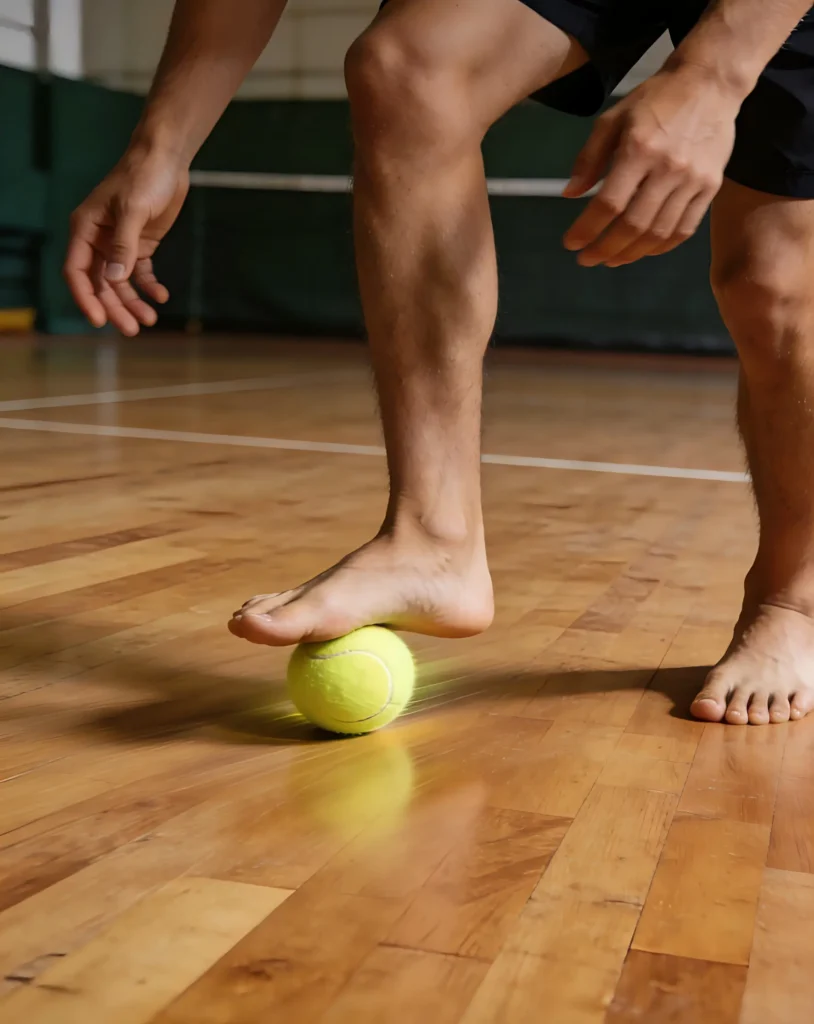
A lacrosse ball is the perfect tool. Take off your shoe. Place the ball under your arch. Stand up. Roll. Slowly. Find the tender spots. They will be there.
If you are feeling fancy, freeze a water bottle. Roll your foot over that instead. The cold reduces inflammation while the rolling breaks up the tightness. It is a two-for-one deal. Your feet will feel reborn. They might even forgive you.
10. Curl Into a Fetal Position
Your backpack pressed down on your shoulders. That force transferred straight to your lower back. The vertebrae compressed. The discs squished.
Child’s Pose is the antidote. Kneel on the ground. Sit back on your heels. Fold forward. Walk your hands out in front of you. Let your belly rest on your thighs.
Feel that? That is your lower spine finally getting a break. The vertebrae are separating slightly. The pressure is releasing. It is a posture of surrender. Surrender to the fact that you are tired. Stay here for a minute. Breathe deeply into your back.
11. Embrace the Temperature Whiplash
This sounds like torture. It is a form of highly effective torture for inflammation. It is called contrast therapy.
If you are brave, start with warm water. Then, switch to cold. As cold as you can stand. The cold constricts blood vessels, pushing inflammation out of the tissues. After a minute or two, switch back to warm. The warmth dilates the vessels, rushing nutrient-rich blood back in.
You are essentially creating a pumping action. If a full ice bath is too extreme, just do the legs in a contrast shower. It flushes the metabolic waste out of your muscles. You will feel tingly and alert. It works.
12. Kick Your Own Butt
Your quads did most of the work on the uphill. They are likely shortened and tired. They need a gentle tug.
Stand up. Hold onto something for balance. Bend one knee. Grab your foot or ankle. Gently pull your heel toward your glute. Keep your knees together. Do not let the stretching knee wing out to the side. That strains the knee joint.
You want a straight-on stretch down the front of the thigh. Hold it. Feel the pull. Do not yank. Be gentle. You are not competing in a flexibility contest. You are just reminding your quads that they can, in fact, lengthen.
13. Fix Your Hunchback Look
Those pack straps pulled your shoulders forward for hours. Your chest muscles shortened. Your upper back stretched out. You now have the posture of a curious turtle.
Find a doorframe. Place your forearms on each side. Gently lean forward. You should feel a stretch across your chest. This opens up the front of the shoulders.
It counters the internal rotation caused by the pack. Hold it. Breathe. You are reversing the “hiker’s slouch.” Your mother would be proud of your posture.
14. Eat Seeds Like a Bird
Magnesium is a miracle mineral. It relaxes the nervous system. It helps muscles unclench. After a long hike, your nerves are jangled and your muscles are tight.
Pumpkin seeds are packed with the stuff. Almonds too. You can eat them. You can also use a topical magnesium spray on your legs.
It might tingle. It might itch. That means it’s working. It helps prevent those awful night cramps where your calf seizes up for no reason. Eat the seeds. Spray the spray. Sleep the sleep.
15. Move Without Going Anywhere
Tomorrow, you will be sore. The instinct is to sit on the couch and become one with the cushions. Fight that instinct too.
You need active recovery. This does not mean another hike. It means gentle movement. Go for a twenty-minute swim. Take your dog for a flat walk around the block. Do some very easy cycling.
This movement pumps synovial fluid into your joints. It keeps everything lubricated. It prevents you from stiffening up like a board. Move slowly. Move gently. Just move.
16. Pop Those Bubbles
You felt that hot spot. You ignored it. Now you have a blister the size of a quarter. It is filled with regret and fluid.
Do not just leave it. It could get infected. Clean the area with antiseptic. If you must pop it, use a sterile needle. Drain it carefully. Do not peel the skin off.
That skin is a natural bandage. Cover it with a proper blister plaster or antiseptic dressing. Treating it now saves you from a world of pain later. Foot hygiene is not glamorous, but it is essential.
17. Vanish for Eight Hours
This is the most important step. This is where the magic happens. Sleep.
During deep sleep, your body releases growth hormone. Growth hormone repairs the micro-tears in your muscles. It rebuilds your tissues. It makes you stronger.
You cannot shortcut this. All the stretching and eating in the world won’t fix a lack of sleep. Prioritize it. Get eight hours. Nine is better. Turn off your phone. Pull the curtains. Vanish into dreamland. Your body will do the rest while you are blissfully unaware.
Conclusion
A successful hike doesn’t end at the trailhead; it ends when your body has fully integrated the effort and returned to a state of balance.
By following these 17 steps, you aren’t just “resting”—you are actively rebuilding a stronger version of yourself.
Consistency in these post-trail habits is what separates a weekend warrior from a lifelong trekker.