I spend a truly baffling amount of my free time hiking under the unblinking, judgmental eye of the sun.
I’ve learned a thing or two about how to stay cool when your body is actively lobbying to become a liquid and seep into the earth.
So, I’m here to share my five best tips for staying cool on hot weather hikes.
My goal is simple: to give you the strategies to keep your cool longer, so you can actually enjoy the hike instead of just surviving it.
Let’s get into it.
Table of Contents
Tip 1: Dress Like a Ghost Who’s Serious About Sun Protection
Let’s start with the most fundamental thing you can control: what you strap to your melting flesh-sack of a body.
The first rule is so simple a caveman could figure it out (though they’d probably prefer a loincloth, which, honestly, fair enough for airflow).
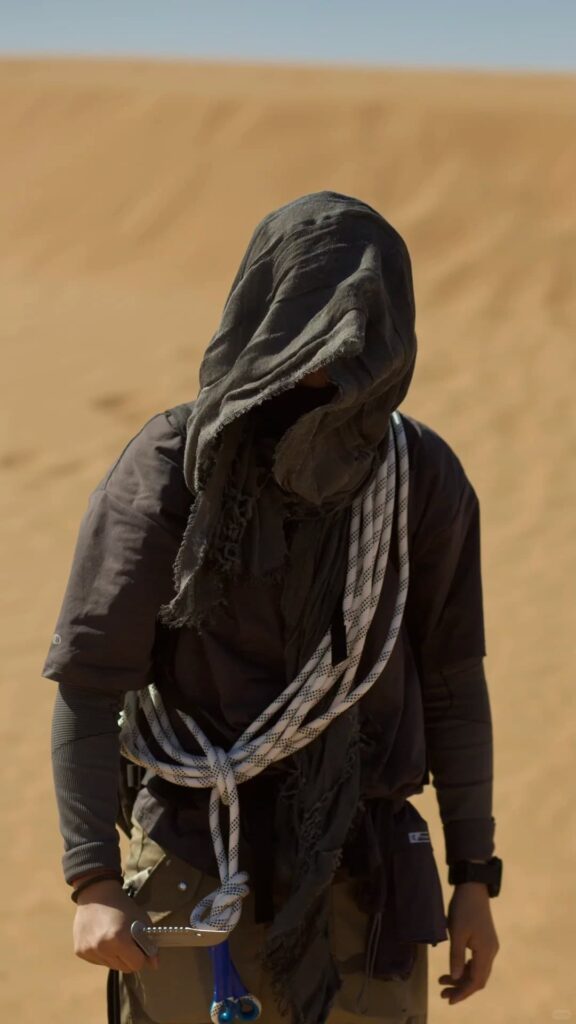
Wear light-colored clothing.
Why? Because light colors reflect sunlight, and dark colors absorb it. It’s basic physics, people.
Wearing a black shirt on a summer hike is like volunteering to be a walking solar panel, except instead of generating clean energy, you’re generating profuse sweating and regret.
I’m out here in my light-colored shorts and a light top, basically doing my best impression of a reflective surface. It makes a tangible difference.
Now, let’s talk about my favorite piece of hiking armor: my hiking shirt.
This is the part where I show you my beloved. This is an older version of a long-sleeved top that I absolutely adore.
I’ll link to the current version in the description, because this thing is a legend.
Now, I know what you’re thinking.
“Long sleeves? In the heat? Have you finally lost your marbles to the heatstroke?” It sounds counterintuitive, I grant you. It sounds like the kind of advice a well-meaning but deeply confused grandmother would give.
But trust me, this isn’t your grandpa’s flannel. This material is specifically designed to keep you cool.
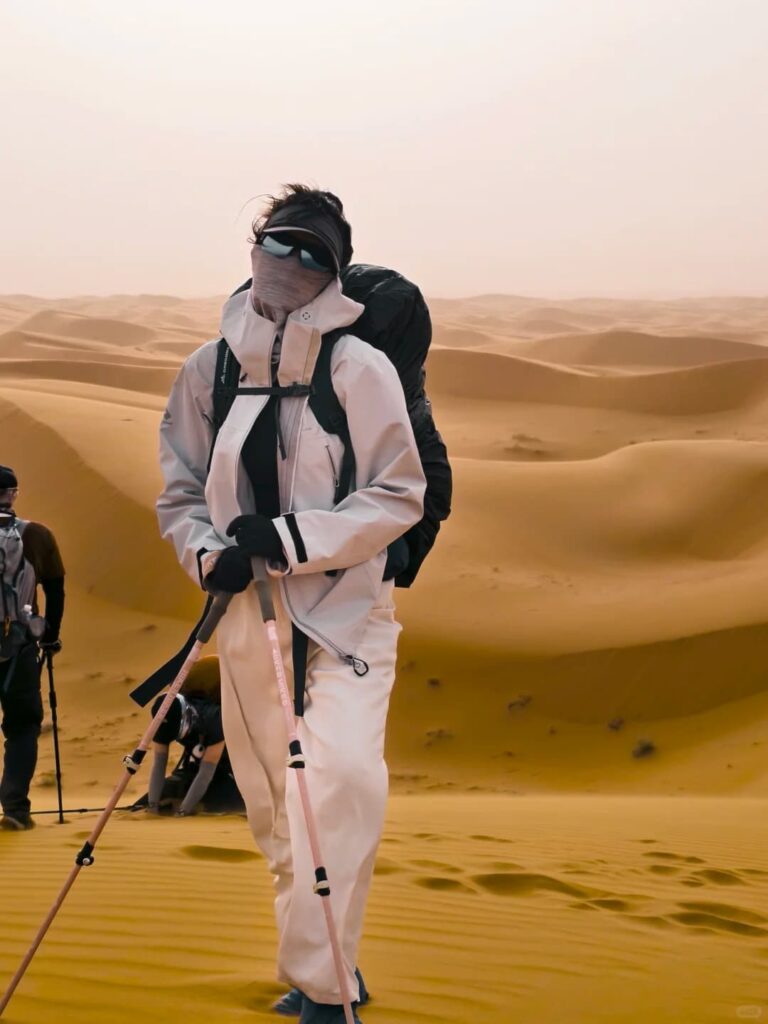
Let me sing you the song of its people, its beautiful, UPF 50-rated features:
- It has a built-in hood. This isn’t for being shady in a metaphorical sense; it’s for being literally shady. When the sun is at that perfect, blinding angle, you can pop this hood up and give your neck and ears a break without messing with a separate hat. It’s a multi-tool for your head.
- Those long sleeves mean I’m slathering on far less sunscreen. My pasty arms are protected from the UV onslaught, which is not only better for my skin health but also for my sanity. Reapplying sticky sunscreen to your own sweaty arms is a special kind of torture.
- UPF 50 rating. This shirt is basically a forcefield against the sun’s evil rays. It blocks over 98% of UVA and UVB radiation. I am a walking, talking, slightly-breathable parasol.
- The fabric is cooling and comfortable. It’s lightweight, moisture-wicking, and feels like a gentle breeze even when the air is still and hot enough to cook a egg on a rock (I’ve never tried, but the potential is there).
The key takeaway here: Light-colored, sun-protective, and actively cooling materials are not a gimmick.
They are your first and best line of defense against transforming into a overheated, crispy critter.
They help maintain your comfort and reduce sun exposure, which means you can hike longer and feel less like you’re actively being slow-roasted.
Tip 2: Embrace Your Inner Bedouin: The Glory of Loose-Fitting Clothes
Alright, you’ve got the color and material right.
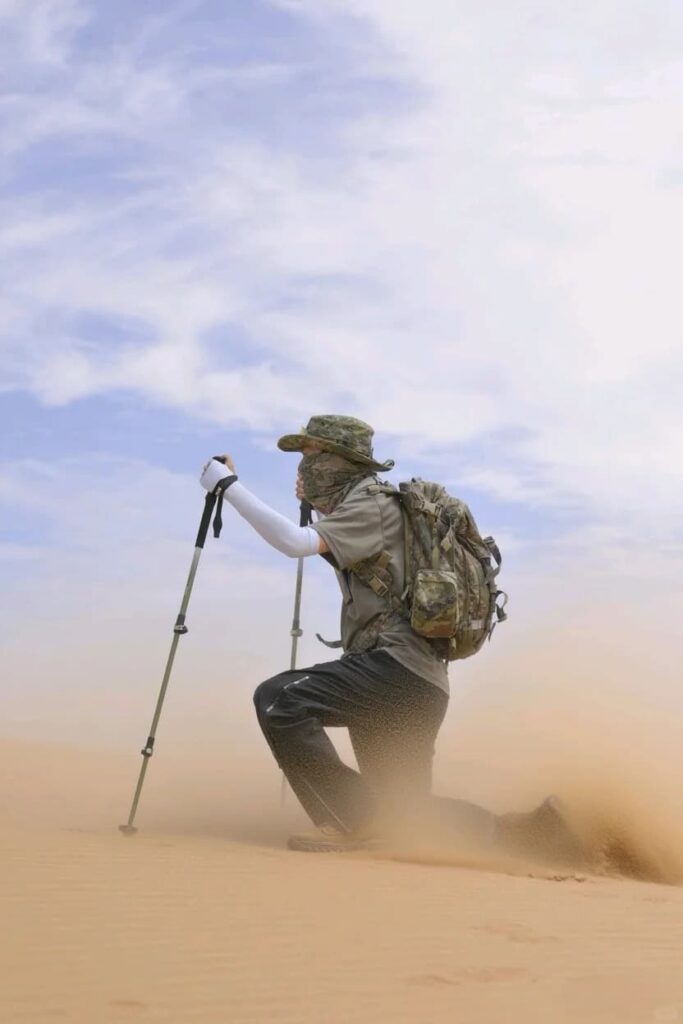
Now, let’s talk about the cut. If your clothing is painted onto your body, you’re doing it wrong.
This isn’t a fashion show on the catwalk of Canyonlands; it’s a strategic maneuver in thermal regulation.
Loose clothing allows for better airflow, which is just a fancy way of saying it lets the breeze (or the sad, faint whisper of moving air you create by walking) get to your skin and actually do its job.
The magical shirt I just waxed poetic about? Notice I didn’t say it was a skin-tight baselayer.
It’s not tight-fitting. It gives me space. It billows. It flows. It allows for a micro-climate to exist between my skin and the fabric, where sweat can actually evaporate and cool me down, instead of just pooling against a synthetic second skin.
My shorts? Also loose and comfortable. We’re aiming for ventilation here, people.
We want our nether regions and our thighs to feel the sweet, sweet freedom of movement and air circulation.
Tight clothes trap heat and moisture, creating a personal, portable swamp.
And nobody wants to hike with a swamp in their pants.
Tip 3: The Magic Scarf

Let’s talk about what is possibly the most underrated, simple, and gloriously effective piece of gear in my pack: the Bandana.
For the uninitiated, a Bandana is a tube of fabric. That’s it. It’s a simple, unassuming, stretchy circle of cloth.
But it is a shape-shifting wizard of temperature control.
You can wear it as a neck gaiter, a headband, a hat, a face mask, a wristband… the list is endless.
But for our purposes today, we are using it as an instant cooling device.
Here’s the technique, and it’s so stupidly easy it feels like cheating:
If you are hiking anywhere near a water source—a river, a stream, an alpine lake, a suspicious-looking puddle you’re 80% sure is clean—you stop.
You take off your Bandana. You dunk it in that glorious, cool water. You wring it out just enough so that it’s not dripping down your back (a sensation that is initially pleasant but quickly becomes annoying), and you put it back on, usually around your neck.
The effect is immediate and borderline spiritual.
I will be completely honest with you. The first time someone told me to do this, I was skeptical. “A wet piece of fabric? That’s your big solution?
I’m supposed to be a hardened outdoorsperson!” But my friends, I was a fool. A hot, sweaty fool. It makes a HUGE difference.
The major arteries in your neck are close to the surface of your skin, and cooling that blood as it travels to your brain is like giving your internal thermostat a gentle, loving slap.
It tells your whole body, “Hey, chill out. Literally.”
I personally prefer wearing it around my neck. As one side warms up from the sun or your body heat, you simply rotate it.
The front goes to the back, the cool part comes to the front. It’s a beautiful, lazy Susan of comfort.
What if there’s no water source? No problem! You are a resourceful human.
Wet that Bandana at home before you even start your hike, wring it out, and stick it in a plastic bag or a small dry bag in your pack.
When you start to feel the heat creeping in, you have a secret weapon ready to go.
Tip 4: Don’t Be a Hero: Avoid the Sun’ Witching Hour
This tip requires no special gear, just a modicum of common sense and planning, which I sometimes lack, but have learned the hard way is essential.
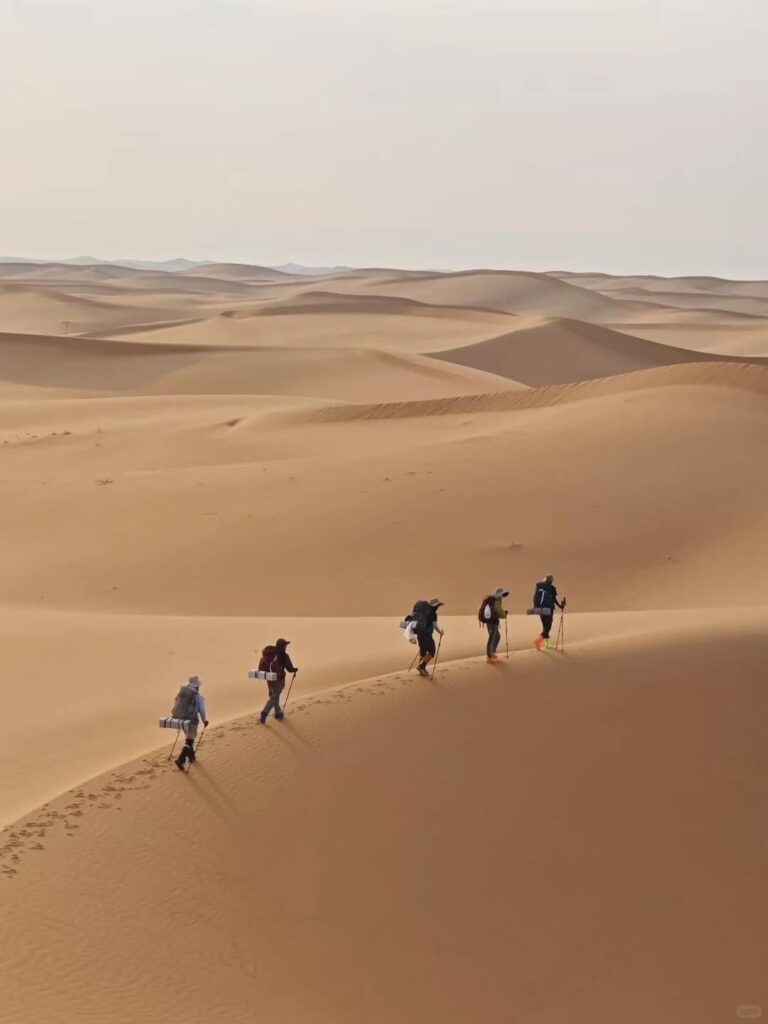
As a general rule, avoid hiking between 12 PM and 3 PM.
This is the sun’s prime time. It’s when it’s directly overhead, unleashing its full, unfiltered fury upon the land.
This is not the time for peak-bagging or traversing shadeless ridgelines. This is the time for napping.
My personal routine is heavily skewed toward being a morning person.
I am that obnoxious individual who is bouncing with energy at 5 AM when we’re heading to the trailhead.
Why? Because starting a hike in the cool, quiet, beautiful part of the day is a pleasure.
You get to watch the world wake up, and more importantly, you get the majority of your hiking done before the heat peaks.
You finish your hike as the temperature is climbing, rather than starting it when the day is already a furnace.
The alternative, if you’re not a morning zombie like me, is to plan your hike so that you’re taking a long, luxurious break during the hottest hours.
Find a lake and go for a swim. Post up by a river and have a long lunch in the shade. Just… stop moving.
Conserve your energy. Let the world bake around you while you’re lounging like a lizard on a cool rock.
An extra-super-pro suggestion: Plan your route to maximize shade exposure.
This is especially critical in the desert. The difference between standing in the full sun and standing in the shade in a dry climate is not a subtle one.
It’s dramatic. It can feel like a 15-20 degree Fahrenheit difference. The sun is an aggressive, physical presence, and the shade is its benevolent, cool opposite.
Use this to your advantage. Look at your map, see where the canyon walls or the tree cover might be, and structure your hike to be in those areas when the sun is at its worst.
Tip 5: Water is Life, But Don’t Forget the Sparkly Salts
This one might seem obvious, but you’d be shocked how many people get it wrong.
Hydration is critical for all hikes, but in the heat, it’s non-negotiable. When you’re sweating profusely, you’re losing water at an alarming rate.
And in dry desert air, that sweat evaporates so quickly you might not even realize how much you’re losing. You can be a walking raisin and not even know it.
How to hydrate effectively:
You can’t just chug a liter at the trailhead and call it good. You have to drink water frequently, in small to moderate amounts, throughout the entire hike.
Think of it as sipping, not gulping. You’re trying to maintain a steady level of hydration, not play a desperate game of catch-up after you already feel like a wrung-out dishrag.
If you wait until you’re thirsty, you’re already behind.
But—and this is a big but—water alone isn’t always enough.
You have to replenish your electrolytes.
What are electrolytes? Fancy word for salts (sodium, potassium, magnesium) that your body needs for, you know, everything.
Especially for holding onto water and making your nerves and muscles work.
A tell-tale sign that you’re low on electrolytes is when you’re drinking a ton of water, but you’re also peeing it all out frequently.
Your body is basically saying, “This is lovely, but I have no way to hang onto it without the salty buddies!” You’re just a very inefficient water filter at that point.
My absolute favorite, go-to, never-leave-home-without-it product for this is Nuun hydration tablets.
Just to be clear, this is not a sponsored segment; they have no idea who I am. I’m just a fangirl.
These little tablets are magic. You drop one into a bottle of water, it fizzes delightfully, and in a minute or two, you have a lightly flavored, electrolyte-rich sports drink.
They even come in caffeinated versions if you need a pick-me-up.
I use them at home almost daily, and I always, always have a few tubes in my hiking backpack.
They’re lightweight, and you can even split the tablets in half if you want a smaller dose.
My pro-tip for using them on the trail: I don’t like putting them directly into my main water bladder.
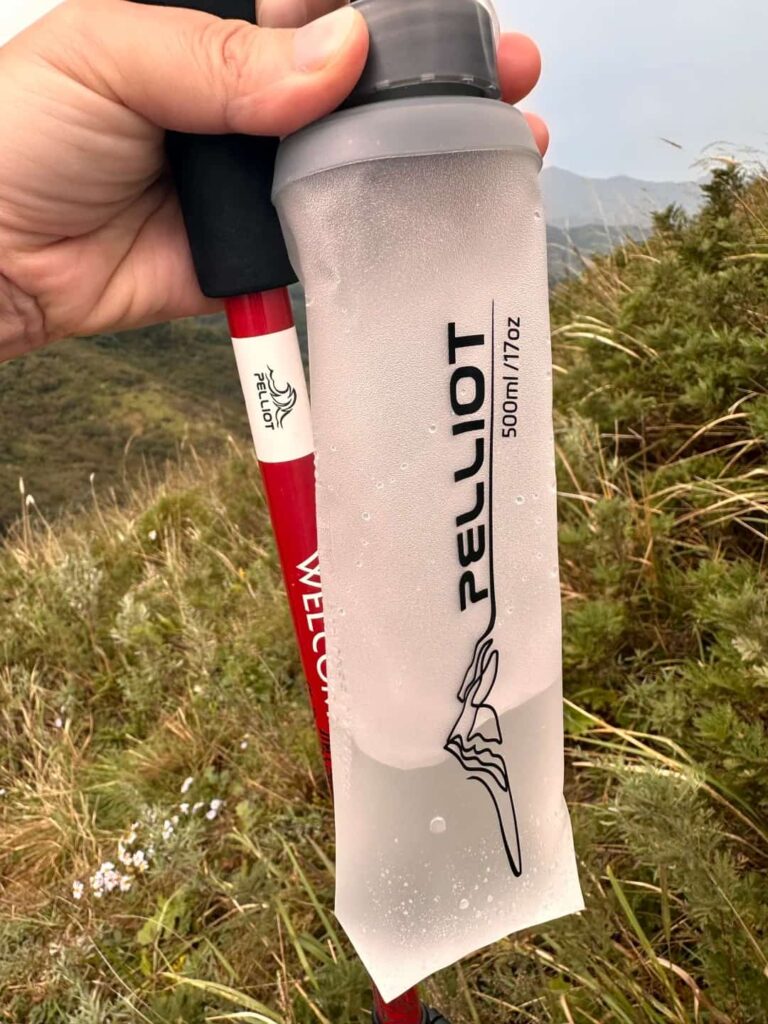
It can leave a residue or a taste that’s hard to get out. Instead, I carry a small, collapsible water bottle specifically for my electrolyte drinks.
When I stop for a break, I’ll mix one up and drink it then, or I’ll just carry it in that bottle and sip on it throughout the hike alongside my plain water.
Final Thoughts
Well, my friends, we’ve reached the end of our journey.
The point is: I am now visibly sweating. My Buff is dry, my water is warm, and I have officially had enough.
I am ready to wrap this up, find a shady rock to contemplate my life choices under, and head on out of here.
I hope these tips help you on your next hot-weather adventure. Remember, it’s all about working with your environment, not against it.
Dress smart, plan smarter, and carry a wet piece of fabric around your neck like the glorious, cool weirdo you are.