Day Hiking vs. Backpacking:15 Difference You Should Know

Spread the love

So you’ve decided to touch grass. Excellent choice. The wilderness calls, and you must go.

But wait. Which wilderness experience are you actually signing up for?

This question haunts many a beginner. You grab your sneakers, fill a water bottle, and suddenly someone mentions “base weight” and “bear canisters.” Panic ensues.

Here’s the truth: day hiking and backpacking look identical from the parking lot. Both involve shoes. Both involve trees. Both might include granola bars.

But beyond that first mile? They’re completely different beasts.

One is a casual date with nature. The other is a committed relationship where you carry your entire house on your back like a very sweaty turtle.

Let’s break down exactly what separates these two trail siblings. Your back—and your dignity—will thank you.

Table of Contents

1. Duration and Scope: Sunrise vs. Sunrises

Day hiking operates on sunlight. You start when the sky brightens. You finish before the vampires come out. Simple.

It’s a “sun-up to sun-down” affair. You chase a view, conquer a peak, and retreat to civilization before dinner. Think of it as nature’s fast food—satisfying, quick, and you’re home in time for Netflix.

Backpacking laughs at your Netflix.

This version requires at least one overnight stay in the backcountry. You don’t just visit the wilderness. You move in temporarily. You become a forest resident with voting rights and everything.

The scope expands dramatically. A day hiker measures distance in miles. A backpacker measures distance in days. Your relationship with time shifts. Minutes stop mattering. Sunrises and sunsets become your clock.

One is a snapshot. The other is a whole photo album.

2. Pack Weight and Volume: The Math Gets Personal

Let’s talk about what sits on your spine.

A day pack is cute. It’s stylish. It holds between 10 and 25 liters of stuff. We’re talking water, snacks, maybe a jacket if you’re feeling fancy. You could technically bring more, but why would you? You’ll be home before your phone dies.

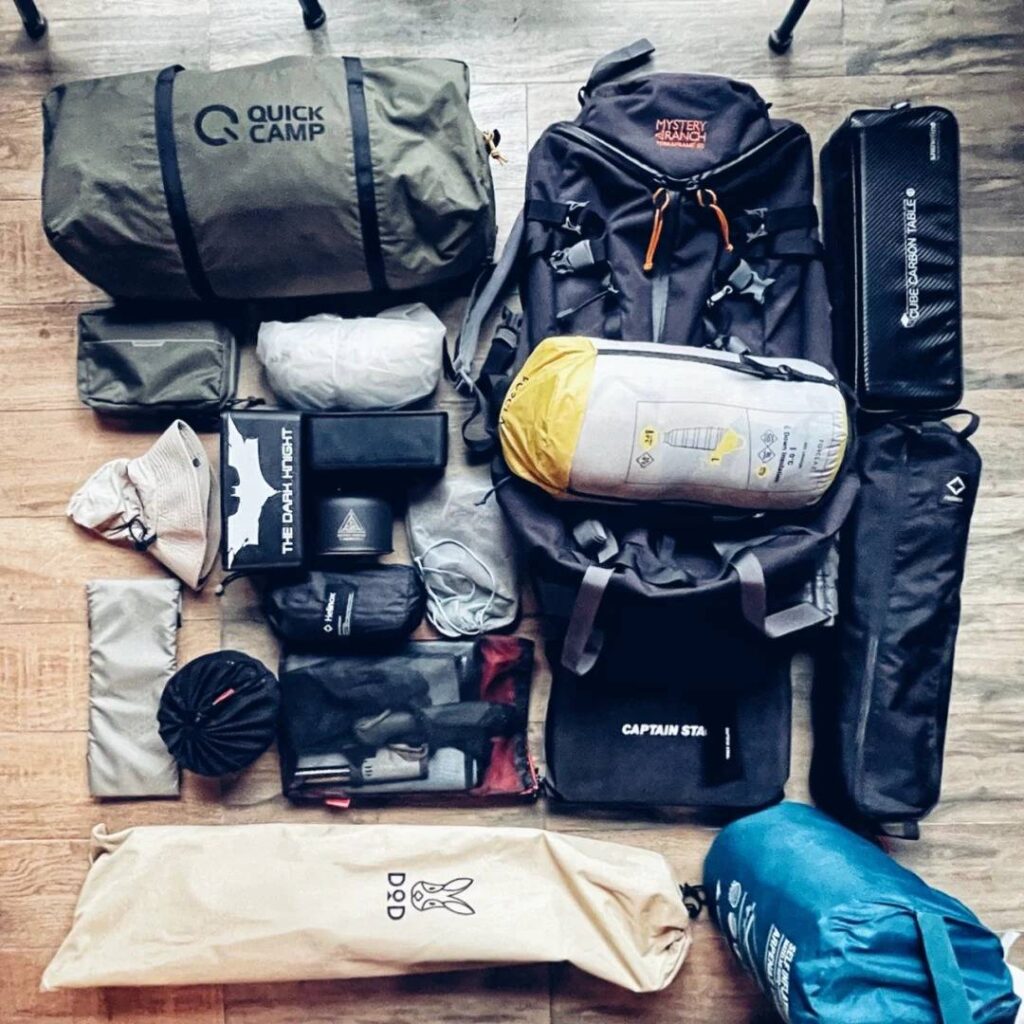
Backpacking packs start at 40 liters and climb to 70 or beyond.

That’s not a backpack. That’s a piece of luggage with attitude.

Suddenly you’re carrying volume previously reserved for airport check-ins. Your pack gains compartments you didn’t know existed. Straps dangle everywhere. You look less like a hiker and more like a sherpa who took a wrong turn.

The weight difference tells the real story. A day pack feels like a heavy purse. A backpacking pack feels like a small person sitting on your shoulders. An angry small person who refuses to get off.

3. Shelter Requirements: Roof Optional

Day hikers enjoy what experts call “having a car.”

Your vehicle serves as your mobile mansion. Need a break? The car has seats. Raining? The car has a roof. Tired? The car will drive you home while you nap. It’s luxury living with cup holders.

You return to a fixed roof every single time. Civilization waits patiently at the trailhead.

Backpackers must become architects.

Your shelter rides on your back all day. Tents, tarps, hammocks—these become your portable castle. You carry walls. You carry a floor. You carry the very concept of “inside” folded into a stuff sack.

Setting up camp transforms from “parking the car” to “constructing your residence using sticks and prayers.”

The best part? You get to do this while exhausted, in the dark, possibly in rain. Glamorous doesn’t begin to cover it.

4. The Sleep System: Counting Sheep Gets Technical

Day hikers sleep in beds. Real beds. With mattresses and pillows and everything. They might nap on a rock, but that’s optional.

Backpackers enter the world of sleep systems.

This isn’t sleeping. This is engineering. You need a specialized bag rated for specific temperatures. Twenty degrees? Thirty degrees? The number matters because your life depends on it.

Then comes the pad. Not a pad like “oh, something soft to lie on.” An insulated pad with R-value. Because apparently sleeping now involves thermal dynamics and insulation ratings.

You’ll spend real money on items designed solely to separate you from the cold ground. Meanwhile, day hikers complain about hotel mattress firmness.

The contrast hurts.

5. Water Management: Thirst Gets Complicated

Thirst works the same everywhere. Your body needs water. The difference lies in acquisition.

Day hikers carry their supply. Bladders, bottles, reservoirs—you bring enough liquid to survive the outing. Run low? Suffer until the car. It’s straightforward. It’s simple. It’s civilized.

Backpackers channel their inner survivalist.

You carry filtration tools. Pumps, squeeze bags, chemical tablets—your water comes from nature now. Streams. Lakes. Puddles if you’re desperate.

Every water source becomes a question. Is it clean? Does it have giardia? Will drinking this turn my intestines into a crime scene?

You pump, filter, treat, and wait. Then you drink and hope your filter worked. Day hikers twist open a bottle. The universe has a sense of humor.

6. Caloric Intake and Cooking: Food Philosophy Clash

Day hiking food follows the grab-and-go philosophy.

Sandwiches. Bars. Chips. Maybe an apple if you’re feeling virtuous. You eat while walking, sitting, or standing. No preparation required. No dishes to wash. It’s efficient and joyless, but it works.

Backpacking transforms food into chemistry.

Every calorie must earn its carry weight. Dehydrated meals dominate. You add boiling water, wait ten minutes, and consume something that resembles food but technically isn’t.

Stoves become essential gear. Tiny canisters of fuel. Compact pots that barely fit a spoon. You cook dinner while surrounded by wilderness, which sounds romantic until you’re huddled over a flame praying your freeze-dried pasta rehydrates properly.

Day hikers eat fresh sandwiches. Backpackers eat astronaut food with better scenery.

7. Permit Logistics: Paperwork Enters the Chat

Day hiking offers beautiful simplicity. Park. Go. Hike. Return. Maybe pay a fee if the lot has an honor system.

Backpacking introduces bureaucracy.

Many wilderness areas require overnight permits. You must plan ahead. Apply online. Wait for approval. Sometimes enter lotteries like you’re competing for concert tickets.

Popular routes book months in advance. Your freedom requires advance planning. Spontaneity dies so regulations can live.

Day hikers laugh at permit anxiety. They arrive at 8 AM and hit the trail. Backpackers schedule bathroom breaks around quota systems. The wilderness wants paperwork, apparently.

8. Physical Conditioning: Gravity Notices You

Day hiking lets you feel light. Nimble. Your pack weighs nothing. You bounce between rocks. Gravity barely registers your presence.

Then you add thirty-plus pounds.

Suddenly gravity remembers you exist. Your center of gravity shifts forward. Knees notice. Ankles notice. Every joint submits a formal complaint.

Balance changes completely. That stream crossing becomes an event. Rocky sections demand concentration. You move slower because falling now involves thirty pounds landing on top of you.

Day hikers practically skip. Backpackers plod with purpose. Both cover ground. One looks considerably more graceful doing it.

9. Navigation and Safety: Beyond Following Signs

Both groups need maps. Getting lost doesn’t discriminate.

But backpackers require deeper wisdom.

Leave No Trace principles become survival skills. Campsite selection matters because sleeping somewhere random might violate regulations or ecology. Waste disposal requires actual thought. Where do you poop? The answer isn’t “behind a tree” anymore.

Day hikers follow trails to viewpoints. Backpackers read terrain for flat spots, water access, and weather protection. Your brain works differently when night approaches.

Navigation shifts from “which way is the parking lot” to “where will I survive until dawn.” Slight difference.

10. Cost of Entry: Wallet Warning

women pack

Day hiking welcomes everyone.

Boots? Buy any pair. Pack? Grab a school backpack. Water bottle? Raid your kitchen. Total investment might hit one hundred dollars. Maybe two hundred if you get fancy.

Backpacking demands tribute.

The Big Three—pack, shelter, sleep system—consume budgets like hungry bears. A decent setup starts at several hundred and climbs toward “why is this hobby so expensive” territory.

Quality gear costs. Ultralight gear costs more. You’ll research, compare, and agonize over ounces while your bank account weeps quietly.

Day hikers buy snacks. Backpackers buy mortgages for equipment.

11. The Luxury Factor: Trade-Offs Defined

Day hikers enjoy the ultimate luxury: restaurants.

Finish your hike? Drive to a burger joint. Eat something heavy, fresh, and actually hot. Sip a milkshake while wearing hiking clothes. Society welcomes you back immediately.

Backpackers trade restaurants for backcountry sunrises.

No burgers exist out there. No milkshakes. No warm seats or cold drinks. Instead, you get solitude. Silence. Views that belong only to you and whoever else made the trek.

You trade comfort for experience. Fresh food for filtered water. Beds for sleeping pads. Restaurants for the best coffee you’ll ever drink, brewed on a tiny stove while fog lifts off a mountain.

It’s not a fair trade. It’s different currency entirely.

12. Emergency Preparedness: Self-Reliance Rules

Day hikers stay close to help. Trailheads sit hours away at most. Cell service might work. Other hikers pass regularly. Rescue, if needed, arrives relatively quickly.

Backpackers enter remote territory.

Miles from trailheads. Days from cell service. Weather shifts without warning. Injuries require self-treatment because help won’t arrive soon.

Your medical kit expands. Your knowledge must expand further. What works for blisters? Can you splint an ankle? Do you know hypothermia signs?

Self-reliance isn’t optional. It’s mandatory. The wilderness doesn’t care about your feelings or your phone battery.

13. Waste Management: The Unpleasant Truth

Day hikers pack trash to cans. Easy. Obvious. You carry wrappers to parking lot bins. Civilization handles the rest.

Backpackers face… more.

Human waste requires planning. Trowels dig cat holes. WAG bags pack everything out. Local regulations dictate exactly how you dispose of your business.

Yes, you might carry your waste. In bags. For days.

Let that sink in.

Day hikers never consider this reality. Backpackers discuss toilet strategies with straight faces. The trail humbles everyone eventually.

14. Hygiene and Comfort: Spice Levels Vary

Day hikers finish and shower. Hot water. Soap. Clean clothes. The transition from sweaty hiker to fresh human takes thirty minutes.

Backpackers embrace trail spice.

You’ll smell. Everyone smells. It’s fine. Biodegradable wipes become luxury items. One set of clothes lasts multiple days. “Clean” becomes relative—more like “less dirty than yesterday.”

Showers don’t exist. Running water doesn’t exist. You adapt, accept, and stop noticing your own odor somewhere around day two.

Returning to civilization involves rediscovering hygiene like a confused caveman.

15. Psychological Reward: Different Brains, Different Gains

Day hiking delivers quick hits.

Endorphins rush. Stress leaves. You reset mentally in hours. Work problems fade during ascent and return after descent. It’s a pressure release valve that works same-day.

Backpacking offers flow state.

Days blur together. Trail rhythms replace phone rhythms. Walking becomes meditation. Thinking stops. Worrying stops. You exist only in steps, breaths, and campsite chores.

Modern life fades completely. Not temporarily—completely. The wilderness becomes your entire world.

Day hikers return refreshed. Backpackers return changed.

Both win. Just differently.

Conclusion

So which path calls your name?

Day hiking keeps civilization close. You taste wilderness without committing. Speed and accessibility win. Perfect for busy lives and afternoon escapes.

Backpacking removes the rearview mirror entirely. You live outdoors, carry everything, and discover what you actually need versus what you thought you needed. Solitude rewards the effort. Landscapes unreachable in single days become your temporary home.

Neither option beats the other. They simply offer different flavors of outside.

Your choice depends entirely on how much of the civilized world you want trailing behind you—and how comfortable you are carrying the rest on your back.

Leave a Comment

Your email address will not be published. Required fields are marked *

Scroll to Top