Master the Art of Bear Safety: 17 Essential Food Storage Tips

Spread the love

Proper food storage is one of the most critical skills anyone venturing into bear country must learn. Whether you’re a seasoned backpacker or a first‑time car camper, how you handle your food directly affects your safety—and the future of the bears themselves.

When bears gain access to human food, they quickly lose their natural wariness. A bear that associates people with easy meals becomes a danger to visitors and ultimately faces lethal removal by wildlife managers. Proper food storage prevents these conflicts.

This guide covers seventeen practical, field‑tested methods to keep your food secure and help bears stay wild. 

Table of Contents

1. Identify "Smellables" Beyond Just Food

Here’s the thing about bears: they have noses that would make a bloodhound weep with envy. They aren’t just sniffing out your triple-cheese pasta; they are on the hunt for anything with a scent.

And when we say anything, we mean anything.

That tube of spearmint toothpaste you were planning to use to freshen up for your selfie with the scenic overlook?

To a bear, that’s essentially an after-dinner mint wrapped in plastic. Your deodorant? Fancy bear perfume.

Sunscreen? Smells like a tropical vacation, and apparently, bears want a vacation too.

Lip balm, lotion, and even those empty soda cans you crushed because you’re a good recycler—they all smell like a five-course meal.

If you put it on your body or in your mouth, it goes in the box. Treat your toiletries like the contraband they are.

2. Use Certified Bear-Resistant Containers (BRCs)

So, you’ve decided to be responsible. Fantastic. You go out and buy a hard-sided plastic canister.

But wait—is it just a “bear-resistant” container, or is it a Certified Bear-Resistant Container?

There’s a difference, and that difference is usually measured in the amount of titanium dioxide it takes to paint a scratch on a bear’s claw.

You want the ones tested by the Interagency Grizzly Bear Committee (IGBC).

These are the containers that have been batted around by actual bears in a testing facility. They’ve been thrown off cliffs, rolled down hills, and chewed on like a teething toy.

If it doesn’t have that IGBC stamp of approval, you might as well be storing your food in a paper bag labeled “Free Buffet.”

Invest in the good stuff. Your future self, watching a bear fail miserably at opening your canister while you smugly sip tea from a safe distance, will thank you.

3. Master the "Bear Hang" Technique

Sometimes, you can’t bring a hard-sided canister. Maybe you’re a minimalist ultralighter who counts grams like pennies.

In that case, you need to master the “Bear Hang.”

It’s an art form, really. A frustrating, rope-tangling, branch-throwing art form.

The rules are simple, yet somehow impossible for mere mortals to execute on the first try.

Your food bag (preferably a dry bag) needs to be at least 12 feet off the ground.

That’s about the height of a one-story building. It needs to be 6 feet away from the tree trunk. That’s about the length of a tall human lying down.

And it needs to be 4 feet below the supporting branch.

Why so specific? Because bears can climb, reach, and do a surprisingly good impersonation of a basketball player going for a slam dunk.

If your bag is too close to the trunk, it’s a bear piñata.

Too low, and it’s a bear snack. Too high, and you’ll need a rocket launcher to get it down in the morning. Good luck.

4. The "Kitchen" Distance Rule

You’ve set up your tent. It’s cozy. It smells like nylon and dreams.

Now, where are you going to cook that delicious backpacker’s pad thai?

Not in the tent. Not next to the tent. Not even vaguely near the tent.

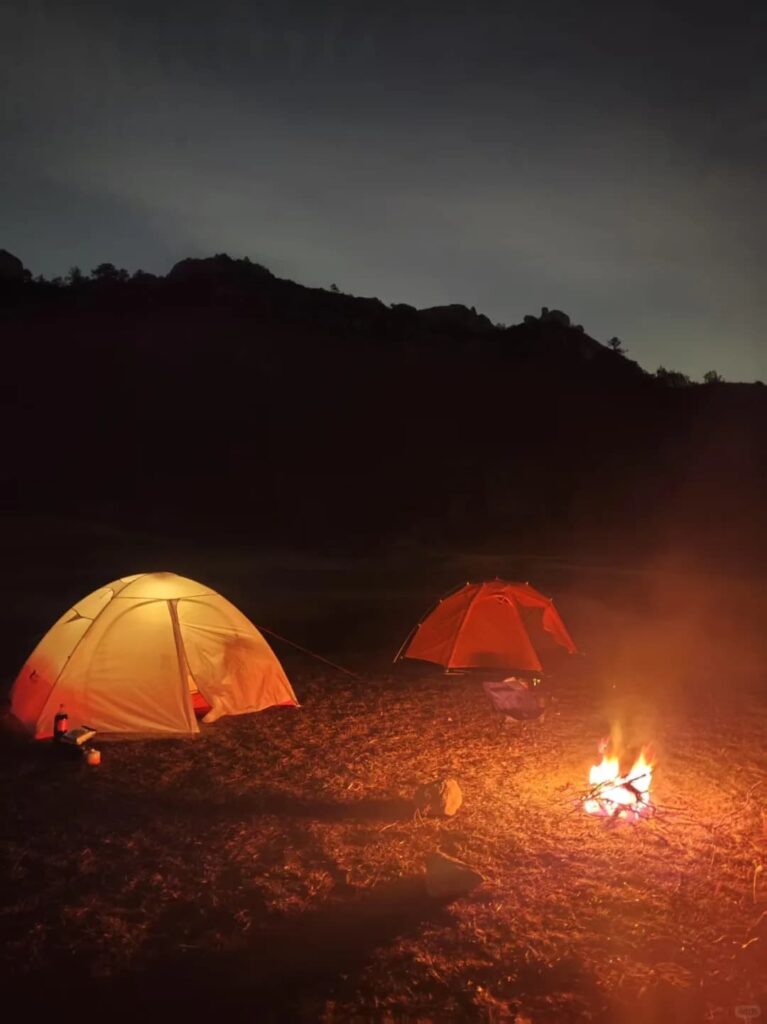
You need to establish your kitchen at least 100 feet (or about 40 sleepy, staggering paces) away from where you plan to sleep.

And you need to do it downwind.

Think of it this way: you’re creating a scent trail that leads from your kitchen to your bedroom.

You want the wind to blow that scent away from your tent, not directly into it.

Otherwise, you’re basically inviting a bear to follow the delicious smell of soy sauce right to your front door. “Oh, dinner’s that way?

Let me just check if they have any leftovers in the bedroom!”

5. Never Sleep with Your Toiletries

It’s a cold night. Your sleeping bag is a warm cocoon of happiness.

Your lips are chapped. That lip balm in your pocket is just begging to be applied. You think to yourself, “It’s just a tiny tube. What harm could it do?”

Plenty. All sorts of harm.

Sleeping with your toiletries is like wearing a steak necklace to bed.

You might as well put up a sign that says, “Bear, please check my tent for tasty treats.”

A curious bear doesn’t know it’s just lip balm. It just knows that something in this fabric cave smells interesting, and it’s going to investigate.

A “tent-check” by a bear is not the kind of wake-up call anyone wants. It usually involves claws, teeth, and a very personal encounter with a very large nose.

Keep everything scented out of your tent. Everything.

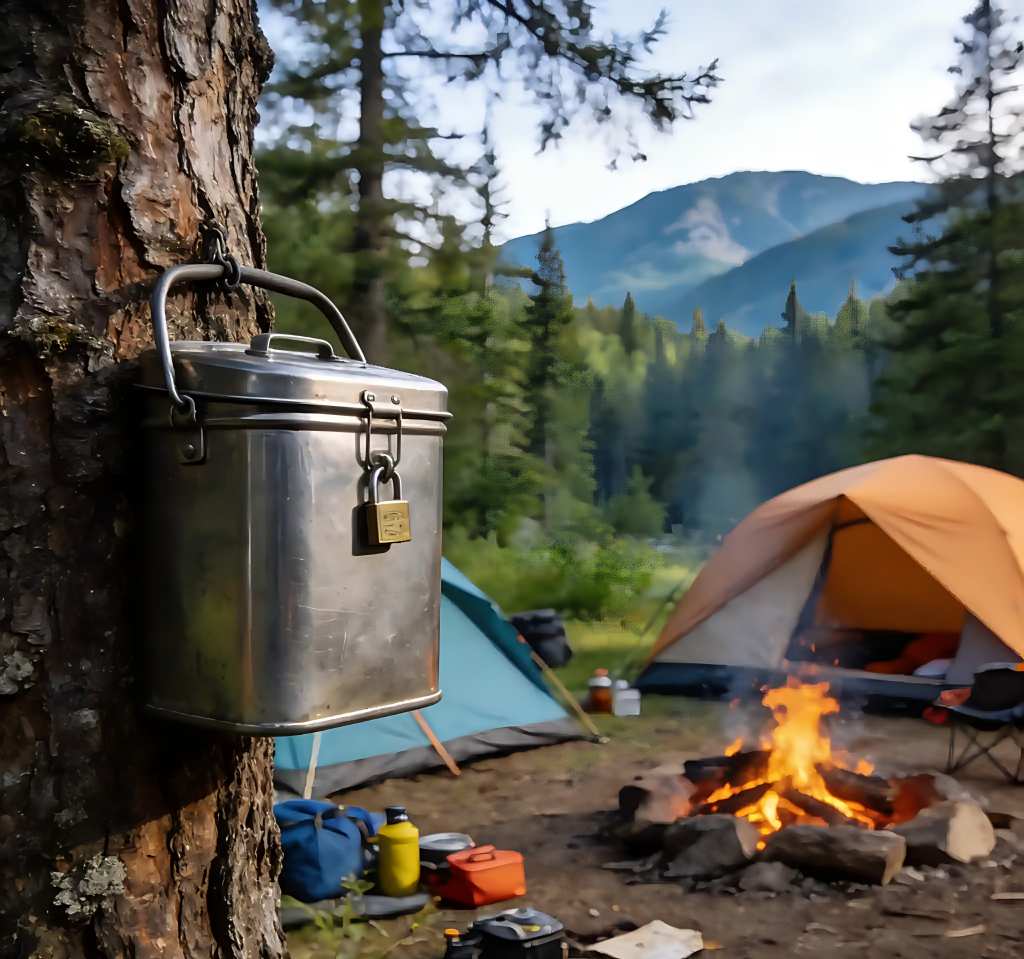
6. Utilize On-Site Bear Lockers

Ah, the glorious, heavy-metal salvation known as the campground bear locker. These big steel boxes are the gold standard of food storage.

If your campsite has one, use it. Use it for everything. This is not a suggestion; it’s a campground commandment.

Here’s the kicker: these lockers are infinitely more effective than your car. Yes, your car.

Many a camper has thought, “I’ll just lock my cooler in the trunk. It’s fine.” It is not fine. Bears have seen that trick. They’ve seen it, and they’ve laughed.

To a determined bear, your car’s trunk is just a slightly more crinkly wrapper.

They will peel it open like a sardine can. They will pop your window out like a champagne cork. The bear locker, however, is basically a bear-proof safe. Use it.

7. Odor-Proof Your Bags

You’ve got your bear canister. You’ve got your smellables inside. You’re feeling pretty good about yourself. But wait, there’s more!

For the truly paranoid (and the truly wise), there is another layer of defense: the odor-barrier bag.

These bags, often called OPSAKs, are made of a special material that is, in theory, impermeable to odors.

You put your food inside them, seal them up tight, and then put those bags inside your canister or your bear hang.

Think of it as double-bagging your groceries, but instead of protecting the environment from your groceries, you’re protecting your environment from a bear’s nose.

It adds a secondary layer of scent protection that can be the difference between a bear sniffing around your campsite and a bear confidently walking past it because it smells nothing at all.

8. Avoid Storage in Vehicles

We touched on this, but it bears repeating (pun absolutely intended). Do not store food in your vehicle.

Seriously.

In many popular bear habitats, the local bear population has earned PhDs in Automotive Engineering.

They know that the shiny box with the glass windows often contains the holy grail: a cooler. They know that if they stand on the door handle just right, the frame bends.

They know that a good shove can pop a trunk.

A bear breaking into your car isn’t just a nuisance; it’s a scene from a horror movie. They will destroy your interior for a single granola bar wrapper. They will redecorate your upholstery with claw marks.

And you will be left on the side of the road with a car that looks like it went twelve rounds with a heavyweight champion and a very expensive towing bill. Don’t do it.

9. Keep a Clean Camp

You’ve finished your delicious, dehydrated dinner. You’ve licked the spoon clean. Now what? You can’t just leave your dishes sitting out.

You need to establish a strict “clean as you go” policy.

This means immediately dealing with your gray water—the water you used to wash your dishes or brush your teeth.

Dispose of it at least 100 feet from your camp. Don’t just toss it in the bushes next to your tent.

And before you toss it, strain it! Carry a small strainer or piece of mesh to catch any food solids. Those tiny bits of mac and cheese are just bear sprinkles.

Pack them out with your trash.

A clean camp is a boring camp. And a boring camp is a safe camp.

10. Store Trash Like Food

Here’s a revelation for you: bears aren’t gourmands. They don’t distinguish between your gourmet backcountry paella and the greasy wrapper it came in.

To a bear, garbage smells like dinner. It smells like possibility. It smells like the easy life.

Your trash is just as enticing as your food. Maybe more so, because it’s a mixture of all the enticing smells.

Therefore, your garbage must be treated with the same reverence and fear as your fresh supplies.

Double-bag it. Tie it tight. And store it in your bear-proof container or locker right alongside your Snickers bars.

If your container isn’t big enough for your trash and your food, you brought too much stuff.

11. Check Local Regulations

Are Yurts Bear Proof

Before you even pack your car, before you even choose which flavor of instant oatmeal to bring, do yourself a favor: research the specific regulations of your destination.

Different parks have different rules. It’s like each national park has its own bear-related legal code.

Some parks, like Yosemite or parts of the Smokies, require hard-sided canisters for all overnight backcountry users.

They will ticket you if you don’t have one. Others might allow bear hangs, but only if you use a specific method.

Some campgrounds have electric fences. Some have specific hours for food storage.

Ignorance is not an excuse that a park ranger will accept.

They’ve heard it all. “But the bears in my local forest don’t mind hanging bags!” won’t fly. Know before you go.

12. Lock Your Canisters Properly

This seems obvious, right? You’d be surprised.

A bear canister only works if it is properly and fully closed. It is not a bowl. It is not a temporary holding zone. It is a fortress, and the gate must be sealed.

Too many campers, in a rush to go on a day hike, will leave the lid of their canister loosely attached. “I’ll be back in a few hours,” they think. “It’ll be fine.”

In those few hours, a bear can wander by. It sees a plastic thing. It smells delicious odors wafting from the not-quite-closed lid.

It gives it a little tap. The lid pops off. Jackpot. You have just single-handedly trained a bear that plastic containers are actually just easy-open lunch boxes. Lock it up tight, every single time.

13. Don't Forget Pet Food

You love your furry friend. You bring them on adventures. You pack their kibble, their treats, and their collapsible bowl.

Good for you. But guess who else loves the smell of kibble? Every bear within a five-mile radius.

Kibble is highly aromatic. It’s basically meat cereal. If you wouldn’t leave a steak out on the picnic table overnight, don’t leave your dog’s bowl out either.

Treat your dog’s food with the exact same strict protocols as your own food. Bag it up. Seal it tight.

Put it in the bear locker or the canister. Your dog might give you sad eyes when you take their food away at night, but a sad dog is infinitely better than a curious bear.

14. Strategic Canister Placement

You’ve locked your canister. You’ve put it 100 feet away. You’re a pro. But you can be a strategic pro.

Don’t just plop your canister in the middle of a clearing. Think like a bear. If a bear finds your canister, what’s its first move?

It’s going to try to open it. When that fails, its second move is to try to destroy it. And when that fails, its third move is to try to relocate it.

They will bat it around like a hockey puck. They will roll it down hills. They might even try to drown it, because bears are weirdly dramatic.

So, hide your canister. Place it in a depression between rocks, or tucked under a log, away from any steep slopes or water sources.

Make it hard for a bear to get a good swing at it. If they can’t bat it into the river, they might just give up and go bother someone else.

15. Avoid "Aromatic" Foods

This is where the meal planning gets real. When you’re in bear country, your menu choices matter.

Yes, we all love the idea of frying up bacon in the crisp mountain air. It’s a camping cliché for a reason.

But bacon is basically a scent bomb. Its greasy, smoky, meaty aroma travels for miles. It screams “BREAKFAST IS SERVED” to every creature with a nose.

The same goes for tuna fish, sardines, or anything with a strong, pungent odor.

Dehydrated meals are your friend. They are boring, they are bland, and they are perfect because they barely smell like anything until you add hot water.

Choose your meals wisely. Save the stinky stuff for when you’re safely back in your kitchen, far away from any curious ursids.

16. Clean Your Clothing

You did it. You cooked your food 100 feet away. You ate it.

You cleaned up. You stored everything. Victory is yours.

But wait. Look down at your shirt. See that little splash of tomato sauce? That smudge of olive oil? That tiny, almost invisible crumb from your energy bar?

That shirt is now a food item.

If you wear those “food clothes” to bed, you are effectively wrapping yourself in a napkin and climbing into a tent.

The scent is right there, inches from your face, emanating into your sleeping bag.

Before you go to bed, change your clothes. Put on your clean “sleeping layers.”

Then, take your dirty, food-scented clothes and store them in your bear-proof container too. Yes, your clothes. It sounds excessive, but so is waking up to a bear unzipping your tent.

17. Reflective Tape for Night Locating

Here’s a pro tip for the truly prepared camper. It’s the middle of the night. You hear a noise. It’s a snuffling, scratching noise.

It’s coming from the direction of your bear canister. Your heart is pounding.

You need to see what’s happening, but you also don’t want to walk into the darkness and surprise a bear.

Grab your headlamp. Now, if you had the foresight to stick a small piece of reflective tape on your canister or your food bag, you’re in luck.

You shine your light in that general direction, and bam—a little beacon of reflection tells you exactly where your stuff is.

You can see if the canister is still there, if it’s moving, or if a large shadow is currently attempting to roll it like a bowling ball.

It’s a small piece of tape, but in a moment of high-adrenaline, middle-of-the-night curiosity, it can be a lifesaver.

Final Thoughts

Proper food storage in bear country isn’t just a suggestion scribbled on a park brochure. It’s a shared responsibility. It’s a pact we make with the wilderness and with the incredible animals that call it home.

You’re ensuring they never get a taste of human food, that they never become “problem animals” who lose their natural fear of us. A fed bear is, tragically, often a dead bear.

Keep them wild. Keep your food locked down.

And sleep soundly knowing that the only thing visiting your tent tonight is the wind.

Leave a Comment

Your email address will not be published. Required fields are marked *

Scroll to Top