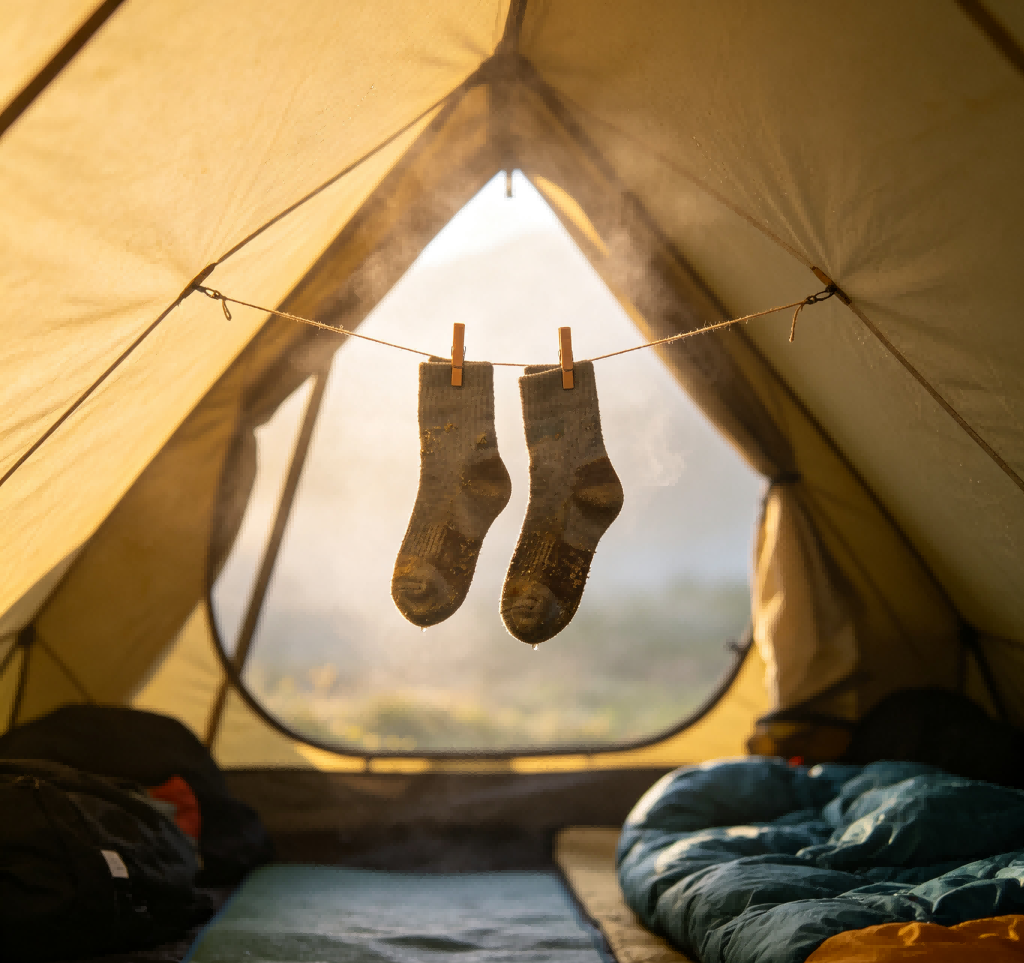
Sleeping on the ground used to be the only option. Then hammocks swung onto the scene.
They promised better sleep and fewer aches. But do they deliver? The debate has split campsites everywhere.
Some swear by the solid earth beneath them. Others float between two trees like dignified bats.
This isn’t just about comfort. It’s about ergonomics. It’s about how you move the next day. It’s about finishing your trip without walking like a question mark.
Let’s explore what happens to your backbone when you choose your sleeping style.
Table of Contents
The Physics of Spinal Alignment: Flat Surface vs. Suspended Cradling

Imagine your spine as a beautiful architectural structure. It has curves in all the right places. Now imagine sleeping on granite. The ground doesn’t care about your lumbar curve. It offers zero compromise.
On a flat surface, even with a pad, gaps appear. Your lower back might hover. Your shoulders might press down awkwardly. You spend the night tensing muscles to fill those voids. That’s exhausting work for a body that should be relaxing.
Now consider the hammock. It wraps around you like a gentle hug. But here’s the catch—it wants to bend you. A narrow hammock turns your spine into a banana. That’s the default position. Straight-line sleepers panic at this thought.
The physics gets interesting here. A flat surface offers predictable support. What you see is what you get. A hammock offers distributed support. It catches you everywhere at once. The problem is keeping things straight.
Your spine doesn’t actually want to be perfectly flat. It wants neutral alignment. That sweet spot between straight and curved. Both setups can achieve this. Both can fail miserably too. The difference lies in how they fight your body’s natural tendencies.
Hammock Mechanics: How a "Diagonal Lay" Prevents the Dreaded Banana Curve

Here’s where hammock geometry gets fascinating. New hammock users lie straight down the center line. They wake up folded like a taco. Their backs hurt. They declare hammocks evil and return to the rocky ground.
But veterans know the secret. It’s called the diagonal lay. You don’t lie along the length. You lie across it at an angle. This changes everything.
Picture a rectangle of fabric. When you sit in the middle, it sags. The ends come up. Your body follows that curve. Now shift yourself sideways. The fabric now supports you differently. Your head goes to one side. Your feet go to the opposite side. Your spine runs diagonally across that sag.
The result? You flatten out. Almost completely. The fabric cradles your shoulders and hips while keeping your back straight. It’s like magic, but with more math involved.
This diagonal position uses the hammock’s width to create length. Your spine finds near-perfect alignment. The banana curve disappears. What remains is a comfortable, supported position that ground sleepers envy.
Some hammocks even have asymmetrical shapes. They’re designed specifically for this diagonal angle. Sleep systems have evolved significantly. Your spine thanks you for doing the research.
Pressure Point Relief: Why Suspension Can Be a Miracle for Side Sleepers and Those with Hip Pain

Side sleepers face a unique challenge on the ground. One hip bears tremendous weight. The shoulder digs into the earth. Pressure points develop overnight. You wake up with a numb arm and a bruised hip bone.
Sleeping pads try to help. They offer cushioning and support. But physics remains stubborn. Hard ground plus bony prominence equals discomfort. No amount of foam completely fixes this.
Enter the hammock suspension system. There’s no hard surface underneath. The fabric gives exactly where you need it to. Your hip sinks in rather than pressing against resistance. Your shoulder nestles into soft support.
This pressure distribution changes everything for pain sufferers. People with chronic hip issues often find relief. Those with shoulder problems sleep through the night. The fabric adapts to your shape instead of forcing your shape to adapt.
Even stomach sleepers (though controversial) can find positions. The gentle curve allows for breathing room. Your spine doesn’t twist unnaturally. Blood flows better without compression points.
The magic lies in suspension’s forgiveness. Every part of you gets equal treatment. No single bone bears the brunt. Your entire body shares the load equally.
Tent Advantages: The Role of High-R-Value Sleeping Pads in Providing Firm Lumbar Support

Let’s not abandon the ground dwellers just yet. Tents offer something hammocks cannot. They provide firm, consistent support where you need it most.
High-quality sleeping pads have evolved tremendously. They’re not just cushions anymore. They’re engineered sleep systems. Some feature built-in baffles. Others use advanced foams. Many offer adjustable firmness through inflation.
For lower back issues, this matters greatly. Some backs need support, not softness. They crave resistance against that lumbar curve. A quality sleeping pad delivers exactly that. You can find pads with higher R-values that also offer structured support.
The ground itself becomes an ally here. It won’t move during the night. It won’t shift when you roll over. That consistency helps某些 backs stay aligned. No readjustment needed at 3 AM.
Sleeping pads also allow customization. Want more hip support? Put extra clothing underneath. Need shoulder relief? Deflate slightly. The ground provides a stable platform for these adjustments.
Some sleepers simply need firmness. Their bodies relax only against resistance. Soft surfaces cause muscle tension. For these folks, the tent wins every time. A high-quality pad on solid ground beats any floating alternative.
The "Freedom of Movement" Factor: How the Ability to Toss and Turn Affects Muscle Stiffness

Here’s a question nobody asks enough. How much do you move at night? The answer varies wildly between people. Some sleep like logs. Others perform nightly gymnastics.
Hammocks restrict movement slightly. Not completely, but noticeably. You can shift positions. You can roll from side to side. But the range feels different. The fabric cocoons you. Some find this comforting. Others feel trapped.
Tents offer complete freedom. You can starfish. You can rotate 360 degrees. You can end up where your head should be. The ground doesn’t care about your sleeping acrobatics.
Why does this matter for stiffness? Muscles need微 adjustments during sleep. They need to change positions. Prolonged static positions cause stiffness. That morning tightness often comes from not moving enough.
Ground sleepers move freely all night. Their bodies self-correct positions automatically. Hammock sleepers move less dramatically. The hammock limits extreme position changes.
Neither is wrong. It depends on your sleep style. Wild movers might prefer ground freedom. Still sleepers might enjoy hammock security. Your muscles will tell you which works better. Listen to them.
Environmental Constraints: Why Terrain—from Rocky Slopes to Treeless Plains—Dictates Your Posture

Sometimes the choice makes itself. You arrive at camp. You survey the landscape. And you realize nature has decided for you.
Rocky terrain laughs at tent stakes. Sloping ground mocks sleeping pads. Roots and rocks create nightly obstacle courses. Your spine suffers through uneven surfaces all night.
Hammocks ignore ground conditions completely. Two trees are all that matters. The ground below can be swampy, rocky, or steep. None of it affects your sleep posture. You float above it all like a sleepy monarch.
But what about treeless plains? Alpine zones above treeline. Deserts with no trees for miles. Coastal areas with nothing but sand and sky. Hammocks become useless decorations. Tents become your only option.
Some environments offer mixed blessings. Forests with widely spaced trees. Treelines with scattered growth. You might find perfect spots or frustrating gaps. Your back depends on finding that sweet spot.
Consider also weather exposure. Hammocks allow airflow underneath. Great for summer. Terrible for cold wind. Tents block ground-level drafts. Better for cold conditions. Your spine’s warmth matters for morning flexibility.
The environment doesn’t care about your preferences. It presents options or limitations. Smart campers adapt accordingly. They carry both systems or choose based on destination.
Entry and Exit Ergonomics: Comparing the "Crawl-In" of a Tent to the "Sit-to-Stand" of a Hammock

Let’s discuss something rarely mentioned. How do you actually get in and out of these things? This matters more as trips continue and fatigue builds.
Tent entry requires crawling. You bend low. You duck through openings. You twist into position. Getting out reverses the process. After several days, your knees notice. Your back notices. Your dignity notices.
Hammock entry requires balance. You sit. You swing legs over. You settle in gracefully (or not). Getting out involves sitting up and standing. No crawling required. No twisting involved.
For people with knee issues, this matters tremendously. For those with back problems, it’s crucial. The transition movements affect how you feel before and after sleep.
Hammocks also offer easy sitting. You can sit on the edge like a chair. Put on boots without bending awkwardly. Change clothes without gymnastics. These small ergonomic wins add up over multi-day trips.
Tents offer privacy and weather protection. You can sit fully upright inside some models. But that initial crawl remains. Your spine must flex in ways it might resist, especially in cold mornings.
Weight and Packability: How Kit Weight Influences Back Strain During the Hike Itself

Here’s the cruel irony. The system that helps your back at night might hurt it during the day. Weight matters enormously for spinal health.
Hammock setups can be incredibly light. Modern suspension systems weigh ounces. Tarps add minimal bulk. Bug nets tuck away easily. Your pack stays light. Your spine thanks you on the trail.
But hammocks require insulation underneath. Underquilts add weight. Sleeping pads inside hammocks add bulk. Cold weather setups rival tent weights. The simplicity disappears with temperature drops.
Tent systems offer predictable weight. You carry everything together. No surprises. But even light tents weigh something. Add sleeping pads and bags. The ounces accumulate.
The trade-off becomes strategic. Ultralight hammock setups shine in summer. Warm nights need minimal gear. Your back carries almost nothing. Winter demands更多 from both systems.
Consider also pack shape. Hammock gear distributes differently. Tarps pack small. Suspension wraps around things. Tents pack in defined shapes. Your spine feels these differences during long miles.
Every ounce on your back affects spinal loading. Every pound compounds over distance. Choose your sleep system with trail miles in mind, not just campsite comfort. Your vertebrae will remember both experiences.
Conclusion
The tent versus hammock debate misses one crucial point. Your spine is unique. Your camping environments vary. What works for your friend might destroy your back.
Listen to your body’s signals. Does firm support feel better? Choose tent camping with quality pads. Does pressure relief matter more? Hammocks might save your hips.
Consider where you camp most. Forest dwellers have options. Alpine enthusiasts face constraints. Desert wanderers must adapt. Let your environment guide the decision.
Maybe you need both systems. Maybe you switch seasonally. Maybe you discover something entirely different. The goal remains unchanged: wake up able to hike another day.
Your spine carried you to camp. It deserves thoughtful consideration. Choose wisely. Sleep well. Hike happily ever after.