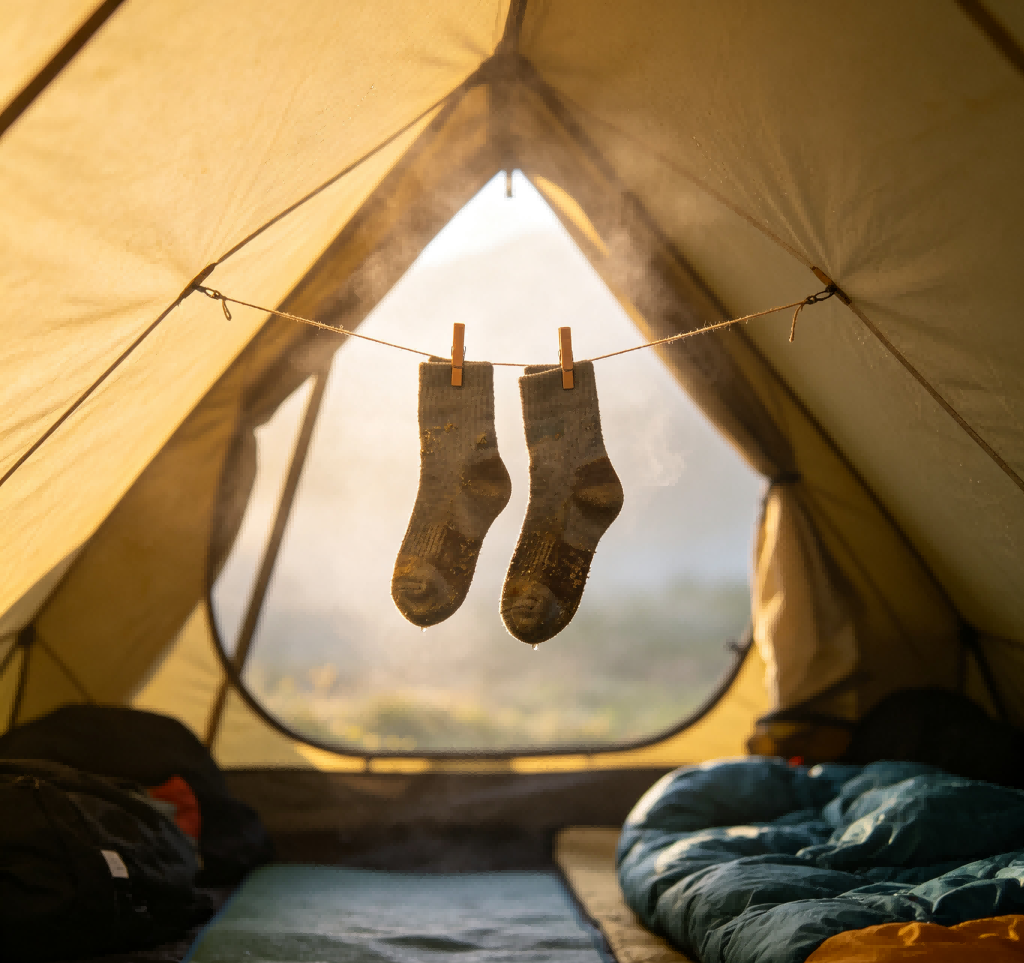
What To Do If It Starts Raining During Setup Your Tent

Spread the love

You planned this trip for weeks. The forecast said “partly cloudy with a chance of unicorns.” But here you are. Rain is falling like Mother Nature is testing your life choices. Your camping buddies are watching from the car, waiting for a miracle.

Here’s the thing about wet-weather camping. It separates the weekend warriors from the folks who actually enjoy suffering. Maintaining a dry interior isn’t just about comfort. It’s about safety. It’s about morale. Hypothermia doesn’t care about your vacation days.

Suddenly, that leisurely setup routine you perfected in the backyard feels like a cruel joke. You shift into efficiency mode. Your brain fires on all cylinders. Every move matters. Welcome to the jungle—literally.

Table of Contents

1. Immediate Site Assessment

Rain Is Too Much For Camping

Stop. Don’t just drop your gear anywhere. That’s rookie behavior.

Look at the ground like you’re a detective solving a murder. Which murder? The murder of your dry socks. You need to evaluate ground drainage immediately. Water follows paths of least resistance. So does your sanity when it floats away.

Avoid natural basins. Those pretty little depressions in the earth? They’re collecting pools by midnight. You’ll wake up on a waterbed you never wanted.

Also watch for runoff paths. Rain travels downhill. It remembers the way. If you see tiny streams forming during the downpour, don’t pitch your tent in one. This seems obvious. Yet every campground has that one tent floating downstream.

Now look up. Scan for overhead cover. Dense tree canopies act as nature’s umbrella. They buffer the initial assault. Just be careful about dead branches. You don’t want a widowmaker landing on your tent at 3 AM. That’s a different kind of wet.

2. The "Dry-Core" Staging Strategy

Rain Is Too Much For Camping

Here’s where discipline matters. Keep that tent body inside its waterproof bag until the absolute last second. Treat it like a parachute. You wouldn’t unpack that early either.

Find a spot under a tarp. Use your rain jacket as a staging platform. Huddle with your buddies. Form a human umbrella if necessary. The goal is simple. Unfurl that tent fabric only when you’re ready to deploy it immediately.

Organize your poles and stakes first. They can get wet. They’re metal and fiberglass. They don’t complain. Lay them out in order. Count everything twice. Nothing kills momentum like discovering you’re missing a pole section mid-pitch.

Think of it as surgery. Your tent is the patient. Rain is the infection. The waterproof bag is the sterile field. Don’t compromise the sterile field until the operating room is ready.

3. Prioritizing the Rainfly (The Fly-First Method)

Rain Is Too Much For Camping

This technique changes lives. Seriously. It should be taught in schools.

Most people pitch the inner tent first. Then they struggle with the rainfly while everything inside gets soaked. This is backwards. This is chaos. This is why relationships end on camping trips.

Instead, attach your rainfly first. Use it as an umbrella. Drape that waterproof shell over the inner tent before the inner tent even exists in this dimension. You’ll need a footprint or groundsheet underneath. But the fly becomes your temporary roof during assembly.

Some tents allow you to pitch the fly independently. These tents are your friends. If yours doesn’t, get creative. Use trekking poles. Use tree branches. Use your buddy’s head if he volunteers.

The concept is simple. Create a waterproof barrier above before exposing anything breathable below. Rain falls down. Physics hasn’t changed recently.

4. Speed-Oriented Hardware Management

Speed matters now. Every extra minute means more water intrusion. Move like you’re in a timed competition. Because you are. It’s called “don’t let your stuff get destroyed.”

Assemble all your shock-corded poles before laying out the tent body. Connect them fully. Let them snap together with purpose. Lay them parallel to where your tent will go. This pre-assembly saves precious seconds later.

Now here’s the wind factor. Rain rarely travels alone. It brings its friend Wind, who is loud and aggressive and likes knocking things over.

If gusts are threatening your setup, grab heavy rocks. Use them as temporary anchors. Place them on corners. On pole ends. On anything that might become a kite. You can properly stake everything later. Right now, you’re in survival mode.

Rocks don’t care about Leave No Trace principles. They just sit there being heavy. Be grateful for their existence.

5. Managing the Transition of Gear

The tent is up. Congratulations. Don’t celebrate yet. The battle continues.

You need a wet vestibule area. This is sacred ground. It’s the airlock between outside chaos and inside sanctuary. Designate a specific spot—preferably under the rainfly overhang—where wet gear gets stripped.

Rain jackets come off here. Muddy boots stay here. Soggy hats get banished here. Nothing wet enters the main cabin. Nothing. This rule is non-negotiable. Violators will be shamed.

Now consider your sleeping bags and electronics. These items are royalty. They don’t get wet. Ever.

Plan the logistics of moving them from your vehicle to the tent. Use dry bags. Use plastic totes. Use trash bags if necessary. Create a human chain of dry stuff passing. Assign one person as the “dry runner” while others handle the wet exterior.

Sleeping bags first. Electronics second. Everything else third. Prioritize like your comfort depends on it. Because it does.

6. Post-Setup Interior Maintenance

You made it inside. The rain drums against the fly. You feel victorious. Don’t get comfortable yet.

Inspect every interior surface immediately. Some moisture always sneaks in during the pitch. A few drops here. Some condensation there. It happens. Deal with it now.

Grab a microfiber towel. These little rectangles are camping miracles. They absorb ten times their weight in water and regret. Wipe down walls. Wipe the floor edges. Check corners where water hides like a guilty secret.

Now examine your rainfly tension. This matters more than you think. If the fly touches the tent body anywhere, you’ll wake up wet.

Here’s the physics. When fabric touches fabric, water capillary action occurs. It’s like the rain is using a straw to drink through your tent. Pull those lines tighter. Stake them out further. Create air gap. Water needs gravity to travel. Don’t give it a bridge.

Conclusion: Resilience and Long-Term Gear Care

Here’s the truth. Your setup won’t be perfect. Something will get damp. You’ll forget one thing. That’s okay.

Perfection isn’t the goal. Staying functional is the goal. Being dry enough to sleep. Being warm enough to eat. Being sane enough to laugh about it tomorrow. That’s winning.

But once the sun returns, you have work to do. Dry everything thoroughly. Every seam. Every pocket. Every hidden corner where mold dreams of growing.

Mold is the real enemy. It doesn’t need rain to destroy your gear. It just needs darkness and moisture and time. Don’t give it any of those things.

Spread your tent in the sun. Hang your rainfly like laundry day. Let the breeze work its magic. Your future self will thank you. And next time it rains, you’ll smile. Because now you know the secret.

You’ve mastered the art of war. The enemy is water. And you just won.

Leave a Comment

Your email address will not be published. Required fields are marked *

Scroll to Top