If you’re picturing a grizzled cowboy searing a steak over an open flame, you’re not wrong.
The line between a soul-stirring camping trip and a bad story is often drawn by a single, heavy, glorious piece of equipment: the cast iron pan.
But I’m here to tell you that this culinary workhorse isn’t just for cowboys and historical reenactors.
It’s for anyone who thinks that “eating al fresco” shouldn’t mean choking down another cold, crumbly granola bar while envying the squirrels.
In this love letter to heavy metal (the culinary kind), we’re going to dive into why you need one, how to buy one without getting duped, and the sacred dos and don’ts (learn from my burns, both literal and metaphorical).
And finally, what delicious campfire feasts can you whip up that will make you the envy of the entire campground.
Table of Contents
Section 1: Why a Cast Iron Pan is Your New Best Camping Friend
I used to be a camping cookware minimalist. My pack was a symphony of flimsy, nesting aluminum pots that buckled under the heat of a stern glance.
Then I saw the light. Or, more accurately, I saw the perfectly seared crust on a campfire steak.
Here’s why cast iron is the undisputed champion of outdoor cooking.
Reason 1: Versatility
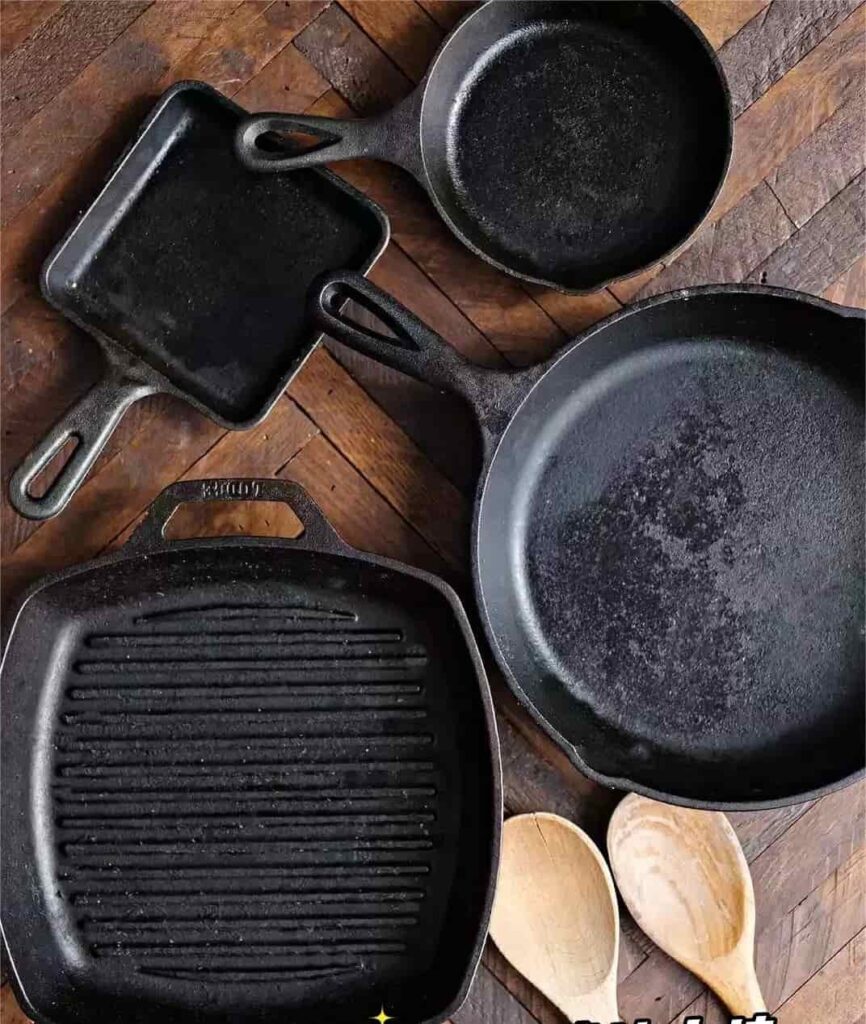
The beauty of cast iron is its utter indifference to your heat source.
Campfire? Check. Little two-burner camp stove that you bought on clearance? Check. A dragon’s breath? Probably.
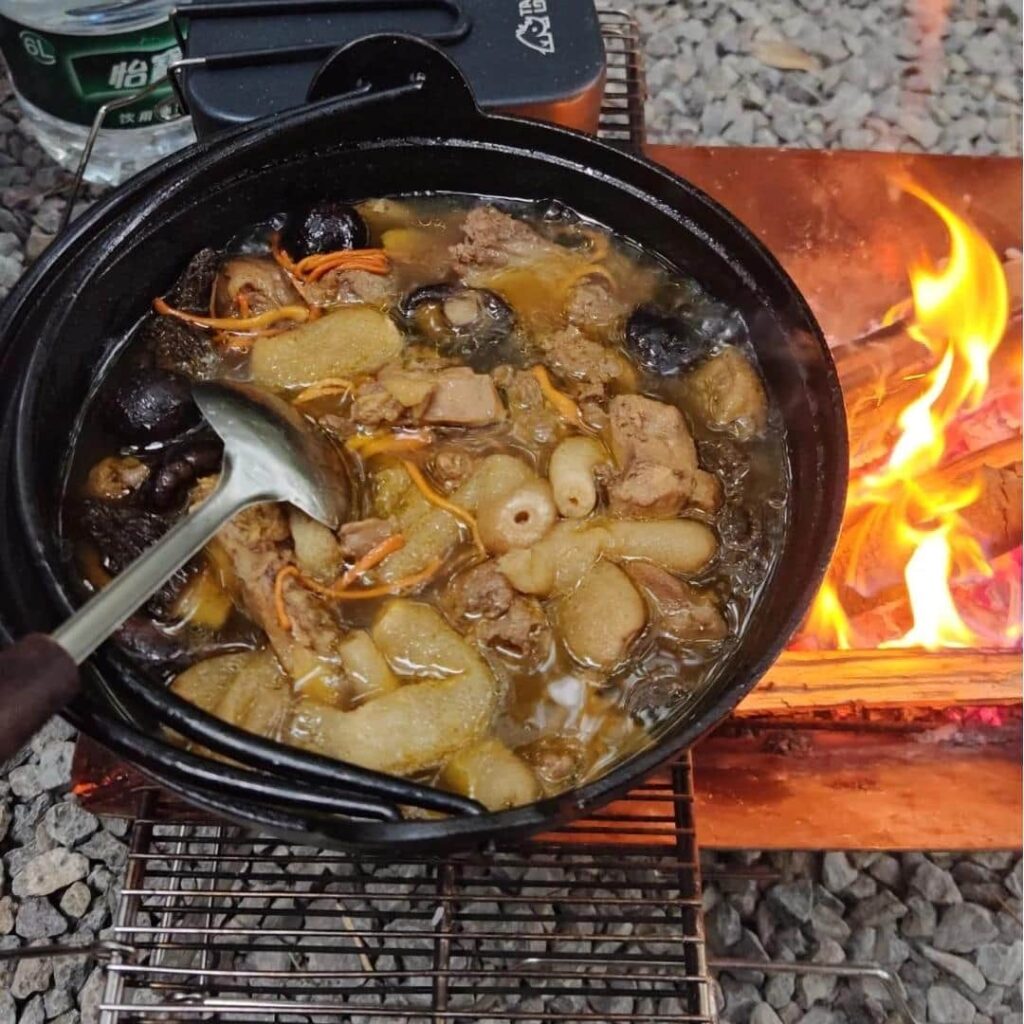
This one pan can fry your bacon, bake your biscuits, sauté your veggies, and sear your trout.
It reduces your need to pack a separate frying pan, a saucepot, and a baking dish. In the world of camping, where packing space is a sacred and limited resource, this is a game-changer.
It’s the multi-tool that actually works for all the tasks it claims to.
Reason 2: Durability
I have an antique cast iron skillet that I lovingly restored. Based on the logo and the wear, it’s roughly 100 years old. Let that sink in.
This pan has seen the invention of sliced bread, the rise of rock and roll, and the entire internet. It has no moving parts, no non-stick coating to flake off into your frittata, and no delicate handle that will snap.
With even the most basic care, a cast iron pan will last a lifetime. In fact, it will likely become a family heirloom. You can’t say that about your Teflon-coated omelet pan from the big-box store.
There’s also a profound sense of history and nostalgia. When I’m scrubbing my antique pan (with salt, you heathen, we’ll get to that),
I sometimes wonder: Who cooked with this before me? A Depression-era homemaker stretching a single chicken to feed a family of eight?
A 1950s dad flipping pancakes on a Sunday morning? It connects you to a long, unbroken chain of people who just wanted a good, hot meal. It’s basically a history lesson you can fry an egg on.
Reason 3: Heat Retention
Campfire cooking is not a precise science. It’s a chaotic ballet of flaming logs, dying embers, and surprise gusts of wind that redirect all the heat onto your left kneecap.
Cast iron is the zen master in this chaos. It’s thick and heavy, so it absorbs heat slowly and distributes it with a beautiful, even-handed patience.
Unlike a thin aluminum pan that develops hot spots the size of a dime, cast iron gets uniformly hot. This means no more scrambled eggs that are charcoal on one side and snotty on the other.
Once it’s hot, it stays hot, even when a breeze kicks up or you have to shift a log.
This makes cooking infinitely easier and your results infinitely more impressive.
It turns you from a frantic fire-tamer into a calm, collected campfire chef.
Section 2: The Quest for the Holy Grail
Popular Brands: The New Guard
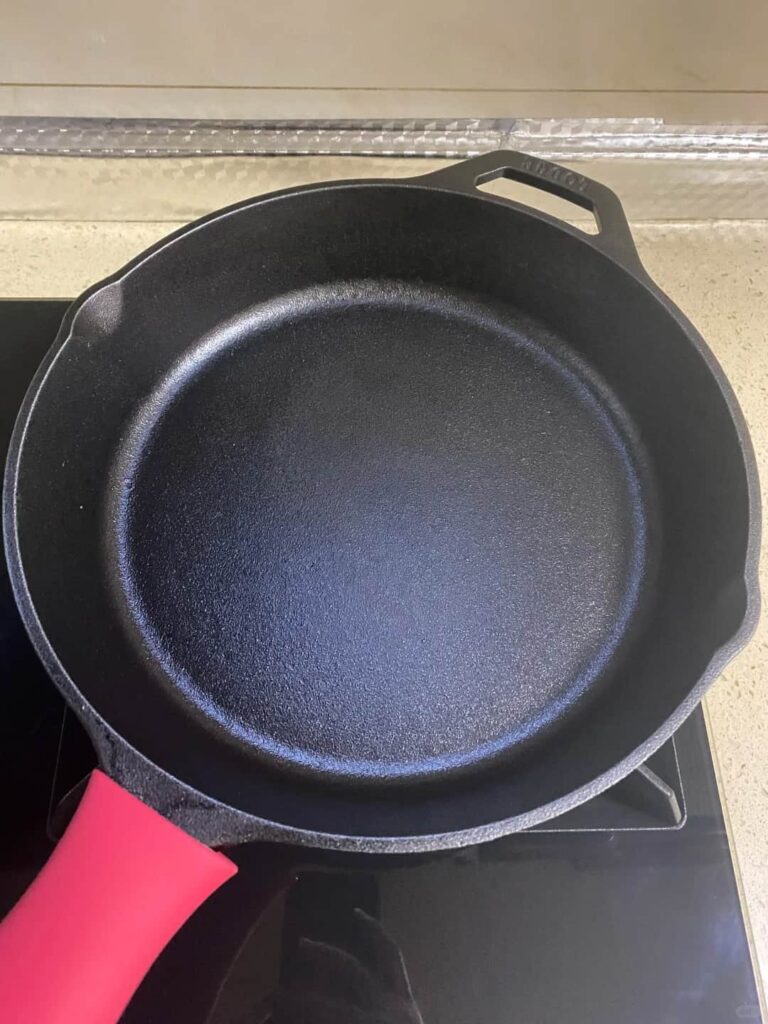
For a brand-new, ready-to-rock pan, you can’t go wrong with Lodge. They are the workhorses of the modern cast iron world, affordable, and come pre-seasoned, which is a fancy way of saying “they’ve done the first layer of non-stick magic for you.”
Other great options include Camp Chef and Barebones Living, which often have a more curated, aesthetic appeal.
The Siren Song of Antique Pans: Griswold & Wagner
Then, there’s the vintage route. Brands like Griswold and Wagner are the royalty of old cast iron.
They are highly sought after for one main reason: their cooking surfaces are often as smooth as glass.
Back in the day, they cast their pans and then ground the cooking surface smooth before seasoning.
The result is an exceptionally non-stick experience that many enthusiasts swear by.
Antique Pan Advantages & Considerations
The pros? That silky-smooth surface, a piece of history, and the fact that they are often surprisingly affordable at flea markets or online.
A well-made antique can genuinely last for generations more.
The cons? You’re likely buying a project. That beautiful, smooth surface might be hiding under a century of carbonized gunk and rust.
Restoring an antique pan is a labor of love involving methods like a lye bath or an electrolysis tank (which sounds like mad science but is wildly effective).
It’s satisfying, but it’s not for everyone. You also need to do a bit of research to make sure you’re not buying a cracked or warped pan.
A quick Google of the brand and identifying marks can save you heartache.
Pan Size Matters: Don’t Bring a Skyscraper to a Tent Peg
For a couple or a small family of 2-4 people, a 10-inch skillet is the Goldilocks zone. It’s big enough to cook a meal, but not so big that it becomes a monolithic burden.
Many 10-inch models also come with a matching lid, which is a huge bonus.
For larger groups, a 12-inch pan is fantastic. You can cook a mountain of pancakes or a serious amount of fajita veggies.
The only caveat: make sure it will actually fit on your camp stove grates if you plan to use one. Some of the bigger beasts can be unwieldy.
Solo campers or those just wanting to supplement their kit for side dishes can look at smaller 6 or 8-inch pans.
They’re adorable and perfect for a single-serving brownie or toasting spices.
Section 3: The Seven Commandments of Cast Iron

1. Thou Shalt Ensure Good Seasoning.
Seasoning isn’t a sprinkle of salt and pepper. It’s the process of baking thin layers of oil onto the iron, creating a hard, polymerized coating that prevents rust and makes the pan non-stick.
Think of it as the pan’s immune system. Modern pans like Lodge come pre-seasoned, so you can start cooking right away.
An antique pan you’ve restored will need you to build this layer from scratch with a little oil and an hour in your home oven.
It’s the pan’s skincare routine, and it’s non-negotiable.
2. Thou Shalt Preheat Slowly
Cast iron is not a sprinter; it’s a marathon runner. Never crank your camp stove or throw it onto roaring flames immediately.
Start with low to medium heat and give it a good 5-10 minutes to warm up evenly. This prevents the pan from warping over time and stops the seasoning from smoking off.
Patience here is the key to a happy pan.
3. Thou Shalt Protect Thine Hands
This seems obvious, but I must emphasize it with a personal anecdote. Once, in a moment of campfire-induced hubris, I thought, “I’ll just quickly adjust the pan on the fire grate.”
I used my bare hand. The sizzle sound was not coming from the bacon. Cast iron gets DEVILISHLY hot.
The entire pan is a heat source. Always, always, ALWAYS use a thick, dry pot holder or a leather grill glove.
And for the love of all that is holy, make sure everyone in your camp, especially children, knows that the handle is just as hot as the bottom.
My fingertip still tells that story on cold mornings.
4. Thou Shalt Use Heat-Resistant Utensils.
Plastic spatulas will melt into a sad, gooey puddle. Use metal, wood, or silicone. Don’t be afraid of metal!
A good, sturdy metal spatula with a flat edge is actually fantastic for cast iron. It helps slowly scrape up the fond (the tasty browned bits) and smooths the seasoning over time.
Just avoid sharp, pointy metal tools like forks or knives that can gouge and scratch the seasoning you’ve worked so hard to build.
5. Thou Shalt Let the Pan Cool Naturally.
After your culinary triumph, the pan will be screaming hot. Your first instinct might be to clean it immediately.
Resist. Your second instinct, on a winter camping trip, might be to toss a handful of snow on it to speed up the process.
DO NOT DO THIS. Rapid, extreme temperature changes are one of the few things that can make a cast iron pan crack or warp.
Just set it aside on a rock or a stove grate that’s not in use and let it come down to a warm temperature on its own. Go enjoy a s’more. You’ve earned it.
6. Thou Shalt Keep Cleaning Simple.
This is where most people panic. Relax. It’s easier than you think.
- The Easy Clean: If you just cooked something simple like pancakes or grilled cheese, simply wipe it out with a paper towel while it’s still warm. You’re done.
- The Standard Clean: For stuck-on bits, add a handful of coarse salt and a tiny bit of water to the warm pan. Use a paper towel or a rag to scrub. The salt acts as a gentle, abrasive cleaner that won’t hurt the seasoning. Wipe it all out.
- The Deeper Clean: For pungent foods like bacon or fish, use warm water and a gentle scrub brush. NO SOAP. I repeat, put the Dawn down. Modern soap won’t immediately strip a well-established seasoning, but old habits die hard and it’s better to be safe. The key, the absolute golden rule, is to dry it thoroughly immediately after washing. I put it back on a warm stove burner or the edge of the fire for a minute to evaporate every last drop of water. This is the single most important step to prevent the dreaded rust.
7. Thou Shalt Use It at Home.
Don’t let your cast iron live exclusively in your camping bin. The best way to build a robust seasoning and get comfortable with its quirks is to use it regularly in your own kitchen.
Cook a steak. Bake a cornbread. Fry some potatoes. This practice builds the seasoning layer and, more importantly, builds your confidence.
By the time you hit the campsite, you and your pan will be an old, familiar team.
Section 4: The Main Event: Glorious Campfire Feasts
Breakfast of Champions
- Pancakes and Scrambled Eggs: One pan, one meal. Make your pancake batter at home in a squeeze bottle for less mess. Cook the pancakes, stack them on a plate, then use the same greased, hot pan to scramble a few eggs. Minimal cleanup, maximum satisfaction.
- Breakfast Burritos: This is next-level. Scramble those eggs directly in the pan. Throw in some pre-diced onions and peppers. Once cooked, push them to one side, warm your tortillas in the now-empty side, assemble your burritos with cheese and pre-cooked sausage, and then griddle the finished burrito in the pan until the outside is crisp and the cheese is melty. You are now a camping god.
Lunch & Dinner: No More Sad Hot Dogs
- Grilled Cheese (& Variations): A cast iron pan makes the best grilled cheese, period. The even heat gives you a perfect, golden-brown crunch without burning. Take it up a notch by spreading a little pesto on the inside, or adding some sliced tomato.
- Quesadillas: The same principle, but with a south-of-the-border vibe. Fill with cheese, black beans, and leftover fajita veggies.
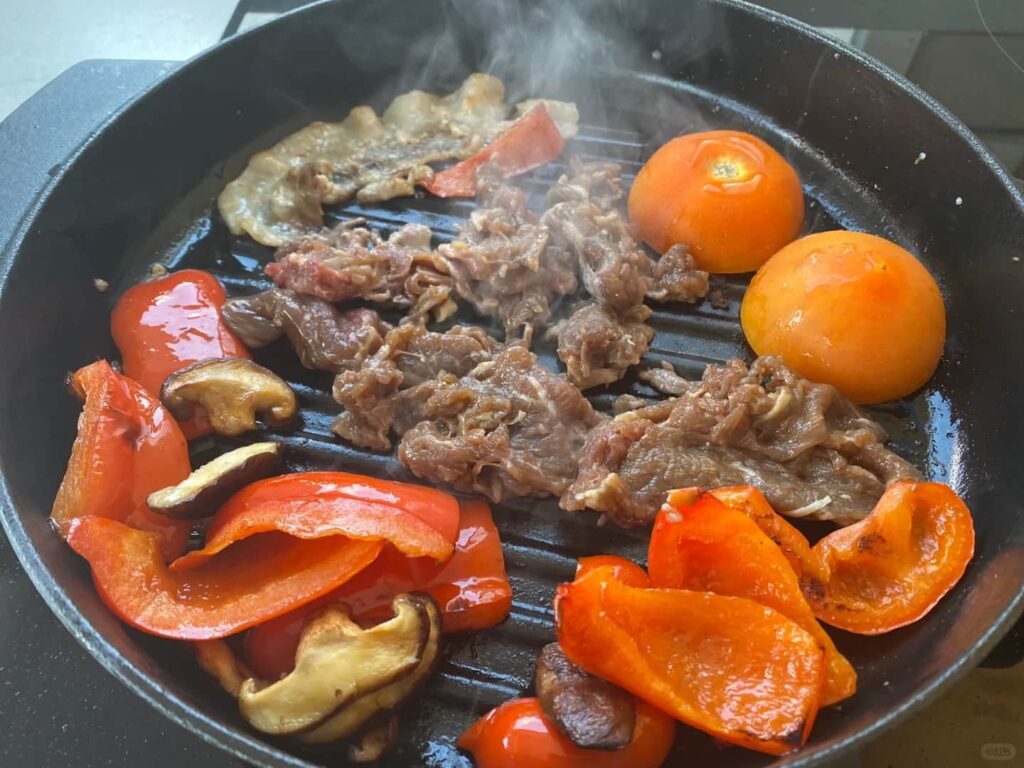
- Grilled Steak Fajitas: This is my showstopper. Season a skirt steak and grill it directly over the fire on a grate. While it’s resting, throw sliced onions and bell peppers into your oiled cast iron pan. Sauté until soft and slightly charred. Slice the steak, toss it back in the pan with the veggies, add a squeeze of lime, and serve with warm tortillas. The sizzle as it comes to the table is pure campfire magic.
- Sloppy Joes: Brown some ground beef/turkey in the pan, stir in a can of Manwich or your own sauce, and let it simmer. Serve on buns with a side of pre-made coleslaw. Messy, delicious, and deeply satisfying.
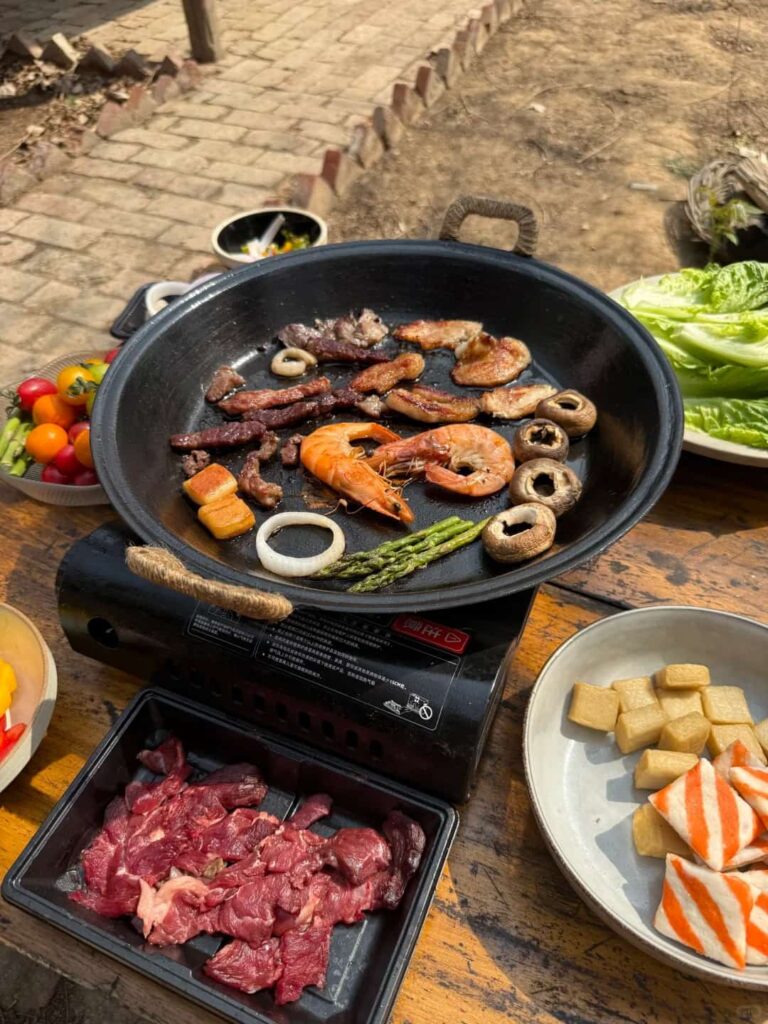
- Shrimp and Veggie Stir Fry: A lighter option. Use pre-cut veggies and frozen, pre-cooked shrimp. A splash of soy sauce and a dollop of minced garlic from a jar, and you have a gourmet meal in minutes.
Dessert: Because You Deserve It
Conclusion
So there you have it. The humble, heavy, magnificent cast iron pan. It’s versatile enough to handle breakfast, lunch, dinner, and dessert.
It’s durable enough to become a story-filled family heirloom. And it’s simple enough to master with just a little knowledge and respect.
It’s the one piece of gear that truly elevates camping from mere survival to a culinary adventure.
So what are you waiting for? Find a pan, season it with love, and get cooking. The great outdoors has never tasted so good.